Shaun Deeb’s POY Blueprint: Why Volume Beats Variance
Shaun Deeb is hunting his third WSOP Player of the Year crown—a feat nobody has accomplished. But the poker grinder extraordinaire isn’t thrilled about the new global format, calling the revamped point structure fundamentally flawed despite a $1 million prize pool addition.
What Happened
The World Series of Poker has transformed its Player of the Year competition into a sprawling international affair spanning three continents and nine months. With events counting from April through December across Las Vegas, Europe, and The Bahamas, the 2026 race represents the most ambitious POY format in WSOP history.
Deeb, fresh off a WSOP Circuit ring victory at Turning Stone in a $400 Six-Max event worth $34,195, made his position clear during a break from the action: he’s all-in on the chase, but the new system has serious problems.
The changes are substantial. The WSOP now offers $1 million in total prizes distributed among the top 100 finishers, with the top three receiving $100,000 Paradise packages alongside the title. Players can now count their best 15 scores instead of 10, and international stops factor into the calculation for the first time.
But there’s a catch—actually, several catches. Online WSOP events no longer contribute to POY standings, a controversial decision that’s divided the poker community. The new point formula heavily weights field size over buy-in level, creating what Deeb sees as a dangerous imbalance that could reduce the entire race to a couple of massive-field tournament results.
The Poker Strategy Breakdown
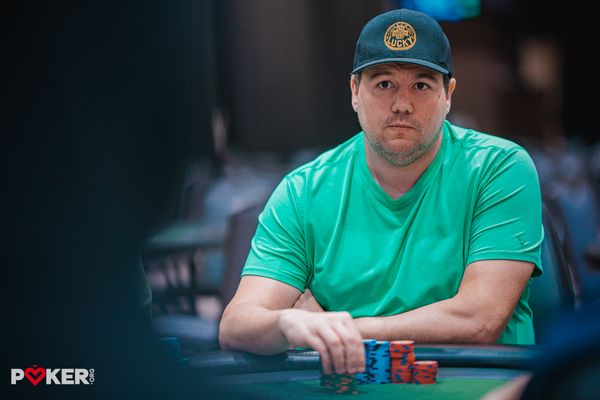
Deeb’s approach to the POY race isn’t about running hot in a handful of events—it’s about systematic exploitation of the point structure combined with relentless volume. Last summer’s campaign provides the blueprint: he didn’t randomly fire bullets at every tournament. Instead, he dissected the scoring system and identified maximum-value opportunities.
His $100,000 PLO High Roller victory for nearly $3 million proved decisive, allowing him to overtake Benny Glaser, who had already accumulated three bracelets and appeared destined for the title. That single score demonstrates Deeb’s understanding of leverage points within the system—high buy-in events with manageable fields offer tremendous point-per-entry value when you can consistently navigate them.
The 2026 formula shifts this calculus dramatically. By overweighting field size, the WSOP has essentially created a system where massive-field tournaments—the Main Event, the $1,000 Mystery Bounty—can deliver point totals that dwarf even the most prestigious high roller victories. Deeb’s criticism centers on this imbalance: “Someone who wins two big tournaments is going to win POY. Whoever wins the Main, if they have 15 scores, they’re just going to win POY.”
This creates a strategic dilemma. High-stakes specialists who excel in tough, small-field environments now face diminished returns on their skill edge. Meanwhile, players willing to grind massive fields gain disproportionate upside from variance-heavy tournaments where anyone can catch fire for a week.
Deeb’s decade-long commitment to POY chases gives him unique insight into what separates contenders from pretenders. It’s not talent alone—it’s the willingness to maintain peak performance across hundreds of tournament entries over months. “Daniel Negreanu, being older and having great success in the past, doesn’t have the drive to put in the volume necessary to give himself the best POY equity,” Deeb notes, highlighting how the grind itself becomes a competitive moat.
The exclusion of online events represents another strategic shift. For players like Deeb who excel at multi-tabling online while simultaneously playing live tournaments, this removes a significant edge. His argument that serious POY contenders aren’t the “shady, cheater types” engaging in multi-accounting or using real-time assistance makes logical sense—these players have too much reputation at stake and typically play live events concurrently, making sophisticated cheating impractical.
Reading The Field & Table Dynamics
The global expansion of the POY race fundamentally alters the competitive landscape. Previously, the race concentrated into a two-month Vegas summer sprint where the deepest-pocketed grinders could fire every event. Now, with stops in Prague and Paradise extending the timeline through December, the field dynamics shift considerably.
International events introduce travel costs, scheduling conflicts, and logistical complexity that naturally thin the field of serious contenders. Players with families, business commitments, or simply less financial flexibility face difficult decisions about which stops justify the investment. This creates an advantage for full-time tournament specialists like Deeb who can structure their entire year around the chase.
The extended timeline also changes variance dynamics. A longer season with more countable scores theoretically allows skill to manifest more reliably—but only if the point structure properly rewards consistent excellence over isolated heaters. Deeb’s concern that two big tournament wins could decide the entire race suggests the opposite: increased variance, not decreased.
Consider the player pool implications. The Main Event attracts thousands of recreational players chasing lottery tickets, creating massive fields with relatively soft competition. Compare this to a $100,000 high roller where every seat contains a world-class professional. Under the new system, winning the former could deliver triple the POY value of the latter, despite requiring dramatically less poker skill.
This misalignment between difficulty and reward creates perverse incentives. The optimal POY strategy may involve prioritizing massive-field events with softer competition over prestigious high-stakes battles. That’s backwards for a title ostensibly recognizing the year’s best tournament player.
How To Apply This To Your Game
Even if you’re not chasing WSOP Player of the Year, Deeb’s approach offers valuable lessons for any tournament grinder looking to maximize results.
First, understand the scoring system—whatever that means in your context. Whether you’re building a poker resume, chasing leaderboard promotions at your local card room, or simply tracking personal performance, know what metrics matter. Deeb doesn’t play tournaments randomly; he calculates expected value not just in dollars but in points, prestige, and strategic positioning. Apply the same analytical rigor to your own goals.
Second, volume matters, but only when paired with sustainable performance. Deeb’s decade-long commitment to the POY grind isn’t about playing every event mindlessly—it’s about maintaining A-game decision-making across hundreds of tournaments. For recreational players, this translates to playing within your bankroll and energy limits. A smaller number of well-played sessions beats a larger number of tilted, exhausted appearances.
Third, identify structural edges. Deeb recognizes that his willingness to grind gives him an advantage over more successful players who lack the same motivation. What edges exist in your player pool? Maybe you play better in certain formats, or your local competition avoids specific tournament structures. Exploit these gaps systematically rather than playing everything equally.
Fourth, advocate for yourself. Deeb doesn’t just accept the POY changes—he articulates specific criticisms based on mathematical analysis. Whether you’re discussing rake structures with your card room, requesting format changes in your home game, or negotiating backing agreements, understand the numbers and speak up when incentives misalign with stated goals.
Finally, recognize that variance increases with field size, but so does the value of fundamental skills. In massive-field events, basic positional awareness, hand selection, and stack preservation become more important than advanced exploitative adjustments. If you’re playing large-field tournaments, tighten up your fundamentals—they’re your edge when the field is too large to develop specific reads.
Key Takeaways
- Shaun Deeb is pursuing an unprecedented third WSOP Player of the Year title and second consecutive crown, with nobody in history achieving either milestone
- The 2026 POY race now spans nine months across three continents (Las Vegas, Europe, Bahamas) with a $1 million prize pool for the top 100 finishers
- Deeb criticizes the new point formula for over-rewarding massive field sizes while undervaluing difficult, small-field high roller events
- Online WSOP events no longer count toward POY standings, eliminating an edge for players who excel at simultaneous online/live play
- The extended global format favors full-time professionals willing to commit to international travel and sustained volume over nine months
- Deeb believes the new system could reduce the entire race to whoever wins one or two massive-field events like the Main Event, rather than rewarding consistent excellence
Frequently Asked Questions
How many WSOP Player of the Year titles has Shaun Deeb won?
Shaun Deeb has won two WSOP Player of the Year titles, including the 2025 crown. He’s now chasing a record third title in 2026, which would be unprecedented in WSOP history. No player has ever won three POY titles or back-to-back titles, making both achievements historic milestones.
Why doesn’t the 2026 WSOP POY count online events?
The WSOP excluded online events from 2026 POY standings primarily due to concerns about account integrity—specifically, worries about multi-accounting, ghosting, and real-time assistance. Players like Daniel Negreanu and Phil Hellmuth have advocated for this change. However, Deeb argues that serious POY contenders are unlikely to cheat given their reputations and the fact that they typically play live events simultaneously, making sophisticated online cheating impractical.
What’s wrong with the new WSOP POY point formula according to Deeb?
Deeb’s primary criticism is that the new formula over-rewards massive field sizes while under-rewarding difficult, small-field high buy-in events. He believes a player who wins the Main Event plus one other large tournament will likely win POY regardless of other results, rather than the title going to whoever demonstrates the most consistent excellence across multiple tough fields. This creates a discrepancy where variance in huge fields matters more than skill in elite competitions.
Final Thoughts
Shaun Deeb’s pursuit of WSOP history reveals a fundamental tension in poker’s most prestigious year-long competition: should Player of the Year recognize consistent excellence against tough competition, or reward whoever gets hottest in the biggest events? The 2026 format leans heavily toward the latter, potentially transforming a skill-based marathon into a variance-driven lottery.
Deeb’s criticisms aren’t sour grapes—they’re mathematical observations from someone who’s mastered the POY game. When the Main Event winner can accumulate triple the points of a $100,000 high roller champion, the system isn’t measuring poker skill so much as field-size-adjusted luck. That doesn’t diminish the accomplishment of winning massive fields, but it does raise questions about whether the POY title accurately identifies the year’s best tournament player.
Still, don’t bet against Deeb. His decade of sustained excellence, combined with unmatched volume and strategic point optimization, makes him the favorite regardless of format flaws. If he captures that third title, it won’t be because the system is perfect—it’ll be because nobody outworks, outgrinds, or out-optimizes Shaun Deeb when he locks onto a goal. And that, ultimately, is a skill worth recognizing.
Ready to Sharpen Your Poker Game?
Master your poker game with expert hand analysis