Shaun Deeb’s POY Blueprint: Why WSOP’s New Format Favors Variance Over Skill
Shaun Deeb is hunting his third WSOP Player of the Year crown—a feat never accomplished in poker history. But the grinder’s grinder has serious reservations about the 2026 format changes, arguing the new point structure rewards tournament variance over consistent excellence. His critique reveals a fundamental tension in how poker should measure greatness.
What Happened
Fresh off capturing his second WSOP Circuit ring at Turning Stone in a $400 Six-Max event for $34,195, Deeb is already deep into preparation mode for an unprecedented POY campaign. The back-to-back POY title would be historic enough, but a third overall championship would cement a record that might stand for decades.
The WSOP has completely overhauled its Player of the Year competition for 2026, transforming it from a summer-only Las Vegas affair into a nine-month global odyssey spanning Vegas, Europe, and Paradise in the Bahamas. The organization sweetened the pot with a $1 million leaderboard prize pool distributed among the top 100 finishers, plus $100K Paradise packages for the top three.
But the most controversial change lies in the formula itself. The new point system heavily weights field size, excludes all online WSOP events, and increases the number of counted scores from 10 to 15. For a player who’s spent a decade mastering the POY grind, Deeb sees these adjustments as fundamentally flawed.
“I’m not a big fan of the changes the WSOP made,” Deeb told PokerOrg during his Turning Stone run. “I think they’re trying hard, and I’m glad they’re finally making some changes. I just don’t think they’re in the right direction.”
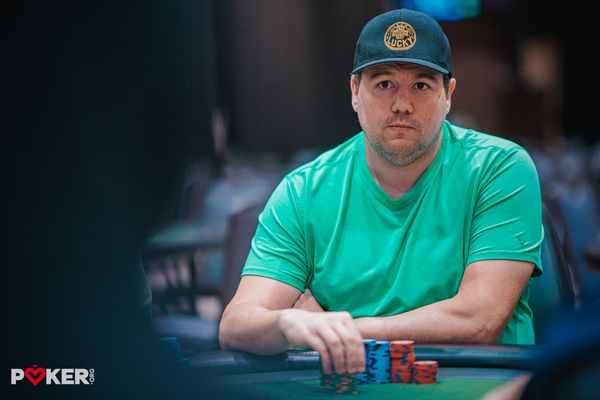
The Poker Strategy Breakdown
Deeb’s 2025 POY victory wasn’t accidental—it was surgical. He didn’t fire every bullet blindly; instead, he reverse-engineered the point system and identified optimal ROI opportunities. The centerpiece was his $100,000 PLO High Roller victory worth nearly $3 million, which generated massive points and allowed him to overtake early leader Benny Glaser, who had already banked three bracelets.
The strategic approach to POY campaigns requires understanding expected value beyond just cash. Each tournament entry must be evaluated through multiple lenses: buy-in level, field size, point multipliers, and how it fits into your overall schedule. Deeb has mastered this calculus better than anyone.
Under the new 2026 format, however, the math has shifted dramatically. The field-size weighting means massive-field events like the Main Event and the $1,000 Mystery Bounty now dwarf everything else in point potential. Deeb’s concern is legitimate: “Whoever wins the Main, if they have 15 scores, they’re just going to win POY.”
This creates a strategic dilemma. Should serious POY contenders focus their energy on high-skill, tough-field, high-buy-in events where they have the greatest edge? Or should they prioritize massive-field tournaments where a single deep run could make or break the entire race?
The exclusion of online events further narrows the playing field. Deeb argues this decision, while popular among old-school players like Daniel Negreanu and Phil Hellmuth, eliminates valuable data points. “I think the people going for the POY are not going to be the shady, cheater types,” Deeb explained. “They’re not going to be multi-accounting or be ghosted. They’re not going to be RTA-ing because they’re usually playing a live tournament simultaneously.”
From a pure strategy standpoint, the new system rewards variance tolerance over edge maximization. A player who runs hot in two massive tournaments could leapfrog someone who consistently cashes and final tables tougher events. That’s antithetical to what POY should represent.
Reading The Field & Table Dynamics
The POY race isn’t just about individual tournaments—it’s about reading the competitive landscape and understanding who your real opponents are. Deeb recognizes that his edge comes from volume and discipline, areas where younger players might match him but veterans like Negreanu won’t.
“Daniel Negreanu, being older and having great success in the past, doesn’t have the drive to put in the volume necessary to give himself the best POY equity,” Deeb observed. This isn’t trash talk—it’s accurate field assessment. Negreanu hasn’t committed to playing the European leg in Prague, immediately conceding significant equity in the race.
The global format creates logistical challenges that favor certain player profiles. Those with families, other business interests, or simply less hunger won’t maintain the grueling schedule required. Deeb estimates he has “a good 10 years left of grinding that hard,” positioning himself perfectly to accumulate multiple additional titles before the next generation fully arrives.
The international component also introduces new dynamics. European stops attract different player pools with varying skill distributions. Paradise events during the holidays present scheduling conflicts that will force difficult decisions. Every choice compounds—skip Europe to stay fresh for Vegas, or grind every series and risk burnout?
ICM considerations extend beyond individual tournaments to the entire season. Early bracelet winners gain psychological edges and point cushions, but they can also become complacent. Deeb’s experience shows the value of peaking at the right time—his 2025 PLO High Roller victory came at the perfect moment to overtake Glaser.
The $1 million prize pool adds another layer. Players on the bubble of the top 100 face different incentives than those battling for the title. Some might shift strategies mid-series based on their leaderboard position, creating exploitable patterns for observant opponents.
How To Apply This To Your Game
Even if you’re not chasing WSOP Player of the Year, Deeb’s approach offers valuable lessons for any tournament series or poker goals you’re pursuing.
First, understand the scoring system completely. Whether it’s a local league, an online series, or your home game’s annual championship, knowing exactly how points or prizes are awarded lets you optimize your strategy. Deeb doesn’t just play poker—he plays the meta-game of point accumulation.
Second, volume matters, but only when combined with discipline. Deeb’s edge isn’t just that he plays more events; it’s that he maintains his A-game across dozens of tournaments. For recreational players, this might mean playing fewer sessions but ensuring you’re well-rested and focused for each one.
Third, identify where you have the greatest edge and exploit it ruthlessly. If you crush six-max but struggle in full-ring, adjust your schedule accordingly. Deeb’s PLO High Roller victory wasn’t random—he identified a high-value, high-skill event where his edge justified the buy-in.
Fourth, think in terms of expected value across your entire poker career, not just individual sessions. Deeb is building a legacy, targeting “a record that’s untouchable.” What’s your equivalent? Maybe it’s becoming the best player at your local card room, or achieving a specific ROI over a large sample. Define it, then reverse-engineer the path.
Finally, don’t be afraid to critique the structure you’re operating within. Deeb’s willingness to call out flaws in the POY system shows intellectual honesty. If your local tournament series has a broken payout structure or your online site’s rake is exploitative, recognize it and adjust or advocate for change.
Key Takeaways
- Shaun Deeb is pursuing an unprecedented third WSOP Player of the Year title and second consecutive crown, neither of which has been accomplished before
- The 2026 POY format now spans nine months across three continents (Las Vegas, Europe, Bahamas) with a $1 million prize pool for top 100 finishers
- The new point formula heavily weights field size, potentially allowing one or two big tournament wins to determine the entire race rather than consistent excellence
- Online WSOP events no longer count toward POY points, a controversial decision driven by concerns about account integrity
- Deeb’s edge comes from volume, discipline, and strategic event selection—understanding not just poker strategy but the meta-game of point accumulation
- The global format favors players willing to maintain grueling schedules over nine months, giving Deeb a significant advantage over older, less motivated competitors
Frequently Asked Questions
How many WSOP Player of the Year titles has Shaun Deeb won?
Shaun Deeb has won two WSOP Player of the Year titles, including back-to-back wins in 2024 and 2025. He’s now chasing a third title in 2026, which would be an unprecedented achievement in WSOP history. No player has ever won three POY titles or won it in consecutive years before Deeb accomplished the latter feat.
Why doesn’t the 2026 WSOP POY include online events?
The WSOP excluded online events from the 2026 Player of the Year race primarily due to concerns about account integrity—specifically whether the registered player is actually the one playing, or if they’re using multiple accounts or receiving real-time assistance. While players like Deeb argue that serious POY contenders wouldn’t engage in such behavior, veterans like Daniel Negreanu and Phil Hellmuth strongly support the exclusion, and their position appears to have influenced the WSOP’s decision.
What’s the main problem with the new WSOP POY point formula?
The primary criticism is that the new formula over-rewards massive field tournaments while under-rewarding high buy-in, small-field events that typically feature much tougher competition. Deeb argues that a player who wins one or two huge tournaments like the Main Event could win POY despite less consistent overall performance, whereas the title should reward multiple strong finishes across various event types. The field-size weighting essentially makes variance a bigger factor than skill edge.
Final Thoughts
Shaun Deeb’s pursuit of poker immortality reveals a fundamental question: What should Player of the Year actually measure? Is it the player who demonstrates the most consistent excellence across diverse formats and field sizes? Or is it whoever gets hottest at the right moment in the biggest tournaments?
The WSOP’s new format leans toward the latter, prioritizing spectacle and variance over grinding excellence. That might be better for marketing—a Main Event winner claiming POY makes for cleaner storytelling than someone who final-tabled fifteen different events. But it potentially cheapens an award that should represent the year’s most complete player.
Regardless of the format’s flaws, don’t bet against Deeb. His track record of setting seemingly impossible goals and achieving them through sheer discipline is unmatched. If anyone can navigate a suboptimal system and still come out on top, it’s the player who’s already proven he can master any POY formula thrown at him. By the time the Paradise series concludes in December, we may be witnessing history—and a record that truly is untouchable.
Ready to Sharpen Your Poker Game?
Master your poker game with expert hand analysis