How Zachary VanKeuren Won His First WSOPC Ring at Home
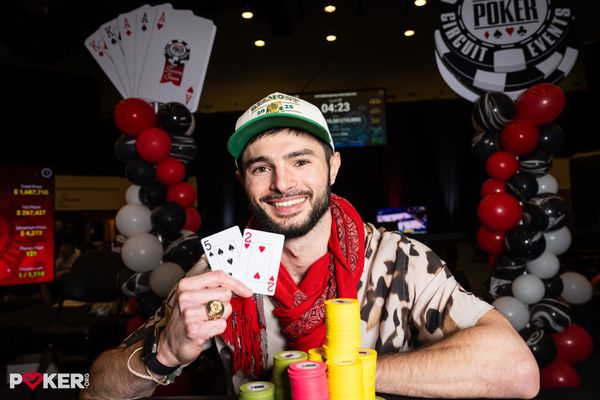
Zachary VanKeuren claimed his maiden World Series of Poker Circuit ring at Turning Stone Resort Casino—the exact venue where he played his first poker hand seven years ago. The 28-year-old dominated the $1,700 Main Event final table, banking $267,437 and completing a remarkable triple crown that includes a WSOP bracelet and WPT Prime title.
What Happened
The WSOPC Turning Stone Main Event attracted 1,114 entries, generating a prize pool exceeding $1.68 million. VanKeuren entered the final table as the second-largest stack and methodically dismantled his opposition over the course of a dominant performance that saw him hold the chip lead for the majority of play.
After a crucial confrontation with Zexiang Sun that propelled him into the driver’s seat, VanKeuren never looked back. He eliminated multiple opponents and entered heads-up play against Adam Kurnitz with a commanding 4.5-to-1 chip advantage. The match concluded quickly as VanKeuren’s aggressive style and card distribution left Kurnitz with limited options.
The victory held special significance for VanKeuren, who cut his teeth at Turning Stone’s poker room when he was barely old enough to play. His father and girlfriend witnessed the triumph from the rail, adding emotional weight to what was already a career-defining moment. The win also secured VanKeuren a $5,000 package to WSOP Paradise in The Bahamas.
Adam Kurnitz earned $178,255 for his runner-up finish, while Andrew Porter rounded out the podium with $124,949. Autumn Hayes, Charbel Boujaoude, and Matthew Schiavi all secured five-figure scores in what proved to be a highly competitive field.
The Poker Strategy Breakdown
The pivotal moment of VanKeuren’s tournament came during a massive pot against Zexiang Sun that demonstrated advanced post-flop aggression and hand reading. VanKeuren opened with pocket nines from an early position, and Sun flatted on the button—a play that immediately suggested strength or strong connectivity potential.
The flop delivered J♦9♣6♦, giving VanKeuren middle set but presenting a dangerous two-tone board with numerous drawing possibilities. Rather than leading out, VanKeuren opted for a check-raise line after Sun continued with a bet. This is a sophisticated play that disguises the strength of his holding while building the pot.
When Sun three-bet the flop to two million chips, VanKeuren faced a critical decision. Despite holding a set, the board texture meant Sun’s range could include overpairs, top set, two-pair combinations, and a wide array of flush and straight draws. VanKeuren’s analysis was particularly astute—he recognized that pocket jacks would likely flat the check-raise rather than three-bet, narrowing Sun’s range toward strong draws and top-pair hands.
VanKeuren’s decision to move all-in represented maximum pressure on what he correctly identified as a likely draw-heavy range. This play forces opponents to call off their entire stack with equity rather than realized value, a fundamental tournament concept that separates elite players from the field. Sun eventually folded K♣J♥ face-up, validating VanKeuren’s read and securing him a three-million-chip pot without showdown.
This hand exemplifies several advanced concepts: check-raising for value on wet boards, accurately constructing opponent ranges based on action sequences, and applying maximum pressure when holding the range advantage. VanKeuren’s willingness to commit his tournament life with middle set—rather than playing cautiously—demonstrates the aggressive approach necessary to accumulate chips at final tables.
Later in the tournament, VanKeuren eliminated Andrew Porter in a dramatic set-over-set confrontation that further extended his chip lead. Both players flopped sets, but VanKeuren’s superior stack leverage meant he could apply maximum pressure and force Porter into a tournament-ending decision. These types of cooler situations are inevitable in poker, but VanKeuren’s chip accumulation throughout the day ensured he was on the right side of variance when it mattered most.
Reading The Field & Table Dynamics
VanKeuren’s path to victory showcased exceptional table awareness and ICM exploitation. After securing the chip lead through the hand against Sun, he recognized that his opponents faced significant pressure from the pay jumps and adjusted his strategy accordingly.
With seven players remaining and over half the chips in play, VanKeuren employed an open-shove strategy that put maximum pressure on his short-stacked opponents. This approach is mathematically sound when holding a dominant chip position—opponents must risk their tournament lives to contest pots, while VanKeuren could afford to lose several all-ins and still maintain control.
The dynamic created a situation where VanKeuren’s opponents were essentially playing for second place. Even when he lost flips or allowed opponents to double through him, he quickly recovered by winning uncontested pots through aggressive preflop play. This is a crucial lesson in tournament poker: chip accumulation isn’t linear, and maintaining pressure often matters more than winning every individual hand.
Sun’s early elimination despite holding the chip lead demonstrates the volatility of final table play. After losing the massive pot to VanKeuren, Sun never regained momentum and busted in tenth place within an hour. This swing illustrates how single hands can define tournament trajectories and why avoiding marginal spots with medium-strength holdings becomes increasingly important as stacks get deeper.
During heads-up play, VanKeuren continued his aggressive approach, immediately putting Kurnitz on the defensive. When Kurnitz flopped top set only to see VanKeuren turn a straight, the writing was on the wall. Kurnitz mounted a brief comeback with two doubles, but VanKeuren’s overwhelming chip advantage meant he could wait for premium spots and close out the tournament on his terms.
How To Apply This To Your Game
VanKeuren’s performance offers several actionable lessons for tournament players at all levels. First, recognize when board textures favor aggression over pot control. On the J♦9♣6♦ flop, VanKeuren understood that his set was vulnerable to draws but also that his opponent’s range contained many hands that couldn’t continue against maximum aggression. Don’t be afraid to commit chips when you hold the range advantage, even if your absolute hand strength feels vulnerable.
Second, develop the ability to construct accurate opponent ranges based on betting sequences. VanKeuren’s insight that pocket jacks would likely flat rather than three-bet the flop allowed him to confidently commit his stack. This type of hand reading comes from experience and study, but you can accelerate your learning by reviewing hands and considering how different holdings would play at each decision point.
Third, leverage your chip lead aggressively when ICM pressure is high. VanKeuren’s open-shove strategy with seven players remaining exemplifies how to exploit opponents who are playing to survive rather than to win. When you hold a dominant stack, force your opponents into difficult decisions for their tournament lives. They’ll fold more often than game theory suggests they should, allowing you to accumulate chips without showdown.
Fourth, maintain your aggressive approach even after setbacks. VanKeuren lost several all-ins during seven-handed play but never shifted into a passive, chip-preservation mode. He understood that his edge came from applying pressure, not from waiting for premium hands. This mental resilience is crucial for tournament success—don’t let short-term variance derail your optimal strategy.
Finally, study away from the table. VanKeuren specifically mentioned his commitment to continuous study over the years, which transformed him from a confused 19-year-old playing his first tournament into a champion with over $2 million in career earnings. Invest time in poker training, hand review, and strategic discussion. The players who consistently reach final tables are those who treat poker as a skill to be developed rather than a game of chance.
Key Takeaways
- Zachary VanKeuren won his first WSOPC ring at Turning Stone, the same venue where he started playing poker at age 18, earning $267,437 and completing a triple crown with his WSOP bracelet and WPT Prime title
- The tournament’s pivotal hand saw VanKeuren check-raise all-in with middle set on a draw-heavy board, forcing his opponent to fold top pair and securing a massive pot without showdown
- VanKeuren leveraged his chip lead by employing an aggressive open-shove strategy that exploited ICM pressure and forced opponents into tournament-life decisions
- Accurate range construction and hand reading allowed VanKeuren to make confident decisions in high-pressure spots, demonstrating the value of study and experience
- The victory showcased how maintaining aggression through variance—rather than shifting to chip preservation—is essential for closing out tournaments from a chip lead position
- VanKeuren’s seven-year journey from recreational player to accomplished champion illustrates the importance of continuous study and dedication to skill development
Frequently Asked Questions
What made VanKeuren’s check-raise all-in with pocket nines the correct play?
VanKeuren correctly identified that his opponent’s three-bet range on the J♦9♣6♦ flop was weighted toward draws and top-pair hands rather than premium made hands like pocket jacks. By moving all-in, he forced his opponent to call off with equity rather than realized value, applying maximum pressure while holding the range advantage. This type of aggressive play on wet boards is essential for accumulating chips at final tables.
How should you adjust your strategy when holding a dominant chip lead at a final table?
With a dominant chip lead, employ an aggressive strategy that exploits ICM pressure on your opponents. Open-shove frequently to force opponents into tournament-life decisions, and don’t be discouraged by occasional doubles. Your edge comes from applying consistent pressure rather than waiting for premium hands. Even if you lose several all-ins, you can quickly recover by winning uncontested pots through aggression.
What is VanKeuren’s triple crown achievement in poker?
VanKeuren has now won a WSOP bracelet (online event in 2024), a WSOPC ring (Turning Stone Main Event), and a WPT Prime Championship title (2024 in Las Vegas for $1.1 million). This combination represents success across the three major tournament circuits in poker, demonstrating his versatility and skill across different formats and competition levels.
Final Thoughts
Zachary VanKeuren’s victory at WSOPC Turning Stone represents more than just another tournament win—it’s a full-circle moment that validates years of dedication and study. From his first confused steps into tournament poker at age 19 to his current status as a multi-title champion, VanKeuren’s journey demonstrates what’s possible when talent meets commitment.
His performance at the final table showcased the complete skill set required for modern tournament success: aggressive post-flop play, accurate hand reading, ICM exploitation, and mental resilience through variance. The pivotal hand against Zexiang Sun exemplified how elite players construct ranges, identify leverage points, and apply maximum pressure when holding the advantage. These aren’t innate abilities—they’re skills developed through thousands of hours of study and play.
For aspiring tournament players, VanKeuren’s path offers a roadmap. Start by mastering fundamentals, commit to continuous study, and don’t be afraid to play aggressively when the situation demands it. The difference between final table appearances and final table victories often comes down to your willingness to apply pressure and make difficult decisions in high-leverage spots. Study hands like VanKeuren’s check-raise all-in, understand why they work, and incorporate similar concepts into your own game. The results will follow.
Ready to Sharpen Your Poker Game?
Master your poker game with expert hand analysis