EPT Monte Carlo Final Table Set: Binder Dominates Day 5
The EPT Monte Carlo Main Event has reached its climactic conclusion, with eight players advancing to battle for €825,000 and poker immortality. Bernhard Binder, fresh off his 2025 WSOP Super Main Event victory, enters the final table with a commanding chip lead—holding nearly three times the chips of his nearest rival.
What Happened
Day 5 of the EPT Monte Carlo Main Event saw 20 hopefuls return to the felt at Sporting Monte-Carlo, each with their sights set on poker’s most prestigious European title. From an original field of 1,011 entries, these survivors had already secured a minimum payday of €99,450—but the real prize money awaited those who could outlast the grueling day of play.
Bernhard Binder entered the day with the chip lead and never relinquished control. The Austrian powerhouse was responsible for sending four players to the rail, systematically dismantling opponents while building his fortress to 7,250,000 chips. That’s 58 big blinds heading into the final table—a stack that gives him tremendous leverage over the field.
The final eight represents a fascinating mix of experience levels and playing styles. At one end sits Jose Malpelli, a relatively unknown French player with just $9,505 in recorded tournament cashes who now finds himself the short stack with 18 big blinds. At the other extreme is Binder, a proven champion with over $13 million in career earnings accumulated in less than four years of competitive play.
Between these extremes, players like Roman Stoica (a 2025 EPT Barcelona Mystery Bounty champion), PokerStars Team Pro Raul Mestre, and Germany’s Samuel Ju—who briefly wrestled the chip lead from Binder during Day 5—round out a final table packed with storylines and strategic intrigue.
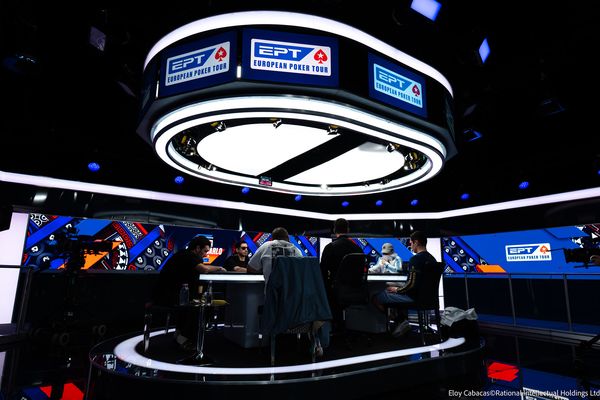
The Poker Strategy Breakdown
Final table dynamics in a major EPT event create a unique strategic environment that differs dramatically from earlier tournament stages. With eight players remaining and massive pay jumps on the horizon, Independent Chip Model (ICM) pressure becomes the dominant factor influencing every decision.
Binder’s massive chip advantage fundamentally alters the strategic landscape. With 58 big blinds, he can apply relentless pressure on medium stacks who can’t afford to risk their tournament lives without premium holdings. This creates a “rich get richer” dynamic where the chip leader can accumulate blinds and antes with aggressive play while opponents are forced into defensive postures.
The most fascinating strategic battle will unfold in the middle of the pack. Players like Raul Mestre (36 big blinds), Samuel Ju (32 big blinds), David Dijan (29 big blinds), Roman Stoica (26 big blinds), and Oshri Lahmani (24 big blinds) are clustered tightly together. This creates a Mexican standoff where each player wants to maintain their position while hoping others clash and eliminate each other.
For these medium stacks, the optimal strategy involves selective aggression—identifying spots where they can attack the shorter stacks (Malpelli and Fan) without exposing themselves to confrontations with Binder or Mestre. Three-bet bluffing becomes extremely risky in this environment, as getting four-bet by a bigger stack creates nightmarish ICM decisions.
The short stacks face the most straightforward strategic imperative: find a spot to double up or face elimination. Jose Malpelli’s 18 big blinds and Longmao Fan’s 20 big blinds leave little room for creative play. They’ll need to identify profitable all-in opportunities and hope to connect with the board. However, with ICM considerations making it expensive for medium stacks to call, the short stacks may find more fold equity than their chip counts would suggest.
One crucial strategic consideration is position at the final table. Players in late position relative to Binder can observe his actions before making decisions, while those immediately to his left will face constant pressure from his raises. Similarly, the players seated after the short stacks gain valuable information about whether they’ve found hands worth committing their tournaments.
Reading The Field & Table Dynamics
Understanding the player profiles and psychological dynamics at this final table provides crucial context for predicting how action might unfold. Bernhard Binder arrives with the confidence of a recent WSOP Super Main Event champion—a victory that came with a $3.4 million payday and proved his ability to navigate high-pressure final tables in massive fields. His aggressive Day 5 performance, where he personally eliminated four opponents, suggests he won’t adopt a passive approach just because he holds the chip lead.
Raul Mestre brings a unique dynamic as a sponsored PokerStars Team Pro playing in one of his employer’s flagship events. This creates both opportunity and pressure. On one hand, a victory would be tremendous for his personal brand and relationship with PokerStars. On the other, the spotlight and expectations could influence his decision-making. With 36 big blinds, Mestre has the ammunition to make moves, and his professional experience should help him navigate ICM considerations effectively.
Samuel Ju’s brief capture of the chip lead during Day 5 demonstrates his willingness to engage in big confrontations. His $1.098 million career high score indicates he’s played for significant money before, which should help him handle the pressure of the moment. Ju’s positioning in the middle of the pack with 32 big blinds makes him a wild card—capable of either mounting a serious challenge to Binder or becoming a cautious survivor hoping to ladder up.
Roman Stoica’s EPT Barcelona Mystery Bounty victory last year proves he knows how to close out major European tournaments. That experience becomes invaluable in final table situations where mental fortitude often matters as much as technical skill. His 26 big blinds put him in an awkward spot—too short to comfortably apply pressure, but too deep to simply push-or-fold.
The most intriguing player psychologically might be Jose Malpelli. Having turned a modest $9,505 in lifetime cashes into a guaranteed €99,450 payday represents a life-changing result. The question becomes whether this financial pressure makes him more conservative (hoping to ladder up for each additional pay jump) or more aggressive (recognizing that he’s already succeeded beyond expectations and can gamble for the title). His Day 5 performance suggests the latter, which could lead to early fireworks.
ICM considerations will dominate every significant decision. The pay jumps from eighth place (€99,450) to first place (€825,000) are substantial, but the incremental jumps between positions also matter enormously. For a player like David Dijan, who has already exceeded his lifetime earnings with the minimum payout, each additional ladder rung represents a massive percentage increase in career winnings. This creates natural risk aversion that Binder can exploit.
How To Apply This To Your Game
The strategic principles on display at this EPT Monte Carlo final table translate directly to final tables you’ll encounter in your own tournament career, whether you’re playing online MTTs or live events at your local card room.
First, understand that chip accumulation strategy changes dramatically once you reach a final table. During earlier stages, doubling up is always good and busting is simply part of tournament poker. At a final table, the risk of elimination becomes much more expensive due to ICM. Before making any significant decision, ask yourself: “What happens if I lose this pot?” If the answer is elimination or severe crippling, you need a stronger hand range than you’d require earlier in the tournament.
Second, recognize the power of the big stack. If you find yourself in Binder’s position with a commanding chip lead, don’t become passive trying to protect your advantage. Instead, leverage your stack to apply maximum pressure on medium stacks who can’t afford to play back without premium hands. Attack their blinds relentlessly, force them into difficult decisions, and make them fight for every chip. The worst thing a chip leader can do is allow the table to see cheap flops and give short stacks opportunities to double through the middle stacks.
Third, if you’re in the middle of the pack like most of this final table, identify the optimal targets for your aggression. You want to attack players who have something to lose—those with 20-30 big blinds who are thinking about pay jumps. Avoid unnecessary confrontations with the chip leader unless you have genuine strength. When you do enter pots, come in with raises rather than limps to maintain fold equity and control the action.
Fourth, practice ICM calculations before you need them at a final table. Numerous online tools and trainers can help you internalize how much equity you’re risking in various spots. Understanding that calling off 25 big blinds for a 60/40 coin flip might be profitable in a cash game but disastrous from an ICM perspective will save you from costly mistakes.
Finally, pay attention to player tendencies and adjust accordingly. If you notice an opponent making tight folds to preserve their stack, increase your aggression against them. If someone seems willing to gamble and take risks, tighten up and wait for strong hands before engaging. Final table success comes from reading the specific dynamics at your table, not from following a rigid strategy chart.
Key Takeaways
- Bernhard Binder’s 58 big blind chip lead gives him enormous leverage to dictate final table action and apply pressure across the field
- The cluster of medium stacks (24-36 big blinds) creates complex ICM dynamics where players will be reluctant to clash without premium holdings
- Short stacks Malpelli and Fan must find double-up opportunities quickly, but may enjoy more fold equity than their chip counts suggest due to ICM pressure on medium stacks
- Player experience varies dramatically, from Malpelli’s $9,505 in career cashes to Binder’s $13+ million, creating psychological advantages for proven champions
- Position relative to the chip leader and short stacks will significantly influence each player’s strategic options and decision-making opportunities
- The €725,550 difference between first and eighth place ensures ICM considerations will dominate every significant pot
Frequently Asked Questions
What is ICM and why does it matter at final tables?
Independent Chip Model (ICM) is a mathematical framework that converts tournament chips into real money equity based on payout structures and remaining players. At final tables, ICM matters enormously because chips don’t have linear value—losing chips costs you more equity than you gain by winning the same number of chips. This creates situations where folding premium hands can be correct if calling risks elimination and forfeiting significant pay jumps. Understanding ICM helps you make mathematically sound decisions when survival value conflicts with chip accumulation.
How should short stacks approach final table play?
Short stacks at final tables need to balance urgency with selectivity. With blinds and antes consuming your stack, you can’t wait forever for premium hands. However, shoving any two cards is also incorrect. The optimal approach involves identifying profitable push-or-fold spots using tools like Nash equilibrium charts, targeting opponents who are likely to fold due to ICM pressure, and being willing to gamble when you find reasonable equity. Position becomes critical—stealing blinds from late position with 15-20 big blinds can extend your tournament life and create double-up opportunities.
What advantages does the chip leader have at a final table?
The chip leader enjoys multiple strategic advantages. First, they can apply constant pressure through aggressive raising without risking tournament life. Second, they force opponents into difficult decisions where calling or re-raising could mean elimination. Third, they can afford to see more flops and play more speculative hands since they have chips to spare. Fourth, they benefit from opponents clashing with each other, as any elimination improves their equity. Finally, the psychological confidence of holding the lead often translates into better decision-making and more creative play. However, chip leads can evaporate quickly if the leader becomes reckless or runs into big hands from short stacks looking to double.
Final Thoughts
The EPT Monte Carlo Main Event final table represents everything compelling about tournament poker—a perfect storm of skill, psychology, mathematics, and fortune. Bernhard Binder’s quest to add EPT glory to his WSOP Super Main Event title provides a compelling narrative, but the seven other players aren’t simply extras in his story. Each brings their own motivations, skills, and strategic approaches to the felt.
What makes this final table particularly fascinating is the wide disparity in experience and expectations. For Jose Malpelli, already sitting on more than ten times his lifetime cashes, every additional pay jump represents a transformational result. For Binder, anything less than victory might feel like a disappointment given his chip advantage and recent success. These psychological dynamics will influence decision-making as much as any mathematical consideration.
The strategic principles on display—ICM pressure, stack-size-dependent strategies, positional awareness, and player profiling—apply whether you’re playing for €825,000 in Monte Carlo or $825 in your local tournament. Study how these elite players navigate final table dynamics, and you’ll improve your own results when you find yourself in similar situations. The fundamentals of tournament poker remain constant regardless of the stakes.
Ready to Sharpen Your Poker Game?
Master your poker game with expert hand analysis