

Dvoress Completes Triton Trident: Strategic Lessons
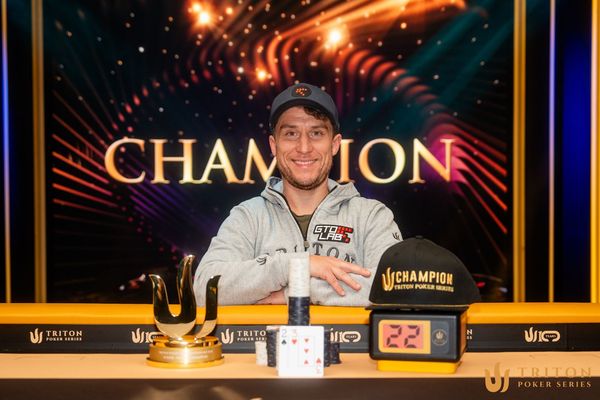
Daniel Dvoress has etched his name into Triton Poker history by becoming the first player to capture the ‘Triton Trident’ — tournament victories across all three major variants offered by the prestigious high roller series. His $849,000 triumph in the $25K Golden Decade no-limit hold’em event at Triton Montenegro marks the completion of a rare trifecta that includes previous wins in pot-limit Omaha and short deck poker.
What Happened
The Golden Decade tournament, celebrating Triton’s 10th anniversary, attracted 146 entries and generated a prize pool of $3.65 million. Dvoress navigated through a stacked field that featured high roller regulars Paul Phua, Samuel Mullur, and Ben Tollerene before facing local hero Dejan Kaladjurdjevic in heads-up play.
The final battle proved surprisingly brief despite deep stacks — over 120 big blinds when heads-up commenced — wrapping up in just 20 minutes. The decisive hand saw Dvoress holding seven-deuce offsuit, poker’s infamous ‘dirty diaper,’ against Kaladjurdjevic’s ace-jack. Dvoress applied relentless pressure throughout the hand, turning a straight while his opponent improved to trip jacks on the river but couldn’t find the fold button.
The Canadian pro now holds Triton victories spanning a $20K short deck event and $50K PLO tournament (both in 2023), plus the $100K short deck championship at Triton Jeju earlier in 2026. That Jeju victory alone netted $1.38 million, contributing to Dvoress’s remarkable 2026 campaign that has already exceeded $3.5 million in tournament earnings.
With over $50 million in lifetime tournament cashes, Dvoress sits comfortably in second place on Canada’s all-time money list, trailing only Daniel Negreanu’s $57.6 million while maintaining a substantial lead over third-place Sam Greenwood’s $39.4 million.
The Poker Strategy Breakdown
The final hand between Dvoress and Kaladjurdjevic offers fascinating insights into high-level tournament poker, particularly the dynamics of heads-up play with deep stacks. While holding seven-deuce offsuit appears like a meme hand, Dvoress’s execution demonstrates sophisticated strategic thinking that transcends starting hand strength.
When you’re playing heads-up with 120+ big blinds, hand ranges widen dramatically compared to full-ring play. Seven-deuce becomes a perfectly playable hand in this context, especially when you’re the aggressor. Dvoress understood that applying pressure throughout the hand — preflop, flop, turn, and river — creates multiple opportunities for opponents to make mistakes.
The key strategic element here involves turn play after Dvoress made his straight. Rather than slow-playing a monster, he continued his aggressive line, which served dual purposes: building the pot with a strong hand while maintaining the credibility of his betting range. This approach prevents observant opponents from exploiting your betting patterns by distinguishing between bluffs and value bets.
Kaladjurdjevic’s river decision illustrates a common tournament trap. After improving to trip jacks on the river, he faced a completed board with straight possibilities. The psychological challenge of folding trips — especially after improving on the final street — creates immense pressure. His decision to move all-in rather than call suggests he may have convinced himself Dvoress was bluffing, a read that proved costly.
This hand exemplifies the importance of board texture awareness and opponent profiling. Against a player of Dvoress’s caliber, who has demonstrated willingness to apply pressure with any two cards, defending with marginal made hands becomes treacherous. The straight possibilities on the board should have triggered alarm bells, but tournament pressure and the desire to win with a home crowd watching likely influenced the decision.
Reading The Field & Table Dynamics
Dvoress’s path to victory required navigating one of poker’s most challenging fields. Triton events consistently attract the world’s elite players, creating an environment where edge comes from razor-thin margins and superior decision-making under pressure.
The presence of players like Paul Phua, Samuel Mullur, and Ben Tollerene at the final table meant Dvoress couldn’t rely on opponents making fundamental errors. Instead, success required exploiting situational advantages, understanding ICM pressure points, and adjusting to individual player tendencies.
Heads-up against Kaladjurdjevic presented unique dynamics. As the local player with hometown support, Kaladjurdjevic likely felt additional pressure to perform, which can lead to either overly cautious play or aggressive hero calls. Dvoress’s aggressive approach tested which direction his opponent would lean, ultimately exploiting a tendency toward the latter.
The quick conclusion to heads-up play — just 20 minutes despite deep stacks — suggests Dvoress identified and exploited specific weaknesses in his opponent’s game. This might have involved recognizing calling patterns, bet-sizing tells, or timing tells that allowed him to apply maximum pressure at optimal moments.
Tournament stage awareness also played a crucial role. With significant pay jumps at the final table, understanding when to accumulate chips versus when to preserve stack becomes critical. Dvoress’s track record suggests he excels at identifying spots where opponents face maximum ICM pressure and leveraging those situations to build his stack.
How To Apply This To Your Game
While most players won’t face $25K buy-in tournaments, the strategic principles from Dvoress’s victory translate directly to games at every level. Here’s how to incorporate these lessons into your poker arsenal:
Embrace aggression in heads-up situations. When playing heads-up or short-handed, your starting hand requirements must adjust dramatically. Hands that seem unplayable in full-ring games become profitable weapons when ranges widen. Practice heads-up play to develop comfort with wider ranges and aggressive betting lines.
Maintain consistent betting patterns. Dvoress’s willingness to apply pressure with seven-deuce demonstrates the importance of balanced ranges. If you only bet aggressively with premium hands, observant opponents will exploit this tendency. Mix in bluffs and semi-bluffs at frequencies that keep opponents guessing.
Study board textures relentlessly. The completed straight possibilities on the final board should have influenced Kaladjurdjevic’s decision. Develop the habit of analyzing how each street affects the range of hands your opponent might hold, and adjust your strategy accordingly.
Recognize when opponents improve to second-best hands. The river jack that gave Kaladjurdjevic trips actually sealed his fate by making his hand too strong to fold but not strong enough to win. Learn to identify when you’ve improved to a hand that’s vulnerable to better holdings, especially against aggressive opponents.
Practice multi-variant poker. Dvoress’s Triton Trident achievement demonstrates mastery across no-limit hold’em, pot-limit Omaha, and short deck. Playing multiple variants improves your overall poker thinking by exposing you to different strategic frameworks and decision-making processes.
Develop tournament-specific skills. Cash game expertise doesn’t automatically translate to tournament success. Study ICM implications, understand how stack sizes relative to blinds affect strategy, and learn to adjust your approach based on tournament stage and payout structures.
Key Takeaways
- Daniel Dvoress completed the ‘Triton Trident’ by winning tournaments in all three major variants (NLH, PLO, short deck), demonstrating exceptional versatility across poker formats
- The final hand showcased advanced heads-up strategy where starting hand strength matters less than aggressive execution and applying consistent pressure
- Deep-stacked heads-up play requires dramatically wider ranges and willingness to contest pots with hands that seem marginal in other contexts
- Board texture awareness and recognizing straight/flush possibilities prevented Dvoress from overvaluing hands while exposing his opponent’s inability to fold improved holdings
- Dvoress’s 2026 campaign has already exceeded $3.5 million in tournament earnings, including victories at EPT Monte Carlo and Triton Jeju within weeks of this triumph
- Multi-variant proficiency strengthens overall poker skills by exposing players to diverse strategic frameworks and decision-making processes
Frequently Asked Questions
What is the Triton Trident and why is it significant?
The Triton Trident refers to winning tournaments in all three major poker variants offered by the Triton Poker Series: no-limit hold’em, pot-limit Omaha, and short deck (also called six-plus hold’em). This achievement is significant because it demonstrates exceptional versatility across different poker formats, each requiring distinct strategic approaches. Daniel Dvoress became the first player to accomplish this feat, with victories spanning from 2023 through 2026.
Why would a professional play seven-deuce offsuit aggressively?
In heads-up situations with deep stacks, starting hand requirements change dramatically compared to full-ring play. Seven-deuce becomes playable because ranges widen significantly when only two players contest the pot. Professional players like Dvoress use aggressive betting lines with weak holdings to maintain balanced ranges — if you only bet aggressively with premium hands, observant opponents will exploit this pattern. The key is applying consistent pressure that creates fold equity while occasionally hitting unexpected hands like the straight Dvoress turned.
How does playing multiple poker variants improve your overall game?
Each poker variant emphasizes different strategic elements. Pot-limit Omaha requires stronger hand reading skills due to four-card starting hands and more complex board textures. Short deck features different hand rankings and equity distributions that demand adjusted strategies. No-limit hold’em emphasizes position and aggression. By mastering multiple variants, players develop more comprehensive poker thinking, improved hand reading abilities, better understanding of equity and pot odds across different scenarios, and enhanced adaptability to changing game dynamics.
Final Thoughts
Daniel Dvoress’s completion of the Triton Trident represents more than just another tournament victory — it’s a testament to the value of versatility in modern poker. As the game continues evolving and players specialize in specific formats, the ability to excel across multiple variants becomes increasingly rare and valuable. Dvoress has proven that mastering diverse strategic frameworks creates a competitive advantage that transcends any single poker discipline.
The final hand against Kaladjurdjevic, while featuring poker’s most notorious starting hand, demonstrates that high-level tournament poker rewards aggressive, balanced play over hand selection alone. The willingness to apply pressure consistently, read board textures accurately, and exploit opponent tendencies separates elite players from merely good ones. These principles apply whether you’re competing for $849,000 at Triton Montenegro or battling for a few hundred dollars at your local card room.
For aspiring tournament players, Dvoress’s 2026 campaign offers a masterclass in sustained excellence. With over $3.5 million in earnings across multiple continents and formats, he’s demonstrated the importance of preparation, adaptability, and mental resilience in navigating the high-variance world of tournament poker. Study hands like these, analyze the strategic decisions behind the headlines, and continuously refine your approach to the game.
Ready to Sharpen Your Poker Game?
Master your poker game with expert hand analysis
