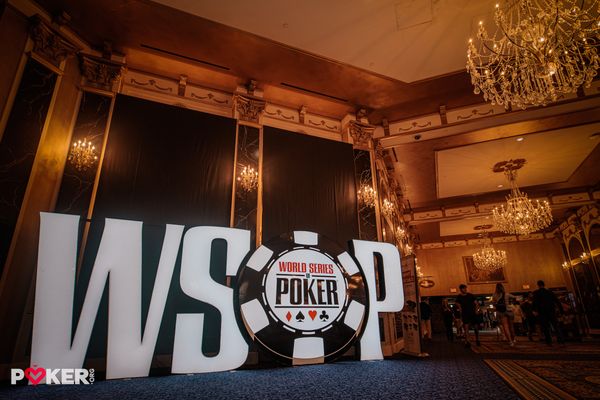
WSOP Patch Ban Sparks Debate Before 2026 Series Begins
The World Series of Poker has ignited a firestorm among professional players after implementing strict new sponsorship patch regulations ahead of the 2026 summer series. High-profile pros including Patrick Leonard are now facing rejection letters for their existing partnerships, forcing difficult decisions about whether to compete at poker’s most prestigious event.
What Happened
Tournament organizers have overhauled Section 52 of the official WSOP rulebook, introducing mandatory pre-approval requirements for any promotional clothing worn at featured tables. Players must now submit sponsorship requests at least 24 hours before appearing on camera, with tournament directors holding the power to disqualify anyone who refuses to remove unapproved branding.
The policy shift represents a dramatic departure from recent years, when WSOP largely adopted a permissive stance toward player sponsorships. That era of tolerance appears to have ended, driven by last year’s ClubWPT Gold marketing controversy and the proliferation of unregulated poker platforms aggressively targeting the American market.
Patrick “Pads” Leonard became the first major casualty of the new regulations when his application to represent CoinPoker was denied. The British pro shared his frustration on social media, where his post garnered over five million impressions and sparked widespread debate about the policy’s fairness and implementation.
“Currently been denied to wear a patch, which I believe can lead to disqualification at the tournament director’s discretion,” Leonard explained. “I imagine, as with a lot of other players, this will complicate things.” He added that while he would respect the decision, he believes such restrictions discourage investment in poker’s ecosystem.
The updated rulebook explicitly prohibits patches promoting enterprises that “abet, assist or promote illegal gambling,” along with content involving false claims, controlled substances, firearms, pornography, or anything deemed potentially harmful to WSOP or Caesars Entertainment’s reputation. CoinPoker operates as a cryptocurrency-based platform that lists the United States among its restricted territories, making the rejection legally defensible under the new framework.
However, inconsistencies in enforcement have emerged. Joey Ingram reported that Americas Cardroom and BetMGM received approval despite their vastly different regulatory statuses. BetMGM operates legally in multiple US states, while ACR remains unregulated domestically, creating confusion about the actual criteria being applied.
Shaun Deeb has been maintaining a running tally of approvals and rejections, confirming that ACR cleared the process while Phenom Poker and ClubWPT Gold joined CoinPoker on the banned list. This selective enforcement raises questions about whether regulation alone determines eligibility or whether commercial relationships and negotiating power play hidden roles.
The Poker Strategy Breakdown
While this controversy appears purely administrative, it actually reveals critical strategic considerations that extend far beyond patch politics. Understanding the business dynamics at play offers valuable lessons for tournament players at every level.
First, consider the timing. ESPN’s return as the WSOP’s broadcast partner after years of streaming-focused coverage fundamentally changes the calculus. Traditional television networks operate under stricter advertising standards than digital platforms, and their legal departments exercise extreme caution regarding anything that might attract regulatory scrutiny. The WSOP isn’t just protecting its brand—it’s protecting a multi-million dollar broadcast deal that depends on maintaining relationships with advertisers who won’t tolerate association with unregulated gambling.
From a player’s strategic perspective, this creates a classic game theory problem. Sponsored pros must now calculate whether the value of their endorsement deals exceeds the expected value of competing in WSOP events. For someone like Leonard, who has accumulated over $20 million in tournament earnings, the mathematics aren’t straightforward.
Consider the variables: annual sponsorship payments, potential WSOP winnings, the promotional value of WSOP exposure for future sponsorships, and the opportunity cost of playing alternative series that don’t restrict patches. A player with a six-figure annual deal from a banned platform might reasonably conclude that skipping the WSOP makes financial sense, especially if they can leverage that decision into additional compensation from their sponsor.
This decision tree becomes even more complex when factoring in the $25,000 Fantasy League that Leonard referenced. Players who get drafted early command premium valuations, but uncertainty about their participation directly impacts their draft stock. The strategic play might involve delaying any final decision until after the draft, maximizing both sponsorship payments and fantasy league value before ultimately choosing which commitment to honor.
The situation also highlights the importance of contract structure in professional poker. Savvy players negotiate sponsorship agreements with contingency clauses for exactly these scenarios—force majeure provisions that protect both parties when external circumstances change the promotional landscape. Those who signed deals without such protections now face potential breach-of-contract exposure if they choose to compete at the WSOP while contractually obligated to wear banned patches.
Reading The Field & Table Dynamics
The patch controversy creates fascinating meta-game implications that will ripple through the entire summer series. Players need to consider how this policy affects field composition, competitive dynamics, and strategic adjustments.
Field composition may shift significantly if multiple high-profile sponsored pros boycott the series. Weaker fields mean higher expected value for players who do compete, creating a prisoner’s dilemma where everyone benefits if sponsored players sit out, but individual players have incentive to defect from any collective action. Watch for subtle negotiations in the coming weeks as players coordinate responses without running afoul of antitrust concerns.
The policy also creates information asymmetries at the tables. Players wearing approved patches signal their sponsorship status, which correlates with skill level and professional commitment. But the absence of patches no longer clearly indicates amateur status—it might simply mean a player chose to compete without their banned sponsor’s branding. This complicates table reads and forces players to rely more heavily on behavioral tells rather than visual shortcuts.
Tournament dynamics could shift in unexpected ways. Sponsored professionals often play more aggressively in televised events because exposure justifies higher variance strategies. If patch restrictions reduce the number of sponsored players at featured tables, we might see more conservative play from amateurs who reach those stages without the same promotional incentives driving aggression.
The ICM implications are subtle but real. Players who boycott the series remove themselves from the prize pool distribution, slightly increasing everyone else’s equity. For players on the bubble of financial viability, this marginal edge might make the difference between a profitable and unprofitable summer.
There’s also a psychological element to consider. Players who comply with the patch ban while feeling resentful about it may experience tilt or reduced focus. Conversely, players who view the restrictions as justified might feel energized by competing in what they perceive as a cleaner, more legitimate environment. These emotional factors influence decision-making quality in ways that are difficult to quantify but undeniably real.
How To Apply This To Your Game
Even if you’re not a sponsored professional facing patch restrictions, this controversy offers valuable lessons applicable to your poker career.
First, always understand the rules before committing resources. Leonard’s situation demonstrates the importance of reading fine print and staying informed about policy changes. Before entering any major series, review the current rulebook rather than assuming last year’s standards still apply. This principle extends to payout structures, late registration periods, and other tournament conditions that directly impact your expected value.
Second, diversify your poker income streams. Professionals who depend entirely on sponsorships from a single platform face catastrophic risk when policies change. Build a portfolio approach that includes tournament winnings, cash game profits, content creation, coaching, and multiple sponsorship relationships. This resilience allows you to weather storms like the current patch controversy without facing existential financial pressure.
Third, negotiate flexibility into your agreements. Whether you’re signing a sponsorship deal, staking arrangement, or coaching contract, include provisions that account for changing circumstances. Force majeure clauses, performance escalators, and mutual termination rights protect both parties when the landscape shifts unexpectedly.
Fourth, consider the meta-game when selecting which tournaments to play. Field composition matters enormously for expected value. If this controversy causes top professionals to skip certain events, those tournaments become more profitable for everyone else. Stay attuned to these dynamics and adjust your schedule accordingly.
Fifth, protect your brand and reputation during controversies. Notice how Leonard framed his response—expressing disagreement while committing to respect the rules. This balanced approach maintains relationships with both his sponsor and the WSOP, preserving future opportunities regardless of how the situation resolves. When you face difficult decisions, communicate thoughtfully rather than burning bridges.
Finally, recognize that poker exists within broader legal and commercial frameworks. The WSOP’s decision reflects legitimate concerns about regulatory compliance and broadcast partnerships. Players who understand these business realities can anticipate policy changes and position themselves advantageously rather than being caught off guard.
Key Takeaways
- The WSOP now requires 24-hour advance approval for all sponsorship patches worn at featured tables, with disqualification possible for non-compliance
- Cryptocurrency platforms like CoinPoker and Phenom Poker face rejection due to US regulatory restrictions, while regulated sites like BetMGM receive approval
- Americas Cardroom’s reported approval despite its unregulated status creates confusion about how the policy is actually being enforced
- ESPN’s return as broadcast partner likely drove the policy change due to stricter television advertising standards
- Sponsored professionals must now calculate whether endorsement deals outweigh the expected value of competing in WSOP events
- The controversy may reduce field strength in certain events, creating higher expected value for players who do compete
Frequently Asked Questions
Why is the WSOP banning certain poker site patches but not others?
The WSOP’s updated rulebook prohibits patches promoting platforms that facilitate illegal gambling in restricted jurisdictions. Cryptocurrency sites like CoinPoker explicitly list the United States as a restricted territory, making them clear violations. Regulated sites like BetMGM operate legally in multiple US states and therefore receive approval. The confusion arises with platforms like Americas Cardroom, which reportedly received approval despite not being regulated in the US, suggesting additional factors beyond pure regulatory status may influence decisions.
Can the WSOP legally enforce these patch restrictions?
Yes. The WSOP operates as a private business on private property (Caesars Entertainment venues), giving them broad authority to set conditions for participation. Players voluntarily agree to the official rules when they register for events, creating a binding contract. While players may disagree with the policy, they have limited legal recourse beyond choosing not to participate. The WSOP’s terms of service explicitly grant tournament directors discretion to enforce dress code and promotional material standards.
How should sponsored players decide whether to compete at the WSOP under these restrictions?
Players should conduct a comprehensive expected value analysis comparing their annual sponsorship compensation against potential WSOP winnings, considering factors like their skill edge in the field, the promotional value of WSOP exposure for future deals, and contractual obligations to their current sponsors. Players with six-figure annual deals from banned platforms may find that honoring those commitments generates more value than competing, especially if their sponsor compensates them for the missed opportunity. Those with smaller deals or multiple sponsorships have more flexibility to comply with WSOP restrictions without significant financial impact.
Final Thoughts
The patch controversy represents far more than a simple dress code dispute—it’s a fundamental clash between poker’s entrepreneurial spirit and the regulatory realities of operating a major gambling event in the United States. As the WSOP navigates its renewed partnership with ESPN and the increasingly complex landscape of online poker regulation, players caught in the middle must make difficult strategic decisions that will shape their careers and the broader poker ecosystem.
What makes this situation particularly challenging is the lack of clear, consistent criteria for approval. If the WSOP aims to exclude only platforms that violate US law, the policy should be straightforward. But the reported approval of Americas Cardroom alongside the rejection of similar unregulated platforms suggests that commercial relationships and negotiating leverage may play unacknowledged roles. This opacity forces players to navigate uncertainty when making decisions that carry significant financial consequences.
Ultimately, this controversy will likely accelerate trends already underway in professional poker. Expect to see more sophisticated sponsorship contracts with contingency provisions, greater diversification of income streams among top players, and potentially the emergence of alternative summer series that compete directly with the WSOP by offering more sponsor-friendly policies. The players who thrive will be those who adapt quickly, negotiate effectively, and maintain the strategic flexibility to capitalize on whatever landscape emerges from this dispute.
Ready to Sharpen Your Poker Game?
Master your poker game with expert hand analysis