Stephen Chidwick’s Mindset Shift: From Leaderboards to Inner Game
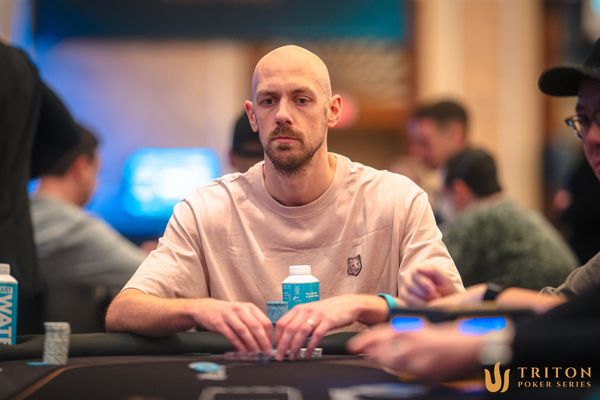
Stephen Chidwick, poker’s second-highest earner with nearly $79 million in tournament cashes, has deliberately stopped obsessing over his position on the all-time money list. The elite high roller’s transformation from external validation to internal motivation reveals a crucial lesson about sustainable excellence in professional poker.
What Happened
In a candid conversation ahead of the 2026 World Series of Poker, Chidwick opened up about his evolving relationship with competitive achievement. Despite sitting comfortably in second place on poker’s all-time earnings leaderboard with $78,718,448, the British pro admitted he’s intentionally distanced himself from tracking his ranking.
“I used to care a lot,” Chidwick explained. “I kind of needed a goal to care less. And that’s what I have achieved to some extent.” This represents a significant philosophical shift for a player who’s built one of the most consistent records in high-stakes tournament poker. Rather than chasing numbers and accolades, Chidwick now focuses on non-external motivators—a transition that’s actually strengthened his mental game.
The timing of this revelation is particularly interesting. Chidwick plans to enter the 2026 WSOP after a grueling month of super high roller events in Monaco and Montenegro, approaching the series with a markedly different attitude than many of his competitors. “I’ll try to play when I feel like it at the WSOP and not put too much pressure on myself,” he noted, highlighting his preference for big buy-in PLO events like the $100K PLO over the traditional grind.
The Poker Strategy Breakdown
Chidwick’s approach to preparation offers a masterclass in modern poker study methodology. As a co-founder of Octopi Poker, he’s leveraged technology to optimize his training regimen, but not in the way many recreational players might expect. His focus isn’t on memorizing charts or running endless simulations—it’s about developing intuitive understanding through deliberate practice.
“The Trainer lets me play a lot of hands against the AI and look into various spots when I do something wrong,” Chidwick shared. “It helps me figure out the why and deepen my understanding overall.” This emphasis on understanding the reasoning behind optimal plays, rather than simply knowing what those plays are, separates elite players from competent ones.
The key distinction in Chidwick’s study method is the real-time feedback loop. He’s not reviewing sessions days later when memory has faded—he’s getting immediate correction on mistakes, allowing him to internalize concepts faster. This approach mirrors how high-level athletes train: repetition with instant feedback creates neural pathways that lead to automatic correct decision-making under pressure.
His preference for PLO tournaments also reveals strategic thinking beyond pure expected value calculations. PLO fields tend to be softer relative to buy-in levels compared to No-Limit Hold’em events, where solver knowledge has become more democratized. By gravitating toward game variants where edge remains substantial, Chidwick maximizes his competitive advantage while maintaining enjoyment—a sustainable combination for long-term success.
The breathing exercises and meditation practice Chidwick employs before sessions aren’t just wellness trends—they’re performance optimization tools. Variance in poker creates emotional turbulence that clouds judgment. By training his mind to observe thoughts without attachment, he’s building the mental resilience required to make optimal decisions regardless of recent results. This is perhaps the most underrated skill in professional poker.
Reading The Field & Table Dynamics
Chidwick’s decision to deprioritize the all-time money list reflects a sophisticated understanding of what actually matters in tournament poker. The leaderboard is a lagging indicator—it tells you where you’ve been, not where you’re going. More importantly, fixating on it creates perverse incentives that can damage your decision-making process.
Consider the mental trap: if you’re constantly aware of your ranking, you might enter marginal tournaments just to accumulate cashes, playing suboptimal schedules that increase variance and reduce hourly rate. You might also make ICM mistakes near final tables, playing too conservatively to lock up a min-cash that boosts your total rather than maximizing expected value through aggressive play.
By contrast, focusing on process over results—what Chidwick calls “non-external things”—keeps your decision-making pure. You play tournaments where you have genuine edge, make theoretically sound plays regardless of short-term outcomes, and maintain the mental clarity required for peak performance. Ironically, this approach likely leads to better results on the very leaderboard you’ve stopped watching.
His willingness to play “when I feel like it” at the WSOP also demonstrates advanced self-awareness about performance states. Many professionals force themselves through grueling schedules when mentally depleted, making costly mistakes that erase weeks of profit. Chidwick’s approach acknowledges that poker isn’t a regular job—your edge exists only when you’re performing at your best. Playing tired or unmotivated is burning money.
The introspective practices Chidwick maintains—breath work, meditation, journaling, working with performance coaches—all serve the same purpose: maintaining awareness of his mental state. In poker, self-deception is expensive. Players who can’t honestly assess when they’re tilted, fatigued, or emotionally compromised will inevitably make mistakes. The ability to recognize these states and adjust accordingly is what separates sustainable winners from those who experience boom-bust cycles.
How To Apply This To Your Game
The most immediate application for players at any level is reframing how you measure success. If you’re tracking only results—profit, tournament cashes, leaderboard position—you’re measuring the wrong things. These outcomes are heavily influenced by variance, especially in the short and medium term. Instead, focus on process metrics: study hours logged, number of hands reviewed, consistency of meditation practice, quality of sleep before sessions.
Implement a pre-session routine similar to Chidwick’s breathing exercises. This doesn’t need to be elaborate—even five minutes of focused breathing can significantly improve your mental clarity and emotional regulation. The goal is creating a ritual that signals to your brain it’s time to perform, while also establishing a baseline calm state that you can return to when variance strikes.
Adopt the real-time feedback approach to study. Whether you’re using training software like Octopi or reviewing your own hands, don’t just note what the correct play was—dig into why it’s correct. What assumptions does this play make about opponent ranges? How does it change on different runouts? What exploitative adjustments might be better against specific opponent types? Deep understanding trumps surface-level memorization.
Be ruthlessly honest about game selection and your mental state. Chidwick plays PLO high rollers because he enjoys them and has edge, and he plays WSOP events when he feels like it. You should apply the same principles at your stakes. Don’t force yourself into games where you’re uncomfortable or outmatched. Don’t grind when you’re tired, tilted, or distracted. Your edge only exists when you’re playing well.
Finally, develop introspective practices that work for you. Chidwick emphasizes that different approaches work for different people—meditation, journaling, coaching, or other methods. The specific practice matters less than the consistency and the goal: developing awareness of your thoughts, emotions, and mental patterns. This self-knowledge is the foundation of emotional control, which is the foundation of optimal decision-making.
Key Takeaways
- External validation creates mental traps: Obsessing over rankings and leaderboards can lead to suboptimal decisions driven by ego rather than EV maximization.
- Process over results: Focus on controllable inputs like study quality, mental preparation, and game selection rather than variance-heavy outcomes.
- Understanding beats memorization: Deep comprehension of why certain plays are optimal creates intuitive decision-making that adapts to novel situations.
- Mental state determines edge: Your skill advantage only exists when you’re performing at your best—playing while tired, tilted, or unmotivated is burning money.
- Introspective practices are performance tools: Meditation, breath work, and journaling aren’t just wellness trends—they’re competitive advantages that improve emotional regulation and decision quality.
- Sustainable excellence requires enjoyment: Chidwick gravitates toward PLO events he enjoys, recognizing that long-term success requires genuine engagement with the game.
Frequently Asked Questions
How can I stop caring about short-term results in poker?
Shift your focus from outcome-based metrics to process-based metrics. Track study hours, hand review quality, pre-session preparation consistency, and decision-making quality rather than profit or tournament cashes. Results are heavily influenced by variance, especially short-term, but your process is entirely within your control. Celebrate making theoretically correct plays regardless of outcomes, and trust that good processes lead to good results over sufficient sample sizes.
What’s the best way to start a meditation practice for poker?
Start small—even five minutes before sessions makes a difference. Sit comfortably, close your eyes, and focus on your breath. When thoughts arise (and they will), simply notice them without judgment, label them if helpful (“worrying,” “planning,” “remembering”), and return attention to your breath. The goal isn’t to stop thinking—it’s to develop awareness of your thoughts without being controlled by them. This skill directly translates to observing tilt or emotional reactions at the table without letting them influence your decisions.
Should I focus on PLO like Chidwick or stick with No-Limit Hold’em?
Choose the game variant where you have the most edge and genuine enjoyment. Chidwick plays PLO high rollers because fields are softer relative to buy-ins and he finds them engaging. For most players, No-Limit Hold’em offers more game availability and established learning resources. The key lesson isn’t the specific game—it’s playing formats where your skill advantage is maximized and your engagement is sustainable. Don’t chase what pros play; optimize for your own situation and preferences.
Final Thoughts
Stephen Chidwick’s evolution from leaderboard chaser to internally motivated competitor represents poker maturity at its finest. His journey illustrates a paradox that applies across competitive domains: the less you fixate on external validation, the better your actual performance becomes. By releasing attachment to rankings and results, you free yourself to make optimal decisions unclouded by ego or fear.
The practical tools Chidwick employs—meditation, breath work, deliberate study with immediate feedback, honest self-assessment about mental state—are accessible to players at every level. You don’t need to be competing in $100K PLO events to benefit from pre-session breathing exercises or from understanding the why behind optimal plays rather than just memorizing them. These practices compound over time, building the mental resilience and strategic depth that separate consistent winners from the field.
As the poker landscape continues evolving with solver access democratizing technical knowledge, the mental game becomes increasingly important as a differentiator. Players who develop Chidwick’s level of self-awareness and emotional regulation will have sustainable edges regardless of how widely strategic information spreads. The question isn’t whether you know the right play—it’s whether you can execute it consistently under pressure, after bad beats, during downswings, when tired or stressed. That’s where the real money is made.
Ready to Sharpen Your Poker Game?
Master your poker game with expert hand analysis