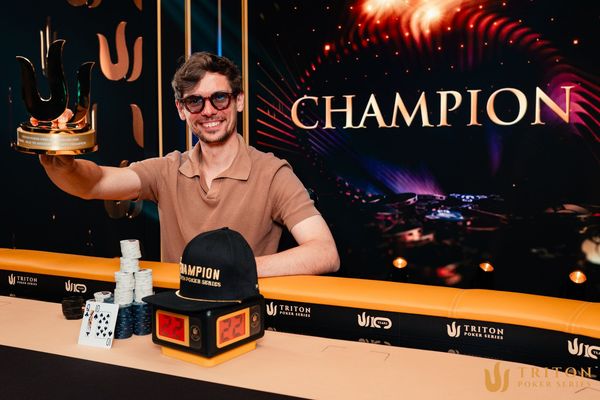
Fedor Holz Conquers Triton Montenegro Mystery Bounty
Fedor Holz proved he’s still a force in high-stakes poker by capturing his fifth Triton Poker Series title in Montenegro, banking over $528,000 in the $40,000 Mystery Bounty event. The German legend battled through 111 entries and collected 11 bounties en route to victory, demonstrating that even in semi-retirement, he remains one of the game’s elite competitors.
What Happened
The $40,000 Mystery Bounty tournament at Triton Montenegro attracted 111 players, generating a prize pool of $2,220,000. Holz navigated a star-studded field that included some of poker’s most accomplished high rollers to claim the top prize of $528,811, plus an undisclosed amount from his 11 mystery bounties—each worth a minimum of $40,000.
This victory marks Holz’s 22nd recorded tournament win according to The Hendon Mob, pushing his career earnings past the $50.5 million mark. More significantly, it’s his first Triton title since 2024 and comes exactly a decade after he won the inaugural Triton event in the Philippines back in 2016—a $200,000 high roller where he defeated legends like Steve O’Dwyer and Phil Ivey.
The final table featured an intimidating lineup of high-stakes regulars: Aleksejs Ponakovs, Nick Petrangelo, Leonard Maue, Mike Watson, Jean-Noel Thorel, Mikhail Soltanov, and Orpen Kisacikoglu. Holz entered Day 2 in second position behind fellow German Leonard Maue, and both players maintained their momentum through to the final table.
Maue held the chip lead entering seven-handed play, but his stack gradually deteriorated before Holz eliminated him in fourth place. Meanwhile, Ponakovs steadily accumulated chips from his short-stacked position. After Nick Petrangelo’s third-place exit, heads-up play began with Holz commanding a massive advantage—145 big blinds versus Ponakovs’ 32.
The two players negotiated a deal and set aside money to compete for the trophy. What seemed destined to be a quick conclusion turned into a dramatic comeback attempt. Ponakovs rattled off 13 consecutive hands to seize the lead in an unlikely reversal. Both players then traded all-in double-ups before Holz regained control. The tournament concluded when Ponakovs attempted a bluff with Holz holding pocket queens, securing the German’s fifth Triton crown.
The Poker Strategy Breakdown
Mystery Bounty tournaments require a fundamentally different strategic approach than traditional freezeout events. Every elimination carries significant value beyond standard ICM considerations, creating unique pressure points that skilled players like Holz exploit masterfully.
The format incentivizes aggression, particularly when covering opponents. With each bounty worth a minimum of $40,000 in this event—matching the buy-in—players face mathematical imperatives to apply pressure when they have chips. Holz’s 11 bounty collections weren’t accidental; they reflect a deliberate strategy of targeting elimination spots and maximizing fold equity against vulnerable stacks.
At the final table, Holz demonstrated textbook big-stack play. When Maue’s chip lead evaporated, Holz capitalized by applying relentless pressure, eventually securing the knockout in fourth place. This aggressive approach serves dual purposes: accumulating chips while collecting bounties that can exceed the traditional prize pool payouts.
The heads-up battle showcased advanced tournament poker dynamics. Despite starting with a 4.5-to-1 chip advantage, Holz agreed to a deal—a pragmatic decision that locked in value while still leaving significant money to compete for. When Ponakovs mounted his 13-hand comeback, Holz didn’t panic or deviate from fundamentally sound play. He maintained discipline, waited for advantageous spots, and eventually regained control.
The final hand exemplifies championship-level decision-making. Facing a bluff from Ponakovs, Holz made a disciplined call with pocket queens. In heads-up play with shallow effective stacks, calling down with medium-strength hands becomes crucial. Holz’s willingness to trust his read and make the call demonstrates the experience and confidence that separates elite players from the field.
Reading The Field & Table Dynamics
The Triton series attracts the world’s best high-stakes players, creating a uniquely challenging competitive environment. Unlike softer fields where technical edges are massive, Triton events require players to exploit marginal advantages and capitalize on every mistake.
Holz’s path to victory involved navigating opponents with combined lifetime earnings exceeding $150 million. Aleksejs Ponakovs, his heads-up opponent, has banked nearly $38 million in tournament earnings. Nick Petrangelo, Mike Watson, and Jean-Noel Thorel are all accomplished high-stakes regulars with extensive experience in these formats.
In such elite fields, table dynamics become paramount. Holz’s ability to identify when Maue’s chip lead was vulnerable, when to apply pressure, and when to exercise patience separated him from the competition. The Mystery Bounty format adds complexity—players must balance traditional ICM considerations with bounty value, creating spots where aggressive plays become mathematically justified even with marginal holdings.
The heads-up comeback attempt by Ponakovs illustrates the variance inherent in short-handed play. Winning 13 consecutive hands represents a statistical anomaly, but Holz’s response demonstrates championship mentality. Rather than tilting or making desperate plays to reclaim the lead, he maintained his composure and waited for the cards to normalize.
This patience reflects deep understanding of tournament poker fundamentals. With money already locked up from the deal, Holz could afford to play optimally without the pressure of needing to gamble. When the opportunity arose, he made the call that ended the tournament, demonstrating that even against world-class competition, disciplined play ultimately prevails.
How To Apply This To Your Game
While most players won’t compete in $40,000 buy-in events, the strategic principles Holz employed translate directly to tournaments at every stake level. Understanding and implementing these concepts can significantly improve your results.
First, recognize that Mystery Bounty tournaments require adjusted ranges and increased aggression. When you cover an opponent, the bounty value adds immediate equity to every elimination scenario. This means you can profitably call all-ins and apply pressure with wider ranges than in traditional tournaments. Calculate the bounty value as part of your pot odds—it often justifies calls that would be clear folds in standard formats.
Second, practice disciplined big-stack play. When you accumulate chips, use them as a weapon to apply pressure to medium and short stacks. Don’t become passive or try to coast to pay jumps. Holz’s aggressive approach at the final table, particularly his elimination of Maue, exemplifies how chip leaders should leverage their advantage.
Third, develop emotional resilience for variance swings. Ponakovs’ 13-hand comeback would tilt many players, but Holz maintained composure. In your own games, when you suffer bad beats or lose the lead, resist the urge to force action. Trust your process, stick to fundamentally sound strategy, and let the cards normalize over time.
Fourth, don’t underestimate the value of deals in tournament poker. Holz’s willingness to negotiate heads-up demonstrates pragmatism over ego. When ICM pressure is significant, locking in value while leaving money to play for creates a lower-stress environment where you can play your best poker. This is especially relevant in top-heavy payout structures where variance can swing six or seven figures.
Finally, work on your calling ranges in crucial spots. The final hand where Holz called with pocket queens represents a skill that separates good players from great ones. Many players over-fold in these situations, allowing opponents to bluff too profitably. Study your opponent’s ranges, trust your reads, and make disciplined calls when the math and situation justify it.
Key Takeaways
- Fedor Holz claimed his fifth Triton title and 22nd overall tournament victory, earning $528,811 plus 11 mystery bounties worth at least $40,000 each
- Mystery Bounty formats require adjusted strategy with increased aggression due to the additional value of eliminating opponents
- Big-stack play should be aggressive and relentless, using chips to pressure opponents and accumulate more chips plus bounties
- Emotional control during variance swings is crucial—Holz maintained composure despite Ponakovs winning 13 consecutive heads-up hands
- Deal-making demonstrates pragmatism and can reduce ICM pressure while still leaving significant money to compete for
- Disciplined calling in crucial spots, like Holz’s final hand with pocket queens, separates elite players from the field
Frequently Asked Questions
How do Mystery Bounty tournaments differ strategically from regular tournaments?
Mystery Bounty tournaments add significant value to every elimination beyond standard prize pool considerations. Each bounty you collect has monetary value, which means you should play more aggressively when covering opponents and widen your calling ranges in elimination spots. The bounty value effectively increases your pot odds, making marginal calls and aggressive plays more profitable than in traditional formats.
Why would Holz make a heads-up deal with such a massive chip lead?
Despite holding a 4.5-to-1 chip advantage, making a deal was strategically sound. Heads-up play involves significant variance, and locking in guaranteed money reduces ICM pressure while still leaving funds to compete for. This allows both players to focus on playing optimally without the stress of massive pay jumps, often resulting in better poker and a more enjoyable experience.
What can recreational players learn from Holz’s victory?
Recreational players can apply several key concepts: adjust your strategy for bounty value in Mystery Bounty events, use big stacks aggressively rather than playing passively, maintain emotional control during variance swings, consider deals when ICM pressure is significant, and develop disciplined calling ranges in crucial spots. These principles work at every stake level, not just high-roller events.
Final Thoughts
Fedor Holz’s victory at Triton Montenegro demonstrates that world-class poker skill doesn’t diminish with reduced playing volume. Despite semi-retiring to focus on family and other interests, Holz continues to prove he can compete with—and defeat—the best players in the world when he chooses to sit down at the felt.
His fifth Triton title, coming exactly a decade after his first, represents more than just another trophy. It validates his approach to poker as a semi-retired professional, showing that selective tournament entries in premium events can still yield significant results. For aspiring players, this offers an important lesson: you don’t need to grind constantly to maintain elite-level skills. Quality practice, game selection, and fundamental mastery can sustain your edge even with limited playing time.
The strategic concepts displayed throughout this tournament—aggressive bounty hunting, disciplined big-stack play, emotional resilience, and sound decision-making in crucial spots—form the foundation of successful tournament poker. Whether you’re playing $40,000 high rollers or $40 local tournaments, these principles remain constant. Study hands like these, analyze the decision-making processes of elite players, and incorporate these lessons into your own game to accelerate your development and improve your results.
Ready to Sharpen Your Poker Game?
Master your poker game with expert hand analysis