

Alex Foxen Advances as Negreanu Suffers Brutal Beat at WSOP
Alex Foxen battled through to the WSOP $25K Heads-Up Championship semifinals while Daniel Negreanu and Michael Mizrachi crashed out in dramatic fashion. The Round of 16 delivered crushing bad beats, epic comebacks, and high-level strategic warfare as 128 hopefuls whittled down to just four contenders.
What Happened
The $25K Heads-Up Championship entered its second day with 16 survivors from the original 128-player field, all redrawn into fresh bracket positions. The tournament structure called for two complete rounds on Sunday, leaving four players to battle for the title on Monday.
Daniel Negreanu faced Biao Ding in what appeared to be a favorable draw, with a potential path to face Michael Mizrachi in the semifinals and Alex Foxen in a dream final. The match started poorly for Negreanu, who couldn’t find a pot for the first 15 minutes of play. Phil Hellmuth provided comic relief with an impromptu appearance, filming on his phone while praising “the great Daniel Negreanu” before awkwardly acknowledging Ding and making a swift exit.
Michael Mizrachi became the day’s first casualty when Ryuta Nakai’s pocket nines held up against mistimed aggression from The Grinder. With starting stacks of 1.2 million chips—a healthy 200 big blinds—matches progressed slowly, with only two completed after 150 minutes of play.
The elimination pace accelerated as Nikita Kuznetsov crushed Justin Saliba with set-over-set, while Alex Foxen dispatched Brandon Wilson. Thomas Boivin secured his quarterfinal spot by defeating Barak Wisbrod, setting up a heavyweight clash with Foxen.
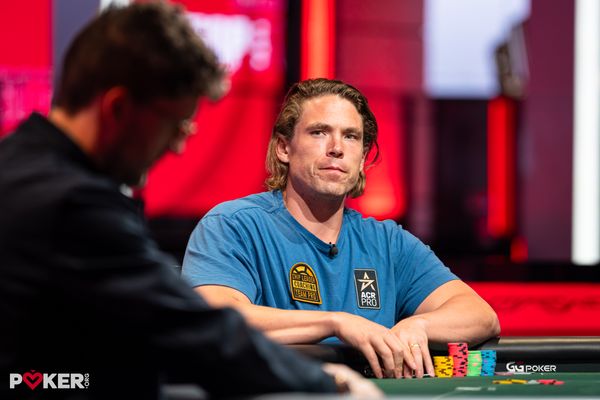
Negreanu appeared destined for the quarterfinals after building a commanding 10:1 chip advantage over Ding. However, he lost two consecutive all-ins, then suffered a devastating river beat when Ding’s ace-king cracked his pocket kings by hitting a three-outer on the final street. “I can’t f***ing take it anymore,” Negreanu lamented. Ding completed the comeback shortly after, eliminating one of poker’s biggest names.
The quarterfinals featured Biao Ding versus Dimitar Danchev, Cary Katz against Ryuta Nakai, Henri Puustinen facing Nikita Kuznetsov, and the marquee matchup of Thomas Boivin versus Alex Foxen.
The Boivin-Foxen battle delivered high-level poker, with Boivin striking first by turning a flush and forcing Foxen to fold top pair on the river. Boivin established a 2:1 chip lead, but Foxen fought back. In a critical hand, Foxen triple-barreled a king-high board, but Boivin correctly called with ace-high to extend his advantage to 3.5 million versus 1.3 million.
Henri Puustinen’s aggressive betting style backfired when he rivered a flush against Kuznetsov’s rivered full house. Despite making a disciplined fold to Kuznetsov’s shove, Puustinen faced a nearly 4:1 chip deficit and soon exited. Ding’s quarterfinal run ended when his flopped set of tens ran into Danchev’s rivered flush, leaving him with just three big blinds and no miracle comeback remaining.
The Poker Strategy Breakdown
The deep-stacked nature of this heads-up championship—200 big blinds to start Day 2—fundamentally altered optimal strategy compared to typical tournament scenarios. With this much play available, patience becomes paramount, and marginal edges that you’d snap-call in shorter-stacked situations require more careful consideration.
Negreanu’s collapse from a 10:1 chip lead illustrates a critical heads-up concept: chip leads are far more fragile in heads-up play than in full-ring tournaments. In a standard tournament with 10 big blinds, a 10:1 chip advantage is virtually insurmountable. In heads-up with deep stacks, you’re never more than two or three hands away from even money. This dynamic demands that big stacks avoid unnecessary gambles, even with premium hands, when the alternative is grinding down opponents with positional and skill advantages.
The Boivin-Foxen match showcased elite-level hand reading and bet sizing strategy. When Foxen triple-barreled with king-high on a king-high board, he was representing a narrow value range—likely kings or better. Boivin’s call with ace-high demonstrates advanced opponent profiling: he recognized that Foxen’s specific bet sizing and timing indicated a bluff more often than a value hand. This wasn’t a standard hero call; it was the result of accumulated information from previous hands and deep familiarity with Foxen’s tendencies.
Puustinen’s aggressive style with oversized bets—240K into a 160K pot—represents a valid heads-up approach designed to apply maximum pressure. However, this strategy becomes exploitable against observant opponents who recognize the pattern. When Kuznetsov rivered the full house against Puustinen’s rivered flush, the pot geometry had been established by Puustinen’s earlier aggression, creating a situation where his strong hand became virtually unplayable. This highlights the double-edged nature of hyper-aggressive heads-up play: it wins small pots efficiently but creates massive reverse implied odds situations.
The set-over-set situation between Kuznetsov and Saliba demonstrates why middle sets are so dangerous in heads-up play. Unlike full-ring games where set-over-set is relatively rare, heads-up ranges are so wide that when your opponent shows significant strength, you must consider that they could have any pocket pair. The key is recognizing when action escalates beyond what your hand can credibly beat and finding disciplined folds even with strong holdings.
Reading The Field & Table Dynamics
Heads-up poker strips away the complexities of multi-way pots and ICM considerations, leaving pure player-versus-player warfare. Success depends entirely on your ability to adjust to your specific opponent’s tendencies faster than they adjust to yours. This tournament format rewards versatile players who can shift gears between tight-aggressive, loose-aggressive, and exploitative styles.
Negreanu’s slow start against Ding—failing to win a pot for 15 minutes—isn’t necessarily indicative of poor play. In deep-stacked heads-up, you can afford to fold marginal spots early while gathering information about your opponent’s frequencies. However, the psychological impact of extended cold streaks can’t be ignored. Momentum matters in heads-up play, and once an opponent senses weakness or frustration, they’ll apply relentless pressure.
The bracket format introduces unique strategic considerations absent from traditional tournament structures. Players could scout upcoming opponents, watching their matches to identify exploitable patterns. Boivin clearly studied Foxen’s game, demonstrating precise hand-reading that suggested deep familiarity with his opponent’s style. This preparation element rewards players who invest time in opponent research rather than relying solely on in-the-moment adjustments.
Physical and mental endurance become critical factors in multi-round heads-up tournaments. With matches lasting 150+ minutes and multiple rounds scheduled in a single day, stamina management is crucial. Players who maintain focus and decision quality deep into lengthy matches gain significant edges over opponents experiencing mental fatigue. Foxen’s ability to find crucial doubles after falling behind Boivin demonstrates the championship-level mental resilience required at this level.
The deep stacks also create interesting bet sizing dynamics. Players can use unconventional sizes to throw opponents off balance without risking tournament life. Puustinen’s oversized bets exemplify this approach—they’re designed to create uncomfortable decisions and force opponents into guessing games. However, as we saw, this strategy requires careful calibration based on opponent type and board texture.
How To Apply This To Your Game
The most important lesson from these matches is understanding when to protect chip leads versus when to press advantages. If you find yourself with a significant heads-up chip lead, resist the temptation to gamble in marginal spots. Your edge comes from forcing your opponent to make difficult decisions across hundreds of hands, not from winning one massive pot. Negreanu’s collapse demonstrates what happens when you allow short-stacked opponents to realize their equity in high-variance situations.
Develop a systematic approach to bet sizing that balances deception with value extraction. Boivin’s success against Foxen stemmed partly from his ability to make Foxen’s bluffs unprofitable through well-timed calls, while also extracting maximum value with his strong hands. Practice using consistent sizing across your range in similar situations, then occasionally deviate to exploit specific opponent tendencies you’ve identified.
When playing deep-stacked heads-up, prioritize position even more than usual. The button advantage compounds over time, and with 200 big blinds, you can apply sustained pressure across multiple streets. Focus on winning small pots from position rather than creating massive confrontations out of position. This approach steadily accumulates chips while minimizing variance.
Study your opponents’ bet sizing tells. Many players unconsciously use different sizes with strong hands versus bluffs, or they adjust their timing based on hand strength. Boivin’s hero call against Foxen likely resulted from identifying such a pattern. Start tracking whether opponents use different sizes in similar spots, and look for correlations with hand strength.
Practice finding disciplined folds with strong hands when action escalates beyond reasonable levels. Puustinen’s fold with a rivered flush, though painful, saved his tournament life temporarily. In heads-up play, you’ll have another hand in 30 seconds—there’s no need to go broke in one pot unless you’re confident you have the best hand. Develop the mental fortitude to fold strong holdings when your opponent’s line represents an even stronger range.
Key Takeaways
- Chip leads are far more fragile in deep-stacked heads-up play than in standard tournaments—a 10:1 advantage can evaporate in two or three hands, so protect leads by avoiding unnecessary gambles
- Bet sizing strategy becomes crucial with deep stacks; oversized bets apply pressure but create reverse implied odds situations when opponents wake up with strong hands
- Advanced hand reading and opponent profiling enable hero calls like Boivin’s ace-high call against Foxen—accumulate information throughout matches to make these high-level plays
- Mental and physical endurance matter significantly in multi-round heads-up tournaments; maintaining decision quality over 150+ minute matches separates elite players from the field
- The bracket format rewards preparation and opponent research; studying potential future opponents’ tendencies provides exploitable information
- Position advantage compounds dramatically with 200 big blind stacks; prioritize winning small pots from the button rather than creating massive out-of-position confrontations
Frequently Asked Questions
Why are deep-stacked heads-up tournaments so different from standard tournament play?
Deep stacks fundamentally change the risk-reward calculations in heads-up play. With 200 big blinds, you have room to outplay opponents across multiple streets, making skill edges more pronounced. However, this also means chip leads are more fragile since opponents can mount comebacks more easily. The optimal strategy shifts from survival-focused play to maximizing edge through superior hand reading and positional warfare.
How should you adjust your strategy when holding a massive chip lead heads-up?
With a commanding chip lead, avoid unnecessary high-variance situations unless you have a clear equity advantage. Your edge comes from forcing opponents into difficult decisions across many hands, not from gambling in marginal spots. Apply consistent pressure with position and bet sizing, but don’t risk your entire advantage in one pot with hands that are strong but not premium. Grind down your opponent rather than trying to end the match immediately.
What’s the most important skill for heads-up tournament success?
Adaptability is paramount in heads-up play. You must quickly identify your opponent’s tendencies—whether they’re overly aggressive, too passive, or playing balanced—and adjust your strategy accordingly. The player who adapts faster typically wins. This requires strong hand-reading skills, pattern recognition, and the discipline to execute your adjusted strategy consistently even when facing short-term variance.
Final Thoughts
The WSOP $25K Heads-Up Championship delivered exactly the kind of high-stakes drama that makes this format so compelling. Negreanu’s brutal beat and subsequent elimination reminded us that in poker, no lead is safe until the final chip crosses the line. Meanwhile, players like Foxen and Boivin demonstrated the elite-level adjustments and mental fortitude required to succeed in extended heads-up battles.
The strategic lessons from these matches apply directly to any heads-up situation you’ll face, whether in tournament play, cash games, or even the final two players in your home game. Understanding when to protect advantages, how to exploit opponent tendencies, and maintaining discipline through variance are universal skills that separate winning players from the rest of the field.
As the tournament progresses to the semifinals, the remaining four players will need to elevate their games even further. With this much money on the line and opponents of this caliber, every decision matters, and the margins between victory and elimination grow razor-thin. Study these hands, internalize the strategic concepts, and apply them to your own game—that’s how you transform from a recreational player into a serious competitor.
Ready to Sharpen Your Poker Game?
Master your poker game with expert hand analysis
