

Michael Mizrachi Tops $10K Stud Final Table Chip Counts
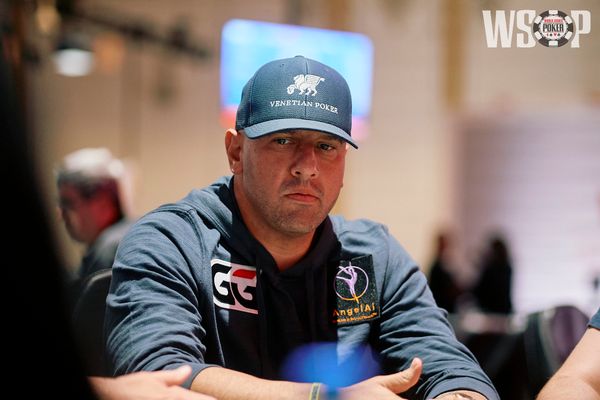
Michael Mizrachi has seized control of the $10K Seven Card Stud Championship, bagging the chip lead as eleven players remain in contention. Meanwhile, Japan’s Naoya Kihara sits fifth in chips with a chance to capture his second bracelet in as many weeks, having broken a 14-year WSOP drought just days ago.
What Happened
Day 2 of the $10K Seven Card Stud Championship delivered the kind of drama that only mixed games can produce. The field condensed from 20 players down to the final 11, with Mizrachi executing a masterful late-day surge to claim the overnight chip lead at 1.4 million.
The Grinder’s timing couldn’t be better. Fresh off his historic 2025 campaign that saw him capture both the WSOP Main Event and Poker Players Championship titles, Mizrachi is hunting his ninth career bracelet. His stack gives him roughly 20% of the chips in play heading into Sunday’s finale.
Chris Brewer sits close behind in second position with 1.3 million, while UK’s Qibang Cheung rounds out the top three with 1.2 million. Ryan Miller occupies fourth place with 845,000 chips.
Kihara’s tournament took an interesting arc. After dominating much of the middle portion of Day 2—at one point holding nearly double the stack of fourth-placed Ryutaro Suzuki—he cooled off as the field thinned. He’ll restart Sunday tied for fifth with Jeremy Ausmus, each holding 702,000 chips.
The always-vocal Allen Kessler demonstrated why he’s earned his reputation as one of poker’s grinders, nursing a short stack for most of the day before bagging 582,000 in seventh position. Maksim Pisarenko sits eighth with 499,000.
The bottom three stacks face steeper climbs. Daniel Sepiol holds 187,000 in ninth, Brad Ruben has 132,000 in tenth, and Jason Kluska will need to mount a serious comeback from his 59,000-chip stack.
Notable eliminations included Paul Volpe in 14th and old-school legend Eli Elezra in 13th, the latter showing his class by wishing the table good luck despite his frustration at missing on seventh street. Patrick Leonard, the highest-owned player in ODB Fantasy, busted in 12th. Robert Mizrachi became the first player to cash, finishing 20th while his brother Michael continued his run.
The Poker Strategy Breakdown
Seven Card Stud presents fundamentally different strategic challenges than the hold’em and PLO variants that dominate modern poker. With no community cards and up to four exposed cards per player, information management becomes paramount.
Mizrachi’s late surge exemplifies expert Stud play. Unlike no-limit hold’em where you can leverage fold equity with aggressive all-in moves, Stud’s limit betting structure requires patience and precise hand reading. The Grinder’s ability to accumulate chips in the late stages suggests he was capitalizing on dead cards and opponent tendencies—the hallmarks of elite Stud strategy.
Consider the mathematics: with seven players seeing cards, you have visibility on roughly 28 cards by fifth street (four exposed per player). This information density rewards players who maintain focus across long sessions. Miss one folded card that pairs your opponent’s door card, and you might overvalue your own pair significantly.
Kihara’s earlier dominance followed by his plateau illustrates another Stud reality: variance in limit poker is lower than in no-limit games, but momentum shifts happen through accumulation rather than single big pots. When Kihara held nearly double Suzuki’s stack at the dinner break, that represented hours of winning marginal edges—and those edges can reverse just as gradually.
Kessler’s short-stack survival deserves analysis. In limit Stud, being short-stacked isn’t the death sentence it is in no-limit formats. With antes and bring-ins creating constant action, a patient player can survive on 10-15 big bets far longer than in big bet games. Kessler’s ability to ladder up from a short stack demonstrates disciplined starting hand selection and aggressive play with premium holdings.
The presence of players like Ausmus, who missed the first 10 days of the series yet immediately contended, speaks to Stud’s skill edge. Unlike tournament no-limit hold’em where recreational players can run deep through preflop shoves, Stud’s complexity creates separation. Every street requires a decision, and those decisions compound over hundreds of hands.
Reading The Field & Table Dynamics
This final table represents a murderer’s row of mixed game specialists. Mizrachi’s credentials need no elaboration—his Poker Players Championship victory alone establishes his mixed game dominance. But the surrounding cast shouldn’t be underestimated.
Brewer has emerged as one of the most dangerous high-stakes tournament players of the past several years, with particular strength in non-hold’em variants. His second-place stack position puts him in prime position to apply pressure, especially on the medium stacks who might be thinking about pay jumps.
Ausmus brings decades of mixed game experience and a calm, calculated approach that’s particularly valuable in Stud’s methodical pace. His ability to jump into the series late and immediately compete at this level demonstrates the kind of game selection and preparation that separates professionals from everyone else.
The stack distribution creates interesting dynamics. With Mizrachi and Brewer controlling roughly 40% of the chips between them, the middle stacks face a dilemma: play conservatively to ladder up the payout structure, or take calculated risks to accumulate chips before the big stacks run them over?
Kihara’s position is particularly fascinating. He’s already secured a bracelet this summer, which theoretically removes some pressure. But that same success might create its own weight—the opportunity to become the first two-time bracelet winner of 2026 could introduce performance anxiety. His stated intention to play all the major mixed events this summer suggests he’s in a confident, aggressive mindset.
The short stacks—Sepiol, Ruben, and especially Kluska—need to find spots early. In limit Stud, you can’t simply shove and hope to double up. They’ll need to catch premium starting hands and extract maximum value, or catch fortunate boards that allow them to win multi-way pots.
ICM considerations matter less in limit structures than in no-limit tournaments, but they still exist. The pay jumps from 11th to first are substantial, and players with medium stacks might tighten up slightly to ensure they don’t bubble the official final table or miss significant pay increases.
How To Apply This To Your Game
Even if you’re not playing $10K Stud championships, the strategic principles on display here translate across poker variants and stakes.
First, recognize that information is currency. In Stud, this means tracking folded cards religiously. In hold’em, it means paying attention to bet sizing tells, timing, and opponent tendencies. Mizrachi didn’t accumulate chips through luck—he processed information better than his opponents across hundreds of hands.
Second, understand the relationship between stack size and strategy in your chosen format. Kessler’s short-stack survival in limit Stud wouldn’t translate to no-limit hold’em, where blinds and antes consume stacks more rapidly. Know the mathematics of your game and adjust your risk tolerance accordingly.
Third, patience remains valuable even in aggressive poker environments. Kihara’s own words about Japanese patience giving him an edge in poker ring true. The best players don’t force action—they wait for advantageous situations and maximize them. This applies whether you’re playing $1/$2 cash games or high-stakes tournaments.
Fourth, study game selection. Notice how Ausmus skipped the first 10 days of the series, then entered a $10K Stud event and immediately contended. That’s not coincidence—it’s a professional identifying his strongest games and allocating his bankroll accordingly. You should do the same at your stakes.
Finally, embrace variance without letting it dictate your decisions. Kihara went 14 years between bracelets despite being a world-class player. He considered quitting tournaments entirely before his recent breakthrough. The lesson: results-oriented thinking destroys long-term success. Focus on making optimal decisions and trust the math to work out over time.
Key Takeaways
- Michael Mizrachi leads the final 11 players in the $10K Seven Card Stud Championship with 1.4 million chips, positioning himself for a potential ninth career bracelet
- Naoya Kihara sits fifth in chips and could become the first two-time bracelet winner of 2026 after breaking his 14-year WSOP drought last week in the $10K 2-7 Championship
- The final table features elite mixed game specialists including Chris Brewer, Jeremy Ausmus, Allen Kessler, and Daniel Sepiol
- Seven Card Stud’s information-dense structure rewards patient, observant players who track exposed cards and exploit opponent tendencies
- Limit betting structures create different strategic considerations than no-limit games, with lower variance but requiring sustained excellence across many hands
- The final day begins Sunday at 1pm Vegas time with pay jumps and bracelet glory on the line
Frequently Asked Questions
What makes Seven Card Stud different from Texas Hold’em strategically?
Seven Card Stud features no community cards, with each player receiving up to seven cards (three down, four up). This creates massive information advantages for observant players who track exposed and folded cards. The limit betting structure also means you can’t use big bets to push opponents off hands, requiring more precise hand reading and value extraction across multiple streets.
How did Naoya Kihara break his 14-year bracelet drought?
Kihara won the $10K 2-7 No Limit Championship last week after coming back from a single big blind. He had been on the verge of quitting tournament poker entirely before the victory, which reignited his passion for competing in major mixed game events this summer.
What is Michael Mizrachi’s WSOP bracelet count and recent accomplishments?
Mizrachi is chasing his ninth career WSOP bracelet. He’s the reigning WSOP Main Event champion and Poker Players Championship winner from 2025, establishing himself as one of the most dominant mixed game players in poker history. A win here would add to his already legendary resume.
Final Thoughts
Sunday’s finale promises the kind of high-level Stud poker that separates the elite from the merely excellent. With Mizrachi hunting his ninth bracelet and Kihara seeking to become the summer’s first two-time winner, the storylines write themselves. But don’t sleep on the supporting cast—Brewer, Ausmus, and even short-stacked players like Sepiol have the skills to navigate this field.
The beauty of Seven Card Stud lies in its unforgiving nature. You can’t hide behind preflop charts or solver outputs. Every decision requires hand reading, card tracking, and situational awareness. When the cards fall on Sunday afternoon, we’ll see who truly mastered the game’s complexities.
For students of poker strategy, this final table offers a masterclass regardless of the outcome. Watch how the chip leaders apply pressure, how the short stacks navigate survival mode, and how the middle stacks balance aggression with caution. These lessons transcend any single variant—they’re the fundamentals of tournament poker excellence.
Ready to Sharpen Your Poker Game?
Master your poker game with expert hand analysis
