Nick Schulman’s HORSE Victory: 8th Bracelet Breakdown
Nick Schulman has cemented his reputation as poker’s ultimate gatekeeper, capturing his eighth WSOP bracelet in the $1,500 HORSE event while denying yet another first-time hopeful their breakthrough moment. The Hall of Famer’s latest conquest came against Canadian mixed games specialist Clayton Mozdzen, extending a pattern that’s become Schulman’s calling card at the felt.
What Happened
The $1,500 HORSE Championship final table showcased Schulman’s mastery across poker’s most demanding mixed game format. Clayton Mozdzen entered the final day as chip leader, riding momentum from a strong 2026 WSOP that already included a fifth-place finish in the Dealer’s Choice event. The Winnipeg native had positioned himself perfectly for his first bracelet run.
Through the early stages of final table play, Mozdzen held his own against the decorated champion. Four-handed action saw both players jockeying for position, but Schulman’s experience in high-pressure situations began to show. The turning point came when Schulman eliminated both Jonathan Nebbout and Joe Brindle in quick succession, building momentum that would prove insurmountable.
By the time heads-up play commenced, Schulman had accumulated a commanding chip advantage. The final battle was decisive rather than dramatic—a testament to Schulman’s ability to close tournaments efficiently when holding the lead. Mozdzen earned $122,206 for his runner-up performance, while Schulman collected $183,366 and his eighth career bracelet.
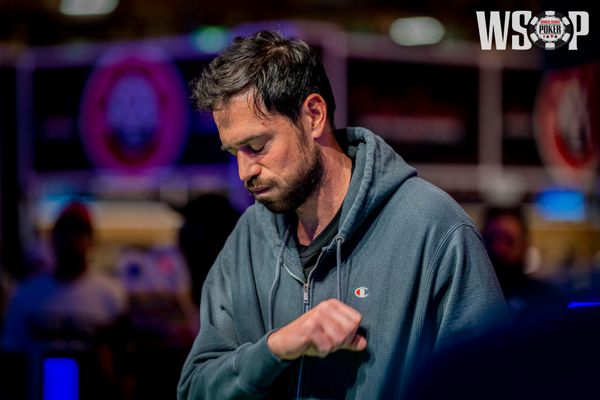
This victory continues a remarkable trend in Schulman’s recent WSOP history. Since 2023, he’s become the player nobody wants to face when chasing their first bracelet. His victims include Andrew Hasdal in Stud, Noel Rodriguez in a $25K High Roller, Ren Lin at WSOP Paradise, and Darren Elias in the 2-7 Single Draw Championship. Only Alexander Wilkinson managed to break through against Schulman in the 2025 Triple Draw Championship.
The Poker Strategy Breakdown
HORSE tournaments demand versatility across eight rotating games: Hold’em, Omaha Hi-Lo, Razz, Stud, and Stud Eight-or-Better. Success requires not just competence in each variant, but the mental agility to shift gears every orbit. Schulman’s track record in mixed games reveals a player who understands this fundamental truth.
The strategic complexity multiplies at final tables where stack sizes create different optimal approaches for each game. In limit formats, pot-sized bets mean aggression must be carefully calibrated. You can’t simply shove all-in to apply maximum pressure. Instead, skilled players like Schulman use positional warfare and hand reading to accumulate chips incrementally.
Schulman’s late-game eliminations of Nebbout and Brindle likely came during rounds that favored his particular strengths. His two 2-7 Championship bracelets and PLO8 title demonstrate exceptional proficiency in draw and split-pot variants. When the game rotates into your wheelhouse at a crucial moment, that’s when champions strike.
The heads-up phase showcased another critical mixed games skill: exploiting chip advantages across different formats. With a big lead, Schulman could apply pressure in aggressive games like Hold’em and Omaha while protecting his stack in the Stud variants. This dynamic forces short-stacked opponents into uncomfortable situations where they must gamble in unfavorable spots.
Mixed games also reward pattern recognition and opponent profiling. By the final table, Schulman had hours of data on Mozdzen’s tendencies across all eight games. Which variants did he play too tight? Where did he get creative? These observations become weapons when you know how to deploy them.
Reading The Field & Table Dynamics
Final table dynamics shift dramatically in mixed games compared to Hold’em tournaments. The rotating formats mean chip leads are more volatile—a player can dominate in Stud but struggle in Razz. This creates psychological pressure as stacks rise and fall with each game change.
Mozdzen’s chip lead entering the final day represented both opportunity and danger. Leading the field establishes psychological dominance, but in mixed games, that advantage evaporates quickly if opponents exploit weaknesses in specific variants. Schulman’s experience allowed him to remain patient, waiting for the right games and situations to launch his assault.
The presence of Mike Wattel at the final table added an interesting dimension. Wattel is a three-time bracelet winner with decades of mixed games experience. Having another veteran in the field changes table dynamics—both Schulman and Wattel understand advanced concepts that might sail over less experienced opponents’ heads. This creates a meta-game within the game.
Four-handed play represents a critical juncture in any tournament, but especially in mixed games. The increased frequency of premium hands means action accelerates. Schulman’s back-to-back eliminations during this phase weren’t accidents—they reflected calculated aggression at precisely the right moment. When you sense opponents tightening up for a pay jump, that’s when you attack.
The international composition of the final table—players from the USA, Canada, France, and UK—also matters. Different poker cultures emphasize different aspects of mixed games. European players often bring unique perspectives to Stud variants, while North American grinders typically have more 2-7 experience. Schulman’s ability to adapt to various playing styles proved decisive.
How To Apply This To Your Game
Most players won’t face WSOP final tables, but Schulman’s approach offers lessons for any mixed game enthusiast. First, identify your strongest and weakest variants within the rotation. Be brutally honest—everyone has games where they’re merely competent rather than excellent. Use this self-awareness to guide your aggression.
When your best game comes around, increase your activity. Open more pots, three-bet more frequently, and put pressure on opponents. Conversely, when the rotation hits your weakest variant, tighten up and focus on fundamentals. This isn’t weak-tight poker—it’s strategic resource allocation.
Study how stack sizes interact with game variants. In limit formats, a 2:1 chip advantage isn’t nearly as dominant as in no-limit. You need roughly 4:1 or 5:1 to truly control the action. Understanding these ratios helps you recognize when to push edges and when to play defensively.
Develop opponent profiles that account for all game variants. Take notes on who plays too many hands in Razz or who doesn’t defend blinds aggressively enough in Hold’em rounds. These patterns create exploitable opportunities that compound over time.
Practice heads-up mixed games specifically. The dynamics differ enormously from full-ring play. Hand values shift, positional considerations change, and aggression becomes paramount. Schulman’s quick heads-up victory suggests he’d prepared for exactly this scenario.
Finally, embrace the mental challenge of game-switching. Between hands, remind yourself which variant is current. This sounds basic, but fatigue-induced errors—playing a Razz hand like Stud, for instance—are surprisingly common. Champions maintain focus through marathon sessions.
Key Takeaways
- Nick Schulman won his eighth WSOP bracelet in the $1,500 HORSE event, defeating chip leader Clayton Mozdzen heads-up
- This continues Schulman’s pattern of denying first-time bracelet seekers, with only one player breaking through against him since 2023
- Mixed games require strategic flexibility across multiple variants, with champions attacking during their strongest games
- Four-handed play proved pivotal as Schulman eliminated two opponents in quick succession to build a commanding heads-up chip lead
- Limit format dynamics mean chip advantages translate differently than in no-limit, requiring patient accumulation rather than explosive double-ups
- Opponent profiling across all eight HORSE variants creates exploitable patterns that skilled players leverage at crucial moments
Frequently Asked Questions
What makes Nick Schulman so successful in mixed games?
Schulman’s success stems from deep expertise across multiple poker variants, particularly in 2-7 games and split-pot formats. His three 2-7 Championship bracelets demonstrate mastery of draw poker, while his PLO8 title shows proficiency in complex split-pot scenarios. Beyond technical skill, Schulman excels at reading opponents across different game types and applying pressure at optimal moments. His Hall of Fame induction in 2025 recognized this rare combination of versatility and championship-level execution.
How does HORSE differ strategically from Hold’em tournaments?
HORSE rotates through eight different poker variants every orbit, requiring players to master multiple game types rather than specializing in one. Stack sizes matter differently in limit formats—you can’t shove all-in, so chip accumulation happens incrementally through superior hand reading and positional play. The mental challenge of switching games every few hands adds another layer of complexity, as hand values and optimal strategies shift constantly. Players must also identify which variants favor their skills and adjust aggression accordingly.
Why do experienced players often beat first-time bracelet seekers?
Final table pressure affects inexperienced players more acutely than veterans who’ve been in championship situations repeatedly. Schulman’s comfort in high-stakes moments allows him to execute optimal strategies while opponents may tighten up or make emotionally-driven decisions. Experience also provides pattern recognition—veterans have seen thousands of similar situations and know which lines work. Additionally, players seeking their first bracelet may play not-to-lose rather than to-win, creating exploitable tendencies that champions like Schulman capitalize on ruthlessly.
Final Thoughts
Nick Schulman’s eighth bracelet reinforces his status among poker’s elite mixed game specialists. His ability to navigate complex formats while maintaining composure in championship moments separates good players from Hall of Famers. The HORSE victory adds another chapter to a remarkable late-career surge that’s seen him collect four bracelets since 2023.
For Clayton Mozdzen and the other first-time hopefuls who’ve fallen to Schulman, there’s no shame in losing to greatness. Each of these players demonstrated the skill required to reach WSOP final tables—a feat most poker players never achieve. Their time will come, though they’ll hope Schulman isn’t standing in their way when it does.
The broader lesson extends beyond any single tournament result. Mastering mixed games requires dedication to multiple disciplines, mental flexibility, and the patience to exploit edges across different formats. Whether you’re competing for bracelets or simply looking to improve your home game, studying how champions like Schulman approach these complex formats provides a roadmap for development.
Ready to Sharpen Your Poker Game?
Master your poker game with expert hand analysis