Dzivielevski’s 6th Bracelet: Strategy Behind $2.8M Win
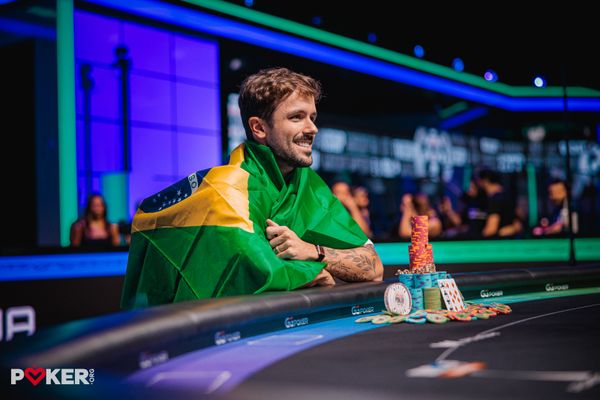
Yuri Dzivielevski captured his sixth World Series of Poker bracelet and a career-best $2.8 million payday in the $100K High Roller, displaying rare emotion after defeating Teun Mulder heads-up. The Brazilian pro’s victory came amid tournament controversy and personal sacrifice, as he competed thousands of miles from his pregnant wife.
What Happened
The $100K High Roller at the 2026 WSOP drew 115 entries, creating an $11.04 million prize pool that would reward the top 18 finishers. After three days of intense competition, Dzivielevski emerged victorious, adding another bracelet to his impressive collection and pushing his career earnings past $14.5 million.
The final table featured some of poker’s elite, including Alex Foxen, Sam Soverel, and Martin Kabrhel. Dzivielevski navigated through this star-studded lineup to face Dutch player Teun Mulder in heads-up play, ultimately securing the title and nearly $1 million more than the runner-up prize.
What made this victory particularly noteworthy wasn’t just the money or the bracelet—it was Dzivielevski’s uncharacteristic emotional response. Known as one of the more reserved professionals on the circuit, the Brazilian openly displayed his feelings after the win, immediately calling home to his expecting wife before even stepping off the stage.
The tournament wasn’t without drama. Day 2 featured multiple disputes involving Kabrhel, including controversies over RFID card scanning procedures and an incident where Foxen allegedly touched Kabrhel’s glasses. These distractions created tension at the table, though Kabrhel’s early elimination on Day 3 helped settle the atmosphere.
The Poker Strategy Breakdown
High roller tournaments like this $100K event require a fundamentally different strategic approach than standard buy-in competitions. The field quality is exceptional—every player at the table has proven themselves among poker’s elite, meaning marginal edges become critical and exploitative play takes on new dimensions.
Dzivielevski’s success in these environments stems from his ability to maintain emotional detachment while staying mentally engaged. As he explained post-victory, he’s “not emotionally attached to titles and glory,” which allows him to make optimal decisions without the pressure that cripples many players in high-stakes situations.
This psychological framework translates into concrete strategic advantages. When you’re not worried about the prestige or the money, you can focus purely on making the correct play in each situation. You’re more likely to execute difficult folds when you know you’re beat, and more willing to apply pressure when the situation demands aggression.
The final table structure also played a crucial role in how the tournament unfolded. With nine players returning and significant pay jumps between each position, ICM considerations became paramount. The difference between sixth place ($522,347) and first ($2,841,432) represented life-changing money even for established pros, creating spots where chip preservation competed with accumulation as the optimal strategy.
Dzivielevski’s approach to the Kabrhel controversy also reveals strategic maturity. While other players became embroiled in disputes about card scanning and table etiquette, Dzivielevski remained focused on the actual poker. His comment—”Just play and show your cards. Let’s compete”—demonstrates the mental clarity that separates consistent winners from talented players who get distracted.
Reading The Field & Table Dynamics
Understanding your opponents becomes exponentially more important as buy-ins increase. At the $100K level, you’re not facing recreational players making fundamental mistakes. Instead, you’re competing against professionals who understand GTO principles, ICM implications, and advanced tournament theory.
The final table composition created interesting dynamics. Kabrhel’s confrontational style, whether genuine or strategic, affected table atmosphere and potentially influenced other players’ decision-making. Some players became drawn into arguments, expending mental energy on disputes rather than focusing on optimal play.
Soverel’s preference for scanning cards at hand’s end—a security measure some pros employ—became a flashpoint. This seemingly minor procedural issue escalated into a significant distraction, demonstrating how even elite players can lose focus on what matters. The fact that Foxen got involved in the dispute, then busted in sixth place, illustrates the potential cost of mental distractions.
Dzivielevski’s ability to ignore these sideshows proved valuable. While others debated procedures and called floor staff, he maintained focus on hand ranges, bet sizing, and exploiting opponents’ tendencies. This mental discipline becomes a tangible edge when everyone at the table possesses similar technical skills.
The heads-up battle against Mulder represented the culmination of these dynamics. Both players had navigated a world-class field and managed ICM pressure throughout the final table. At this stage, the tournament shifted from multi-way dynamics to pure heads-up strategy, requiring immediate adjustment in hand ranges, aggression frequencies, and bluffing patterns.
How To Apply This To Your Game
Even if you’re not playing $100K buy-ins, Dzivielevski’s approach offers valuable lessons for players at any level. The most important takeaway is the power of emotional detachment combined with genuine passion for competition.
Start by examining your own relationship with results. Are you so focused on winning a particular tournament that you make suboptimal decisions under pressure? Do bad beats affect your play for the rest of the session? Dzivielevski maintains passion for the game while staying “free of pressure” regarding outcomes—a balance worth cultivating.
Practice ignoring table distractions. Whether it’s a chatty opponent, a controversial ruling, or drama between other players, your job is to focus on making optimal decisions. Every minute spent thinking about non-poker issues is a minute you’re not spending on reading opponents or analyzing hand ranges.
In tournament play, develop a clear understanding of ICM implications at different stages. The correct play with 20 big blinds at a nine-handed final table differs dramatically from the same stack size in the early stages. Study ICM calculators and train yourself to recognize when chip preservation matters more than accumulation.
When facing tough opponents, shift your focus from exploiting obvious mistakes (which won’t exist) to making fewer mistakes yourself. Against strong competition, the player who makes the fewest errors typically wins. This means tightening up marginal spots, avoiding hero calls, and being willing to fold when the math doesn’t support continuing.
Finally, maintain perspective on what truly matters. Dzivielevski’s first action after winning wasn’t celebrating with friends or doing media—it was calling home to his pregnant wife. This grounding in real life helps prevent poker from becoming an all-consuming obsession that leads to tilt and poor decision-making.
Key Takeaways
- Emotional detachment improves decision-making: Dzivielevski’s ability to stay “free of pressure” regarding titles and money allowed him to focus purely on optimal play throughout the tournament.
- Table distractions are costly: While other players engaged in disputes about procedures and etiquette, Dzivielevski maintained focus on actual poker strategy, creating a mental edge.
- ICM pressure defines final table play: With massive pay jumps between positions, understanding when to preserve chips versus accumulate them becomes critical to tournament success.
- Elite fields require adjusted strategy: Against world-class opponents, minimizing your own mistakes matters more than exploiting theirs, as fundamental errors become rare.
- Passion without attachment wins long-term: Caring deeply about competition while staying detached from specific outcomes creates the ideal mindset for consistent success.
- Life perspective prevents tilt: Maintaining priorities outside poker—family, relationships, personal growth—helps keep the game in proper context and prevents emotional spirals.
Frequently Asked Questions
How does Yuri Dzivielevski’s bracelet count compare to other active players?
With six WSOP bracelets, Dzivielevski ranks among the most decorated active tournament players. While legends like Phil Hellmuth (17 bracelets) and Phil Ivey (10 bracelets) lead the all-time list, six bracelets places Dzivielevski in elite company. His success across different formats and buy-in levels demonstrates versatility that extends beyond single-tournament variance.
What is ICM and why does it matter at final tables?
ICM (Independent Chip Model) calculates the real money value of tournament chips based on remaining prize pool distribution. Unlike cash games where chips equal their face value, tournament chips have varying worth depending on stack sizes and payout structure. At final tables with significant pay jumps, ICM often dictates folding hands that would be clear calls in cash games, as survival to the next pay level has concrete monetary value.
Why do some players scan their cards at the end of hands?
RFID card scanning allows broadcasts to display hole cards for viewers, but some professionals worry about real-time information security. By scanning cards only after hands complete, players prevent any potential data leaks that could theoretically give opponents an advantage. While modern systems have strong security, players like Sam Soverel prefer this precautionary approach, especially in high-stakes events.
How should recreational players approach high-pressure tournament situations?
Focus on making optimal decisions rather than worrying about outcomes. Study ICM fundamentals so you understand when chip preservation matters most. Practice emotional regulation techniques—deep breathing, taking breaks, maintaining perspective on the game’s role in your life. Most importantly, accept that variance exists and single tournament results don’t define your skill level.
Final Thoughts
Dzivielevski’s sixth bracelet win offers a masterclass in maintaining competitive excellence while staying grounded in what truly matters. His ability to navigate a world-class field, ignore table distractions, and execute optimal strategy under immense pressure demonstrates why he’s consistently successful at poker’s highest levels.
The contrast between his emotional post-victory response and his detached approach during play reveals a sophisticated understanding of when feelings help versus hurt performance. He cares deeply about the competition itself—”when I lose this emotion, I will probably stop playing”—but doesn’t let attachment to outcomes cloud his judgment during hands.
For players looking to improve their tournament results, the lessons are clear: develop emotional discipline, ignore distractions, understand ICM implications, and maintain life perspective. Whether you’re playing $100K high rollers or $100 local tournaments, these principles separate consistent winners from talented players who never quite reach their potential. Study the hands, analyze the decisions, and remember that poker success ultimately comes from making optimal choices regardless of external pressure.
Ready to Sharpen Your Poker Game?
Master your poker game with expert hand analysis