Nathan Gamble’s PLO8 Mastery: When Instinct Beats Analysis
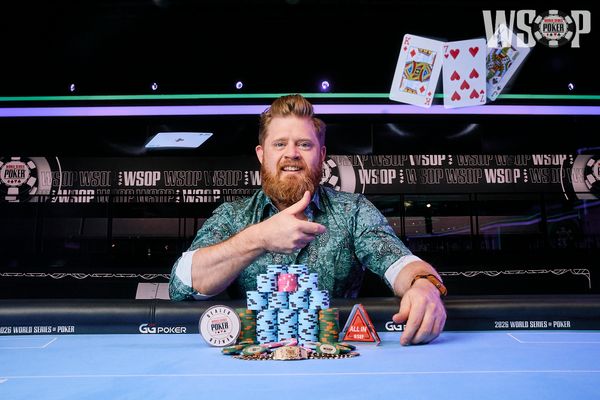
Nathan Gamble captured his third WSOP bracelet and $767,395 in the $10,000 Pot-Limit Omaha Hi-Lo Championship, but his winning formula might surprise you. The Texas pro claims he doesn’t actually think at the table—instead relying on years of accumulated experience to guide his decisions through pure instinct.
What Happened
The WSOP Event #33 attracted 390 entries and generated a prize pool exceeding $3.6 million. After four days of intense competition, Gamble emerged victorious over a final table that included accomplished pro Justin Liberto, who entered the finale holding a commanding chip lead with more than four times Gamble’s stack.
Liberto had dominated Day 3, building momentum that carried into the final day. He eliminated Martin Zamani in fourth place with a perfectly-timed river card that completed a wheel, scooping the entire pot when Zamani held two pair. The New Jersey pro continued applying pressure, using his massive chip advantage to control the action.
The pivotal moment arrived in a blind-versus-blind confrontation. After Liberto raised from the small blind and Gamble re-potted from the big, Liberto called and shoved on a king-high flop. Gamble called with a premium holding and watched the board complete to give him both the nut flush and nut low, scooping a massive pot that flipped the tournament on its head.
Despite Liberto’s resilience in heads-up play—he battled back to even and briefly reclaimed the lead—Gamble’s experience and composure proved decisive. The final hand saw Gamble complete his journey from online PLO sit-and-go grinder to three-time WSOP bracelet winner, fifteen years after his first World Series appearance.
The Poker Strategy Breakdown
Gamble’s approach to PLO8 reveals a fascinating paradox in modern poker strategy. While most players obsess over GTO solvers and real-time calculations, Gamble has internalized patterns through thousands of repetitions. His background grinding Full Tilt sit-and-goes created a database of scenarios stored not in spreadsheets, but in muscle memory.
The crucial all-in pot against Liberto demonstrates this perfectly. When Liberto shoved on the king-high flop, Gamble faced a decision that could end his tournament. Rather than freezing up with analysis paralysis, his pattern recognition kicked in. He understood his hand’s equity against Liberto’s likely range, factored in the pot odds, and made the call that would ultimately deliver him the championship.
In split-pot games like Omaha Hi-Lo, hand selection becomes exponentially more complex than Hold’em. You’re not just evaluating high hand potential—you need hands that can scoop both ways. Gamble’s preflop re-pot in the pivotal hand showed his understanding of premium starting requirements: coordinated cards that work together for both high and low possibilities.
The blind-versus-blind dynamic added another layer. With antes in play and shorter effective stacks at the final table, Gamble recognized an opportunity to apply maximum pressure. His re-pot forced Liberto into a difficult spot, and when the flop arrived with flush and low possibilities, Gamble’s hand had connected perfectly with the texture.
What separates elite PLO8 players from competent ones is their ability to evaluate runouts in real-time. When that flop hit, Gamble immediately recognized he had the nut flush draw, a wheel draw, and additional straight possibilities. Against Liberto’s likely holdings, he was either ahead or had tremendous equity to improve. This type of rapid board texture assessment comes only from extensive experience.
Reading The Field & Table Dynamics
Entering the final table as the short stack relative to Liberto created an interesting dynamic. Many players would feel intimidated facing an opponent with four times their chips. Gamble instead recognized that in PLO8, chip leads are more fragile than in Hold’em. One scooped pot can completely reverse fortunes—exactly what happened.
Liberto’s aggressive style, fueled by his chip advantage, created exploitable opportunities. When you’re the big stack, there’s natural pressure to maintain momentum and close out the tournament. This can lead to slightly wider ranges and more marginal spots taken. Gamble’s patience allowed him to wait for a premium situation where he could commit his stack with maximum equity.
The presence of multiple accomplished professionals at the final table—including Liberto with his recent bracelet win and Matthew Beinner—meant Gamble couldn’t rely on opponents making fundamental errors. Instead, he needed to execute at the highest level himself, making marginal edges count and avoiding costly mistakes.
Stack size dynamics in PLO8 differ significantly from other variants. With the pot-limit betting structure, you can’t simply shove all-in preflop as easily as in No-Limit Hold’em. This creates more play postflop, which favors skilled players who can navigate complex board textures. Gamble’s experience gave him an edge in these intricate postflop situations.
The heads-up battle showcased elite-level adjustments. Despite building a substantial lead, Gamble faced a determined opponent who understood the game’s nuances equally well. Liberto’s comeback demonstrated that in split-pot poker, leads evaporate quickly. The eventual winner needs not just skill, but the mental fortitude to weather swings and maintain optimal play through variance.
How To Apply This To Your Game
Gamble’s success offers several actionable lessons for players at all levels. First, volume matters tremendously. His thousands of online sit-and-go repetitions created pattern recognition that no amount of study alone could replicate. If you’re serious about mastering PLO8, you need to play hands—lots of them. Online poker provides the perfect training ground for accumulating this experience efficiently.
Second, develop your instincts through deliberate practice. Don’t just play mindlessly; after each session, review key hands and identify patterns. Over time, you’ll start recognizing similar situations instantly. This is what Gamble means by “process”—he’s not thinking through each decision from scratch because he’s already solved these puzzles hundreds of times before.
Third, understand that PLO8 rewards patience and premium hand selection. Unlike PLO high-only where you might speculate more liberally, split-pot games punish loose play severely. Wait for hands with two-way potential—coordinated low cards with high card strength, or premium high hands with wheel possibilities. Gamble’s re-pot in the key hand came with a genuinely powerful holding, not a marginal speculation.
Fourth, study board textures religiously. When that flop appeared, Gamble immediately understood how it connected with his range versus Liberto’s range. He knew which draws were live, which were counterfeited, and what his true equity looked like. Spend time away from the table analyzing different board textures and how various hands interact with them.
Fifth, manage your mental game for the long haul. Championship poker requires maintaining optimal decision-making across multiple days and through significant swings. Gamble’s calm demeanor throughout the final table wasn’t accidental—it came from trusting his process and not getting emotionally attached to short-term results.
Finally, recognize when to commit your stack. In the pivotal hand, Gamble didn’t fold to Liberto’s all-in despite facing elimination. He understood his equity was sufficient to make the call, and he trusted his read. Developing this courage comes from confidence in your analysis, which again circles back to experience and preparation.
Key Takeaways
- Volume and repetition create instinctive decision-making that outperforms real-time analysis in high-pressure situations—Gamble’s thousands of online PLO sit-and-gos gave him pattern recognition that proved decisive
- In PLO8, chip leads are fragile and can reverse completely in a single scooped pot, making patience and premium hand selection crucial even when short-stacked
- Blind-versus-blind situations offer prime opportunities for aggression with coordinated holdings that have two-way potential in split-pot games
- Board texture recognition separates elite PLO8 players from competent ones—understanding how the flop connects with ranges determines whether to commit your stack
- Mental fortitude matters as much as technical skill in championship poker; maintaining composure through swings and trusting your process leads to optimal long-term results
- Postflop play in pot-limit structures creates more room for skill edges compared to no-limit games where stacks often go in preflop
Frequently Asked Questions
What makes PLO8 strategy different from regular Omaha?
Pot-Limit Omaha Hi-Lo splits pots between the best high hand and best qualifying low hand (eight-or-better), fundamentally changing hand selection and strategy. Premium starting hands must have potential to scoop both ways, not just win high. This makes coordinated low cards with high potential (like A-2-3-K double-suited) more valuable than purely high hands. Players must constantly evaluate whether they’re competing for half the pot or have scoop potential, which affects betting strategy and pot odds calculations throughout every hand.
How did Gamble overcome such a massive chip disadvantage?
Gamble leveraged two key factors: patience and PLO8’s inherent variance. Rather than forcing action with his shorter stack, he waited for a premium situation where he could get his chips in with strong equity. The blind-versus-blind confrontation gave him that opportunity with a hand that had multiple ways to win. When he scooped that massive pot with both nut flush and nut low, the chip lead completely reversed. This demonstrates that in split-pot games, one well-played hand can overcome seemingly insurmountable deficits.
Can recreational players develop the same instincts Gamble describes?
Absolutely, though it requires significant volume and deliberate practice. Gamble’s instincts came from grinding thousands of online sit-and-gos, creating pattern recognition through repetition. Recreational players can develop similar skills by playing regularly, reviewing hands after sessions, and studying common scenarios. Online poker accelerates this process since you can play more hands per hour than live. The key is combining volume with analysis—don’t just play mindlessly, but actively work to recognize patterns and internalize optimal responses to recurring situations.
Final Thoughts
Nathan Gamble’s victory in the $10,000 PLO8 Championship offers a masterclass in how preparation and experience translate to success at poker’s highest levels. His counterintuitive claim about not thinking at the table actually reveals a deeper truth: the best decisions often come from internalized knowledge rather than real-time calculation. By accumulating thousands of repetitions in similar situations, Gamble built a mental database that allowed him to react instinctively when tournament life was on the line.
The strategic lessons extend beyond PLO8 to all poker variants. Pattern recognition, disciplined hand selection, understanding of stack dynamics, and mental fortitude form the foundation of championship poker. Whether you’re playing $10,000 buy-in events or $50 tournaments, these principles apply. The difference lies in how thoroughly you’ve internalized them through practice and study.
For players looking to improve their mixed game skills, Gamble’s journey from online grinder to three-time bracelet winner provides a roadmap. Start with volume to build experience, study situations away from the table to understand the theory, then trust your instincts when pressure mounts. This combination of preparation and execution separates good players from champions.
Ready to Sharpen Your Poker Game?
Master your poker game with expert hand analysis