Phil Ivey’s $250K WSOP Final Table Run: Strategy Lessons
Phil Ivey is hunting his 12th WSOP bracelet after navigating to the final table of the $250,000 Super High Roller, albeit as the shortest stack with 2.8 million chips. The poker legend max late-registered Day 2 and outlasted 46 opponents to secure a minimum $518,518 payday, with $4.3 million awaiting the champion.
What Happened
The 2026 WSOP’s most expensive tournament drew 56 entries by the close of late registration on Day 2, creating a prize pool that would pay nine players. The bubble proved particularly painful—lasting nearly 90 minutes before Nick Petrangelo’s elimination in 10th secured payouts for the survivors.
Ivey’s approach was calculated from the start. Rather than entering on Day 1, he waited until the maximum late registration point on Day 2, firing a single bullet and conserving his tournament equity. This patient strategy contrasts sharply with players like Jans Arends, Danny Tang, and Eelis Parssinen, who all fired second bullets without reaching the money.
The tournament claimed several notable casualties before the final table formed. Daniel Negreanu started Day 2 with the fourth-largest stack but busted in 35th place, reportedly exchanging words with Martin Kabrhel before his exit. Christoph Vogelsang, who began third in chips, also failed to cash. Chris Brewer, the 2023 champion of this event, couldn’t replicate his success and was eliminated before the bubble.
Kristen Foxen endured perhaps the day’s most devastating exit. Moving all-in from under the gun for seven big blinds with pocket jacks, she was called by Samuel Mullur’s ace-nine offsuit. The flop delivered Foxen a straight and 96% equity—only for the turn and river to complete Mullur’s full house, eliminating her in 11th place, one spot from the money.
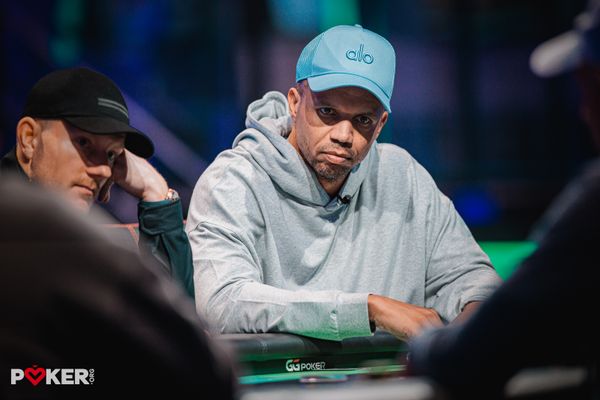
When play concluded, Bryn Kenney held the chip lead with 19.4 million, followed by Adrian Mateos with 16.9 million. Businessman David Einhorn sits third with 13.4 million. Ivey’s 2.8 million represents just 14 big blinds at the final table’s starting level, presenting a significant challenge when play resumes.
The Poker Strategy Breakdown
Ivey’s late registration decision offers our first strategic lesson. By waiting until Day 2 to enter, he gained crucial information about the field composition, player counts, and stack distributions. This intel allowed him to assess whether the tournament represented positive expected value before committing a quarter-million dollars. The trade-off? Starting with a shorter stack and less time to accumulate chips.
For elite players with deep pockets and strong post-flop skills, max late-regging can be profitable. You minimize time investment while the field has already thinned, and weaker players have been eliminated. However, this strategy demands exceptional short-stack play and the ability to exploit opponents quickly—skills Ivey possesses in abundance.
Adrian Mateos demonstrated textbook big-stack aggression throughout Day 2. His elimination of Matthias Eibinger—queens versus eights all-in preflop—drew commentary from Jared Bleznick, who labeled Eibinger’s play “a massive mistake.” Without knowing exact stack depths and ICM pressure, we can infer that Eibinger’s shove with pocket eights likely represented either a miscalculation of fold equity or a misread of Mateos’s calling range.
In super high roller tournaments, hand reading becomes exponentially more important. When Mateos holds queens in that spot, he’s almost certainly calling given the pot odds and his chip position. Eibinger needed to consider whether his eight-high pocket pair had enough fold equity to justify the risk, or whether it played better as a call against aggressive opens rather than a shove.
The Foxen elimination, while brutal, illustrates an important concept: even with 96% equity, you’re not invincible. Her decision to shove pocket jacks from under the gun with seven big blinds was standard—perhaps even slightly conservative. Mullur’s call with ace-nine offsuit from the big blind, getting approximately 2.3-to-1 pot odds, falls within acceptable parameters against a short-stack shoving range. The outcome was unfortunate, but both players executed reasonably sound strategies.
Reading The Field & Table Dynamics
The 90-minute bubble period reveals fascinating psychological warfare. With only $518,518 separating 10th place from 9th, ICM pressure intensifies dramatically. Players with medium stacks face excruciating decisions—every pot becomes a potential tournament life, while chip leaders can apply maximum pressure knowing opponents are incentivized to fold.
Kenney’s bubble performance exemplifies this dynamic perfectly. According to reports, he employed “well-timed aggression” to build his stack during the bubble, ultimately ending the day as chip leader. This wasn’t reckless gambling—it was calculated exploitation of ICM pressure. When shorter stacks are desperate to survive into the money, big stacks can profitably widen their stealing ranges and apply relentless pressure.
Mateos earned praise from Bleznick as “the best no-limit tournament player in the world” for his bubble play. While hyperbolic, the comment underscores Mateos’s ability to navigate high-pressure situations with optimal aggression. His chip lead heading into the bubble gave him permission to attack, and he clearly leveraged that advantage effectively.
The final table composition presents intriguing dynamics. You have seasoned professionals like Ivey, Kenney, Mateos, Winter, and Koon—players with decades of combined high-stakes experience. Then there’s David Einhorn, a businessman and recreational player (albeit a highly skilled one) sitting third in chips. This mix creates exploitable situations where professionals might underestimate Einhorn or, conversely, overadjust against his perceived tendencies.
Ivey’s short stack position demands immediate aggression. With just 14 big blinds, he cannot afford to wait for premium hands. He’ll need to identify spots to resteal against opens, particularly from players like Kenney and Mateos who will apply pressure to the middle stacks. His legendary ability to read opponents and execute precisely-timed bluffs becomes paramount—one or two successful moves could vault him back into contention.
How To Apply This To Your Game
Even if you’re not playing $250,000 buy-in tournaments, these strategic concepts translate directly to your local tournament scene or online grind.
Master ICM fundamentals: The bubble dynamics we witnessed here occur in every tournament. When you’re approaching the money bubble or a significant pay jump, understand how stack sizes affect optimal strategy. Short stacks should tighten up slightly to survive into the money, while big stacks should increase aggression to exploit this dynamic. Use ICM calculators during study sessions to internalize how prize pool distribution affects calling and shoving ranges.
Respect position and stack depth: Eibinger’s mistake with pocket eights likely stemmed from underestimating Mateos’s calling range or overestimating his fold equity. Before making any significant move, ask yourself: “What hands is my opponent continuing with, and how does my hand perform against that range?” Pocket pairs below jacks rarely want to commit stacks preflop against competent opponents unless you’re extremely short-stacked.
Develop short-stack mastery: Ivey’s situation—entering the final table with 14 big blinds—requires a specific skillset. Practice push-fold scenarios, understand which hands have enough equity to shove from various positions, and recognize resteal opportunities. Tools like SnapShove or ICMIZER can help you study optimal short-stack ranges until they become second nature.
Leverage information advantages: Ivey’s late registration strategy worked because he possessed skills to overcome the shorter starting stack. In your games, gather information about opponents before committing to marginal spots. Who’s tilting? Who’s playing scared near the bubble? Who’s capable of big bluffs? This intelligence gathering pays dividends in crucial pots.
Accept variance gracefully: Foxen’s elimination with 96% equity serves as a reminder that poker involves inevitable bad beats. Your job is making +EV decisions consistently, not winning every hand. When you suffer a brutal beat, review the hand objectively—if your decision was sound, move forward without emotional baggage.
Key Takeaways
- Late registration has strategic merit for skilled players who can leverage information advantages and excel in short-stack situations, though it’s not optimal for everyone
- ICM pressure creates exploitable situations during bubble periods—big stacks should increase aggression while medium stacks must balance survival with chip accumulation
- Pocket pairs below queens rarely want to commit significant stacks preflop in tournament situations unless extremely short or against specific opponent types
- Position and timing matter more than cards at final tables—Ivey’s path to a 12th bracelet depends on finding optimal spots to apply pressure, not waiting for premium holdings
- Variance is inevitable even with massive equity advantages; focus on decision quality rather than short-term results
- Field strength affects ROI—the $250K drew 56 entries compared to 63 in 2025, suggesting possible saturation in ultra-high roller markets
Frequently Asked Questions
Why would Phil Ivey late register instead of playing from Day 1?
Late registration provides information advantages about field size, player composition, and stack distributions before committing the buy-in. For elite players like Ivey, these benefits can outweigh the disadvantage of starting with fewer chips. Additionally, it minimizes time investment—if the field looks particularly tough or small, top pros might skip the event entirely. The strategy requires exceptional short-stack skills and the ability to exploit opponents quickly, both strengths in Ivey’s game.
How should you play a short stack at a final table like Ivey’s situation?
With 14 big blinds, Ivey cannot wait for premium hands. Optimal short-stack play involves identifying resteal opportunities against aggressive openers, shoving first-in from late position with a wide range, and avoiding marginal call-shove situations that burn chips. The key is maintaining fold equity—once you drop below 10 big blinds, your options narrow significantly. Ivey needs to find one or two double-up spots early to regain maneuverability, which means taking calculated risks rather than bleeding out slowly.
What is ICM and why does it matter during bubble play?
ICM (Independent Chip Model) calculates the real money value of tournament chips based on remaining prize pool distribution. During bubble play, ICM pressure intensifies because the pay jump from 10th to 9th place ($0 to $518,518 in this event) is massive. This mathematical reality forces medium stacks to play more conservatively to secure a cash, while big stacks can exploit this tendency with aggressive stealing. Understanding ICM helps you make optimal decisions that maximize long-term tournament earnings rather than just accumulating chips.
Final Thoughts
Phil Ivey’s pursuit of a 12th WSOP bracelet from the short stack position exemplifies why he remains one of poker’s most respected competitors. While chip leaders like Bryn Kenney and Adrian Mateos enter the final table with significant advantages, Ivey’s track record in high-pressure situations suggests he’s far from finished. His ability to read opponents, time aggression perfectly, and execute under extreme pressure has defined a Hall of Fame career—qualities that matter more than chip counts when the stakes are highest.
The strategic lessons from this tournament extend well beyond the $250,000 buy-in level. ICM pressure, bubble dynamics, short-stack play, and information gathering apply whether you’re playing a $50 local tournament or grinding online MTTs. The players who consistently profit in tournament poker master these fundamentals and apply them with discipline, regardless of variance or stack size.
As the final table unfolds, watch how Ivey navigates his short stack. Pay attention to his timing, his spot selection, and his willingness to apply pressure despite being the shortest stack. These are lessons you can immediately implement in your own game. Tournament poker rewards patience combined with precisely-timed aggression—a balance Ivey has perfected over decades of elite competition.
Ready to Sharpen Your Poker Game?
Master your poker game with expert hand analysis