Skye Chen’s WSOP Ladies Victory: Strategy Lessons From Epic Final
Skye Chen captured her first WSOP bracelet in only her second-ever Series event, defeating Aubrey Williams in a dramatic heads-up battle that showcased tournament poker at its finest. The 2026 WSOP Ladies Championship final table delivered high-level play, gutting coolers, and hero calls that defied solver recommendations—offering valuable lessons for tournament players at every level.
What Happened
The Ladies Championship final table brought together six players, none of whom had previously cashed for six figures. Emily Spencer held the chip lead entering play, with Aubrey Williams sitting fifth in chips and Skye Chen somewhere in the middle of the pack.
The tournament atmosphere was electric. Caitlin Comeskey commanded the loudest rail, featuring poker personalities like Nikki Limo, Ashley Frank, and James Hartigan, all sporting cowboy hats. Victoria Ailloud’s French supporters added international flavor to the proceedings, while custom signs and chants filled the Horseshoe card room.
Action remained relatively tight for the first two hours before a rapid-fire elimination sequence reshaped the tournament. Ailloud exited first when Williams cracked her pocket sixes with ace-king, flopping the decisive ace. Spencer followed shortly after, running her ace-queen into Chen’s pocket kings after refusing to believe Chen’s UTG open and subsequent shove over her three-bet.
The most dramatic exit belonged to Comeskey. She shoved pocket fours into Lisa Teebagy’s aces, flopped a miracle four to take the lead, only to watch in agony as runner-runner clubs gave Teebagy a flush. The devastating cooler propelled Teebagy into the chip lead and left Comeskey’s boisterous rail stunned into silence.
Three-handed play produced one of the tournament’s defining moments. Williams executed a brilliant hero call with king-jack high, catching Chen’s queen-high bluff on a four-to-a-straight board. The call vaulted Williams into a commanding position and reduced Chen to fewer than ten big blinds.
Chen’s tournament life appeared precarious, but she found a double through Teebagy to stay alive. Shortly after, Chen eliminated Teebagy in third place when her pocket fives held against ace-king, making a full house on the turn despite Teebagy picking up seventeen outs on the flop.
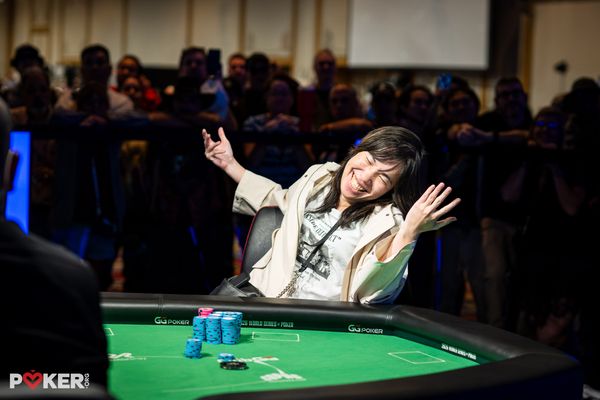
Heads-up began with Williams holding a significant advantage—19,075,000 to Chen’s 10,350,000. The match swung wildly as both players demonstrated fearless aggression and impressive hand-reading abilities. Chen engineered a remarkable comeback, culminating in an even more spectacular hero call than Williams had made earlier.
With Chen holding the chip lead, Williams moved all-in on the river holding queen-high on a board showing four-to-a-straight. The bluff made perfect sense against most opponents, and GTO Wizard analysis later confirmed that Chen’s hand—jack-high—should fold 100% of the time according to game theory optimal play. Chen requested a count, tanked extensively, and made the call to win the tournament’s largest pot.
Williams wasn’t finished. She doubled three times with a short stack, bringing the match nearly even again and demonstrating the resilience that characterized her entire tournament run. The final hand came down to a classic flip: Chen’s pocket fours against Williams’ ace-jack. The board ran out clean for Chen, securing her the bracelet and a career-best $194,630 payday.
The Poker Strategy Breakdown
Several hands from this final table deserve deep strategic analysis, particularly the two extraordinary hero calls that defined the heads-up match.
Williams’ three-handed hero call with king-jack high demonstrated exceptional hand-reading. After three-betting preflop with king-jack suited and seeing a flop of ten-nine-eight, she wisely checked back to control pot size. When Chen bet 1.2 million on the queen turn and 3.6 million into a 6.5 million pot on the seven river, Williams faced a completed straight on board.
The river sizing was crucial to Williams’ decision. Chen’s bet represented roughly 55% of the pot—large enough to apply pressure but not so large as to polarize her range completely. Williams recognized that Chen’s line didn’t make sense with many value hands. A genuine straight would likely have bet the flop or turn more aggressively. The checking pattern followed by delayed aggression screamed of a missed draw or complete air.
Williams’ call showcased advanced tournament thinking. At this stage, with significant pay jumps still on the line, many players default to folding without a pair. Williams understood that Chen’s range was wider than it appeared and that calling with king-high was actually the correct exploitation.
Chen’s subsequent hero call heads-up was even more remarkable. Facing an all-in river bet with jack-high on another four-to-a-straight board, Chen made a call that solvers would reject every time. This highlights an essential truth about tournament poker: GTO is a baseline, not a straitjacket.
Chen’s call worked because she’d been paying attention. Williams had shown aggression throughout heads-up play, and the specific timing and sizing of this particular shove felt off. Against an opponent playing a purely balanced strategy, folding jack-high is mandatory. Against a specific opponent in a specific moment showing specific timing tells, calling can be correct.
The elimination hands also merit discussion. Chen’s UTG open with pocket kings followed by a shove over Spencer’s three-bet was textbook. From under the gun, Chen’s opening range is already strong, and when facing a three-bet, her continuing range becomes even more polarized toward premiums. Spencer’s ace-queen, while a strong hand, simply ran into the top of Chen’s range.
The Comeskey elimination illustrated brutal tournament variance. Getting it in with pocket fours against aces is never ideal, but flopping a set provides false hope. Teebagy’s runner-runner flush demonstrated why aces remain the strongest starting hand—they offer multiple ways to win even when behind.
Reading The Field & Table Dynamics
Tournament dynamics shifted dramatically as the final table progressed. Early on, with six players remaining and significant pay jumps looming, ICM pressure should have created conservative play. Instead, the two-hour stall before the first elimination suggested players were respecting each other’s ranges and avoiding marginal spots.
Once eliminations began, the dynamic shifted entirely. With three players eliminated in rapid succession, the remaining three understood that aggression would be rewarded. This explains why both Williams and Chen were willing to make huge bluffs and hero calls—they recognized the match had evolved beyond survival mode into championship mode.
The rail atmosphere likely influenced play as well. With boisterous supporters creating an electric environment, players fed off the energy. Comeskey’s emotional reaction to her bad beat and her immediate post-elimination confidence about winning a future bracelet showed how the supportive atmosphere helped players embrace variance rather than fear it.
Heads-up dynamics proved particularly fascinating. Williams entered with a nearly 2:1 chip advantage, but Chen never played scared. Short-stack tournament strategy often emphasizes survival and waiting for premium hands, but Chen maintained aggression even when down to fewer than ten big blinds. This fearless approach kept Williams from running her over and created the opportunities Chen needed to mount her comeback.
The multiple doubles Williams secured after losing the chip lead demonstrated advanced short-stack play. Rather than shutting down after her failed river bluff, Williams immediately shifted gears, found spots to get her money in good, and clawed back into contention. Her refusal to go quietly nearly changed the tournament’s outcome.
How To Apply This To Your Game
The strategic lessons from this final table translate directly to tournaments at every buy-in level.
First, don’t be afraid to make hero calls when your opponent’s line doesn’t make sense. Both Williams and Chen demonstrated that hand-reading trumps hand strength in certain situations. If you’ve been paying attention to your opponent’s patterns and something feels off about their story, trust your instincts. Obviously, this requires actually paying attention—you can’t make hero calls based on gut feeling alone.
Second, bet sizing tells a story. Chen’s 55% pot bet on the river against Williams was designed to look strong while actually representing weakness. When you’re bluffing, consider what sizing makes your opponent’s call most difficult. When you’re value betting, consider what sizing your opponent can actually call. And when you’re facing a bet, ask yourself what the sizing reveals about your opponent’s actual holding.
Third, tournament stage matters more than stack size. Chen played aggressively with fewer than ten big blinds because she understood that passive play would only blind her out. When you’re short-stacked at a final table, you need chips to win, not just to survive. Look for spots to apply pressure rather than waiting for premium hands that may never come.
Fourth, resilience separates good tournament players from great ones. Williams doubled three times after her failed bluff rather than tilting off her remaining chips. When you suffer a bad beat or make a mistake, the next hand is a fresh opportunity. Your ability to reset emotionally often matters more than your technical skills.
Finally, understand when to deviate from GTO. Chen’s jack-high call defied solver recommendations but was correct in context. Study GTO principles to understand the baseline, then learn when specific opponents and situations justify exploitation. The best tournament players blend theoretical knowledge with adaptive thinking.
Key Takeaways
- Hero calls win tournaments when your opponent’s betting line doesn’t match their perceived range—trust your hand-reading skills over your actual hand strength in the right spots
- Bet sizing communicates information; analyze what your opponent’s sizing reveals about their holding and ensure your own sizing tells the story you want
- Short-stack aggression beats short-stack survival at final tables; when you need chips to win, find spots to apply pressure rather than blinding away
- Emotional resilience matters as much as technical skill; the ability to reset after bad beats or mistakes separates consistent winners from the field
- GTO provides the baseline, but exploitation wins tournaments; learn when specific opponents and situations justify deviating from theoretically optimal play
- Tournament dynamics shift as player counts decrease; recognize when the game transitions from survival mode to championship mode and adjust your aggression accordingly
Frequently Asked Questions
Should you ever call with jack-high or king-high in a tournament?
In most situations, no—you need at least a pair to call significant bets. However, when your opponent’s betting line doesn’t make sense with value hands and you’ve identified them as capable of big bluffs, hero calls with high cards can be correct. This requires excellent hand-reading skills and specific reads on your opponent. It’s an advanced play that should only be attempted when you’re confident in your analysis, not as a default strategy.
How should you play pocket pairs against aggressive opponents in tournament finals?
Pocket pairs gain value against aggressive opponents who apply frequent pressure. Small and medium pairs should generally be played for set value, but you can occasionally call down when your opponent’s aggression doesn’t match the board texture. Large pairs (tens through aces) should be played aggressively yourself—don’t slow-play premium hands against opponents who will bluff into you anyway. The key is balancing between trapping and building pots with your strongest holdings.
What’s the optimal strategy when short-stacked at a final table?
With fewer than fifteen big blinds at a final table, shift toward push-fold strategy rather than trying to see cheap flops. Look for spots to move all-in first rather than calling shoves, as fold equity significantly increases your winning percentage. Don’t wait for premium hands—any ace, any pair, and strong broadways become shoving hands depending on your position and stack size. The goal is accumulating chips to win, not surviving one more spot for a minimal pay jump.
Final Thoughts
Skye Chen’s victory in the 2026 WSOP Ladies Championship exemplifies tournament poker’s beautiful complexity. Her path to the bracelet required technical skill, emotional resilience, fearless aggression, and the courage to make calls that solvers would reject. Williams’ runner-up finish was equally impressive, showcasing world-class hand-reading and the determination to battle back multiple times when facing elimination.
The strategic lessons from this final table apply whether you’re playing a WSOP event or your local tournament series. Pay attention to your opponents’ betting patterns, trust your hand-reading skills when the situation warrants it, maintain aggression when short-stacked, and never give up when the cards turn against you. These principles separate consistent tournament winners from players who occasionally run hot.
Most importantly, this final table reminded us that poker rewards those who think independently. Chen’s jack-high hero call worked precisely because it violated conventional wisdom. The best players understand theory deeply enough to know when breaking the rules makes sense. Study the fundamentals, then develop the judgment to recognize when specific situations demand creative solutions.
Ready to Sharpen Your Poker Game?
Master your poker game with expert hand analysis