Charity-Minded Player Turns $100K Bounty Into Chip Lead
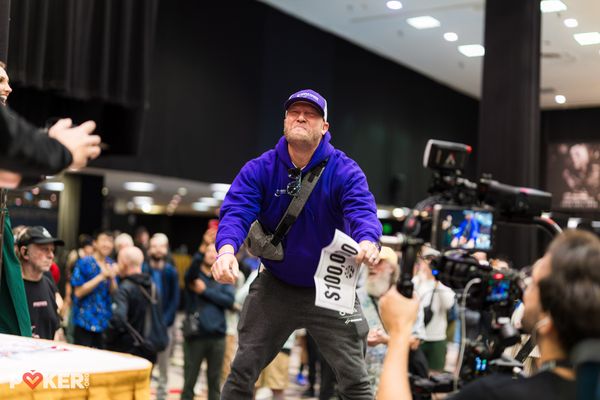
Brian Smith pulled a six-figure bounty at the WSOP Mystery Millions, pledged a chunk to pancreatic cancer research, then spun eight big blinds into a top-15 stack on Day 2. The Atlanta sales executive’s aggressive comeback—fueled by a rivered full house against queens—showcases how short-stack aggression and recreational opponent reads can salvage tournaments when you’re on the brink of elimination.
What Happened
Smith’s Day 2 in the record-setting 22,811-entry Mystery Millions looked bleak. Hours after pulling a $100,000 bounty and committing a portion to Purple Pansies—a charity fighting pancreatic cancer—he found himself down to eight big blinds with ace-five suited in clubs. An aggressive recreational opponent shoved, and Smith made the call despite verbalizing his read: “I know you have kings.”
The opponent tabled pocket queens. The flop brought ace-queen-five, giving his opponent top set and leaving Smith drawing thin. The turn bricked, but the river delivered the ace of spades for a full house and a critical double-up. That single hand became the catalyst for a massive comeback.
Smith leveraged his renewed stack with aggressive play, accumulating chips rapidly until he held over 10 million—enough to become the table captain at break. By the dinner break on Day 2, with fewer than 100 players remaining, he sat in the top 15 with over 11 million chips, positioning himself for a serious run at his first WSOP bracelet and the $1 million top prize.
The Poker Strategy Breakdown
Smith’s ace-five suited call with eight big blinds represents a textbook short-stack survival situation. With the M-zone in critical territory, waiting for premium hands becomes a luxury you can’t afford. Ace-five suited offers approximately 30% equity against a range like queens or kings, and with antes in play and the pressure of blinds approaching, folding your way to zero isn’t a strategy—it’s a slow death.
The key strategic element here is opponent profiling. Smith identified his opponent as “a very aggressive recreational player,” which expands the jamming range significantly. Recreational players often overvalue suited connectors, broadway cards, and medium pocket pairs in short-stack situations. While Smith’s read of queens or kings proved accurate, the opponent’s aggression pattern suggested a wide enough range to justify the call with any ace.
Post-flop, Smith was crushed by the ace-queen-five board that gave his opponent top set. With only two outs (the remaining aces), he had roughly 4.5% equity going to the turn. The mathematics were brutal, but the decision had already been made preflop. This is tournament poker’s harsh reality: sometimes you make the correct decision and still face elimination—until variance swings your direction.
The river ace completed a one-outer that transformed Smith’s tournament. But the real strategic mastery came afterward. Rather than playing conservatively with his newfound chips, Smith attacked. He recognized that momentum matters in tournament poker, especially when opponents have witnessed your fortunate double-up and may assume you’re running hot or playing scared with your second life.
Smith’s aggressive post-double approach exploits a crucial tournament dynamic: players often give too much credit to someone who just won a big pot. They assume you’re either card-dead and grateful to survive, or that you’ll protect your stack cautiously. By instead applying pressure, Smith forced opponents into difficult decisions while his table image was still forming.
Reading The Field & Table Dynamics
The Mystery Millions format creates unique dynamics that Smith navigated expertly. With bounties ranging from $100 to $100,000, players face conflicting incentives. Some hunt bounties aggressively, while others play for the prize pool. Smith’s $100K pull came early, removing the bounty-hunting pressure and allowing him to focus purely on chip accumulation.
Smith’s self-described style—”I’m the opposite of a robot. I don’t study charts, and I play by feel”—might sound antiquated in the GTO era, but it’s perfectly calibrated for live tournament poker against mixed fields. The Mystery Millions attracted 22,811 entries precisely because it appeals to recreational players chasing life-changing bounties. Against this field composition, exploitative play trumps balanced ranges.
His approach of drinking and talking at the table isn’t reckless—it’s strategic camouflage. Recreational players feel more comfortable against opponents who don’t fit the “online grinder” stereotype. This comfort leads them to make looser calls, wider shoves, and more exploitable plays. Smith’s eight final tables in 13 tournaments suggest his feel-based approach isn’t luck—it’s a refined exploitation strategy honed over 22 years.
The Day 2 dynamics with 200K/400K/400K blinds meant chips would fly. With an M-zone of approximately 14 (11 million divided by 1 million per orbit), Smith had enough ammunition to apply pressure without being committed to every pot. This is the sweet spot where aggressive players thrive—deep enough to maneuver, shallow enough that every decision matters.
Smith’s table captaincy at break—buying up 5,000 chips—signals psychological warfare. It broadcasts abundance and confidence, making opponents second-guess their own stack sizes and willingness to tangle. In tournaments, perceived chip power often matters as much as actual chip count.
How To Apply This To Your Game
The primary lesson from Smith’s comeback is commitment to short-stack aggression. When you’re down to eight big blinds, your fold equity is your most valuable asset. Waiting for premium hands means the blinds will consume you. Instead, identify aggressive opponents whose ranges are wide enough to justify calls with hands like ace-five suited. Your equity doesn’t need to be favorable—it needs to be sufficient given pot odds and the alternative of blinding out.
Opponent profiling matters more than your cards in these spots. Smith verbalized his read before calling, demonstrating the confidence that comes from observation. Watch how opponents play their big hands versus their marginal ones. Recreational players telegraph strength and weakness through bet sizing, timing tells, and table talk. Use this information to make educated guesses about their holdings.
After doubling up, resist the temptation to play conservatively. Your opponents expect caution, so deliver aggression instead. This is especially effective when you’ve won a pot through luck rather than skill—opponents assume you’re grateful to survive and won’t risk your newfound chips immediately. Exploit this assumption by maintaining pressure and accumulating chips while your table image is still forming.
Smith’s charitable commitment offers an unexpected strategic advantage: emotional detachment from results. By pledging donations regardless of bullets fired, he removes the “scared money” mentality that plagues many tournament players. When you’re not playing with rent money or life-changing sums, you make better decisions. Consider setting aside a percentage of winnings for causes you care about—it reframes poker as a vehicle for positive impact rather than pure profit.
Finally, embrace your natural playing style rather than forcing yourself into the GTO mold. Smith’s feel-based approach works because it’s authentic and calibrated to his opponents. If you’re naturally social and observant, use those skills. If you’re analytical and quiet, leverage that instead. The best poker strategy is one you can execute consistently without cognitive dissonance.
Key Takeaways
- Short-stack survival requires aggressive decisions with marginal hands when facing wide ranges from recreational opponents—waiting for premiums leads to death by blinds
- Opponent profiling trumps hand strength in critical spots; Smith’s read of queens/kings justified his ace-five call despite being behind
- Post-double momentum matters—attacking immediately after a fortunate win exploits opponents’ assumptions about your mindset and risk tolerance
- Playing against recreational-heavy fields rewards exploitative strategies over balanced GTO approaches, especially when your style makes opponents comfortable
- Emotional detachment through charitable commitments removes scared-money pressure and improves decision-making in tournament spots
- Table captaincy and psychological warfare through chip displays can influence opponent decisions before cards are dealt
Frequently Asked Questions
Was Brian Smith’s ace-five call mathematically correct with eight big blinds?
Yes. With eight big blinds and facing an aggressive recreational player’s shove, ace-five suited has sufficient equity against most realistic jamming ranges to justify a call. Even against the actual holding of pocket queens, Smith had approximately 30% equity preflop, and the pot odds combined with the alternative of blinding out make this a standard call in short-stack situations. The key factor is opponent profiling—against a tight player, this becomes a fold, but against an aggressive recreational player, the call is correct.
How does the Mystery Millions bounty format affect tournament strategy?
The Mystery Millions bounty structure creates conflicting incentives that change player behavior. Some opponents prioritize bounty hunting and make looser calls to eliminate players, while others focus on prize pool equity. Once you’ve pulled a significant bounty like Smith’s $100K, you can shift to pure chip accumulation without bounty-hunting pressure. This format also attracts more recreational players chasing big bounties, creating a softer field where exploitative strategies outperform GTO approaches.
What is Purple Pansies and why does Smith donate to this charity?
Purple Pansies is a charitable organization dedicated to ending pancreatic cancer through research funding and providing grants and scholarships for children who’ve lost family members to the disease. Smith commits to donating a percentage of his tournament earnings regardless of how many buy-ins he fires or whether he profits overall. This charitable commitment provides emotional detachment from results and removes the scared-money mentality that can compromise tournament decision-making.
Final Thoughts
Brian Smith’s comeback from eight big blinds to a top-15 stack demonstrates that tournament poker rewards calculated aggression over passive survival. His willingness to commit with ace-five suited against a read opponent, then leverage that double-up into sustained pressure, separates winning players from those who merely survive. The fact that he needed a one-outer to stay alive doesn’t diminish the strategic soundness of his decisions—it highlights that correct plays don’t always work, but they’re still correct.
What makes Smith’s story compelling beyond the cards is his commitment to charitable giving regardless of results. This mindset shift—viewing poker as a vehicle for positive impact rather than pure profit—removes the emotional baggage that causes players to make scared-money decisions. Whether you donate to pancreatic cancer research, support local causes, or simply set aside winnings for family experiences, creating purpose beyond profit improves your poker psychology and, paradoxically, your results.
As Smith continues his run toward a potential first bracelet and million-dollar score, his approach offers a blueprint for recreational and semi-professional players alike: know your opponents, trust your reads, attack when others expect caution, and never forget that poker is ultimately just a game—one that’s far more meaningful when it serves something beyond yourself.
Ready to Sharpen Your Poker Game?
Master your poker game with expert hand analysis