

The Player Who Treats WSOP Main Event Like a Video Game
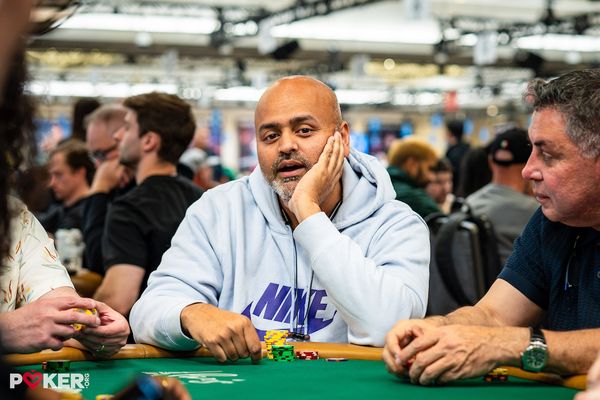
Amit Agarwal walked away from the 2026 WSOP Main Event with 240,000 chips—not because he busted, but because he wanted to watch a horror movie for the second time that week. His unconventional approach to poker’s biggest tournament raises fascinating questions about bankroll management, mental game, and what it truly means to find an edge in modern poker.
What Happened
During Day 2D of the 2026 World Series of Poker Main Event, Amit Agarwal did something almost unheard of in tournament poker: he voluntarily left his seat multiple times while holding a healthy stack. After building his chip count to 240,000 during Level 6, Agarwal departed the Horseshoe Event Center to catch a screening of “Obsession,” an indie horror film he’d already seen once during the same tournament.
This wasn’t a one-time occurrence. Agarwal had already left during dinner on Day 1D and played just 45 minutes on Day 2D before his first departure. His strategy? Set a chip target of 300,000, and once he hit it, leave for the day. The poker community watched in bewilderment as a player with a perfectly viable stack treated the most prestigious tournament in poker like a casual cash game session.
Between his Main Event appearances, Agarwal explored $4/$8 Limit Hold’em at South Point Casino—his first time playing the variant. He openly admitted he doesn’t know how to make money playing poker and treats his tournament buy-in like purchasing video game tokens. His philosophy: when the fun stops, so does the session, regardless of stack size or tournament dynamics.
The experiment ended when Agarwal attempted a bluff that got called, dropping him below 100,000 chips. Shortly after, his Main Event journey concluded—but not before he’d become one of the most talked-about players of the series.
The Poker Strategy Breakdown
From a traditional poker strategy perspective, Agarwal’s approach violates nearly every tournament principle taught in modern poker education. The WSOP Main Event structure is designed to reward players who can maintain focus across multiple days, accumulate chips during favorable situations, and navigate the unique dynamics of deep-stacked play.
By voluntarily blinding off chips during his absences, Agarwal surrendered significant equity. In tournament poker, every chip matters, but they don’t all hold equal value. The concept of chip utility means that your first 10,000 chips are worth more in real money terms than your next 10,000. When you’re sitting on 240,000 chips and blind down to 200,000, you’re not just losing chips—you’re losing tournament equity that can never be recovered.
Consider the math: if blinds are running 1,000/2,000 with a 2,000 big blind ante, you’re paying 5,000 per orbit. Missing even two hours of play could cost you 30,000-40,000 in chips without seeing a single hand. That’s equivalent to losing several all-in confrontations without the opportunity to win them.
However, there’s an unconventional counterargument buried in Agarwal’s madness. Tournament poker is grueling. The Main Event demands 10-12 hour days of intense focus. Mental fatigue leads to mistakes, and mistakes in poker are expensive. If Agarwal genuinely plays better during short, focused bursts than during marathon sessions where his attention wanes, his strategy might not be as irrational as it appears.
Professional players often discuss the importance of playing your “A-game.” If your A-game only lasts 90 minutes before deteriorating into C-game play, perhaps maximizing that window while accepting chip loss during absences could theoretically produce better results than grinding through hours of suboptimal play. Of course, this only works if you’re significantly better than your opponents during those focused periods—a big assumption.
Reading The Field & Table Dynamics
Agarwal’s approach creates unusual table dynamics that are worth examining. When a player repeatedly leaves and returns, it signals to observant opponents that this person isn’t following conventional tournament strategy. This could be exploited in several ways.
First, opponents know they can apply pressure when Agarwal returns to a diminished stack. If he’s been blinded down significantly, he’ll need to rebuild, potentially taking marginal spots he might otherwise avoid. Second, his stated goal of hitting 300,000 and leaving creates a predictable pattern. Savvy players could adjust by playing more aggressively against him as he approaches that threshold, knowing he might be more willing to gamble to reach his target quickly.
From an ICM (Independent Chip Model) perspective, Agarwal’s strategy is particularly puzzling. ICM calculations show that survival becomes increasingly valuable as you progress deeper into a tournament. The difference between finishing 500th and 400th is minimal, but the difference between 50th and 40th can be tens of thousands of dollars. By voluntarily reducing his stack through absences, Agarwal increases his bust-out risk at every stage.
The psychological impact on tablemates shouldn’t be underestimated either. Some players might tilt knowing someone is treating the Main Event so casually. Others might adjust their strategy, assuming Agarwal is a weak player to target. Both reactions create exploitable situations—though it’s unclear whether Agarwal is sophisticated enough to leverage them.
How To Apply This To Your Game
While we can’t recommend Agarwal’s exact strategy, there are legitimate lessons hidden within his unconventional approach that can improve your tournament poker.
First, recognize the value of mental freshness. If you’re playing a multi-day tournament and feel your focus slipping, taking a scheduled break—during dinner or between levels—is far better than playing on tilt or autopilot. The difference is planning these breaks during natural tournament pauses, not mid-level while chips are at stake.
Second, understand your personal sustainability threshold. Some players can grind 12-hour days effectively; others perform better with shorter, more intense sessions. If you’re a cash game player dabbling in tournaments, consider shorter-structured events that match your stamina rather than forcing yourself into marathon formats where you’ll make costly mistakes during hour ten.
Third, question the conventional wisdom that you must always maximize every edge. Agarwal’s philosophy of treating poker as entertainment rather than pure profit maximization isn’t wrong—it’s just different. If poker stops being enjoyable, you’ll either quit or play poorly. Finding the balance between optimal strategy and personal enjoyment is legitimate, especially for recreational players.
Fourth, experiment with setting session goals beyond just “play until I bust.” Cash game players do this routinely with stop-loss and stop-win limits. While tournament poker doesn’t allow you to cash out mid-event, you can set performance goals: play your A-game for four levels, then reassess. Make decisions based on mental state, not just chip stack.
Finally, recognize that bankroll management extends beyond just having enough buy-ins. If spending three days grinding a tournament only to bust on the bubble would genuinely ruin your week psychologically, that’s a form of bankroll mismanagement too. Agarwal’s approach of limiting his time investment protects his mental bankroll, even if it sacrifices chip equity.
Key Takeaways
- Voluntarily blinding off chips in tournaments sacrifices significant equity, as every chip lost represents tournament value that can’t be recovered through normal play
- Mental game and focus sustainability matter more than most players acknowledge—playing tired or tilted is often worse than not playing at all
- Setting unconventional session goals can work for recreational players who prioritize enjoyment over pure profit maximization
- Your personal playing style should match the tournament structure you choose—marathon events aren’t optimal for everyone
- Understanding ICM and chip utility becomes crucial when evaluating any tournament decision, including time management and session length
- The psychological edge of playing fresh and focused can partially offset the mathematical disadvantage of missing hands, though rarely enough to justify extended absences
Frequently Asked Questions
Is it ever correct to voluntarily leave a tournament with chips remaining?
In almost all cases, no. The only legitimate exceptions are genuine emergencies or situations where continuing to play would lead to severe tilt or impaired decision-making that would cost more equity than blinding off. If you’re so mentally compromised that you’d make catastrophic errors, taking a break might be defensible, but this should be extremely rare. The structure of tournaments means that chips lost to blinds and antes represent permanent equity loss that can’t be recovered.
How important is mental stamina in multi-day poker tournaments?
Mental stamina is critically important and often underestimated by amateur players. Studies of decision-making quality show significant deterioration after 6-8 hours of intense focus. Professional players train specifically for tournament endurance through physical fitness, proper nutrition, sleep schedules, and mental conditioning. If you struggle with long sessions, consider starting with single-day tournaments or events with shorter level structures before attempting multi-day championships like the WSOP Main Event.
Can treating poker as pure entertainment rather than profit-seeking ever be strategically valid?
For recreational players, absolutely. The “optimal” strategy depends on your goals. If you’re a professional, maximizing EV (expected value) is paramount. But if you’re playing with discretionary income for entertainment, optimizing for enjoyment is perfectly rational. The key is being honest about your goals and not confusing the two approaches. You can’t claim to be profit-focused while making entertainment-based decisions, and vice versa. Agarwal’s approach is internally consistent—he openly states he doesn’t know how to make money at poker and plays purely for fun.
Final Thoughts
Amit Agarwal’s WSOP Main Event adventure won’t appear in any poker strategy textbook as a model to emulate. His willingness to blind off chips while watching horror movies and learning limit hold’em violates every principle of optimal tournament play. Yet his story resonates because it challenges the assumption that everyone at the table shares the same goals and motivations.
For serious players looking to improve their tournament results, the lesson isn’t to copy Agarwal’s strategy—it’s to recognize that mental game, focus management, and personal sustainability are real strategic considerations. The best technical strategy in the world means nothing if you’re too exhausted or tilted to execute it properly. Understanding your limits and playing within them is a form of strategic wisdom that doesn’t show up in solver outputs.
Perhaps the most valuable insight from Agarwal’s experiment is the reminder that poker remains a game, even at its highest levels. When the fun disappears entirely, when it becomes pure mechanical optimization devoid of enjoyment, something essential is lost. Finding your personal balance between optimal play and sustainable enjoyment isn’t weakness—it’s self-awareness. Just maybe don’t blind off 40,000 chips to catch a movie while you’re figuring it out.
Ready to Sharpen Your Poker Game?
Master your poker game with expert hand analysis
