Two Canadians Eye WSOP Main Event Glory at Final Table
For the first time since Jonathan Duhamel’s legendary 2010 victory, Canada has a legitimate shot at claiming poker’s most prestigious title. Greg Mueller and Rami Hammoud have both secured seats at the 2026 WSOP Main Event final table, giving the Great White North two bullets in the chamber for a historic repeat performance.
What Happened
The 2026 World Series of Poker Main Event has reached its climactic final table, and the story everyone’s talking about involves two maple leaf representatives with serious championship aspirations. Greg Mueller, a seasoned high-stakes crusher from White Rock, British Columbia, bagged 48.5 million chips to claim the fourth spot on the leaderboard. Meanwhile, Rami Hammoud from Montreal sits in an even stronger position with 79 million chips, good for second place overall.
The chip leader entering the final table is Lucas Jumalon from the United States, who commands a formidable stack of 194 million—more than double Hammoud’s count and four times Mueller’s arsenal. The remaining six players represent a truly international field: Jamie Shaevel (USA) with 56M, Michael Gagliano (USA) with 46.5M, Mario Boos (France) with 44M, Lauri Saaskilahti (Finland) with 37.5M, Han Feng (USA) with 25M, and Evagoras Evagorou (Cyprus) bringing up the rear with 22.5M.
The final table is scheduled to resume on August 3 at the Horseshoe Event Center, giving all nine competitors nearly three weeks to prepare for the biggest poker moment of their lives. For Mueller and Hammoud, that preparation time carries extra weight—they’re not just playing for themselves, but for an entire nation that hasn’t celebrated a Main Event champion since Duhamel’s triumph sixteen years ago.
Mueller brings substantial pedigree to the felt, with three WSOP bracelets already adorning his resume and over $3.5 million in recorded tournament earnings. He’s a fixture in the toughest mixed games and high-stakes cash action that Las Vegas offers each summer. Hammoud, by contrast, represents a breakthrough story—his previous career-best score was $123,386, making this guaranteed seven-figure payday a life-changing result regardless of where he finishes.
The Poker Strategy Breakdown
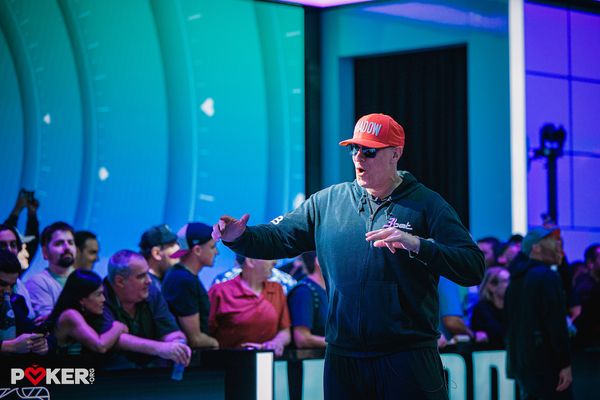
Mueller’s approach heading into the final table reflects the mindset of a battle-tested veteran who understands the difference between playing to win and playing not to lose. His strategy is refreshingly straightforward: maintain the fearless aggression that got him here, and don’t adjust just because the stakes have escalated. This “dance with who brought you” philosophy is sound tournament theory—players who suddenly tighten up at final tables often find themselves blinded away or exploited by more aggressive opponents.
With 48.5 million chips and blinds that will start at substantial levels, Mueller faces a critical decision tree. He’s in the danger zone where he has enough chips to do damage but not enough to coast. This stack size demands selective aggression—picking the right spots to apply pressure without spewing chips in marginal situations. His stated willingness to “go for it” when opportunities arise suggests he won’t be making ICM-heavy folds that might preserve ladder equity but sacrifice win equity.
The stack distribution creates fascinating strategic implications. Jumalon’s massive chip lead means he can apply relentless pressure to the middle stacks, forcing difficult decisions for their tournament lives. However, that same dynamic creates opportunities for players like Hammoud and Mueller to pick up pots when Jumalon overextends or when the shorter stacks play desperately to survive.
Hammoud’s second-place stack position is arguably the sweet spot at this final table. With 79 million chips, he has enough ammunition to play real poker without constantly worrying about survival. He can three-bet liberally, apply pressure to the middle and short stacks, and even challenge Jumalon in certain spots. The key for Hammoud will be avoiding unnecessary confrontations with the chip leader while accumulating chips from everyone else.
The presence of three very short stacks—Saaskilahti (37.5M), Feng (25M), and Evagorou (22.5M)—fundamentally alters the strategic landscape. These players will be looking for spots to double up, which means the medium stacks need to be cautious about tangling with them in marginal situations. Meanwhile, the big stacks can exploit this dynamic by applying pressure when short stacks are in the blinds or when they show weakness.
Reading The Field & Table Dynamics
The psychological element of having two Canadians at the final table shouldn’t be underestimated. Mueller explicitly mentioned the “team energy” and support system that’s been fueling his run, drawing parallels to his former life as a professional hockey player. This camaraderie can provide genuine strategic advantages—having someone to discuss hands with during breaks, sharing reads on opponents, and providing emotional support during the inevitable swings.
However, this buddy dynamic also creates potential complications. If Mueller and Hammoud find themselves in pots together, the dynamics become tricky. Do they play straightforward against each other to avoid complex leveling wars? Do they avoid each other entirely when possible? These decisions will need to be made in real-time, and the wrong read could prove costly.
The ICM (Independent Chip Model) pressure at this final table will be immense, particularly for the middle stacks. With pay jumps of hundreds of thousands of dollars between each position, every decision carries enormous financial consequences. The shortest stacks will be looking to ladder up, which creates opportunities for the big stacks to steal with impunity. But it also means that when short stacks do decide to make a stand, they’re often doing so with legitimate hands.
Mueller’s experience in high-stakes mixed games gives him a significant edge in hand reading and multi-street planning. These skills translate directly to final table play, where the ability to construct ranges, recognize betting patterns, and adjust to opponent tendencies becomes paramount. His three bracelets prove he knows how to close tournaments, which is a skill unto itself.
Hammoud’s relative inexperience at this level could cut both ways. On one hand, he might make mistakes that more seasoned pros would avoid. On the other hand, his game might be harder to read precisely because he doesn’t have an established final table track record. His opponents can’t simply review his previous big-stage performances to identify patterns and tendencies.
The three-week break before the final table resumes is a double-edged sword. It allows for preparation, coaching, and physical rest—Mueller mentioned wanting to “lose some pounds” and look good for the cameras. But it also allows anxiety to build, and players can overthink their approach. The key is finding the right balance between preparation and maintaining the confident, instinctive play that earned the final table seat in the first place.
How To Apply This To Your Game
The most important lesson from Mueller’s approach is the danger of changing your strategy just because the stakes have increased. If aggressive play and fearless decision-making got you to the final table, abandoning that style in favor of conservative play rarely works. This applies whether you’re playing a $50 tournament or the WSOP Main Event—trust the process that’s been successful for you.
When you’re in a middle-stack situation like Mueller, your primary goal should be accumulating chips rather than merely surviving. Yes, ICM considerations matter, but playing too tight allows the big stacks to run you over and the short stacks to catch up. Look for spots to three-bet, resteal, and apply pressure—especially against players who are clearly playing for ladders rather than the win.
Hammoud’s emphasis on sharing the experience with friends and family highlights an often-overlooked aspect of tournament poker: the mental and emotional support system. Having a rail, discussing hands with trusted friends, and maintaining perspective all contribute to better decision-making under pressure. Don’t isolate yourself during big tournament runs—lean on your support network.
The stack distribution at this final table demonstrates why chip accumulation throughout a tournament is so crucial. Jumalon’s massive lead gives him multiple paths to victory and allows him to absorb mistakes that would cripple other players. In your own tournament play, don’t be satisfied with just surviving to the next pay jump—look for opportunities to build a commanding stack that gives you maximum flexibility.
Pay attention to how the presence of short stacks changes the dynamics at your table. When multiple players are in push-or-fold mode, it affects everyone’s ranges and strategies. You can exploit tight play from other medium stacks who are trying to let the short stacks bust, but you also need to be cautious about calling shoves too liberally when short stacks are desperate.
Key Takeaways
- Greg Mueller (48.5M chips, 4th place) and Rami Hammoud (79M chips, 2nd place) are both chasing Canada’s first WSOP Main Event title since Jonathan Duhamel’s 2010 victory
- Mueller’s strategy emphasizes maintaining the fearless, aggressive approach that got him to the final table rather than adjusting for the increased stakes—a sound principle for any tournament stage
- Hammoud’s second-place stack position provides the ideal balance of chips to apply pressure without constant survival concerns, while Mueller’s medium stack requires selective aggression
- The three-week break before the August 3 final table allows for preparation and support-building, but players must avoid overthinking and maintain their instinctive play
- The presence of multiple short stacks (three players under 40M chips) creates ICM pressure that the big and medium stacks can exploit through aggressive play
- Mueller’s experience in high-stakes mixed games and three previous bracelet wins gives him crucial edges in hand reading and closing out tournaments under pressure
Frequently Asked Questions
When was the last time a Canadian won the WSOP Main Event?
Jonathan Duhamel from Montreal won the WSOP Main Event in 2010, taking home the bracelet and the title. That was sixteen years ago, making the 2026 final table appearance of both Greg Mueller and Rami Hammoud particularly significant for Canadian poker fans hoping to see another champion crowned.
What is Greg Mueller’s poker background?
Greg Mueller is a high-stakes veteran from White Rock, British Columbia, with three WSOP bracelets and over $3.5 million in recorded tournament earnings. He’s known as a fixture in tough mixed games and high-stakes cash games during the World Series of Poker, and he previously played professional hockey before transitioning to poker.
How does ICM pressure affect final table strategy?
ICM (Independent Chip Model) pressure refers to how pay jump considerations affect decision-making at final tables. With hundreds of thousands of dollars separating each finishing position, players—especially those with medium and short stacks—often play more conservatively to avoid busting before others. This creates opportunities for big stacks to apply pressure, but it also means players need to balance survival with chip accumulation to maintain winning chances.
Final Thoughts
The 2026 WSOP Main Event final table sets up as one of the most compelling in recent memory, with the Canadian angle adding genuine narrative weight to the proceedings. Mueller and Hammoud represent different archetypes—the grizzled veteran with multiple bracelets versus the breakthrough player experiencing the biggest moment of his career—but both share the same goal and the same national pride driving them forward.
What makes this final table particularly interesting from a strategic perspective is the stack distribution. Jumalon’s enormous chip lead doesn’t guarantee victory, but it certainly provides multiple paths to the title. For Mueller and Hammoud, the challenge will be navigating the ICM minefield while still playing aggressively enough to accumulate the chips necessary to challenge for the win. The three-week break gives them time to prepare, but it also allows doubt and anxiety to creep in if they’re not careful.
Regardless of the outcome, both Canadians have already secured life-changing scores and cemented their places in poker history. But neither player is satisfied with just being there—they came to win, and they have the chips and skills to make it happen. When cards fly on August 3, expect both Mueller and Hammoud to bring the fearless, aggressive poker that got them this far. Canada hasn’t had a Main Event champion in sixteen years, but that drought might be about to end.
Ready to Sharpen Your Poker Game?
Master your poker game with expert hand analysis