AI Tells Detection: How Machine Learning Is Changing Poker
Artificial intelligence has moved from the poker lab into mainstream broadcasts, with machine learning tools now analyzing player behavior patterns on major television coverage. An AI tells detection system recently deployed during WSOP broadcasts on ESPN is sparking debate about technology’s role in reading opponents—and whether these tools give players an unfair advantage at the tables.
What Happened
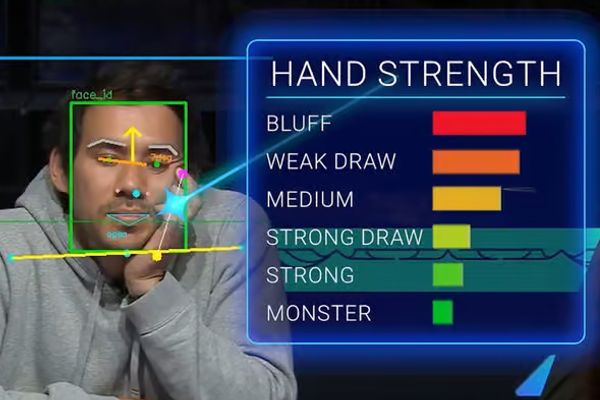
During this year’s World Series of Poker coverage on ESPN, viewers witnessed something unprecedented: an AI-powered tells detection system analyzing player behavior in real-time. The technology, developed by an Air Force AI engineer and poker enthusiast, tracks physical movements and verbal patterns, then correlates them with hand strength to identify potential tells.
The system works by processing hours of footage from featured tables, mapping facial expressions, body language, and speech patterns against known hand outcomes. Once a player was eliminated from the Main Event, producers at Omaha Productions would send footage to be analyzed—a process taking roughly 8-9 hours from raw video to broadcast-ready graphics.
The technology trains on hundreds of images of specific players to recognize them at the table, then collects thousands of data points per second during play. These data points track everything from eye movement to posture shifts, betting cadence to vocal inflection. The algorithm then identifies correlations between these behaviors and hand strength categories: bluffing, medium strength, or premium holdings.
Beyond television broadcasts, the tool has attracted interest from professional players looking to study opponents who frequently appear on livestreams. Several pros have reached out to commission private analyses of specific opponents, though the developer notes this work has taken a backseat to the ESPN collaboration.
The Poker Strategy Breakdown
Understanding tells has always been fundamental to live poker strategy, but AI takes this ancient art into uncharted territory. Traditional tell-reading relies on human observation—noticing that an opponent touches their chips differently when bluffing, or speaks more when holding the nuts. These observations accumulate slowly through hours of play and require significant pattern recognition skills.
Machine learning accelerates this process exponentially. Where a human might consciously track three or four behavioral patterns, AI can monitor dozens simultaneously with mathematical precision. The system doesn’t get tired, doesn’t have confirmation bias, and doesn’t miss subtle micro-expressions that flash across a face in milliseconds.
The strategic implications are profound. Players who appear frequently on livestreamed games are essentially creating a database of their own tells. Every hand broadcast becomes training data. A player might have excellent discipline in controlling obvious tells—the chip shuffle, the forced smile—but still exhibit subtle patterns in breathing rate or blink frequency that only machine analysis would catch.
This creates a new strategic consideration: broadcast exposure risk. Players must now weigh the promotional benefits of televised poker against the intelligence they’re providing to opponents. The more footage available, the more accurate the AI analysis becomes. A player with 100 hours of broadcast time is far more vulnerable to this technology than someone with just 10 hours.
The technology also highlights the importance of behavioral consistency. Players who consciously adopt the same routine regardless of hand strength—the “poker face” taken to its logical extreme—become harder for AI to read. The system relies on finding correlations; if no correlation exists between behavior and hand strength, the analysis yields nothing useful.
Reading The Field & Table Dynamics
The introduction of AI tells detection fundamentally alters table dynamics in ways that extend beyond individual matchups. When players know this technology exists, it creates a meta-game of behavioral awareness that didn’t exist before.
Consider the psychological impact on livestream regulars. These players now face an invisible threat: someone might be studying them with tools that exceed human analytical capability. This awareness could lead to more robotic play, with players deliberately standardizing their actions to avoid creating patterns. While this protects against tells, it might also reduce the natural flow and table feel that helps elite players make intuitive decisions.
Tournament dynamics add another layer of complexity. In deep-stacked situations where ranges are wide and reads are crucial, tells become more valuable. An AI-informed player entering a major tournament might have significant edge against opponents they’ve studied through broadcast footage. They’re essentially playing with partial information about opponent tendencies that others lack.
The technology also impacts the economics of poker content creation. Livestream shows depend on regular players building audiences and storylines. If appearing regularly on stream means exposing yourself to AI analysis, some players might limit their appearances, potentially hurting the content ecosystem that has driven poker’s recent growth.
There’s also the question of accessibility. Currently, this technology requires specialized knowledge and significant processing time. But as AI tools become more democratized, we could see a future where any player can upload footage of an opponent and receive instant analysis. This would level the playing field in some ways while potentially making live poker more mechanical and less intuitive.
How To Apply This To Your Game
Whether you embrace or reject AI tells detection, its existence demands strategic adjustments to your game. Here’s how to adapt in this new landscape.
Develop behavioral consistency: The best defense against tells detection—human or AI—is eliminating patterns. Create a standardized routine for every action: how you look at cards, how you place chips, how you sit when thinking. Practice this routine until it becomes automatic regardless of hand strength. Record yourself playing and review the footage critically.
Limit your broadcast exposure strategically: If you play livestreamed games regularly, consider the intelligence cost. You might choose to play more conservatively on stream while saving your creative plays for non-broadcast settings. Alternatively, occasionally make plays that contradict your usual patterns to poison the data pool for anyone analyzing you.
Study your own tells: Before someone else does it for you, analyze your own behavior. Have friends review footage of your play and identify patterns you’re unaware of. Many players discover they have tells they never knew existed—touching their face when bluffing, breathing differently with strong hands, or changing their betting motion based on confidence level.
Exploit the paranoia: In games where players are aware of AI tells detection, you can leverage their overcorrection. Players trying too hard to be consistent often become rigid and predictable in other ways. They might eliminate physical tells while creating timing tells or bet-sizing patterns that are equally exploitable.
Focus on fundamentals: The best players have always known that solid strategy beats tells-based play in the long run. While tells provide marginal edges in close decisions, they can’t overcome fundamental strategic errors. Ensure your ranges, bet sizing, and positional play are sound before worrying about whether your eye movements are giving away information.
Key Takeaways
- AI tells detection systems can now analyze thousands of behavioral data points per second, identifying patterns invisible to human observers and potentially giving players significant edges against frequently-broadcast opponents
- The technology processes 8-9 hours per session to correlate physical behaviors, verbal patterns, and hand strength, creating detailed profiles of player tells across bluffing and value-betting situations
- Players with extensive livestream appearances face increased vulnerability to AI analysis, creating a strategic trade-off between promotional exposure and competitive intelligence leakage
- Developing behavioral consistency—standardized routines for all actions regardless of hand strength—provides the most effective defense against both human and AI tells detection
- The existence of this technology is already changing table dynamics, with players becoming more aware of their physical patterns and potentially adopting more mechanical playing styles
- As AI tools become more accessible, the competitive landscape may shift toward players who combine strong fundamental strategy with disciplined behavioral control
Frequently Asked Questions
Can AI tells detection be used in real-time during a poker game?
Currently, the technology requires 8-9 hours of processing time to analyze footage, clean data, and generate usable insights, making real-time application impossible. However, players could theoretically study opponents before tournaments using previously recorded footage. Real-time detection would require massive computational resources and likely violate casino and tournament rules regarding electronic devices and outside assistance.
Is using AI to study opponent tells legal and ethical?
Using AI to analyze publicly available footage of opponents is currently legal, as it’s no different in principle from a player studying broadcast hands manually. However, using such analysis during live play would violate rules against electronic assistance in virtually all casinos and tournaments. The ethics remain debated—some view it as advanced preparation, others as an unfair technological advantage that undermines the spirit of poker.
How can I protect myself from AI tells detection?
The most effective protection is behavioral consistency: develop standardized routines for every action at the table and maintain them regardless of hand strength. Limit your exposure on livestreams and broadcasts when possible. Record and review your own play to identify unconscious patterns. Remember that strong fundamental strategy matters more than tells in the long run—focus on sound poker decisions first, behavioral control second.
Final Thoughts
The integration of AI tells detection into mainstream poker broadcasts represents more than a technological novelty—it signals a fundamental shift in how the game is analyzed and played. Like solver technology before it, AI tells detection will likely progress from controversial innovation to standard tool in the professional’s arsenal. The question isn’t whether this technology will impact poker, but how players will adapt to its existence.
For recreational players, the immediate impact is minimal. These tools require significant expertise and processing power, and most opponents aren’t studying you with AI. But the broader lesson applies to everyone: in an age of increasing surveillance and analysis, behavioral discipline matters more than ever. The skills that protect you from AI—consistency, awareness, routine—also make you harder for human opponents to read.
The poker community’s mixed reaction to this technology reflects a deeper tension between tradition and progress. Poker has always balanced human intuition with mathematical analysis, art with science. AI tells detection pushes that balance further toward the analytical, but it doesn’t eliminate the human element—it just raises the bar for what constitutes elite play. The best players will be those who master both the technical and behavioral aspects of the game, combining solver-perfect strategy with tells-proof execution.
Ready to Sharpen Your Poker Game?
Master your poker game with expert hand analysis