Maurice Hawkins’ 26th WSOP Ring: What Circuit Grinders Can Learn
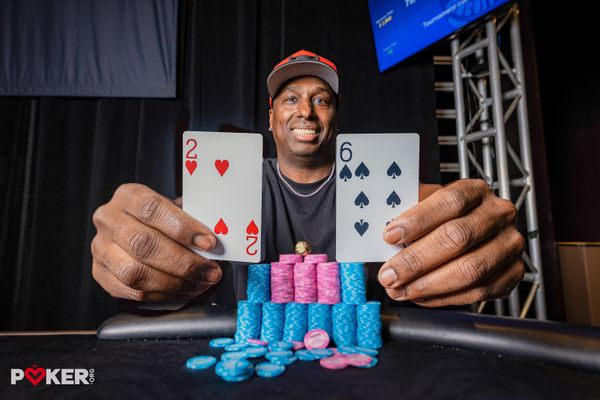
Maurice Hawkins has done it again, capturing his 26th WSOP Circuit ring at Choctaw and extending a record that may never be broken. The win came in the Mini Main Event, where Hawkins battled back from a massive chip deficit in heads-up play to claim another $76,380 and cement his status as the most decorated Circuit player in history.
What Happened
The WSOP Circuit stop at Choctaw delivered another chapter in the Maurice Hawkins legacy. Taking down the Mini Main Event, Hawkins added ring number 26 to his collection, pulling further ahead of the pack in a race that’s becoming less competitive by the month.
The final table wasn’t a cakewalk. Hawkins faced stiff competition from fellow ring hunters Ari Engel and Will Givens, both formidable opponents with deep Circuit experience. Engel, who sits tied for second all-time with Daniel Lowery at 20 rings, finished fourth. Givens took third place, setting up a heads-up battle with Brian Green that nearly went the other way.
Green mounted serious pressure, grinding Hawkins down to just six big blinds at one point. But experience won out. Hawkins clawed back, eventually claiming the victory and the lion’s share of the prize pool. Green settled for second place and $50,900, a respectable haul but not the ring.
This victory comes during a turbulent year for Hawkins. He filed for bankruptcy in the spring, just weeks after securing ring #24. Ring #25 followed at Cherokee before a deep run at the WSOP main series, where he finished runner-up in a $600 mixed game event—his closest brush with a bracelet to date.
The Poker Strategy Breakdown
Hawkins’ post-win interview revealed something crucial that separates elite Circuit grinders from the rest: he’s figured out the formula. When he says he’s “got the recipe,” he’s not being cocky—he’s stating a fact backed by 26 pieces of evidence.
The strategy Hawkins employs on the Circuit differs significantly from what works at the WSOP in Las Vegas. He’s candid about this: the competition level drops outside Vegas, and chip accumulation becomes easier. This isn’t arrogance; it’s strategic awareness. Understanding your edge and where to deploy it is fundamental to long-term tournament success.
Hawkins has developed a pattern-recognition system that allows him to categorize opponents quickly and adjust his strategy accordingly. Against weaker fields, he can apply pressure more liberally, knowing that opponents will make mistakes at higher frequencies. The chip accumulation he references isn’t about running hot—it’s about maximizing value from every marginal spot.
The comeback from six big blinds in heads-up play demonstrates another critical skill: short-stack mastery. Many players panic when their stack dwindles, either shutting down completely or making desperate moves. Hawkins maintained composure, picked his spots, and executed a comeback that required both technical precision and mental fortitude.
His approach to Circuit events also involves volume. By playing numerous stops throughout the year, Hawkins ensures he’s always in the mix. This isn’t just about getting lucky; it’s about creating opportunities. The more final tables you reach, the more chances you have to close. Simple math, but most players lack the stamina and bankroll management to execute this strategy consistently.
Reading The Field & Table Dynamics
The Choctaw Mini Main final table presented a fascinating study in table dynamics. With Engel and Givens in the mix, Hawkins couldn’t simply bully his way through. These are players who understand ICM pressure and won’t fold their way off the podium.
Engel’s fourth-place finish is particularly instructive. As someone chasing Hawkins in the all-time ring race, Engel had extra motivation to take this one down. The fact that Hawkins outlasted him speaks to superior final table play or better run-good—likely a combination of both.
The three-handed play that saw Givens eliminated set up the heads-up match. This is where tournament poker gets truly psychological. Both players know the other’s resume. Green had momentum, having just knocked out Givens and holding a significant chip advantage. But Hawkins had something more valuable: experience in exactly this situation.
When you’ve won 25 rings before, the pressure of heads-up play for number 26 doesn’t hit the same way. Green was playing for his first ring, facing the all-time leader who’d been in this exact spot dozens of times. That mental edge matters, especially when stacks get shallow and every decision carries tournament-ending weight.
Hawkins’ ability to read opponent tendencies becomes amplified in heads-up play. With only one opponent to focus on, he can dedicate full attention to betting patterns, timing tells, and strategic adjustments. His comment about understanding “other people’s games” isn’t vague—it’s the result of thousands of hours studying how different player types react under pressure.
The field composition at Circuit events also plays into Hawkins’ hands. While there are always tough regulars, the majority of the field consists of recreational players, local grinders, and amateurs taking their shot. This creates a different strategic environment than the WSOP, where the concentration of professionals is significantly higher.
How To Apply This To Your Game
The Hawkins formula isn’t a secret, but it requires discipline most players lack. First, identify where your edge is greatest. If you’re a solid player but not world-class, you might have more success in regional events than in high-profile series. There’s no shame in this—it’s smart business.
Second, develop a systematic approach to opponent categorization. Within the first orbit, you should have preliminary reads on each player at your table. Are they tight-passive? Loose-aggressive? Do they understand position? How do they react to three-bets? Build a mental database and update it continuously.
Third, master short-stack play. Hawkins’ comeback from six big blinds didn’t happen by accident. Practice push-fold ranges, understand when to take flips, and know when to wait for a better spot. Many players lose tournaments they should win because they panic when short.
Fourth, play volume. One tournament result proves nothing. Hawkins has played hundreds of Circuit events to win 26 rings. That’s roughly a 10-15% final table rate if you estimate conservatively. You need to put in the volume to let your edge manifest.
Fifth, manage your mental game. Hawkins has dealt with bankruptcy, public criticism, and the pressure of defending his record. Yet he continues to perform. Develop resilience. Bad beats happen. Downswings are inevitable. The players who succeed long-term are those who can weather the storms.
Finally, be honest about competition levels. Hawkins openly acknowledges that Circuit fields are softer than the WSOP. This isn’t disrespectful—it’s strategic awareness. If you’re trying to build a bankroll or gain experience, playing in events where you have a clear edge makes more sense than jumping into shark tanks.
Key Takeaways
- Maurice Hawkins extended his all-time WSOP Circuit ring record to 26 with a Mini Main victory at Choctaw, outlasting a tough final table that included Ari Engel and Will Givens
- The comeback from six big blinds in heads-up play demonstrates the importance of short-stack mastery and mental composure in championship situations
- Hawkins’ success stems from pattern recognition, opponent categorization, and understanding where his edge is greatest—primarily Circuit events outside Las Vegas
- Volume matters: consistent deep runs require playing numerous events and creating opportunities for success rather than relying on single-tournament variance
- Strategic honesty about field strength allows players to maximize ROI by selecting events where their skill edge is most pronounced
- The gap between Hawkins (26 rings) and his closest competitors Engel and Lowery (20 each) continues to widen, suggesting his approach is systematically superior in this format
Frequently Asked Questions
How does Maurice Hawkins keep winning WSOP Circuit rings?
Hawkins has developed a systematic approach to Circuit events that combines high volume, superior opponent reads, and strategic game selection. He plays numerous stops throughout the year, understands the field composition differs from major WSOP events, and has mastered the specific dynamics of Circuit final tables. His experience in high-pressure situations gives him a mental edge that becomes decisive in close spots.
What’s the difference between WSOP Circuit rings and bracelets?
WSOP bracelets are awarded for events at the World Series of Poker main festival in Las Vegas, which attracts the strongest fields in poker. Circuit rings are awarded at regional WSOP Circuit stops throughout the year, which typically feature softer competition and smaller buy-ins. While both are prestigious, bracelets are generally considered more valuable due to the higher competition level. Hawkins has 26 rings but has yet to win his first bracelet.
Can Maurice Hawkins’ Circuit ring record ever be broken?
While anything is possible in poker, Hawkins’ record appears increasingly safe. His closest competitors, Ari Engel and Daniel Lowery, each have 20 rings—six behind. At the current pace, Hawkins is adding rings faster than anyone else is chasing. For someone to catch him, they’d need to dedicate similar volume to Circuit events while Hawkins simultaneously stops winning, which seems unlikely given his continued success and stated goal of reaching 200 rings.
Final Thoughts
Maurice Hawkins’ 26th WSOP Circuit ring isn’t just another trophy—it’s a masterclass in strategic specialization. While many players chase glory at the biggest events, Hawkins has identified where his edge is greatest and exploited it relentlessly. The result is a record that grows more untouchable with each passing stop.
The comeback from six big blinds in heads-up play encapsulates what makes Hawkins special in this format. Lesser players would have accepted defeat or made a desperate hero call. Hawkins trusted his process, executed fundamentally sound short-stack strategy, and closed out another victory. That’s not luck—that’s skill compounded over thousands of hands.
For aspiring tournament players, the lesson is clear: find your edge, play volume, and don’t apologize for strategic game selection. Hawkins doesn’t pretend Circuit events are as tough as High Rollers. He acknowledges the reality and capitalizes on it. That honesty, combined with technical excellence and mental toughness, is the actual recipe he’s spreading across America.
Ready to Sharpen Your Poker Game?
Master your poker game with expert hand analysis