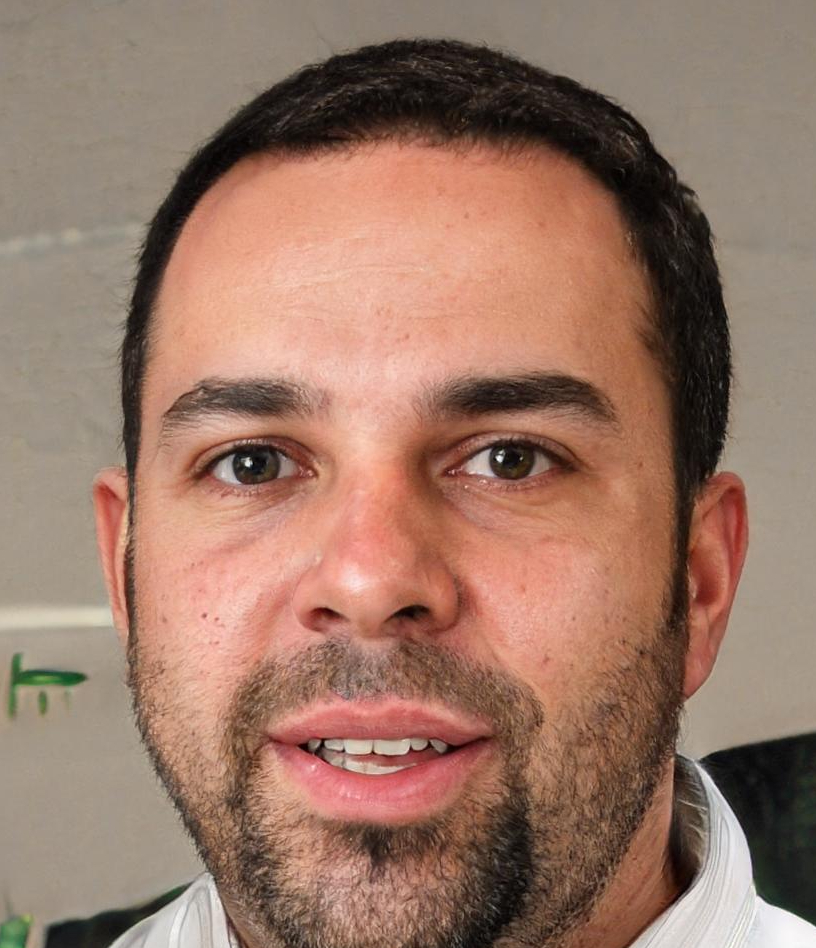
WSOP Final Tabler Returns Home to Work Between Sessions
Evagoras Evagorou made history as Cyprus’s first-ever WSOP Main Event finalist, then promptly boarded a plane back to Nicosia to resume his day job as an optician. The poker pioneer who helped build the island’s poker scene two decades ago wasn’t about to let a $10 million opportunity interfere with his eyewear business.
What Happened
When Day 8 of the 2026 WSOP Main Event concluded, Evagorou found himself among the final nine players vying for poker’s most prestigious title. While most competitors would hunker down in Las Vegas to prepare, the 22-year business owner made a different choice. He flew 7,000 miles back to Cyprus to manage his optical shop in the nation’s capital.
“I am an optician. I have had a business in Nicosia for 22 years,” Evagorou explained during an interview from his home country. “After Day 8, I came back to Cyprus, and I was working.” The decision speaks volumes about his priorities and the balanced lifestyle he’s cultivated since his semi-professional poker days ended over a decade ago.
Evagorou enters the final table with 22.5 million chips, placing him ninth in the chip counts. Despite being the shortest stack, he carries the weight of an entire nation’s poker aspirations on his shoulders. His journey from organizing underground games in the early 2000s to representing Cyprus on poker’s biggest stage represents a remarkable arc that few could have predicted.
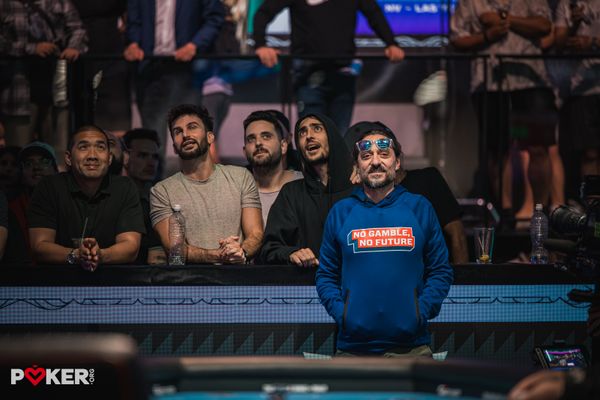
The Poker Strategy Breakdown
Evagorou’s path to the final table reveals a player who understands his strengths and plays exclusively within them. His chip progression throughout the tournament shows methodical accumulation rather than explosive growth: from 83,000 on Day 1D to 198,000 on Day 2D, then 546,000 on Day 3. The real surge came on Day 6 when he jumped to 7.475 million, followed by a massive Day 7 where he peaked at 38.2 million before settling at his current 22.5 million.
This isn’t luck—it’s calculated preparation meeting opportunity. Evagorou exclusively plays deep-stack tournaments, a strategic choice that aligns with his skill set. “I am very good in deep tournaments. Very, very good. In all the deep tournaments I have played, I make the money,” he stated confidently. This specialization allows him to develop expertise in specific situations rather than spreading himself thin across various formats.
His background in deep-stack cash games provides the foundation for his tournament success. “I know how to navigate better in these situations because I play very deep cash games,” he explained. The translation from cash to tournament poker isn’t always seamless, but deep-stack events bridge that gap. The patience required to grind through 200+ big blind stacks, the hand-reading skills developed over thousands of hours, and the emotional control necessary for marathon sessions all transfer directly.
What makes Evagorou particularly dangerous is his self-awareness. He doesn’t chase every tournament or try to master every format. He identified his lane and stayed in it. “This was the tournament that I was dreaming of going to play. I knew that because I know my type of player,” he said. This is his first WSOP Main Event, but he’s been preparing for it his entire poker career.
Reading The Field & Table Dynamics
Entering as the short stack creates unique challenges and opportunities. In a nine-handed final table with $10 million on the line, ICM pressure affects every decision. However, Evagorou’s experience on televised tables gives him an edge that chip counts don’t reflect. “Every time I have played on TV tables, I am very calm, for some reason. I’m patient, I can wait, I speak to the players,” he noted.
This psychological composure becomes crucial when facing the ESPN cameras and the intensity of the final table atmosphere. While other players might tighten up or make uncharacteristic plays under pressure, Evagorou’s track record suggests he thrives in these moments. His ability to remain conversational and engaged while making critical decisions indicates a level of mental fortitude that can’t be measured in big blinds.
The short stack position also creates strategic flexibility. With 22.5 million chips, he’s not desperate but can’t afford to wait too long. The other players must account for his presence while simultaneously battling each other for chip supremacy. This dynamic often allows the short stack to find spots where aggression goes unpunished because medium stacks can’t afford to tangle without premium holdings.
Evagorou’s deep tournament expertise means he understands stack leverage better than most. He knows when 30 big blinds plays differently than 50, when to apply pressure, and when to preserve chips. His comment about being “really good” in deep tournaments wasn’t bravado—it was pattern recognition based on years of results.
How To Apply This To Your Game
The first lesson from Evagorou’s journey is specialization. Recreational players often try to master every poker variant and tournament structure simultaneously. Instead, identify the formats where your skills shine brightest and focus your energy there. If you excel at deep-stack play, seek out tournaments with generous starting stacks and slow structures. If you’re a short-stack wizard, satellite tournaments might be your goldmine.
Second, maintain perspective and balance. Evagorou’s decision to return home and work between sessions wasn’t just about business obligations—it was about staying grounded. “I live a healthier life. I have grown up more now. I have my family, my daughter, and my dog here. I like to have a calm way of life,” he shared. This emotional equilibrium translates directly to better decision-making at the table.
Third, leverage your cash game experience in tournament settings. The skills aren’t identical, but deep-stack tournaments create situations remarkably similar to cash games. If you’re primarily a cash player considering tournament poker, look for events with 200+ big blind starting stacks where your post-flop skills and hand-reading abilities provide maximum advantage.
Fourth, embrace your role at the table. Whether you’re short-stacked, deep-stacked, or somewhere in between, each position requires different tactics. Evagorou isn’t lamenting his ninth-place chip position—he’s preparing to navigate it with the skills he’s honed over decades. Study how to play various stack sizes effectively rather than hoping to always be the chip leader.
Finally, build genuine comfort in pressure situations. Evagorou’s calmness on TV tables didn’t happen accidentally—it developed through repeated exposure and conscious effort. Seek opportunities to play in higher-pressure environments, even if it means playing smaller stakes in unfamiliar settings. The psychological skills you develop will pay dividends when the stakes matter most.
Key Takeaways
- Specialize in poker formats that align with your natural strengths rather than trying to master everything simultaneously
- Deep-stack tournament skills translate directly from cash game experience, particularly in hand-reading and post-flop play
- Maintaining life balance and perspective outside poker contributes to better decision-making and emotional control at the table
- Short-stack play at final tables requires different tactics but creates unique opportunities when opponents are ICM-constrained
- Psychological preparation and comfort under pressure can be as valuable as technical skills in high-stakes situations
- Building a poker community and contributing to the game’s growth creates legacy beyond individual tournament results
Frequently Asked Questions
Why would Evagorou return home instead of staying in Las Vegas to prepare?
Evagorou’s decision reflects his commitment to maintaining balance between poker and his established life in Cyprus. After 22 years running his optician business, he prioritizes stability and family over single-minded poker focus. This grounded approach likely contributes to his calm demeanor and strong decision-making under pressure, as he doesn’t view poker as his sole identity or income source.
How does deep-stack cash game experience translate to tournament success?
Deep-stack cash games develop crucial skills for tournament poker: hand-reading over multiple streets, patience to wait for profitable spots, and comfort playing 100+ big blind stacks. In deep-stack tournaments, these skills directly apply, especially in the early and middle stages. Players can make more sophisticated plays, extract maximum value, and avoid the push-fold scenarios that dominate shallow-stack play.
What advantages does the short stack have at a final table?
While challenging, short-stack play offers strategic opportunities. Other players often avoid confrontations with medium stacks due to ICM pressure, creating fold equity for well-timed aggression. The short stack can also exploit situations where chip leaders battle each other, and ladder pressure sometimes works in their favor as players with similar stacks try to outlast each other. Psychological comfort in this position, like Evagorou possesses, amplifies these advantages.
Final Thoughts
Evagoras Evagorou’s story transcends a single tournament result. His journey from organizing Cyprus’s first poker games to representing the nation on poker’s grandest stage demonstrates how passion, patience, and strategic focus can overcome geographical and resource limitations. The fact that he maintains his optician business and prioritizes family while competing at the highest level challenges the stereotype that poker excellence requires complete life sacrifice.
His approach offers a blueprint for recreational and semi-professional players seeking sustainable poker success. By specializing in deep-stack formats, maintaining emotional balance, and playing within his strengths, Evagorou maximized his chances when the opportunity arrived. Whether he captures the $10 million first prize or not, he’s already achieved something arguably more valuable—inspiring an entire nation’s poker community and proving that measured, strategic preparation beats reckless volume.
As the final table approaches, Evagorou carries more than chips to the table. He brings decades of experience, a pioneer’s mentality, and the calm confidence of someone who knows exactly who he is as a player. That self-knowledge might be the most powerful weapon of all.
Ready to Sharpen Your Poker Game?
Master your poker game with expert hand analysis