WSOP Main Event Final Table: Feng’s Surge & ICM Paralysis
Han Feng rocketed from last place to second in chips during Day 1 of the 2026 WSOP Main Event final table, while ICM pressure created a suffocating atmosphere that saw just two eliminations over six grueling hours. With five players now clustered below 20 big blinds and Lucas Jumalon commanding a massive chip lead, Day 2 promises fireworks.
What Happened
The opening session of the 2026 WSOP Main Event final table delivered drama in unexpected ways. While many anticipated aggressive action, the reality was a masterclass in patience, pressure, and calculated risk-taking that reshaped the entire tournament landscape.
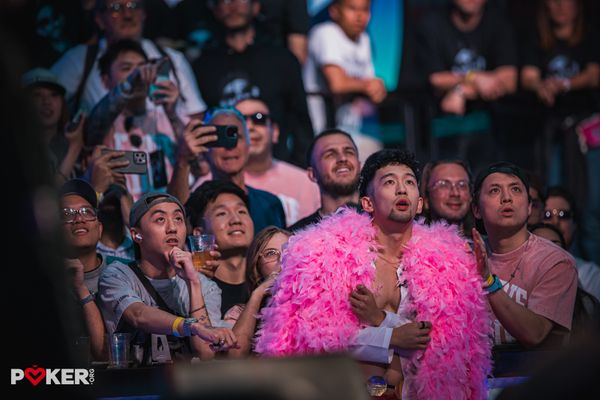
Han Feng entered the final table as the short stack but executed one of the most impressive comebacks in recent Main Event history. His ascent to 106.5 million chips puts him firmly in second place, trailing only Lucas Jumalon’s commanding stack of 212 million. The gap between second and third is substantial, with Lauri Saaskilahti sitting on 84.5 million.
The session’s pivotal moment came when Feng found himself all-in holding pocket queens against Mario Boos’ ace-king. When a queen spiked on the turn, it fundamentally altered the tournament’s trajectory. Feng gained momentum while Boos began his descent, eventually busting to Saaskilahti later in the day.
Cyprus’ Evagorou Evagorou became the first casualty, making history as his nation’s first-ever WSOP Main Event final table participant before his elimination. Starting with the shortest stack, he managed an early double-up through Jumalon but couldn’t sustain the run.
The remaining five players—Rami Hammoud (45.5M), Michael Gagliano (42M), Jamie Shaevel (33M), and Greg Mueller (29.5M)—find themselves in precarious positions. All sit below 20 big blinds heading into Day 2, setting up what should be an explosive continuation when cards fly at 4pm PT on Tuesday.
The Poker Strategy Breakdown
The queens versus ace-king confrontation between Feng and Boos represents a classic tournament inflection point that deserves deeper analysis. Pre-flop, pocket queens are roughly a 57-43 favorite against ace-king offsuit, making this essentially a coin flip with slight equity advantage to the pair.
From Boos’ perspective, getting it in with ace-king at this stage isn’t necessarily a mistake—it depends entirely on the circumstances. If Feng was shoving light as part of his short-stack comeback strategy, ace-king plays well against that range. However, against a player fighting for tournament life who likely has a tight shoving range, calling off significant chips with unpaired cards becomes questionable.
The critical lesson here involves understanding ranges in final table scenarios. Short stacks don’t need to gamble with marginal holdings when pay jumps are massive. Feng’s willingness to commit his stack suggests he held a premium hand, which should have given Boos pause. Reading opponent tendencies and adjusting ranges accordingly separates good final table players from great ones.
Feng’s overall approach demonstrated textbook short-stack strategy. He understood that survival alone wouldn’t win the tournament—he needed to accumulate chips. His gym work and study sessions clearly paid dividends, as he picked optimal spots to apply pressure and maximize fold equity when appropriate.
The turn queen that sealed Boos’ fate illustrates poker’s variance, but the setup reveals strategic depth. Feng positioned himself to either double up or exit, recognizing that middle-stack limbo at a final table often leads to slow death. His aggressive approach, while risky, gave him the only realistic path to victory.
Reading The Field & Table Dynamics
ICM considerations dominated this session in ways that fundamentally altered standard poker strategy. With pay jumps exceeding a million dollars between positions, every decision carried enormous financial weight beyond chip equity.
The slow pace—just two eliminations in six hours—reflects this pressure. Players like Shaevel and Mueller, who started in favorable positions, found themselves handcuffed by ICM. Risking chips to accumulate more becomes mathematically questionable when each elimination guarantees a massive payday increase.
This dynamic creates opportunities for chip leaders. Jumalon’s commanding stack allows him to apply relentless pressure on middle stacks who can’t fight back without risking their tournament lives. His post-session comments about “bobbing and weaving” suggest he understands this leverage perfectly. He doesn’t need to win massive pots—he just needs to avoid disasters while the short stacks cannibalize each other.
Saaskilahti’s climb from seventh to third demonstrates smart exploitation of these dynamics. By staying active without overcommitting, he accumulated chips from players too scared to defend properly. His elimination of Boos came after Boos was already crippled, representing a low-risk opportunity to pad his stack.
The cluster of five players below 20 big blinds creates a fascinating dynamic for Day 2. Someone needs to make a move soon, as blinds and antes will erode these stacks rapidly. This desperation benefits Jumalon and Feng, who can pick spots to apply pressure knowing opponents must act.
Hammoud’s significant slide from his starting position suggests he may have overvalued pot control and survival. While making the final table is an incredible achievement, playing too conservatively allows aggressive opponents to dictate action. Finding the balance between ICM awareness and necessary aggression defines final table success.
How To Apply This To Your Game
The strategic lessons from this final table session translate directly to tournament poker at every level, from local casino events to online MTTs.
First, understand that short-stack play requires calculated aggression, not desperation. Feng didn’t wait to be blinded out—he identified a spot to commit his chips with a strong hand. In your tournaments, recognize when survival mode becomes counterproductive. If you’re going to bust anyway, make opponents pay maximum price to eliminate you.
Second, study ICM implications for your regular tournaments. Free ICM calculators are readily available online. Input various scenarios from your recent final tables to understand how chip values change based on stack distributions. You’ll discover that certain calls or shoves that seem profitable in chip EV are actually disasters in ICM terms.
Third, adjust your ranges based on opponent tendencies and tournament stage. When Boos faced Feng’s shove, he needed to consider whether a short stack would risk elimination with anything less than a premium holding. Apply this thinking to your own decisions—don’t call off chips with ace-king against tight ranges simply because it’s a “good hand.”
Fourth, recognize when to shift gears. The middle stacks who stagnated did so by maintaining the same strategy throughout the session. Tournament poker demands constant adjustment. If you notice opponents playing scared due to pay jumps, increase your aggression. If the table is wild, tighten up and wait for premium spots.
Finally, preparation matters. Feng’s gym sessions, study time, and even his outfit choice contributed to his confidence and performance. Treat important tournaments with appropriate seriousness. Review hand histories, work on your mental game, and arrive ready to execute your A-game under pressure.
Key Takeaways
- Han Feng executed a masterful short-stack comeback, surging from last to second place through aggressive, well-timed plays including a crucial queens-versus-ace-king confrontation
- ICM pressure created a slow-paced session with just two eliminations in six hours, as players valued survival over chip accumulation
- Lucas Jumalon’s massive chip lead (212M) gives him enormous leverage to bully the five players clustered below 20 big blinds
- The queens-versus-ace-king hand illustrates the importance of range reading and understanding opponent tendencies in high-pressure situations
- Day 2 setup promises explosive action as short stacks must make moves before blinds consume their remaining chips
- Proper final table preparation—physical, mental, and strategic—directly correlates with performance under the brightest lights
Frequently Asked Questions
What is ICM and why did it slow down the WSOP Main Event final table?
ICM (Independent Chip Model) calculates the real money value of tournament chips based on payout structure and remaining stacks. At the WSOP Main Event final table, each elimination means a pay jump exceeding a million dollars, making chips worth less in dollar terms than their face value. This causes players to avoid marginal spots, slowing action as they prioritize survival over chip accumulation.
Should Mario Boos have called with ace-king against Han Feng’s shove?
The decision depends on Feng’s perceived shoving range. Against a short stack fighting for survival, ace-king is likely behind the range of hands strong enough to justify an all-in. While ace-king is a premium hand, calling off significant chips against a tight range represents questionable ICM strategy. Folding and waiting for better spots against other opponents may have been optimal given the tournament dynamics.
How should short stacks approach WSOP Main Event final table play?
Short stacks must balance survival with necessary chip accumulation. Waiting to be blinded out guarantees elimination, so identifying premium hands and optimal spots to commit chips is crucial. The key is selective aggression—don’t gamble with marginal holdings, but don’t be so tight that you lose all fold equity. Study opponents for exploitable tendencies and strike when you have both a strong hand and favorable dynamics.
Final Thoughts
The opening day of the 2026 WSOP Main Event final table delivered a fascinating study in contrasts. While Han Feng’s aggressive comeback captivated audiences, the overall cautious pace revealed how dramatically ICM pressure affects elite-level play. This tension between necessary aggression and survival instinct creates the compelling drama that makes final table poker so captivating.
Day 2 promises to resolve the logjam in spectacular fashion. With five players nursing short stacks and Jumalon wielding his chip lead like a weapon, someone must blink first. The player who best balances ICM awareness with opportunistic aggression will likely claim the bracelet and life-changing prize money.
For students of the game, this final table offers invaluable lessons about tournament poker’s highest level. Study how these players navigate pressure, make marginal decisions, and adjust strategies based on changing dynamics. Whether you’re grinding online MTTs or pursuing your own WSOP glory, the principles on display here apply universally. Master them, and you’ll find yourself making deeper runs and bigger scores.
Ready to Sharpen Your Poker Game?
Master your poker game with expert hand analysis