Alan Keating Skips $25K WSOP Event for No Doubt Concert
High-stakes poker legend Alan Keating forfeited his $25,000 WSOP Heads-Up Championship match, choosing rest and a No Doubt concert at the Sphere over competing against Piotr Krupas. The decision cost him his entry fee and a shot at one of poker’s most prestigious bracelet events, raising questions about commitment versus lifestyle in modern poker.
What Happened
When tournament officials called for the Round of 64 match between Alan Keating and Piotr Krupas at noon, only one player took his seat. Keating, the charismatic businessman and high-stakes cash game regular, was nowhere to be found inside the Rio All-Suite Hotel & Casino.
As the clock ticked, Keating’s chip stack began disappearing into the muck, blinded away hand after hand while Krupas sat across from an empty chair. Eventually, tournament directors had no choice but to award Krupas a walkover victory into the Round of 32.
The absence seemed particularly puzzling given Keating’s $25,000 investment in the tournament. However, those following his recent activities had a clue about what might have kept him away. Just hours earlier, Keating had been grinding at The Lodge Card Club in Texas, where he navigated a volatile session that saw him lose the biggest pot of the night yet still cash out over $1 million in profit.
When reached for comment, Keating provided a refreshingly honest explanation that perfectly encapsulates his approach to poker and life: “I was tired from the Lodge game and have a suite for No Doubt at the Sphere tonight, and want to be rested for it.”
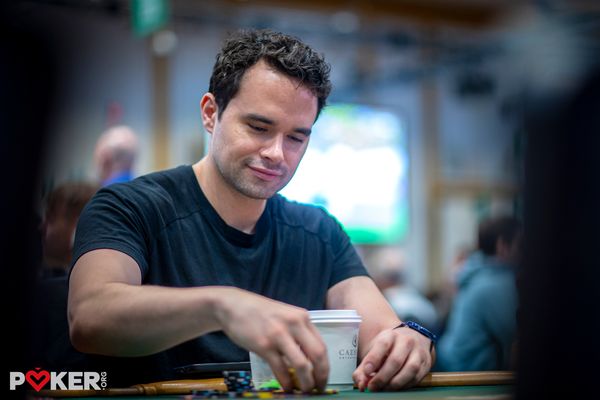
Meanwhile, the tournament continued without him. Day 1A produced eight survivors from a field of 64, including Michael Mizrachi, who defeated Phil Hellmuth in one of the day’s marquee matchups, and Daniel Negreanu, who advanced past Henry Castro. Day 1B featured another 32 competitors, including Doug Polk, Patrick Leonard, Martin Kabrhel, and Phil Ivey, all battling to join the Day 1A survivors in the final 16.
The Poker Strategy Breakdown
While Keating’s no-show wasn’t a strategic poker decision in the traditional sense, it reveals something important about bankroll management and expected value calculations that every serious player should understand.
For most poker players, a $25,000 tournament entry represents a significant investment requiring careful consideration and commitment. The decision to register implies you’re properly bankrolled for that buy-in level and believe you have an edge over the field. Walking away from that investment without playing a single hand seems irrational on the surface.
However, Keating operates in a different financial ecosystem. His regular cash game sessions routinely involve pots exceeding six figures, and his recent Lodge session alone netted him over $1 million despite taking a massive loss in the night’s biggest pot. From this perspective, the $25,000 entry fee represents a fraction of his typical poker variance.
This context doesn’t make the forfeit strategically sound from a pure poker standpoint, but it illustrates an important concept: the relationship between money and utility isn’t linear. For Keating, the marginal value of being well-rested for a concert he was looking forward to apparently exceeded the value of competing in a prestigious tournament he’d already paid for.
From a game theory perspective, heads-up tournaments require peak mental performance. Unlike multi-table tournaments where you can fold your way through early levels or cash games where you can leave when tired, heads-up play demands constant engagement and decision-making. Arriving exhausted from an all-night session would significantly compromise Keating’s edge, potentially turning a +EV situation into a -EV one.
The broader strategic lesson here involves understanding when to play and when to step away. Many amateur players make the mistake of forcing themselves to play in tournaments they’ve registered for, even when they’re not in optimal condition. This sunk cost fallacy leads to -EV decisions and poor performance.
Reading The Field & Table Dynamics
The $25K Heads-Up Championship attracts a unique mix of players compared to standard WSOP events. The format favors aggressive, adaptable players who excel in one-on-one combat rather than those who thrive in large-field tournament dynamics.
Keating would have faced a challenging bracket. While he’s proven himself in high-stakes cash games against world-class opposition, heads-up tournament poker requires different skills. The progressive bracket structure means you must win six consecutive matches against increasingly tough opponents to claim the bracelet.
His first-round opponent, Piotr Krupas, received an unexpected gift with the walkover. In heads-up tournaments, every bye is valuable—it conserves mental energy, prevents variance from eliminating you early, and provides extra time to study potential future opponents.
The Day 1A results showed the format’s unforgiving nature. Phil Hellmuth, a 17-time bracelet winner, fell to Michael Mizrachi in their first-round clash. Martin Kabrhel busted on Day 1A but returned for another shot on Day 1B, demonstrating the commitment level most players bring to this event.
The presence of specialists like Doug Polk and Phil Ivey on Day 1B underscored the field’s strength. Polk, in particular, built his reputation as one of the world’s best heads-up players before retiring from high-stakes online play. Competing against such opposition while fatigued would have been a significant handicap.
Interestingly, Keating’s absence also reveals something about the modern poker ecosystem. His primary value to the poker community isn’t as a tournament grinder but as a charismatic high-stakes cash game player who creates action and content. His Lodge session likely generated more entertainment value and poker interest than his WSOP tournament appearance would have.
How To Apply This To Your Game
While most players can’t afford to casually forfeit $25,000 tournament entries, Keating’s decision offers several applicable lessons for players at all levels.
First, recognize that physical and mental condition dramatically impact your edge. If you’ve registered for a tournament but find yourself exhausted, sick, or mentally unprepared, honestly assess whether playing is +EV. Sometimes the best decision is to forfeit the entry fee rather than compound the loss by playing poorly and damaging your confidence.
Second, avoid the sunk cost fallacy. The money you’ve invested in a tournament entry is already gone—it shouldn’t influence your decision about whether to play. Make decisions based on future expected value, not past investments. If playing while impaired costs you more in the long run through poor decisions and missed opportunities, walking away is correct.
Third, understand your personal bankroll context. Keating can absorb a $25,000 loss without it affecting his poker career or lifestyle. Most players cannot. Ensure your tournament buy-ins represent an appropriate percentage of your bankroll, typically no more than 2-5% for any single event. This prevents individual results from creating financial or emotional stress.
Fourth, schedule your poker commitments realistically. If you’re planning to play a major tournament, avoid scheduling exhausting sessions immediately beforehand. Keating’s situation arose from playing a marathon cash game session too close to his tournament start time. Build buffer time into your schedule for rest and preparation.
Finally, know your strengths and focus on your most profitable formats. Keating excels in deep-stacked cash games where his fearless style and table presence create maximum value. Heads-up tournaments, while prestigious, may not be his optimal format. Similarly, identify which poker variants and structures maximize your edge, and concentrate your time and bankroll there.
Key Takeaways
- Alan Keating forfeited his $25K WSOP Heads-Up Championship match after a profitable but exhausting session at The Lodge Card Club, choosing rest before a concert over tournament competition
- The decision illustrates how bankroll context affects poker decisions—what seems irrational for most players made sense given Keating’s financial situation and regular stakes
- Physical and mental condition significantly impact your edge in poker, especially in demanding formats like heads-up tournaments that require constant engagement
- Avoiding the sunk cost fallacy is crucial—make decisions based on future expected value rather than money already invested
- The $25K Heads-Up Championship continued with strong fields on both Day 1A and Day 1B, featuring champions like Michael Mizrachi, Daniel Negreanu, Doug Polk, and Phil Ivey
- Understanding your optimal poker format and focusing on games where you have the greatest edge maximizes long-term profitability
Frequently Asked Questions
Why did Alan Keating skip the WSOP Heads-Up Championship?
Keating was exhausted from an all-night high-stakes cash game session at The Lodge Card Club where he won over $1 million. He chose to rest before attending a No Doubt concert at the Sphere rather than compete in the tournament while fatigued, forfeiting his $25,000 entry fee.
Is it ever correct to forfeit a tournament you’ve already paid for?
Yes, when playing would be -EV due to physical exhaustion, mental fatigue, illness, or other factors that significantly compromise your edge. The entry fee is a sunk cost—decisions should be based on future expected value, not past investments. If playing while impaired costs you more through poor decisions, walking away is correct.
How much did Alan Keating lose by not showing up?
Keating forfeited his $25,000 entry fee plus the opportunity to compete for a WSOP bracelet and the tournament’s prize pool. However, given his recent $1 million win at The Lodge and his typical cash game stakes, this amount represents a relatively small percentage of his poker bankroll and variance.
Final Thoughts
Alan Keating’s WSOP no-show perfectly encapsulates the tension between poker as a competitive sport and poker as a lifestyle. For professional grinders, forfeiting a $25,000 tournament entry would be unthinkable—a devastating blow to both bankroll and reputation. For Keating, it was simply a rational decision prioritizing rest and entertainment over a suboptimal competitive situation.
This incident also highlights the evolving poker ecosystem. Traditional measures of poker success—bracelets, tournament scores, leaderboard rankings—matter less for players like Keating whose value comes from creating action in high-stakes cash games and generating content that grows the game. His Lodge session and the story of his WSOP absence likely contributed more to poker’s entertainment value than another standard tournament run would have.
The key lesson for players at all levels is understanding your own context and making decisions accordingly. Know your bankroll, recognize your optimal playing conditions, avoid sunk cost fallacies, and focus on formats where you have the greatest edge. Poker rewards those who make rational, disciplined decisions based on expected value rather than emotion or convention. Sometimes the best play is not to play at all.
Ready to Sharpen Your Poker Game?
Master your poker game with expert hand analysis