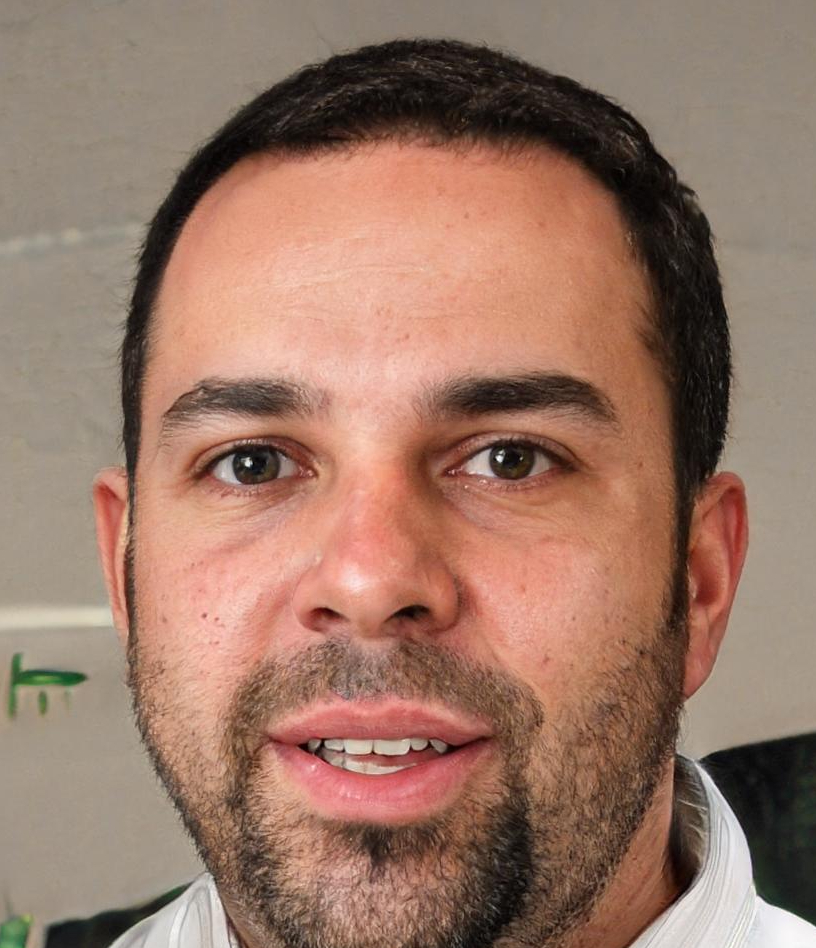
Albert Daher Takes Down EPT €100K One Drop High Roller
Albert Daher claimed the €2.05 million first prize at the EPT High Roller for One Drop, defeating Stephen Chidwick heads-up while Bryn Kenney—poker’s all-time money leader—laddered from shortest stack to a fourth-place finish. The €100,000 buy-in event drew 76 entries, creating a €7.3 million prize pool and raising over €250K for charity in the process.
What Happened
The EPT High Roller for One Drop delivered exactly what high-stakes poker fans crave: a final table stacked with elite talent, massive swings, and a showdown between two of the game’s most decorated players. The tournament attracted the largest field ever seen for a six-figure buy-in at the European Poker Tour, with 76 players ponying up €100,000 each.
Bryn Kenney arrived at the eight-handed final table in last place, facing an uphill battle against a lineup that included Wiktor ‘Limitless’ Malinowski, who started as chip leader, along with Stephen Chidwick, Albert Daher, Teun Mulder, Enrico Camosci, Artsiom Lasouski, and Leonardo Drago. Despite the short stack, Kenney managed to navigate his way to fourth place for €728,500.
Chidwick began the final day in the middle of the pack but worked his way into contention, ultimately reaching heads-up play against Daher. However, Daher proved unstoppable throughout the final table, eliminating multiple opponents with premium hands and building an insurmountable chip lead. When heads-up play began, Daher held a commanding three-to-one chip advantage.
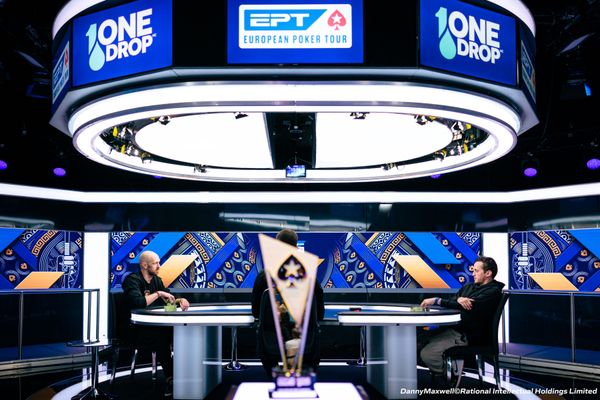
The final hand saw Chidwick shove his last 10 big blinds with queen-jack offsuit, only to run into Daher’s pocket fours. When a four hit the flop, the tournament was effectively over, securing Daher’s €2.05 million payday and leaving Chidwick with €1.33 million for second place.
Daher’s path to victory included three crucial eliminations. He busted Teun Mulder when ace-jack couldn’t overcome pocket aces, then sent Enrico Camosci packing in similar fashion when the same hand ran into his pocket kings. Later, he eliminated Artsiom Lasouski with another dominating hand, and his flopped set of tens against Kenney’s pocket queens sealed the American’s fate in fourth place.
The Poker Strategy Breakdown
This final table showcased several critical tournament poker concepts that separate elite players from the rest of the field. Daher’s performance was a masterclass in premium hand value extraction and aggressive chip accumulation when holding the lead.
Let’s examine the key strategic decisions that shaped the outcome. Daher’s early eliminations with pocket aces and pocket kings weren’t just lucky coolers—they were the result of proper hand construction and bet sizing that extracted maximum value. When Mulder and Camosci both showed up with ace-jack, they were making standard moves with a strong hand, but Daher’s position and stack management put them in spots where they felt committed.
Kenney’s ladder-up from shortest stack demonstrates the importance of survival strategy in high-stakes tournaments. Rather than making desperate moves early, he waited for premium spots and picked his battles carefully. His elimination of Malinowski was crucial for getting off the bottom of the counts, and it bought him time to ladder past three more players.
The final confrontation between Kenney and Chidwick—where Kenney shoved ace-seven suited into Chidwick’s ace-king—illustrates the razor-thin margins at elite final tables. Kenney’s shove was likely correct given his stack size and the ICM pressure, but running into a dominating ace was simply unfortunate timing. The board offering no help sealed his elimination.
Chidwick’s heads-up play faced a significant disadvantage from the start. Beginning three-to-one down in chips against an aggressive opponent like Daher requires either exceptional card luck or the ability to win a series of marginal spots. His final shove with queen-jack offsuit at 10 big blinds was textbook short-stack play, but Daher’s pocket fours held up when the set arrived on the flop.
Reading The Field & Table Dynamics
The dynamics at this final table were heavily influenced by ICM considerations and the presence of poker’s two all-time money leaders. With Kenney sitting on over $80 million in tournament earnings and Chidwick trailing by approximately $4 million, a win for Chidwick would have significantly closed that gap.
This added an interesting psychological element to their confrontation. While both players are consummate professionals who focus on optimal play regardless of external factors, the narrative surrounding their all-time money race added extra intrigue for observers.
Kenney’s short-stack navigation required a delicate balance between survival and accumulation. He couldn’t simply fold his way up the pay jumps—the blinds and antes would have consumed his stack too quickly. Instead, he had to identify spots where he could apply pressure or call off with reasonable equity. His elimination of Malinowski was a perfect example of capitalizing on a favorable situation.
Daher’s chip lead allowed him to apply constant pressure, especially in three-handed and heads-up play. With a commanding stack, he could force his opponents into difficult decisions for their tournament lives. This is a crucial advantage in high-roller events where every pay jump represents hundreds of thousands of euros.
The field composition itself tells a story about modern high-stakes poker. These players regularly face each other in similar events across the globe, creating a unique dynamic where everyone knows everyone else’s tendencies. Exploitative adjustments become crucial when you’ve played hundreds of hours against the same opponents.
Leonardo Drago’s quiet approach throughout the day—keeping his head down and waiting for spots—eventually earned him a third-place finish worth €947,000. His pocket deuces ran into Chidwick’s pocket eights in a standard cooler, but his patient strategy maximized his tournament equity given the aggressive players at the table.
How To Apply This To Your Game
While most players won’t face €100,000 buy-in decisions, the strategic principles from this final table apply across all stakes. Here’s how you can incorporate these lessons into your tournament game.
First, understand the power of premium hands in short-handed play. Daher’s success with aces, kings, and even pocket fours demonstrates that when you wake up with strong holdings at final tables, you need to build pots and extract value. Too many players get fancy with premium pairs when straightforward aggression is the most profitable approach.
Second, master the art of the ladder-up. Kenney’s survival from shortest stack to fourth place wasn’t accidental—it required discipline, patience, and the ability to identify crucial spots. When you’re short-stacked at a final table, every decision matters. Don’t panic and shove marginal hands just because you’re uncomfortable. Wait for legitimate spots where you have fold equity or strong equity when called.
Third, recognize when stack sizes dictate your strategy. Chidwick’s final shove with queen-jack at 10 big blinds wasn’t a mistake—it was mandatory. Many recreational players wait too long to commit their chips, allowing their stack to dwindle to the point where they have no fold equity. When you’re below 15 big blinds, you need to be looking for shoving opportunities with any reasonable holding.
Fourth, understand heads-up dynamics when facing a chip disadvantage. Chidwick entered heads-up play down three-to-one, which requires an aggressive approach to have any chance of mounting a comeback. You can’t wait for premium hands when you’re being blinded down. This means widening your shoving range and taking calculated risks to chip up.
Finally, study ICM implications at final tables. The pay jumps in this tournament were massive, with the difference between fourth and first place being over €1.3 million. These pay considerations should influence your calling and shoving ranges, especially when multiple short stacks are in play. Sometimes the correct play is to let other players bust each other while you preserve your stack.
Key Takeaways
- Albert Daher dominated the EPT €100K One Drop final table, eliminating multiple opponents with premium holdings and maintaining his chip lead throughout
- Bryn Kenney successfully laddered from shortest stack to fourth place, demonstrating proper short-stack survival strategy in high-stakes tournaments
- Stephen Chidwick’s runner-up finish earned €1.33 million but wasn’t enough to significantly close the gap on Kenney in the all-time money race
- The tournament drew 76 entries—the largest field ever for a six-figure EPT buy-in—generating over €250K for One Drop charity programs
- Premium hand value extraction and aggressive chip accumulation were the keys to Daher’s victory, particularly his eliminations with aces, kings, and flopped sets
- Heads-up play began with a three-to-one chip disadvantage for Chidwick, making a comeback extremely difficult against an aggressive opponent like Daher
Frequently Asked Questions
How did Bryn Kenney ladder up from shortest stack to fourth place?
Kenney employed patient short-stack strategy, waiting for premium spots rather than making desperate moves. His key hand came when he eliminated chip leader Wiktor Malinowski, which got him off the bottom of the counts and allowed him to survive past three more players. He eventually busted in fourth when his pocket queens ran into Daher’s flopped set of tens, then lost his final chips with ace-seven suited against Chidwick’s ace-king.
What was the significance of this tournament for the all-time money list?
With Bryn Kenney holding the all-time money lead at over $80 million and Stephen Chidwick in second place trailing by approximately $4 million, this €100K buy-in represented a prime opportunity for movement at the top. However, with Kenney finishing fourth for €728,500 and Chidwick finishing second for €1.33 million, the gap only narrowed by about €600K, keeping Kenney firmly in the lead.
How should you play heads-up with a significant chip disadvantage?
When facing a three-to-one or greater chip disadvantage heads-up, you need to adopt an aggressive strategy and widen your shoving ranges significantly. You can’t afford to wait for premium hands because the blinds will consume your stack too quickly. Look for opportunities to apply pressure and double up, even with marginal holdings. Chidwick’s final shove with queen-jack at 10 big blinds was textbook short-stack play, though he unfortunately ran into pocket fours that flopped a set.
Final Thoughts
The EPT High Roller for One Drop delivered a compelling final table that showcased the highest level of tournament poker strategy. Albert Daher’s victory was built on solid fundamentals—extracting value with premium hands, maintaining aggression with the chip lead, and avoiding costly mistakes in crucial spots. His €2.05 million payday represents a career-defining score that pushes his lifetime earnings near $12 million.
While the all-time money list drama between Kenney and Chidwick didn’t produce the dramatic shift some observers hoped for, both players demonstrated why they’re at the top of the poker world. Kenney’s ladder-up from shortest stack and Chidwick’s deep run both added significant scores to their already impressive résumés. The real story, however, was Daher’s dominant performance against one of the toughest final tables in recent EPT history.
For players looking to improve their tournament game, this final table offers a masterclass in ICM navigation, short-stack survival, and chip-lead leverage. Whether you’re playing €100K high rollers or $100 local tournaments, the strategic principles remain constant. Study these hands, understand the decision-making processes, and apply these lessons to your own game.
Ready to Sharpen Your Poker Game?
Master your poker game with expert hand analysis