APT Taipei 2026: Strategic Gold Mine With 22 APTC Seats
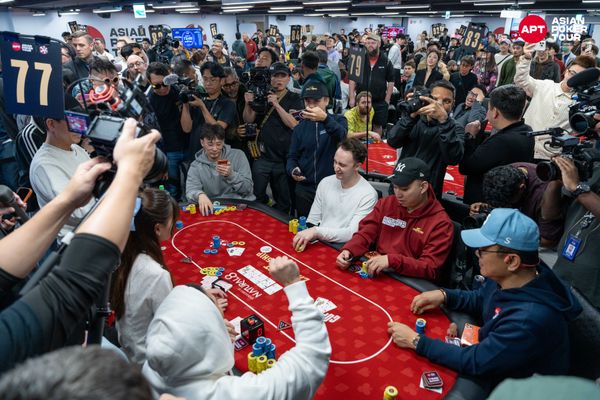
The Asian Poker Tour kicks off its 2026 season in Taipei with an unprecedented opportunity: 22 guaranteed seats into the $10,000 APTC Main Event spread across multiple tournaments. Running April 22 through May 3, this 172-event festival represents one of the highest-value satellite structures in live poker today, offering strategic players numerous pathways to poker’s biggest stage in Asia.
What Happened
APT Taipei 2026 launches the tour’s season with a massive 12-day festival featuring over $6.5 million in combined guarantees. The standout promotion awards 22 entries into the season-ending Asian Poker Tour Championship Main Event, valued at $10,000 each—a total prize package worth $220,000 in championship seats alone.
The seat distribution spans ten different tournaments, creating multiple strategic entry points for players of varying bankrolls. The flagship $1,740 Main Event awards six seats to its top finishers, while events ranging from the $380 National Cup to the $10,450 Super High Roller each offer championship qualification opportunities.
Two additional seats will be randomly drawn during the Main Event itself—one on Day 4 and another when the money bubble bursts—adding an element of pure fortune to the skill-based qualifications. Last year’s APTC Main Event attracted 671 entries and generated a $6.2 million prize pool, with Nishant Sharma claiming the $1.1 million first prize.
The Taipei stop has become the APT’s flagship location, bookending the annual season with opening and closing festivals. The tour has experienced explosive growth, with each of the last five stops establishing new attendance and prize pool records.
The Poker Strategy Breakdown
The multi-tournament satellite structure creates fascinating strategic considerations that differ dramatically from traditional single-table satellites or mega-satellites. Understanding optimal play requires analyzing both immediate tournament equity and the overlay value of championship seats.
Each $10,000 APTC seat represents significant value relative to buy-in costs. In the Main Event, for instance, a $1,740 investment offers six guaranteed seats among the final finishers. Assuming a field of 1,200 players (conservative based on APT’s growth trajectory), the top six finishers each secure $10,000 in value beyond their cash prizes. This creates a unique dynamic where deep-stacked play near the final table carries additional implied value beyond traditional ICM calculations.
The strategic approach varies dramatically based on which qualifying event you’re playing. In winner-take-all seat tournaments like the National Cup or Mystery Bounty Hunter, traditional tournament strategy applies—chip accumulation and survival balance according to standard ICM principles. However, in multi-seat events like the Main Event or Super High Roller, strategy shifts once you’re approaching the seat-awarding positions.
Consider the Zodiac Classic, which awards two seats to the top two finishers. Once you’ve reached the top three or four positions, your strategy should incorporate the step-function value of those top-two finishes. This isn’t a smooth payout structure where each position incrementally increases—there’s a massive cliff between second and third place in terms of championship value.
The random seat draws during the Main Event add another layer. While you can’t strategically play for random selection, these draws increase the expected value of deep runs. A player who reaches Day 4 or the money bubble gets additional lottery tickets worth $10,000 each. This slightly increases the value of conservative play to reach these milestones, though the effect is marginal compared to traditional prize pool considerations.
Bankroll management becomes crucial when selecting which qualifying path to pursue. The $380 National Cup offers the most affordable entry with championship upside, but only awards a single seat to the winner—requiring you to outlast the entire field. The $1,740 Main Event costs more but offers six seats, dramatically improving your odds of qualifying if you can navigate to the final table.
For players specifically hunting championship seats rather than immediate cash, the Mini Main Event and Zodiac Classic present interesting middle-ground options. Both award two seats with buy-ins of $955 and $2,690 respectively, offering better qualification odds than winner-take-all events while remaining accessible to mid-stakes players.
Reading The Field & Table Dynamics
Field composition shifts dramatically as you approach seat-awarding positions, and recognizing these shifts is critical for exploitation. Players fall into three categories: those playing for cash, those hunting championship seats, and those indifferent between the two.
Wealthy recreational players and high-stakes professionals often fall into the third category—a $10,000 seat holds value, but they’re equally happy with equivalent cash. These players maintain standard tournament strategy throughout. Mid-stakes professionals and serious amateurs, however, often weight championship seats more heavily than equivalent cash, especially if the APTC represents a career-making opportunity they couldn’t otherwise afford.
When you’re at a final table where seats are awarded, watch for players who tighten up excessively as they approach qualifying positions. A player with 15 big blinds who suddenly refuses to call reasonable shoves is likely overvaluing seat security. These players become exploitable through increased aggression, as they’re essentially laying odds that someone else will bust before they do.
Conversely, short stacks who’ve mentally written off their seat chances may play with reckless abandon, creating chaos that skilled players can navigate for advantage. If you’re in a strong position to claim a seat, allowing these players to collide with each other while you preserve chips can be optimal—even when you hold hands that would normally warrant aggression.
The bubble dynamics in multi-seat events create unique situations. In the Main Event, there’s effectively a secondary bubble at seventh place—one spot away from the final championship seat. Traditional money bubble strategy applies, but amplified. The gap between sixth and seventh place isn’t just the difference in cash prizes; it’s an additional $10,000 in championship value.
ICM pressure intensifies dramatically at this secondary bubble. Medium stacks should generally tighten ranges, as the cost of busting in seventh is catastrophic. Short stacks gain fold equity as medium stacks avoid confrontation. Big stacks can apply maximum pressure, but should be wary of chip-spewing against other big stacks when medium stacks are available to prey upon.
In the High Roller events awarding two seats, heads-up play takes on unusual characteristics. If both players value the championship seat above the difference in first and second-place cash, deal-making becomes attractive. Smart players should enter these events prepared to negotiate, understanding both the cash and seat values at stake.
How To Apply This To Your Game
If you’re planning to play APT Taipei with championship qualification as a goal, strategic event selection is your first critical decision. Calculate your expected value across different paths based on realistic assessments of your skill edge and the field sizes you’ll face.
For most players, the Main Event represents optimal value. Six seats among the top finishers, combined with a substantial cash prize pool, offers multiple ways to win. The four-day opening flight structure also allows you to choose your starting field, potentially game-selecting toward softer flights if you can identify them.
Budget-conscious players should consider firing multiple bullets at the National Cup. At $380, you can take three shots for less than the cost of a single Main Event entry. While each individual attempt has lower success probability, the affordability allows volume—and in poker, volume with an edge generates results.
Adjust your strategy as you approach seat-awarding positions. In the Main Event, once you’ve reached the top 10-15 players, begin factoring the seat value into your ICM calculations. This doesn’t mean playing scared—it means recognizing that the value step-function at sixth place should influence your risk-taking.
Practice heads-up play before attending if you’re entering the two-seat events. The difference between first and second in these tournaments is minimal in cash but massive in championship value, making heads-up deals likely. Understanding heads-up strategy and deal negotiation gives you an edge when these situations arise.
Don’t neglect the random draw opportunities. While you can’t play specifically for random selection, understanding that reaching Day 4 or the money in the Main Event provides additional expected value should marginally influence your risk tolerance at those specific thresholds. This is a small adjustment, not a dramatic strategy shift.
For players who qualify for the APTC through Taipei, immediate preparation begins. Study previous APTC final tables, understand the player pool you’ll face, and ensure your bankroll can support the trip and associated expenses. A championship seat is valuable, but only if you can properly capitalize on it.
Key Takeaways
- APT Taipei 2026 awards 22 seats to the $10,000 APTC Main Event across ten different tournaments, creating multiple strategic qualification paths for players of varying bankrolls
- The $1,740 Main Event offers the best qualification value for most players, awarding six seats to top finishers while maintaining a substantial cash prize pool
- Strategy shifts dramatically near seat-awarding positions, creating secondary bubble dynamics where the value gap between qualifying and missing exceeds normal ICM calculations
- Field composition changes as players approach qualification, with some overvaluing seat security (exploitable through aggression) and others playing recklessly after writing off their chances
- Event selection should balance buy-in cost, number of seats awarded, and realistic field size expectations to maximize your expected value
- Two random seat draws during the Main Event add lottery-ticket value to deep runs, marginally increasing the expected value of reaching Day 4 and the money bubble
Frequently Asked Questions
Which APT Taipei event offers the best value for qualifying to the APTC?
For most players, the $1,740 Main Event provides optimal value. It awards six championship seats to top finishers, dramatically improving qualification odds compared to winner-take-all events. The substantial prize pool also ensures you’re playing for immediate cash value alongside championship equity. Budget-conscious players might prefer multiple entries in the $380 National Cup, while high-stakes players should consider the $10,450 Super High Roller which awards two seats and features a softer field relative to buy-in.
How should ICM strategy change when playing for championship seats versus cash?
When approaching seat-awarding positions, treat the championship seat as a value step-function rather than a smooth payout curve. The gap between qualifying and missing (say, 6th versus 7th in the Main Event) includes both the cash difference and the $10,000 seat value. This intensifies bubble dynamics and generally warrants tighter play from medium stacks, increased fold equity for short stacks, and aggressive exploitation opportunities for big stacks. However, don’t overadjust—maintain fundamentally sound tournament strategy while incorporating the additional value into your calculations.
What’s the expected value of the random seat draws in the Main Event?
Assuming a 1,200-player Main Event field, approximately 150-180 players typically reach Day 4, and roughly 120-150 cash. Each random draw awards one $10,000 seat, giving you approximately 0.5-0.8% chance of winning each draw if you reach those milestones. The combined expected value is roughly $100-150 for reaching both thresholds—meaningful but not strategy-defining. This slightly increases the value of conservative play at these specific bubble points, but shouldn’t dramatically alter your approach compared to traditional prize pool considerations.
Final Thoughts
The APT Taipei 2026 championship seat structure represents one of the most player-friendly promotions in tournament poker. By distributing 22 seats across multiple events rather than concentrating them in a single mega-satellite, the tour creates accessible pathways for players across the bankroll spectrum while maintaining the skill-testing integrity of full-field tournaments.
Smart players will recognize this as more than just a promotion—it’s a strategic opportunity that rewards proper game selection, bankroll management, and adaptive strategy. The players who succeed won’t just be those who run hot, but those who identify their optimal qualification path and adjust their play appropriately as they approach seat-awarding positions.
Whether you’re a recreational player taking a shot at poker’s biggest stage or a professional building your tournament resume, APT Taipei offers genuine value. The combination of substantial guaranteed prize pools, multiple championship qualification opportunities, and the tour’s continued growth trajectory makes this an event worth serious consideration for anyone operating in the Asian poker market.
Ready to Sharpen Your Poker Game?
Master your poker game with expert hand analysis