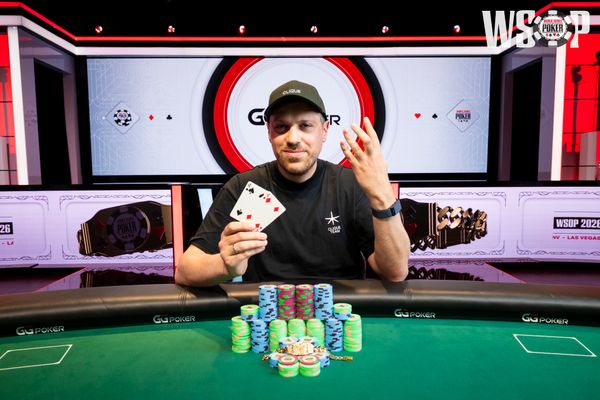
Artur Martirosian Claims Fourth WSOP Bracelet in $25K
Artur Martirosian has cemented his status among poker’s elite by capturing his fourth World Series of Poker bracelet and $1.286 million in the $25,000 No-Limit Hold’em Six-Handed event. The Russian high roller outlasted a field of 242 entries and dominated a grueling three-hour heads-up battle against Pavel Plesuv to claim the title.
What Happened
The $25,000 High Roller Six-Handed event at the 2026 WSOP generated a prize pool of $5,687,000 from 242 entries, down from 336 the previous year. When seven players returned for the final day, Martirosian entered as one of the chip leaders alongside Sean Winter, and he never relinquished control.
The final table saw swift eliminations early on. Klemens Roiter became the first casualty in seventh place ($159,885) after facing a brutal decision against Plesuv’s flopped set of queens. Despite GTO Wizard recommending a fold just 52% of the time in that marginal spot, Roiter made the disciplined laydown. However, his tournament ended the very next hand when his ace-jack couldn’t hold against Martirosian’s pocket tens after a ten spiked on the river.
Four-time bracelet winner Chance Kornuth’s run ended in sixth place ($218,092) when his dominant ace-king fell to Yosuke Miki’s ace-queen after queens appeared on both the flop and turn. Kornuth immediately jumped into the $50K High Roller, demonstrating the bankroll management—or Martingale approach—common among high-stakes regulars.
Martirosian accelerated his chip accumulation by eliminating Marius Gierse in fifth ($301,347) with a flopped flush, then dispatched Miki in fourth ($421,721) when his ace-jack outran ace-ten. Winter’s tournament concluded in third place ($597,635) after running top pair into Plesuv’s flopped set of nines, which filled up on the river to eliminate any chop possibility.
Heads-up play began nearly even, with Plesuv holding 76 big blinds to Martirosian’s 74. The match stretched over three hours before Martirosian sealed victory with king-nine suited against Plesuv’s jack-eight offsuit, earning $1,286,285 and denying Plesuv his second bracelet. Plesuv collected $857,510 for runner-up.
The Poker Strategy Breakdown
Several hands from this final table deserve strategic scrutiny, particularly Roiter’s river decision against Plesuv’s all-in. With Plesuv holding queens full of aces and Roiter holding just ace-king, the situation illustrates how even professional players face coin-flip decisions in tournament poker. GTO Wizard’s analysis showing a 52-48 split between folding and calling demonstrates the razor-thin margins that separate correct from incorrect plays at the highest levels.
The critical factor in Roiter’s spot was the action sequence. Plesuv flopped a set, Roiter turned top pair, and the river ace gave Roiter two pair while completing Plesuv’s full house. When facing an all-in on the river, Roiter needed to consider Plesuv’s range, which would heavily weight toward full houses and flushes given the aggressive line. The tournament context—seven players remaining with significant pay jumps ahead—made survival paramount, even if calling might be marginally profitable in a cash game scenario.
Kornuth’s elimination hand presents a different lesson. Getting dominated with ace-king versus ace-queen is unfortunate but unavoidable. The real teaching moment comes from understanding that even premium hands face significant equity disadvantage when running into better aces at short-handed tables. With six players remaining and escalating blinds, Kornuth’s shove was standard, but the cooler demonstrates why hand reading and opponent tendencies matter even in seemingly straightforward spots.
The heads-up battle between Martirosian and Plesuv showcased deep-stacked tournament play at its finest. The pivotal hand came when Martirosian’s pocket jacks held against Plesuv’s pocket fives, building a 3:1 chip advantage. This hand exemplifies proper aggression with medium pairs in heads-up play. Against a single opponent, jacks play significantly stronger than in full-ring scenarios, and Martirosian’s willingness to commit chips in a favorable spot demonstrates the controlled aggression required to win high-stakes tournaments.
Martirosian’s near-miss with ace-seven suited against Plesuv’s jack-eight, where Plesuv rivered a straight, could have ended the tournament an hour earlier. However, Martirosian’s ability to rebuild and maintain pressure shows championship-level mental fortitude. He didn’t allow the bad beat to affect his strategy, continuing to apply pressure until the final hand where his king-nine suited held against jack-eight offsuit.
Reading The Field & Table Dynamics
The final table composition featured a mix of established bracelet winners and hungry contenders, creating fascinating dynamics. With Winter and Martirosian controlling the majority of chips early, shorter stacks faced ICM pressure that influenced their decision-making. Independent Chip Model considerations become paramount at final tables where pay jumps exceed six figures between positions.
Roiter’s fold against Plesuv, while strategically sound from a GTO perspective, also reflected ICM reality. Seventh place paid $159,885 while sixth earned $218,092—a $58,000 jump for surviving one more elimination. When facing a decision that solver software deems nearly 50-50, tournament life preservation often tips the scales toward folding, especially when other players have similar or shorter stacks.
The rapid eliminations after reaching six-handed play—from six players to three in just over two hours—demonstrates how quickly chip dynamics can shift once the ICM bubble bursts. Players who were nursing short stacks suddenly found spots to gamble, while chip leaders like Martirosian could apply maximum pressure knowing they could afford to lose flips.
Martirosian’s heads-up dominance stemmed from his willingness to play deep-stacked poker patiently. His post-tournament comment about being “ready to play three more hours” reveals a crucial mindset: championship poker requires stamina and patience, not just technical skill. Many players would have forced the action after building an 8:1 chip lead, but Martirosian understood that Plesuv would eventually find a spot to commit chips, and maintaining pressure without unnecessary risk was the optimal approach.
The heads-up match also highlighted how stack depth influences strategy. Starting with approximately 75 big blinds each, both players had room to maneuver without desperation. This depth allowed for post-flop play, bluffing opportunities, and strategic maneuvering that wouldn’t exist in shorter-stacked situations. Martirosian’s ability to exploit these dynamics—winning pots without showdown, applying pressure in position, and picking optimal spots for aggression—separated him from his opponent.
How To Apply This To Your Game
The most immediately applicable lesson from this final table is understanding when to fold strong hands facing aggression. Roiter’s discipline in folding what GTO Wizard deemed a marginal call demonstrates that tournament survival sometimes trumps theoretical chip EV. In your own tournaments, especially near pay jumps, consider the broader context before committing chips in close spots. Ask yourself: Do I need this pot to win the tournament, or does folding preserve my ability to find better spots?
Martirosian’s patient heads-up approach offers a blueprint for deep-stacked play. Rather than forcing action with his chip lead, he maintained consistent pressure and waited for premium opportunities. Apply this to your game by resisting the urge to end tournaments quickly when you have a chip advantage. Deep stacks favor skilled players who can outplay opponents across multiple streets, so embrace the grind rather than gambling unnecessarily.
The tournament also demonstrates the importance of immediate mental reset after bad beats. Martirosian lost a significant pot when Plesuv rivered a straight, yet he didn’t tilt or drastically alter his strategy. He continued playing fundamentally sound poker until finding his winning spot. When you suffer a bad beat, take a moment to breathe, reset your mental state, and return to your proven strategy rather than making revenge-driven plays.
Pay attention to ICM implications throughout tournament play, not just at final tables. The decisions made by players like Roiter and Kornuth were influenced by prize pool distribution and remaining opponents. Study ICM calculators and understand how your stack size relative to others affects optimal strategy. Sometimes the mathematically correct cash game play becomes a tournament mistake when significant money jumps are at stake.
Finally, recognize the value of hand selection in short-handed and heads-up play. Hands like king-nine suited and jack-eight offsuit—which you’d fold without hesitation at a full table—become playable and even premium in heads-up situations. Adjust your ranges appropriately as tables shrink, but maintain discipline in understanding which hands merit aggression versus which should be folded despite the reduced player count.
Key Takeaways
- Artur Martirosian won his fourth WSOP bracelet and $1,286,285 by defeating Pavel Plesuv in a three-hour heads-up battle at the $25K Six-Handed event
- Tournament ICM pressure influences decisions significantly at final tables—sometimes folding theoretically marginal spots is correct when pay jumps are substantial
- Deep-stacked heads-up play rewards patience and skill over aggression and gambling, as demonstrated by Martirosian’s willingness to grind for three hours
- Mental resilience after bad beats separates champions from average players—Martirosian recovered from losing a major pot to ultimately claim victory
- Hand ranges expand dramatically in short-handed and heads-up play, requiring strategic adjustments from full-ring strategies
- The field of 242 entries was down from 336 the previous year, generating a prize pool of $5,687,000 with 37 players reaching the money
Frequently Asked Questions
How many WSOP bracelets does Artur Martirosian have now?
Artur Martirosian now has four WSOP bracelets after winning the $25,000 No-Limit Hold’em Six-Handed event. This victory adds to his impressive resume and pushes his career tournament earnings past $33.5 million, establishing him as one of the most successful high-stakes tournament players in the world.
What is ICM and why does it matter at final tables?
ICM (Independent Chip Model) is a mathematical model that calculates the monetary value of tournament chips based on remaining prize pool distribution and stack sizes. At final tables, ICM becomes crucial because chip values don’t correspond linearly to dollar values—losing chips costs more in prize equity than winning the same number of chips gains. This is why players like Klemens Roiter made disciplined folds in marginal spots, prioritizing survival over theoretical chip accumulation when significant pay jumps were at stake.
How should strategy change in heads-up versus full-table play?
Heads-up poker requires dramatic strategic adjustments from full-ring play. Hand ranges expand significantly—hands like king-nine suited or ace-seven suited become premium holdings rather than folds. Aggression increases because you’re only competing against one opponent, making position even more valuable. Post-flop play becomes more complex with deeper effective stacks, and the ability to read your specific opponent matters more than playing a balanced GTO strategy. Patience remains important, as Martirosian demonstrated by playing three hours heads-up rather than forcing quick action.
Final Thoughts
Artur Martirosian’s fourth bracelet victory reinforces what separates elite tournament players from the field: technical excellence combined with mental fortitude and strategic patience. His performance in the $25K Six-Handed event showcased all these qualities, from his aggressive chip accumulation during the final table to his disciplined heads-up grinding that ultimately wore down Plesuv despite some setbacks along the way.
The tournament also provided a masterclass in final table dynamics, ICM considerations, and the importance of adjusting strategy based on table composition and stack depths. Whether you’re playing $25,000 high rollers or $25 local tournaments, the fundamental principles remain constant: understand your opponents, recognize when survival trumps aggression, maintain emotional control through variance, and execute your strategy with patience and precision.
For poker students, this final table offers countless hands worth studying in detail. From Roiter’s marginal river decision to Martirosian’s patient heads-up approach, each significant pot contains lessons applicable to your own game. The key is moving beyond simply knowing what happened and understanding why these elite players made their decisions, then incorporating those thought processes into your own strategic framework.
Ready to Sharpen Your Poker Game?
Master your poker game with expert hand analysis