Bryce Yockey Claims Third Bracelet in Dealer’s Choice
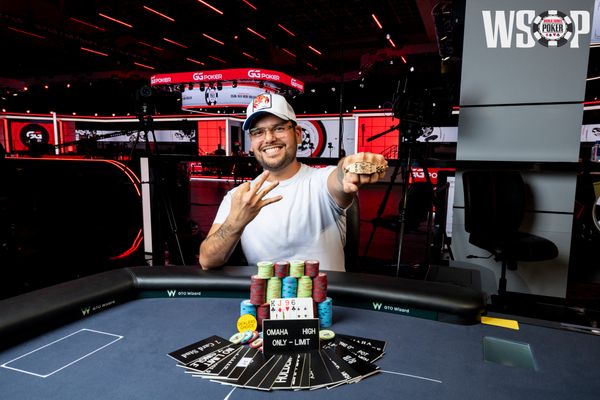
Bryce Yockey secured his third WSOP bracelet with a commanding performance at the $10,000 Dealer’s Choice Championship, pocketing $371,464 after dominating an elite field of mixed-game specialists. The victory adds another prestigious title to his resume, following previous bracelet wins in PLO variants, and cements his reputation as one of poker’s most versatile tournament players.
What Happened
The $10,000 Dealer’s Choice Championship attracted some of the world’s best mixed-game players, and Yockey proved he belonged at the top of that list. Starting the final day in the middle of an 11-player field, he quickly separated himself from the pack, building a chip lead that at one point gave him control of more than half the chips in play with five players remaining.
The path to victory wasn’t entirely smooth. After establishing his massive advantage heading into the dinner break, Yockey encountered resistance when play resumed, redistributing a significant portion of his stack back to his opponents. However, rather than panicking, he drew on his tournament experience to weather the storm and reassert his dominance when it mattered most.
Notable casualties along the way included 2023 champion Chad Eveslage, who fell in fourth place to Yockey, and high-stakes regular Nick Schulman, who finished fifth. Ryan Miller made a strong run to second place but ultimately couldn’t overcome Yockey’s chip advantage and mixed-game expertise. Jake Schwartz rounded out the podium in third, taking home $161,292 for his efforts.
The Poker Strategy Breakdown
Dealer’s Choice represents one of poker’s ultimate tests of versatility, with 21 different game variants available for selection. Unlike fixed rotation events like H.O.R.S.E. or the Poker Players Championship, this format introduces a psychological warfare element where game selection becomes a weapon. Players can force opponents into uncomfortable situations by choosing obscure variants or exploit edges in games where they have superior technical knowledge.
Yockey’s approach to the final table demonstrated sophisticated tournament strategy across multiple dimensions. His early aggression wasn’t reckless—it was calculated pressure designed to accumulate chips while opponents were still finding their rhythm. By building such a commanding lead before the dinner break, he created a situation where his opponents faced increasingly desperate circumstances with every pot they lost.
The mid-tournament setback he experienced after the break actually provides valuable strategic insight. When opponents began winning pots and chipping away at his lead, Yockey didn’t adjust his fundamental approach. He recognized that variance was playing a role and that his strategic framework remained sound. This discipline—maintaining your game plan when results temporarily turn against you—separates elite players from merely good ones.
His post-tournament reflection revealed the mental framework that enabled his comeback: “The fact that I did lose a lot of chips, yeah, it kind of sucked, but I didn’t think I was doing anything wrong. I felt my game plan was completely fine.” This ability to separate process from results is crucial in tournament poker, where short-term variance can obscure correct decision-making.
In Dealer’s Choice specifically, game selection strategy becomes paramount. Strong players will choose games that maximize their edge against specific opponents, targeting the weakest player in particular variants or selecting games that create multiway pots when holding a chip advantage. The format rewards not just technical proficiency across multiple games, but also the meta-game awareness to know which games to call when.
Reading The Field & Table Dynamics
The composition of this final table featured some of the most accomplished mixed-game players in the world, making Yockey’s dominance all the more impressive. Chad Eveslage entered as the defending champion with intimate knowledge of what it takes to win this event. Nick Schulman has long been recognized as one of the game’s sharpest mixed-game minds, while Jeremy Ausmus brings decades of high-stakes experience to any felt he sits at.
Yockey’s chip accumulation strategy in the early stages of the final table exploited a fundamental tournament dynamic: when you’re in the middle of the pack, you can apply pressure both upward and downward in the chip counts. Short stacks become desperate to survive, while other medium stacks fear busting before the shorter players. By aggressively accumulating chips during this phase, Yockey transformed a competitive situation into a dominant one.
Once he established his massive chip lead, the table dynamics shifted entirely in his favor. With over 50 percent of the chips in play, he could apply relentless pressure, forcing opponents into difficult decisions for their tournament lives. In a mixed-game format, this advantage compounds—not only does the chip leader have mathematical leverage, but they can also select games that maximize their edge or create the most uncomfortable situations for specific opponents.
The post-dinner comeback by his opponents created a critical inflection point. With the chip lead narrowed, Yockey faced a decision about whether to tighten up and protect his remaining advantage or maintain his aggressive approach. His choice to trust his process and continue playing his game demonstrated the kind of mental fortitude that defines championship poker. As he noted, the five-year-younger version of himself might have gotten “in his head” during this stretch, but experience taught him to maintain perspective.
Four-handed play with 4-5 million chips still represented an excellent position, even if it felt like a step backward from his earlier dominance. This ability to reframe the situation—to recognize that he was still in an advantageous spot despite losing ground—allowed him to play without fear and ultimately regain control of the tournament.
How To Apply This To Your Game
The first lesson from Yockey’s victory is the importance of versatility in modern poker. While specialization has its place, the ability to compete across multiple formats opens up more opportunities and creates edges against players with narrower skill sets. If you’re serious about tournament poker, investing time in learning mixed games will pay dividends, even if you primarily play No-Limit Hold’em.
Yockey’s mental approach during his mid-tournament adversity offers a blueprint for handling variance. When results turn against you, ask yourself whether your strategy is fundamentally sound or whether you’re making mistakes. If your process is correct, maintain your approach and trust that variance will even out. Too many players make their biggest mistakes when they abandon winning strategies after a few bad results.
The concept of “enough chips” that Yockey articulated is crucial for tournament players. Rather than fixating on your peak chip count or comparing yourself to where you were an hour ago, evaluate your current position objectively. Would you be happy with your current stack if someone had offered it to you at the start of the day? This perspective prevents the kind of tilt that comes from feeling like you’ve “lost” chips that were never really yours to begin with.
In terms of practical strategy, Yockey’s aggressive approach with a big stack demonstrates the power of applying pressure. When you have a chip advantage, especially in mixed games or formats with multiple streets of betting, you can force opponents into difficult decisions repeatedly. Don’t squander big stacks by playing passively—use them as a weapon to accumulate more chips and put opponents in uncomfortable spots.
Finally, his recognition that Dealer’s Choice differs from structured mixed-game events highlights the importance of understanding format-specific strategy. In any poker variant, take time to understand the unique strategic elements that format introduces. What makes this game different? What edges exist here that don’t exist elsewhere? Players who think deeply about these questions will find advantages that others miss.
Key Takeaways
- Bryce Yockey captured his third WSOP bracelet and $371,464 by dominating the $10,000 Dealer’s Choice Championship final table
- His aggressive early strategy built a massive chip lead, giving him control of over 50% of chips in play at one point
- When opponents fought back after the dinner break, Yockey maintained his strategic approach rather than panicking, demonstrating elite mental discipline
- The Dealer’s Choice format rewards versatility across 21 game variants and adds a game-selection meta-game not present in fixed rotation events
- Yockey’s ability to reframe his situation objectively—recognizing that 4-5 million chips four-handed was still excellent—prevented tilt and enabled his victory
- The win adds to his PLO and PLO8 bracelets, establishing him as one of the game’s premier mixed-game tournament players
Frequently Asked Questions
What makes the Dealer’s Choice Championship different from other mixed-game events?
Unlike H.O.R.S.E. or the Poker Players Championship where games rotate on a fixed schedule, Dealer’s Choice allows the button to select from 21 available game variants. This adds a strategic layer of game selection, where players can choose games that maximize their edge against specific opponents or avoid games where they’re weakest. It rewards not just technical proficiency but also the ability to exploit opponent weaknesses through game choice.
How should you handle losing chips after building a big tournament lead?
Yockey’s approach offers an excellent template: evaluate whether your strategy is sound rather than fixating on the chips you’ve lost. If your process is correct, maintain your approach and trust variance to even out. Reframe your situation objectively—would you be happy with your current stack if offered it at the start of the day? This perspective prevents the tilt that comes from feeling you’ve “lost” chips that were never permanently yours.
Why is versatility across multiple poker variants valuable even for Hold’em specialists?
Learning mixed games develops fundamental poker skills that transfer back to Hold’em, including hand reading in different board textures, understanding equity in various situations, and adapting to different betting structures. It also opens up additional tournament opportunities with often softer fields, as many Hold’em specialists avoid mixed-game events. The strategic thinking required to master multiple games makes you a more complete poker player overall.
Final Thoughts
Bryce Yockey’s third bracelet victory represents more than just another tournament win—it’s validation of his standing among poker’s elite mixed-game players. His performance at the Dealer’s Choice Championship final table showcased not just technical proficiency across 21 game variants, but the mental fortitude and strategic discipline that separate good players from champions. The way he handled adversity, maintained his process during variance, and ultimately closed out the victory provides lessons that apply far beyond this specific format.
For aspiring tournament players, Yockey’s path offers a roadmap worth studying. His willingness to invest time mastering multiple poker variants has created opportunities and edges that specialists simply can’t access. His mental approach to variance and chip count fluctuations demonstrates the kind of emotional control necessary for tournament success. And his aggressive but calculated style with a big stack shows how to convert chip advantages into victories rather than squandering them through passive play.
As Yockey himself noted, the Poker Players Championship remains his number one target, but this Dealer’s Choice victory moves him one step closer to the pantheon of truly elite mixed-game players. For the rest of us, studying how champions like Yockey approach the game—from technical strategy to mental discipline—provides the blueprint for improving our own poker journey.
Ready to Sharpen Your Poker Game?
Master your poker game with expert hand analysis