

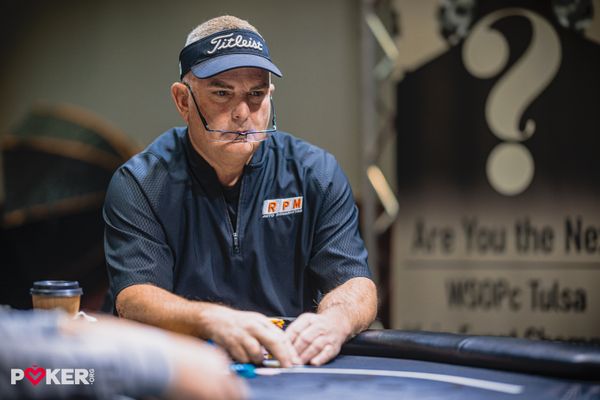
Car Salesman’s Comeback: Shuptrine Takes WSOPC Tulsa
After a three-year hiatus from tournament poker, Robert Shuptrine returned to the felt and immediately captured a World Series of Poker Circuit ring, banking $142,758 at the WSOPC Tulsa Main Event. The wholesale car salesman credits his aggressive final table performance to skills honed in his day job, where he says gambling on inventory decisions mirrors poker’s risk-reward calculations.
What Happened
The $1,700 buy-in WSOPC Tulsa Main Event drew 478 entries, generating a prize pool of $724,170. Shuptrine entered Day 1b and navigated his way to 11th in chips among the 55 players who made the money. His momentum built throughout Day 2, culminating in a commanding chip lead heading into the final table.
The decisive moment came when Shuptrine doubled through William Rowlett, propelling him into a dominant position. From there, he methodically dismantled the opposition, eliminating three of his final four opponents in rapid succession. Play paused with four players remaining, but when cards flew again on Monday, Shuptrine needed less than two hours to close out the tournament.
He dispatched John Reynolds in fourth place ($45,153), followed by Christy Cranford in third ($64,890), before defeating Christopher Stewart heads-up to claim the title. Stewart, who earned $96,254 for his runner-up finish, couldn’t mount an effective defense against Shuptrine’s relentless aggression. The entire final sequence concluded before the first break, showcasing Shuptrine’s ability to apply maximum pressure when holding the chip advantage.
This victory marked a remarkable comeback for the Tulsa poker regular, whose last recorded cash came nearly three years prior at a $1,500 WSOP Badugi bracelet event. Before that, his most recent appearance was a 44th-place finish at the 2019 WSOP Circuit Main Event at the same Tulsa Hard Rock venue, earning $4,190.
The Poker Strategy Breakdown
Shuptrine’s approach at the final table exemplified aggressive tournament poker executed at precisely the right moment. With four players remaining and a substantial chip lead, he shifted into high gear, leveraging his stack to apply constant pressure. This strategy prevented his opponents from finding comfortable spots to double up or chip away at his lead.
The key strategic element was timing. Rather than adopting a conservative approach to protect his chip lead, Shuptrine recognized that aggressive play would force his opponents into difficult decisions for their tournament lives. Each elimination further consolidated his advantage, creating a snowball effect that made him increasingly difficult to stop.
His background in wholesale car sales provides an interesting lens through which to view his poker strategy. In his business, Shuptrine purchases approximately 100 vehicles weekly, betting that each car will generate profit at its destination market. This constant evaluation of risk versus reward translates directly to poker’s fundamental calculations. Every hand requires assessing potential gain against probable loss, factoring in incomplete information and variance.
The aggressive betting patterns Shuptrine employed—big bets, big raises, and big calls—suggest a player comfortable with variance and confident in his reads. When you’re making high-stakes decisions about vehicle inventory daily, putting chips at risk with marginal edges becomes second nature. This comfort with uncertainty gives players from gambling-adjacent professions a psychological edge that pure poker students sometimes lack.
His final table elimination pattern reveals disciplined execution. Taking down three opponents in under two hours requires capitalizing on every opportunity while avoiding costly mistakes. This pace suggests Shuptrine wasn’t waiting for premium hands but rather creating opportunities through positional awareness and well-timed aggression.
Reading The Field & Table Dynamics
Tournament poker changes dramatically as the field narrows, and Shuptrine demonstrated excellent awareness of these shifting dynamics. Starting the final table with a commanding chip lead, he understood that his opponents faced an uncomfortable choice: wait for premium hands and risk getting blinded down, or take stands with marginal holdings against a player who could eliminate them.
This dynamic creates what’s known as “bubble pressure” even after the money bubble has burst. With significant pay jumps between each position, shorter stacks often play too conservatively, hoping others will bust first. Shuptrine exploited this tendency by maintaining constant aggression, forcing opponents to make tough decisions rather than allowing them to ladder up passively.
The ICM (Independent Chip Model) implications at four-handed play heavily favored Shuptrine’s aggressive approach. With a substantial chip lead, he could afford to lose several confrontations without jeopardizing his tournament life, while his opponents risked elimination on every major pot. This asymmetric risk profile allowed him to apply maximum pressure with a wider range of holdings.
Consider the psychological factors at play. After a three-year absence, Shuptrine had no recent tournament reputation to defend. His opponents couldn’t reference his recent play patterns or tendencies, creating informational asymmetry. Meanwhile, Shuptrine could observe how the tournament poker landscape had evolved during his hiatus and adjust accordingly.
The rapid conclusion of final table play—three eliminations before the first break—suggests Shuptrine’s opponents struggled to adjust to his aggressive style. In modern tournament poker, players often expect chip leaders to play cautiously, protecting their stacks and allowing shorter stacks to battle each other. Shuptrine’s willingness to engage directly disrupted these expectations, creating exploitable situations.
How To Apply This To Your Game
The primary lesson from Shuptrine’s victory is recognizing when to shift gears and apply maximum pressure. Many players with chip leads adopt overly conservative strategies, allowing opponents to find double-ups and regain competitiveness. When you’ve built a commanding stack, consider whether aggressive play might close out the tournament faster and more profitably than passive play.
Evaluate your comfort with variance. Shuptrine’s background in high-volume vehicle trading conditioned him to accept short-term fluctuations in pursuit of long-term profit. If you find yourself playing too cautiously in advantageous situations, examine whether fear of variance is costing you equity. Sometimes the mathematically correct play involves accepting significant risk.
Pay attention to tournament pacing and opponent psychology. When Shuptrine returned to action with four players remaining, he immediately accelerated the pace, not allowing opponents time to settle in or develop counter-strategies. In your tournaments, consider how pace affects the table dynamic. Rapid-fire aggression can overwhelm opponents who need time to think through complex ICM decisions.
Don’t underestimate the value of fresh perspectives. Shuptrine’s three-year absence might have actually benefited him, allowing him to approach the final table without overthinking or second-guessing himself. Sometimes stepping away from poker helps you rediscover the aggressive instincts that get dulled by excessive study and analysis paralysis.
Finally, recognize that poker skills transfer from other domains. If you work in sales, trading, business ownership, or any field requiring risk assessment and negotiation, you’re already developing poker-relevant skills. Consciously connecting these experiences can strengthen your mental game and decision-making confidence at the table.
Key Takeaways
- Aggressive play with a chip lead can be more profitable than conservative approaches, especially when opponents are ICM-constrained and playing for pay jumps
- Comfort with variance and risk, developed through professional experience or life circumstances, provides a significant psychological edge in tournament poker
- Rapid pace and relentless pressure prevent opponents from finding comfortable rhythms or developing effective counter-strategies
- Taking breaks from poker can refresh your perspective and help you avoid overthinking, allowing instinctive, aggressive play to emerge
- Skills from gambling-adjacent professions—risk assessment, incomplete information decision-making, variance tolerance—translate directly to poker success
- Final table dynamics change dramatically with each elimination; recognizing these shifts and adjusting aggression levels accordingly separates good players from champions
Frequently Asked Questions
How long had Robert Shuptrine been away from tournament poker before this win?
Shuptrine’s last recorded cash came nearly three years before his WSOPC Tulsa victory, at a $1,500 WSOP Badugi bracelet event. He took time away from poker to focus on family, particularly raising his son, who recently turned 13 and encouraged him to return to playing tournaments.
What role did Shuptrine’s car sales career play in his poker success?
As a wholesale car salesman moving approximately 100 vehicles weekly, Shuptrine constantly makes risk-reward decisions based on incomplete information—betting that cars will generate profit at different locations. He directly compared this to poker, noting that both require comfort with variance and gambling on calculated risks. This professional experience developed his tolerance for uncertainty and aggressive decision-making.
How quickly did Shuptrine close out the final table?
After play resumed with four players remaining, Shuptrine eliminated his final three opponents in less than two hours, finishing before the first break. He knocked out John Reynolds in fourth, Christy Cranford in third, and Christopher Stewart in second place through relentless aggressive play that prevented opponents from mounting effective resistance.
Final Thoughts
Robert Shuptrine’s WSOPC Tulsa Main Event victory offers a masterclass in leveraging chip leads through aggressive play. His willingness to apply constant pressure, accept variance, and force opponents into uncomfortable decisions demonstrates tournament poker fundamentals executed at the highest level. The fact that he accomplished this after a three-year hiatus makes the performance even more impressive, suggesting that poker skills—particularly psychological and strategic fundamentals—remain sharp even during extended absences.
The connection between his wholesale car business and poker success highlights an underappreciated aspect of the game: decision-making skills transfer across domains. Whether you’re evaluating vehicle inventory, negotiating business deals, or analyzing poker hands, the core competencies remain consistent—assessing risk, managing uncertainty, and executing decisions confidently despite incomplete information.
For players looking to improve their tournament results, Shuptrine’s approach provides a clear blueprint. Build your stack through solid play, then recognize the moment when aggressive acceleration becomes optimal. Don’t let fear of variance prevent you from capitalizing on advantageous situations. And perhaps most importantly, trust your instincts and the skills you’ve developed both at and away from the poker table.
Ready to Sharpen Your Poker Game?
Master your poker game with expert hand analysis
