Chess Master’s Mental Game Conquers WSOP Badugi Field
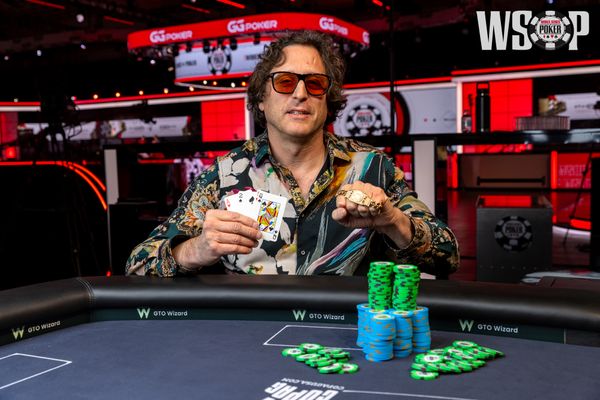
Michael Casella proved that elite competitive chess training translates directly to poker success, outlasting poker royalty Nick Schulman and Scott Seiver to capture his first WSOP bracelet in the $1,500 Badugi event for $141,963. The Los Angeles mixed game regular credited his chess background for giving him the mental stamina to survive a grueling three-hour heads-up battle and navigate a final table stacked with seven-time bracelet winners.
What Happened
The final table of the $1,500 Badugi event featured an intimidating lineup that would make most recreational players reconsider their life choices. When Day 3 began with ten players remaining, Casella held the chip lead but faced a gauntlet that included 2025 Poker Hall of Fame inductee Nick Schulman, 2024 WSOP Player of the Year Scott Seiver, and Brazilian powerhouse Yuri Dzivielevski.
Dzivielevski exited first, setting up the exact scenario Casella had visualized the night before. “I was planning on this last night,” Casella revealed post-victory. “I thought it would be four-way with me, Seiver, Nick, and Yuri, and that I would beat them all. So it kind of came true.”
The three-handed portion proved devastating for Seiver despite entering with the second-largest stack. A brutal cooler saw his six Badugi run into Casella’s superior five Badugi in a massive pot that shifted momentum decisively. Seiver couldn’t recover from the blow, and subsequent confrontations where Casella made seven and eight Badugis sent the future Hall of Famer to the rail in under an hour of three-way action.
The heads-up match between Casella and Schulman stretched over three hours and showcased the highest level of Badugi play seen at the WSOP this year. Schulman repeatedly clawed back from the brink, surviving multiple all-in situations to keep his bracelet hopes alive. Casella finally sealed victory midway through Level 33, denying Schulman his eighth WSOP bracelet and claiming his first.
The Poker Strategy Breakdown
Badugi presents unique strategic challenges that separate it from traditional poker variants. The goal is to make the lowest four-card hand with one card from each suit and no pairs—a “Badugi.” The game’s drawing structure and hand valuation system create complex decision trees that reward both mathematical precision and psychological warfare.
The cooler hand between Casella and Seiver illustrates a fundamental Badugi concept: even strong hands can be dominated. A six Badugi (four unpaired cards of different suits with six as the highest) is an excellent holding in most situations, easily justifying aggressive action. However, against a five Badugi or better, it’s crushed. This creates scenarios where skilled players can lose enormous pots with premium holdings—a reality Seiver experienced firsthand.
What made Casella’s performance remarkable was his ability to construct seven and eight Badugis consistently in crucial spots. While these aren’t premium hands in absolute terms, they’re significantly ahead of three-card hands and two-card hands that opponents might be drawing to. The key strategic insight here is understanding relative hand strength based on opponents’ likely holdings and betting patterns.
During the extended heads-up battle, both players demonstrated advanced Badugi concepts. The multiple all-in confrontations that Schulman survived weren’t merely luck—they represented calculated spots where both players correctly assessed their equity. In Badugi, drawing hands maintain significant equity even when behind, making all-in decisions more complex than in hold’em or Omaha variants.
Casella’s chess background likely contributed to his ability to calculate these complex equity situations under pressure. Chess masters develop pattern recognition skills that allow rapid evaluation of complex positions—a skill that translates directly to Badugi’s multi-street decision-making. When you’re drawing to improve your hand while simultaneously blocking certain outs for your opponent, the calculations become intricate quickly.
Reading The Field & Table Dynamics
Casella’s pre-tournament visualization wasn’t mere wishful thinking—it demonstrated sophisticated opponent modeling. By identifying the four most dangerous players in the field and mentally preparing to face them, he entered the final table with a strategic framework already in place.
His post-victory comments about Seiver reveal deep respect for his opponent’s aggression: “Especially Seiver, he’s like an animal, just constantly bluffing and snowing.” This observation highlights a critical dynamic in mixed game tournaments. Against elite competition, you can’t simply wait for premium holdings. Seiver’s aggressive approach, while ultimately unsuccessful in this event, represents optimal strategy in many Badugi situations.
The “snowing” Casella referenced—representing a strong hand while actually holding weak cards—is particularly effective in Badugi because the hand rankings are less intuitive than traditional poker games. When an opponent bets aggressively across multiple streets, they could hold a premium Badugi, a strong drawing hand, or complete air. Navigating these situations requires both mathematical understanding and psychological reads.
Schulman’s resilience during heads-up play demonstrated why he’s earned seven bracelets and a Poker Hall of Fame induction. Rather than accepting defeat when short-stacked, he identified spots where his equity justified all-in moves and executed them. This aggressive survival strategy extended the match considerably and gave him legitimate chances to complete the comeback.
The chip distribution dynamics played a crucial role in the final table’s progression. Casella’s chip lead allowed him to apply pressure without risking tournament life, while Seiver’s second-place stack should have provided similar flexibility. The cooler hand that crippled Seiver illustrates how quickly chip dynamics can shift in Badugi, where large pots develop naturally due to the game’s structure.
How To Apply This To Your Game
The most transferable lesson from Casella’s victory is the importance of mental preparation and stamina. His comment that chess training helped him “handle the poker, heads-up, better” because of chess’s physical and emotional demands offers a blueprint for tournament success. Long poker sessions, especially at final tables with life-changing money on the line, test your mental endurance as much as your strategic knowledge.
Develop pre-tournament visualization practices similar to Casella’s. Before entering a tournament, identify the tough opponents you might face and mentally rehearse confrontations with them. This preparation reduces anxiety when you actually encounter these players and helps you execute your strategy under pressure.
In Badugi specifically, study hand equity calculations extensively. Unlike hold’em where you can rely on general principles, Badugi requires precise understanding of how different drawing hands fare against made hands. Invest time in equity calculators and simulation software to internalize these percentages, allowing you to make correct decisions rapidly at the table.
When facing aggressive opponents like Seiver, resist the temptation to fight fire with fire immediately. Casella’s approach appeared measured—he let Seiver’s aggression work against him by having strong holdings when major confrontations occurred. This doesn’t mean playing passively, but rather choosing your battles strategically rather than engaging in every skirmish.
During extended heads-up matches, focus on sustainable decision-making rather than forcing action. Schulman’s multiple comebacks demonstrate that chip leads can evaporate quickly if you make marginal calls or poorly-timed bluffs. Maintain your strategic discipline even when fatigue sets in, as this is precisely when opponents hope you’ll make mistakes.
Finally, embrace mixed game variants to develop well-rounded poker skills. Casella’s success in the LA mixed game scene prepared him for this bracelet victory. Players who specialize exclusively in no-limit hold’em often struggle with the different strategic frameworks required in games like Badugi, Stud, and Razz. Expanding your game selection improves your overall poker thinking.
Key Takeaways
- Mental stamina from competitive pursuits outside poker—like chess—directly translates to better tournament performance during crucial moments
- Pre-tournament visualization and opponent modeling helps you execute strategy under pressure when facing elite competition
- In Badugi, even premium hands like six Badugis can be dominated, requiring careful hand reading and equity assessment
- Aggressive opponents like Seiver require patient counter-strategies rather than immediate escalation of aggression
- Extended heads-up battles test your ability to maintain strategic discipline when fatigue sets in
- Mixed game experience develops strategic flexibility that improves your overall poker decision-making across all variants
Frequently Asked Questions
How does chess training specifically help with poker performance?
Chess develops pattern recognition, calculation speed under time pressure, and emotional control during long competitive sessions. These skills transfer directly to poker, particularly in complex variants like Badugi where equity calculations are intricate. Chess masters learn to evaluate positions quickly and maintain focus for extended periods—exactly what’s required during marathon final tables and heads-up battles. The competitive experience also builds mental resilience for handling high-pressure situations with significant money at stake.
What makes Badugi strategy different from traditional poker games?
Badugi requires building the lowest four-card hand with one card from each suit and no pairs, creating completely different hand values than traditional poker. Drawing hands maintain significant equity across multiple streets, making all-in decisions more complex. The hand rankings are less intuitive, which allows for more effective bluffing and “snowing” strategies. Additionally, the game’s structure naturally creates larger pots relative to stack sizes, leading to more volatile swings and requiring different bankroll management approaches than hold’em variants.
How should you adjust your strategy when facing multiple bracelet winners at a final table?
Against elite competition, focus on solid fundamentals rather than fancy plays that might backfire against experienced opponents. Study their tendencies beforehand—many top players have extensive recorded hands available for analysis. Avoid the temptation to prove yourself through elaborate bluffs; instead, wait for genuine value situations where your strong holdings can extract maximum value. Maintain mental discipline and don’t let their reputations intimidate you into passive play. Finally, recognize that even elite players make mistakes under pressure, so stay alert for exploitable patterns.
Final Thoughts
Michael Casella’s bracelet victory represents more than just another tournament result—it demonstrates how skills from seemingly unrelated competitive pursuits enhance poker performance. His chess mastery provided the mental framework to outlast two of poker’s most accomplished players in a grueling final table battle. The visualization techniques, emotional control, and competitive stamina developed through years of chess competition proved decisive when the pressure peaked during that three-hour heads-up marathon.
For aspiring tournament players, Casella’s path offers valuable lessons. Success at the highest levels requires more than poker-specific knowledge. Building mental stamina through challenging competitive experiences, whether chess, athletics, or other demanding pursuits, creates the psychological foundation for peak performance when life-changing money is on the line. Combined with solid strategic fundamentals and thorough opponent analysis, this mental edge can be the difference between victory and elimination.
The WSOP continues to showcase how diverse backgrounds and skill sets contribute to poker excellence. Whether you’re a chess master, a mathematician, or simply a dedicated student of the game, opportunities exist to compete at the highest levels. Study the strategic concepts, develop your mental game, and put in the hours necessary to compete with the best—your bracelet might be waiting.
Ready to Sharpen Your Poker Game?
Master your poker game with expert hand analysis