

Finnish Pro Wins $25K PLO Bracelet After Quad Cooler
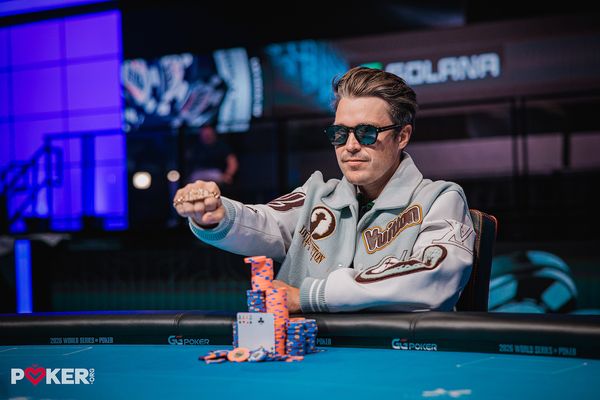
Eelis Paerssinen captured his second WSOP bracelet and $2.16 million after delivering one of the summer’s most devastating coolers in the $25,000 PLO High Roller. The Finnish wizard flopped quads against Levon Khachatryan’s flopped top boat in a heads-up clash that effectively ended the tournament.
What Happened
The 2026 WSOP $25,000 Pot-Limit Omaha High Roller came down to a battle between California-based grinder Levon Khachatryan and Finnish PLO specialist Eelis Paerssinen. With Khachatryan holding a commanding 47 million to 20 million chip advantage during heads-up play, the tournament appeared to be trending in the American’s favor.
Then came the hand that would flip the script entirely. After Khachatryan opened to 1.8 million preflop, Paerssinen called from the big blind. The flop brought a coordinated board that would set up the carnage. Khachatryan continuation bet 1.2 million after Paerssinen checked, and the Finn called. Both players checked the turn, exercising caution on what was already a dangerous board.
The river brought action. Paerssinen led out for 3.6 million, prompting Khachatryan to raise to 12 million with what he believed was a monster holding. Paerssinen responded by moving all-in for just under 18 million total. Khachatryan made the call with his flopped full house, holding what would normally be an unbeatable hand in this spot.
Unfortunately for the Californian, Paerssinen tabled flopped quad nines, having connected perfectly with the board texture. The pot swung nearly 40 million chips to Paerssinen, completely reversing the chip dynamic and crushing Khachatryan’s momentum. From that point forward, the Finnish pro never looked back, riding the psychological and chip advantage to claim the bracelet and $2,161,056 first-place prize.
The Poker Strategy Breakdown
This hand presents a fascinating case study in PLO variance and the importance of understanding board texture in four-card games. Let’s examine the strategic elements that made this cooler so brutal.
In Pot-Limit Omaha, flopped full houses are significantly less powerful than in Hold’em due to the increased number of combinations each player can make. With four hole cards instead of two, the probability of running into a superior holding increases dramatically. That said, Khachatryan’s play was entirely standard and virtually impossible to avoid.
The preflop action was straightforward—a standard raise and call in a heads-up scenario. The flop continuation bet from Khachatryan was automatic with top full house, and Paerssinen’s check-call with quads was a masterclass in deception. By flatting rather than raising, the Finnish pro kept his opponent’s range wide and set up the possibility of extracting maximum value on later streets.
The turn check from both players is particularly interesting. Khachatryan likely checked behind to control the pot size with what he perceived as a strong but vulnerable hand, while Paerssinen’s check was pure trap-setting. With the absolute nuts and no realistic way to be beaten, slow-playing becomes the optimal strategy to allow your opponent to catch up or bluff.
The river action is where the hand exploded. Paerssinen’s lead bet of 3.6 million into a pot of approximately 6 million was designed to look like a blocking bet or a value bet from a worse hand. When Khachatryan raised to 12 million, he was representing exactly what he had—a massive hand that wanted to get value. Paerssinen’s all-in was the natural conclusion, and Khachatryan’s call was mandatory given his holding.
From a GTO perspective, there’s virtually nothing Khachatryan could have done differently. When you flop the second-best possible hand in a heads-up pot, you’re getting the money in every single time. This is pure variance at its most extreme, and it highlights why bankroll management is crucial even for world-class professionals.
Reading The Field & Table Dynamics
The psychological impact of this hand cannot be overstated. Before this crucial pot, Khachatryan had been steadily building his chip lead and winning the majority of contested pots. He had established dominance at the table and was dictating the pace of play.
Paerssinen acknowledged this shift in his post-tournament interview, noting that while he doesn’t typically believe in momentum, this hand fundamentally changed the match’s trajectory. Losing a 40-million chip pot when you believe you have the tournament locked up creates mental damage that’s difficult to overcome, even for experienced professionals.
Khachatryan’s comments reveal the psychological toll: “From that moment, I just got card dead.” While it’s possible he genuinely ran poorly after the hand, it’s equally likely that his decision-making was compromised by the shock of the cooler. In high-stakes tournament poker, maintaining emotional equilibrium after devastating beats separates good players from great ones.
The heads-up dynamic also matters significantly here. In a multi-way pot, players tend to exercise more caution with full houses in PLO because the likelihood of running into quads or a superior boat increases with each additional opponent. Heads-up, however, the range of hands your opponent can hold narrows considerably, making Khachatryan’s aggressive line even more justified.
For Paerssinen, this tournament represents his second WSOP bracelet and confirms his status as one of the elite PLO players in the world. His ability to capitalize on the momentum shift and close out the tournament demonstrates championship-level mental fortitude and technical skill.
How To Apply This To Your Game
While most players will never face this exact scenario in a $25,000 buy-in event, the strategic and mental lessons are universally applicable across all stakes.
First, understand that in PLO, even premium made hands can be vulnerable. Unlike Hold’em, where flopped sets and full houses are typically dominant, Omaha’s four-card structure creates more combinations and more potential for coolers. This doesn’t mean you should play scared, but it does mean you should be aware of board texture and how it interacts with your opponents’ possible holdings.
Second, practice emotional resilience. Khachatryan’s admission that he “got card dead” after the cooler suggests the hand affected his mental state. Whether you’re playing a $25,000 High Roller or a $50 home game, bad beats will happen. Your ability to reset emotionally and continue making optimal decisions determines your long-term success.
Third, recognize when you’re beat and when you’re not. In this specific hand, there was no way for Khachatryan to fold—he had the second nuts on the flop and the board didn’t change the relative strength of his hand. However, in other situations, being able to release strong hands when the action and board texture suggest you’re behind is a crucial skill.
Fourth, master the art of slow-playing premium hands. Paerssinen’s check-call on the flop and check on the turn allowed his opponent to hang himself. When you have the absolute nuts in PLO, especially on coordinated boards where your opponent likely has something strong, giving them rope to build the pot is often more profitable than aggressive fast-play.
Finally, maintain proper bankroll management. Even world-class players like Paerssinen and Khachatryan experience massive swings due to variance. Ensuring you have adequate buy-ins for your chosen stakes protects you from going broke during inevitable downswings.
Key Takeaways
- Eelis Paerssinen won his second WSOP bracelet and $2,161,056 after flopping quads against a flopped full house in heads-up play
- The cooler hand swung nearly 40 million chips and completely reversed the tournament’s momentum
- In PLO, even strong made hands like top full house are more vulnerable than in Hold’em due to increased combination possibilities
- Slow-playing the absolute nuts, especially in position or when your opponent likely has a strong hand, can maximize value
- Mental resilience after devastating beats is crucial for tournament success—the ability to reset emotionally separates elite players from the rest
- Levon Khachatryan still earned a career-best $1,440,680 for second place, demonstrating that even coolers can come in profitable tournaments
Frequently Asked Questions
How rare is flopping quads in Pot-Limit Omaha?
Flopping quads in PLO is extremely rare, occurring approximately 0.25% of the time when you have a pocket pair (roughly 1 in 400 hands). The odds of both players flopping such strong hands simultaneously—quads versus a full house—is astronomically low, making this one of the most memorable coolers of the 2026 WSOP.
Should Khachatryan have played the hand differently?
No. When you flop the second-best possible hand in a heads-up pot, you’re obligated to get the money in. Khachatryan’s line was standard and optimal—any other play would have been a mistake. This hand represents pure variance, and even the best players in the world cannot avoid these situations.
How important is mental game after a bad beat in tournament poker?
Mental resilience is arguably as important as technical skill in tournament poker. Studies have shown that players who experience significant bad beats often make suboptimal decisions in subsequent hands due to tilt or emotional distress. The ability to reset emotionally and continue playing optimally is what separates recreational players from professionals.
Final Thoughts
The 2026 WSOP $25,000 PLO High Roller will be remembered not just for Eelis Paerssinen’s second bracelet, but for one of the most brutal coolers witnessed on poker’s biggest stage. The hand serves as a reminder that even in a skill-based game like poker, variance plays an undeniable role in short-term outcomes.
What separates champions like Paerssinen from the field isn’t just technical prowess—it’s the ability to capitalize on fortunate situations and maintain focus when momentum shifts in your favor. Similarly, Khachatryan’s gracious acceptance of the defeat and his career-best cash demonstrate the professionalism required at poker’s highest levels.
For players at all levels, this hand offers valuable lessons about PLO strategy, emotional control, and the importance of accepting variance as an inherent part of the game. Whether you’re grinding micro-stakes online or competing in high-roller events, the principles remain the same: make optimal decisions, manage your emotions, and trust that skill will prevail over the long run.
Ready to Sharpen Your Poker Game?
Master your poker game with expert hand analysis
