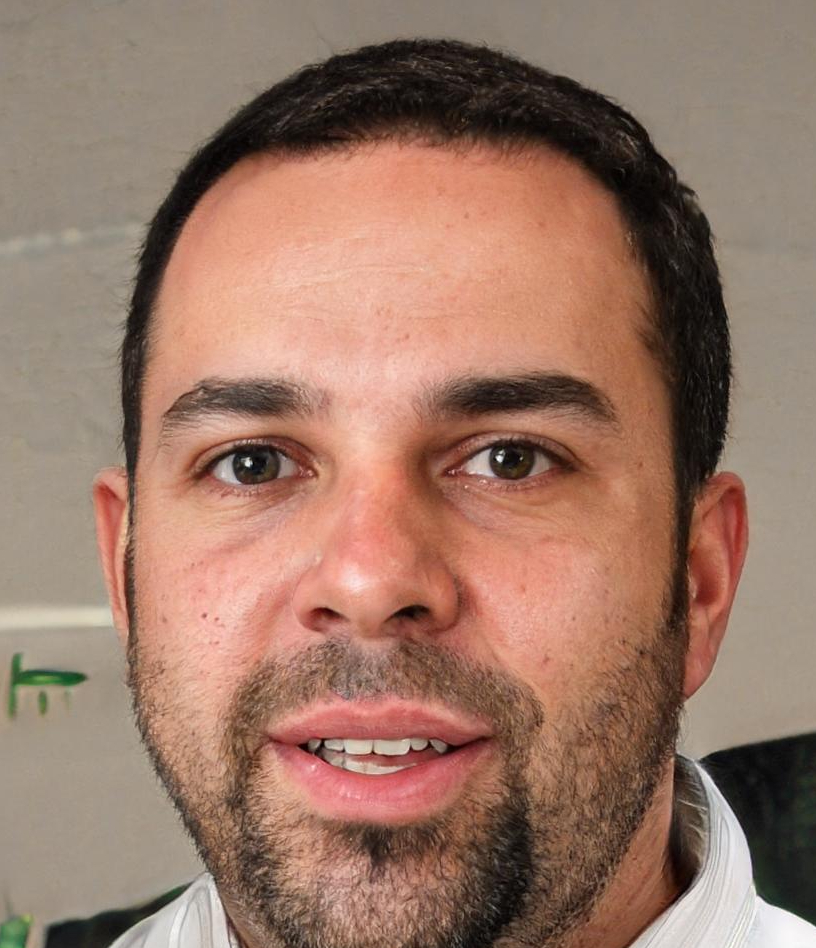
Frederic Normand’s WSOP Bracelet Win: Learning PLO8 On The Fly
Frederic Normand had never played Pot-Limit Omaha 8 or Better before entering the $1,500 WSOP event. Three days later, the French Canadian walked away with his first bracelet and $235,377, proving that deep poker fundamentals can transcend game variants—even when you’re learning the rules as you go.
What Happened
The 2026 World Series of Poker witnessed one of the most remarkable bracelet victories in recent memory when Frederic Normand conquered a field of 1,093 players in the $1,500 Pot-Limit Omaha 8 or Better event. What makes this achievement extraordinary isn’t just the six-figure score—it’s that Normand had zero experience with the split-pot variant before registering.
Coming off a $52,000 victory at the Aria Poker Classic just days earlier, Normand brought extensive pot-limit Omaha credentials to the table. His resume includes cashes in high-stakes PLO events worldwide, including a $78,000 buy-in Triton tournament at WSOP Paradise. But PLO8? That was uncharted territory.
“I played one Big O tournament, I think two years ago. I learned the rules there,” Normand explained post-victory. “I didn’t even know what certain low is better than a certain low, and I guess I learned that yesterday.” He openly admitted to mucking winning low hands during the tournament, figuring out hand values through trial and error.
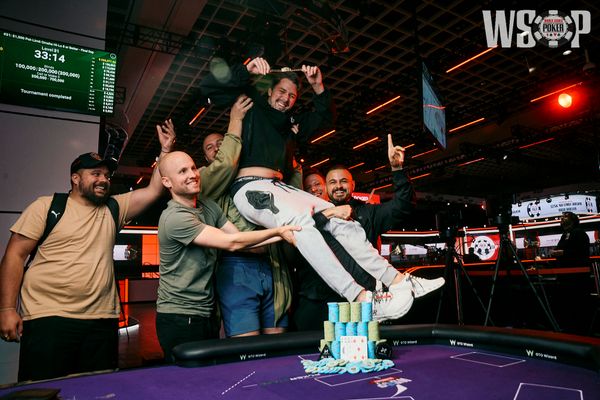
The final table showcased Normand’s rapid learning curve. He entered Day 3 with the chip lead and never relinquished it, navigating complex split-pot scenarios against experienced PLO8 specialists. The pivotal moment came in a three-handed confrontation with seven-time bracelet winner Josh Arieh, where Normand’s decision-making under pressure proved crucial.
After Arieh limp-called a pot-sized raise preflop, the action exploded on a flop showing coordinated cards perfect for split-pot warfare. Arieh check-potted Normand’s continuation bet, committing nearly his entire stack. Normand tanked for several minutes before the clock was called, ultimately moving all-in with a slightly covering stack.
Arieh showed bottom two pair with a gutshot straight draw to Broadway. Normand tabled aces with backdoor equity. The turn improved Normand to a better two pair, and the river sealed Arieh’s elimination in third place. One hand later, Normand dispatched Michael Rodrigues of Portugal to claim the bracelet.
The victory marks consecutive Canadian wins in this event, following Zachary Zaret’s 2025 triumph. Normand’s bracelet was particularly sweet after finishing runner-up in the $5,000 8-max No-Limit Hold’em event the previous summer.
The Poker Strategy Breakdown
The hand that eliminated Arieh reveals fascinating strategic layers, especially considering Normand’s admitted unfamiliarity with PLO8 nuances. Let’s dissect why this wasn’t just a lucky cooler but a theoretically sound decision.
In Pot-Limit Omaha 8 or Better, hand values shift dramatically compared to standard PLO. The low qualifier (five unpaired cards eight or below) means pots frequently split, reducing the effective value of high-only hands. Normand’s aces gave him premium high potential, but his backdoor low draw provided the crucial equity that made his call profitable.
“There was a lot in the pot with what happened preflop,” Normand explained. “I felt it was a close spot with the backdoor low draw. I don’t think he had that many ace-nine or kings.” This reads demonstrates sophisticated hand-range thinking. Despite being new to the format, Normand correctly identified that Arieh’s limp-call range wouldn’t be heavily weighted toward premium holdings.
The flop texture created a complex decision tree. Arieh’s check-pot represented polarization—either a monster or a strong draw with low potential. Normand’s aces were behind Arieh’s made two pair, but the combination of pair outs, backdoor low possibilities, and pot odds made continuing correct.
What’s particularly instructive is Normand’s meta-game awareness. “Apparently, nine is not a good card in this game,” he noted, referencing how nines create problematic low draws that often get counterfeited. This insight, absorbed on the fly, influenced his range construction and calling decisions.
The mathematical reality: Normand needed roughly 40% equity to call given the pot odds. With six outs to improve his high hand (three aces, three cards for second pair), plus backdoor low potential and backdoor flush possibilities, he comfortably exceeded that threshold. The fact that he arrived at the correct decision through intuition rather than precise calculation speaks to transferable poker fundamentals.
Reading The Field & Table Dynamics
Tournament poker isn’t played in a vacuum, and Normand’s success stemmed partly from reading opponents and exploiting final table dynamics. Three-handed play with a significant chip lead creates unique strategic opportunities.
Normand held approximately 5-to-1 chip advantage over Rodrigues after eliminating Arieh, but the Arieh confrontation itself revealed crucial tournament awareness. With three players remaining and Arieh holding a medium stack, ICM pressure was mounting. Arieh’s check-pot represented a commitment to the hand, but also potential desperation.
Normand’s extended tank wasn’t indecision—it was information gathering. By forcing the clock, he observed Arieh’s demeanor and body language. More importantly, he calculated the tournament implications. Eliminating Arieh would virtually guarantee first place given his massive lead over Rodrigues.
The risk-reward calculation favored aggression. Even if Normand lost the pot, he’d still hold a competitive stack. But winning would end the tournament in all but name. This ICM consideration made the call even more attractive than pure pot odds suggested.
Normand’s chip lead throughout Day 3 also allowed him to apply pressure without risking tournament life. In split-pot games, aggression carries premium value because opponents must consider both high and low possibilities. A chip leader can force opponents into marginal decisions, exactly what happened with Arieh.
The one-hand heads-up match against Rodrigues underscores another dynamic: psychological momentum. After the dramatic Arieh elimination, Rodrigues faced a mountain to climb both in chips and confidence. Normand’s aggressive style, honed through high-stakes PLO experience, translated perfectly to closing out the victory.
How To Apply This To Your Game
Normand’s bracelet run offers several actionable lessons for players looking to expand their poker repertoire or improve tournament performance.
Fundamentals transfer across variants. Normand’s PLO background provided the foundation for PLO8 success. Position, pot odds, equity calculation, and hand-reading skills apply universally. If you’re strong in one poker variant, you’re closer to competence in others than you might think. The core mathematics and psychology remain constant.
Don’t fear learning in competition. While Normand’s approach might seem reckless, it demonstrates confidence in transferable skills. Obviously, don’t jump into stakes beyond your bankroll, but challenging yourself with new formats accelerates learning. The pressure of real money focuses attention and cements lessons faster than casual study.
Embrace calculated aggression with chip leads. Normand’s willingness to call Arieh’s check-pot exemplifies how chip advantage creates strategic flexibility. When you can afford to take risks, pressure opponents into difficult decisions. This applies across all tournament formats, not just split-pot games.
Study hand values specific to each variant. Normand’s comment about nines being problematic in PLO8 reveals important variant-specific knowledge. When learning new games, focus first on how hand values differ from familiar formats. In PLO8, coordinated low cards with high potential (A-2-3-x with suited ace) dramatically outperform hands that play well in standard PLO.
Use tank time strategically. Normand’s extended tank before calling Arieh served multiple purposes: calculating equity, reading opponents, and considering ICM implications. Don’t rush major decisions, especially at final tables. The information gained from observation often justifies the time investment.
Recognize when backdoor equity matters. In split-pot games, backdoor draws carry more value than in high-only formats. The possibility of backing into either the high or low half of the pot provides crucial additional equity. Factor these possibilities into calling decisions, especially when pot-committed or facing short-stacked opponents.
Key Takeaways
- Frederic Normand won his first WSOP bracelet in $1,500 PLO8 event despite never playing the variant before, earning $235,377 from a field of 1,093 players
- Strong fundamentals in one poker variant (PLO) can transfer effectively to related games (PLO8), especially when combined with quick learning and adaptability
- The crucial hand against Josh Arieh demonstrated correct application of pot odds and equity calculation, even while learning hand values on the fly
- Chip leadership at final tables enables aggressive play that pressures opponents into marginal decisions with tournament life at stake
- Backdoor equity in split-pot games provides significant additional value that justifies calling in spots that might be folds in high-only formats
- The victory marks back-to-back Canadian wins in this event, with Zachary Zaret taking down the 2025 edition
Frequently Asked Questions
What is Pot-Limit Omaha 8 or Better and how does it differ from regular PLO?
Pot-Limit Omaha 8 or Better is a split-pot variant where the pot is divided between the best high hand and the best qualifying low hand (five unpaired cards eight or below). If no qualifying low exists, the high hand scoops the entire pot. This dramatically changes hand values compared to regular PLO, making coordinated hands with both high and low potential (like A-2-3-K double-suited) premium holdings. Players must use exactly two cards from their hand and three from the board for both high and low.
How did Normand’s PLO experience help him succeed in PLO8?
Normand’s extensive PLO background provided crucial transferable skills: understanding four-card hand combinations, calculating pot odds in pot-limit betting structures, reading board textures, and recognizing equity in multi-way pots. These fundamentals apply equally to PLO8. The main adjustment required was learning low hand rankings and recognizing when hands had scooping potential versus situations where splitting was likely. His strong mathematical foundation and hand-reading abilities allowed him to learn variant-specific nuances quickly during tournament play.
Was Normand’s call against Arieh mathematically correct?
Yes, the call was mathematically sound despite Normand being behind when the money went in. With six direct outs to improve his high hand (three aces and three cards for second pair), backdoor low possibilities, and backdoor flush potential, Normand had sufficient equity to call given the pot odds. Additionally, tournament ICM considerations made the call even more attractive—eliminating Arieh would give Normand a massive chip lead with only one opponent remaining. The combination of pot odds, equity, and ICM pressure made this a clear call despite the difficult spot.
Final Thoughts
Frederic Normand’s WSOP bracelet victory challenges conventional wisdom about specialization in poker. While deep expertise in specific variants certainly has value, his success demonstrates that strong fundamental skills create a foundation for rapid adaptation. The ability to calculate equity, read opponents, manage bankroll, and make mathematically sound decisions under pressure transcends any single game format.
What makes this story particularly compelling for developing players is the honesty. Normand didn’t pretend to be a PLO8 expert—he openly admitted to mucking winning hands and learning hand values during the tournament. Yet his confidence in transferable skills, combined with willingness to learn through experience, proved more valuable than years of specialized study might have been for a less fundamentally sound player.
As Normand sets his sights on the $10,000 PLO8 Championship next week, his journey offers inspiration for players looking to expand their game. Whether you’re a hold’em specialist curious about Omaha variants, or a cash game player considering tournaments, the lesson is clear: trust your fundamentals, embrace the learning curve, and don’t be afraid to compete while you’re still developing variant-specific expertise. Sometimes the best education happens under fire.
Ready to Sharpen Your Poker Game?
Master your poker game with expert hand analysis