

Gaolito’s $535K Bluff Goes Wrong After Showing Key Card on HCL
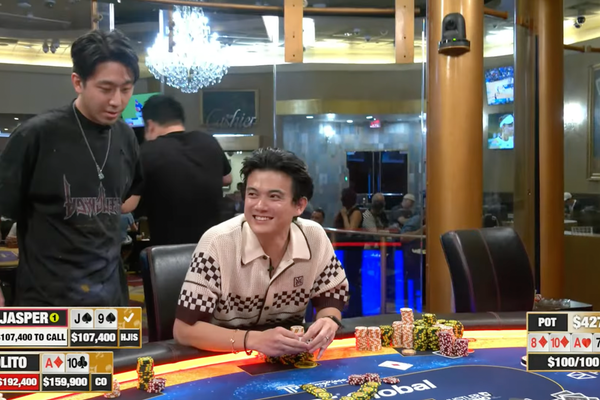
A massive bluff turned into an expensive lesson on Hustler Casino Live when Gaolito showed a critical card during a $535,000 pot, then walked away from the table while his opponent tanked. Despite revealing the ace of diamonds to apply pressure, Jasper Ma eventually made a hero call with the nuts, catching Gaolito’s stone-cold bluff in one of the most dramatic hands of the year.
What Happened
The hand unfolded during the final stretch of a High Stakes Friday session on Hustler Casino Live, featuring deep-stacked play that would ultimately produce a pot worth over half a million dollars.
Gaolito, sitting on a massive stack approaching $430,000, opened the action in a double-straddled pot to $3,000 holding queen-nine offsuit. After the action folded around, Jasper Ma defended from the double-straddle position with king-jack suited, working with approximately $265,000 behind.
The flop came down nine-nine-queen rainbow, giving Gaolito top two pair. When Ma checked, Gaolito fired a continuation bet of $4,000. Ma, holding an open-ended straight draw with his king-jack, decided to apply immediate pressure with a raise to $17,000. Gaolito called, and the turn delivered the ten—completing Ma’s straight and giving him the absolute nuts.
With $40,500 already in the middle, Ma didn’t slow down. He fired an aggressive overbet of $55,000, putting maximum pressure on Gaolito’s full house. After some consideration, Gaolito made the call, bringing the pot to $150,500 heading to the river.
The river card changed everything—or at least appeared to. Ma, despite no longer holding the pure nuts after the board paired, continued his aggression with an $85,000 bet. Gaolito checked his cards one more time, seemingly confirming his holdings, then looked up and announced he was all-in for Ma’s remaining $107,000.
The announcement sent Ma into visible distress. “Oh my god, that’s the worst river for me,” he exclaimed, flipping over his cards to show the table his straight. As Ma entered a deep tank, Gaolito offered to show him a card. When Ma accepted, Gaolito revealed the ace of diamonds—a card that would be crucial to any bluff in this spot.
What happened next was unprecedented. With Ma still deep in thought, Gaolito stood up from the table and headed to the restroom. “I’m just gonna go to the toilet and if he… whatever happens just flip over my hand,” he announced before leaving the stage entirely.
After several minutes of agonizing deliberation, Ma made the hero call. Nik Airball took it upon himself to reveal Gaolito’s other card—the nine of diamonds—confirming the bluff. When Gaolito returned from the restroom, he was greeted with the news that his ambitious play had failed, costing him over $190,000.
The Poker Strategy Breakdown
This hand presents a fascinating case study in aggression, bluff construction, and the psychological warfare that defines high-stakes poker. Let’s dissect the key strategic elements at play.
Gaolito’s river bluff, while ultimately unsuccessful, wasn’t completely without merit. From his perspective, he held a hand that blocked some full houses and could credibly represent the absolute nuts or a boat. The river card that paired the board created a natural bluffing opportunity, as it would legitimately concern someone holding a straight.
However, the decision to show the ace of diamonds introduces a complex layer to the strategy. In theory, showing a key blocker card could add credibility to a value hand—after all, why would a bluffer voluntarily reveal information? The logic suggests that someone bluffing would be more desperate to induce a fold and less likely to give away information that could help their opponent make a decision.
But this logic cuts both ways. Sophisticated players understand reverse tells and leveling wars. By showing the ace, Gaolito eliminated some uncertainty but also gave Ma concrete information to work with. Ma could now construct a more accurate range for his opponent, knowing that at least one key card was accounted for.
The decision to leave the table mid-tank is equally intriguing from a strategic standpoint. This move could be interpreted as supreme confidence—someone so unconcerned with the outcome that they’re willing to walk away. Alternatively, it could be seen as an attempt to avoid giving off any physical tells during the most critical decision point.
From Ma’s perspective, the call represents exceptional hand reading and courage under pressure. Despite the river card creating legitimate concern for his straight, several factors pointed toward a potential bluff. The sizing of Gaolito’s all-in was relatively small compared to the pot, offering Ma favorable odds. Additionally, the specific way the hand played out—with Gaolito’s willingness to show a card and then leave—could suggest discomfort with the situation.
Reading The Field & Table Dynamics
Context matters enormously in high-stakes cash games, and this hand didn’t occur in a vacuum. Understanding the table dynamics and player profiles helps explain why this particular confrontation developed the way it did.
Hustler Casino Live features some of the deepest-stacked cash game action available on stream, creating an environment where creative plays and massive pots become more common. With Gaolito sitting on nearly $430,000, he had the stack depth to apply maximum pressure. This isn’t a tournament situation where ICM considerations would make such a large bluff inadvisable—this is pure chip-for-chip combat where aggression often wins the day.
The player dynamics between Gaolito and Ma also factor into the equation. Both players have established reputations as aggressive, thinking players willing to make big moves. This wasn’t a situation where a tight, straightforward player suddenly decided to blast off chips. Instead, both players operate in ranges that include creative plays, making the decision tree more complex.
The live-streamed environment adds another dimension. Players on HCL are performing for an audience while playing for real money. This can influence decision-making, sometimes encouraging more action and spectacular plays than might occur in a private game. The presence of cameras doesn’t change the fundamentals, but it can affect the frequency of certain plays.
Ma’s willingness to take time in the tank—and Gaolito’s patience in allowing it—reflects the high-stakes cash game culture where major decisions deserve adequate consideration. In smaller games, such lengthy tanks might draw criticism, but when nearly $200,000 is on the line, taking several minutes to think through the situation is not only acceptable but advisable.
How To Apply This To Your Game
While most players won’t face $535,000 pots, the strategic principles from this hand scale down to any stake level. Here’s how to incorporate these lessons into your game.
First, understand that showing cards during a hand is almost always a mistake. Despite Gaolito’s sophisticated reasoning about reverse psychology, giving your opponent information generally helps them more than it helps you. Even if showing a blocker seems clever, you’re eliminating uncertainty that works in your favor. Keep your cards to yourself until the hand is complete.
Second, when constructing bluffs, consider not just whether you can represent a strong hand, but whether your specific line makes sense. Gaolito’s bluff would have been more credible if his betting pattern throughout the hand told a consistent story. The relatively small flop call followed by the turn call and then the river shove creates a somewhat disjointed narrative that a perceptive opponent can question.
Third, don’t be afraid to take your time on major decisions. Ma’s extended tank wasn’t weakness—it was smart poker. When facing a decision for a significant portion of your stack, use the time you need to consider all available information. Think through your opponent’s possible holdings, consider the betting story, and evaluate the pot odds you’re being offered.
Fourth, recognize that physical tells and table presence matter, but they’re not the only factors. Gaolito’s decision to leave the table was unusual, but Ma ultimately based his call on more concrete factors: the betting pattern, the pot odds, and his read of the overall situation. Don’t over-rely on behavioral tells at the expense of fundamental poker logic.
Finally, understand that aggression is powerful but not invincible. Gaolito’s willingness to fire a massive river bluff exemplifies the kind of fearless play that wins big pots. However, good players will eventually find calls when the situation warrants it. Balance your aggression with hand selection and situation awareness to maximize its effectiveness.
Key Takeaways
- Showing cards during a hand almost always gives your opponent more information than it gives you, regardless of your reasoning—keep your holdings concealed until the hand is complete
- Bluff construction requires a coherent betting story from start to finish; inconsistent lines make your bluffs easier to catch
- Taking time to think through major decisions is smart poker, not weakness—use the tank when significant money is at stake
- Physical tells and table presence matter, but fundamental factors like pot odds, betting patterns, and range construction should drive your decisions
- Aggressive play wins pots, but sophisticated opponents will find hero calls when the math and situation support it
- In deep-stacked cash games, creative plays become more viable, but they also carry proportionally larger risks when they fail
Frequently Asked Questions
Was Gaolito’s decision to show the ace of diamonds a strategic mistake?
Yes, most poker strategists would consider showing a card during active play a mistake. While Gaolito’s reasoning about reverse psychology had some merit, giving Ma concrete information about his hand composition helped his opponent construct a more accurate range. The uncertainty about whether Gaolito held an ace was actually working in Gaolito’s favor before he revealed it. Even sophisticated leveling attempts generally work better when you maintain complete information asymmetry.
Should Ma have folded given the river card?
Ma’s call was ultimately correct, but it was a genuinely difficult decision. The river card did create legitimate concern for his straight, and Gaolito could credibly represent a full house. However, several factors supported a call: the pot odds were favorable, the all-in sizing was relatively small, and Gaolito’s willingness to show a card and leave the table suggested possible discomfort. Ma’s extended tank and ultimate decision demonstrate excellent hand reading under pressure.
Is leaving the table during a hand allowed in poker?
Yes, leaving the table while your opponent tanks is generally allowed in cash games, though it’s highly unusual. Once a player is all-in and has no further decisions to make, they technically have no requirement to remain at the table. However, this is rarely done in practice and can be considered poor etiquette in some settings. In this case, Gaolito’s departure was likely an attempt to avoid giving off any physical tells during Ma’s decision-making process.
Final Thoughts
This hand exemplifies both the beauty and brutality of high-stakes poker. Gaolito’s willingness to fire a massive bluff in a half-million-dollar pot demonstrates the kind of fearless aggression that defines elite cash game play. His creative approach—showing a key card and then leaving the table—shows a player thinking beyond standard tactics and attempting to manipulate the psychological dynamics of the situation.
Yet poker ultimately rewards not just creativity but sound fundamentals. Ma’s hero call, while agonizing to make, was rooted in solid reasoning about pot odds, betting patterns, and hand ranges. The hand serves as a reminder that while aggression and creative plays are powerful weapons, they’re not invincible against opponents who can think clearly under pressure.
For players at any level, this hand offers valuable lessons about bluff construction, information management, and decision-making under pressure. Whether you’re playing $1/$2 or the nosebleed stakes featured on Hustler Casino Live, these principles remain constant. The best players combine fearless aggression with disciplined hand reading—knowing when to apply pressure and when to make the tough call.
Ready to Sharpen Your Poker Game?
Master your poker game with expert hand analysis
