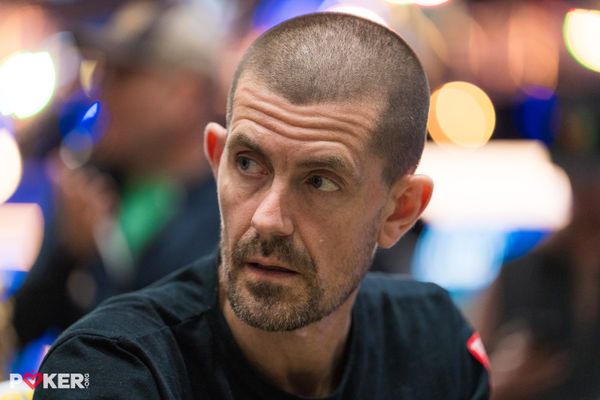
Gus Hansen on Poker’s Future: Why the Game Isn’t Going Anywhere
Legendary Danish pro Gus Hansen believes poker has never been stronger, despite what television ratings might suggest. In a candid Run It Once Training Elite Q&A session, ‘The Great Dane’ explained why the game’s evolution signals growth rather than decline—and why poker will outlast most modern entertainment trends.
What Happened
Run It Once Training continued its nostalgic series of interviews with poker’s old guard, bringing Gus Hansen into the spotlight for their monthly Elite Q&A format. Following recent sessions with Tom Dwan, the platform has clearly committed to showcasing voices from poker’s golden era—players who witnessed the game’s explosive growth firsthand and can offer perspective on its trajectory.
When Run It Once Training’s Mikey Stotz posed a straightforward question about poker’s future, Hansen delivered an unexpectedly philosophical answer. Drawing parallels between poker and humanity’s oldest professions, the Winamax Poker ambassador argued that gambling occupies a permanent place in human culture. His commentary touched on everything from the World Poker Tour’s revolutionary impact in 2002 to why the proliferation of tournaments actually indicates health rather than oversaturation.
Hansen addressed a common concern among casual observers: poker’s reduced television presence compared to the mid-2000s boom. Friends outside the poker world frequently mention this to him as evidence of the game’s decline. But Hansen sees something entirely different in the data—more players than ever before, just distributed across a vastly expanded landscape that makes individual achievement harder to track and celebrate.
The Poker Strategy Breakdown
Hansen’s observations reveal something crucial about how we should analyze poker’s ecosystem. The game hasn’t shrunk; it’s fragmented and diversified. Understanding this distinction matters for anyone serious about poker strategy and career longevity.
Consider the strategic implications of Hansen’s tournament count observation. When the World Poker Tour launched with twelve televised events annually, players could focus their preparation on a limited schedule. The strategic meta evolved slowly enough that adjustments happened seasonally rather than weekly. Today’s environment demands constant adaptation.
The explosion to what Hansen jokingly estimates as “570,000 fucking tournaments a year” fundamentally changes optimal player strategy. Game selection becomes paramount. With unlimited options across online and live venues, choosing which tournaments to enter based on field strength, structure, and ROI potential separates profitable players from those spinning their wheels.
This fragmentation also impacts skill development. The 2002-2006 era produced household names because excellence was easier to identify and track. Players like Hansen himself became famous partly because their results stood out in a concentrated field. Today’s elite players often toil in relative obscurity despite superior technical skills, because their achievements get lost in the noise.
From a strategic standpoint, this creates opportunities. Lesser-known crushers can exploit their anonymity, avoiding the table image baggage that comes with fame. Meanwhile, recognizable pros like Hansen benefit from opponents who remember their aggressive 2000s-era style rather than adapting to how they actually play today.
Hansen’s point about poker becoming a “household game” also carries strategic weight. When your office runs a monthly tournament, when your friends host home games, the overall player pool expands dramatically. This means more recreational money entering the ecosystem—the lifeblood of poker’s economy. For serious players, this represents sustained opportunity rather than a saturated market.
Reading The Field & Table Dynamics
Hansen’s commentary on Scandinavian overrepresentation in poker (mentioned in the Q&A) connects to broader questions about player pools and cultural factors that shape table dynamics. Understanding where players come from and what poker means in their culture provides exploitable information.
The social component Hansen references—poker as a workplace bonding activity, as a monthly ritual among friends—creates distinct player types with predictable patterns. The first-Friday-of-the-month tournament player approaches the game differently than someone grinding online daily. These recreational players typically play tighter than optimal, overvalue premium hands, and struggle with multi-street aggression.
Table dynamics in 2026 differ markedly from the 2002 landscape Hansen describes. Modern players have access to solvers, training sites, and vast databases of hand histories. This raises baseline competency but also creates exploitable patterns. Many players over-rely on GTO frameworks without adjusting to opponent tendencies—a weakness that experienced pros like Hansen instinctively exploit.
The live versus online divide Hansen mentions also affects table dynamics significantly. Live poker’s social component attracts personality-driven players who enjoy conversation and table banter. These environments favor players with strong live reads and psychological warfare skills. Online poker strips away these elements, creating a purer mathematical battleground where HUD stats and bet sizing tells dominate.
Tournament stage considerations have evolved alongside poker’s expansion. With so many events offering various structures—from turbo formats to deep-stack marathons—understanding how structure impacts optimal strategy becomes critical. The same player might employ vastly different approaches depending on whether they’re playing a weekend turbo or a flagship championship event.
ICM considerations have also grown more sophisticated. As the player pool’s overall skill level rises, understanding push-fold ranges, bubble dynamics, and final table deal-making becomes non-negotiable for serious tournament players. Hansen’s era featured more intuitive play; today’s game demands mathematical precision in these spots.
How To Apply This To Your Game
Hansen’s optimism about poker’s future should inform your strategic approach and career planning. Here’s how to translate his insights into actionable improvements.
First, embrace specialization over generalization. With thousands of tournaments and cash games running simultaneously, you can’t master everything. Identify your most profitable formats and structures, then focus your study time accordingly. If you crush online six-max tournaments but struggle in live full-ring cash games, lean into your strength rather than forcing well-roundedness.
Second, recognize that reduced mainstream visibility doesn’t mean reduced opportunity. While poker may not dominate ESPN’s schedule anymore, the player pool has never been larger or more accessible. Use this to your advantage by building your skills in less glamorous but more profitable environments. The player grinding mid-stakes online tournaments often earns more than recognizable pros chasing televised final tables.
Third, cultivate the social aspects Hansen emphasizes. Whether online or live, poker remains a people game. Building a network, joining study groups, and engaging with the community provides strategic advantages beyond hand analysis. These connections lead to staking opportunities, game information, and collaborative learning that accelerates improvement.
Fourth, adapt your game selection strategy to modern realities. With unlimited options, choosing optimal games matters more than playing volume. Track your results by game type, buy-in level, and venue. Ruthlessly cut formats where you’re breakeven or losing, even if you enjoy them. Profitability requires discipline.
Fifth, study poker history to understand cyclical patterns. Hansen’s perspective comes from witnessing multiple boom-and-bust cycles. Understanding that poker evolves in waves—with periods of mainstream attention followed by quieter growth phases—helps you maintain realistic expectations and avoid burnout during less exciting periods.
Finally, develop skills that transcend specific game formats. Hand reading, bankroll management, emotional control, and strategic thinking apply whether you’re playing 2002-era limit hold’em or 2026 PLO tournaments. These fundamentals ensure longevity regardless of how poker’s landscape shifts.
Key Takeaways
- Poker’s reduced television presence doesn’t indicate decline—the player pool has actually grown larger than ever, just distributed across more platforms and formats
- The explosion in tournament options (from 12 major events to thousands annually) makes game selection and specialization more important than ever for profitable play
- Poker’s integration into mainstream social activities (workplace tournaments, monthly home games) ensures a steady influx of recreational players who fuel the ecosystem
- Modern players must balance GTO fundamentals with exploitative adjustments, as over-reliance on solver outputs creates predictable patterns
- Understanding poker’s historical cycles and cultural staying power helps maintain perspective and career longevity through inevitable market fluctuations
- The fragmentation of poker media and achievement tracking creates opportunities for skilled players to profit without the burden of fame
Frequently Asked Questions
Is poker actually growing or declining in 2026?
Despite reduced mainstream media coverage, poker is experiencing growth in total player participation. The game has fragmented across numerous platforms, formats, and geographic markets rather than concentrating around a few televised events. This makes growth less visible to casual observers but more sustainable long-term, as it’s based on genuine player interest rather than media hype cycles.
Why does Gus Hansen compare poker to prostitution and gambling?
Hansen references these as humanity’s oldest professions to make a point about poker’s permanence. Activities that have persisted across millennia despite legal restrictions, moral objections, and cultural shifts demonstrate fundamental human desires that don’t disappear. Hansen argues poker taps into these same deep-rooted interests in competition, risk-taking, and social interaction—ensuring its longevity regardless of temporary popularity fluctuations.
How has the explosion in tournament options changed optimal poker strategy?
With thousands of tournaments available instead of a dozen flagship events, game selection has become a crucial skill. Players must analyze field strength, structure, rake, and variance to choose optimal spots. Additionally, the inability to track who’s “best” (as Hansen mentions with Negreanu, Mateos, and Ivey) means table image and reputation matter less than during poker’s television era, shifting emphasis toward pure technical execution and exploitative adjustments.
Final Thoughts
Gus Hansen’s perspective carries weight precisely because he’s witnessed poker’s complete evolution—from pre-boom obscurity through the Moneymaker explosion to today’s mature, diversified ecosystem. His confidence in poker’s staying power isn’t blind optimism; it’s pattern recognition from someone who’s seen the game survive multiple predicted deaths.
The strategic lesson extends beyond whether poker will exist in ten years. Hansen’s analysis teaches us to look past surface-level indicators like television ratings and recognize underlying fundamentals. More players, more games, more formats—this represents health, not decline. For serious students of the game, this means opportunity remains abundant for those willing to adapt, specialize, and continuously improve.
Whether you’re grinding online micro-stakes or competing in high-roller tournaments, Hansen’s message applies: poker isn’t going anywhere, so invest in your skills accordingly. The game’s permanence rewards long-term thinking over short-term results chasing. Build your fundamentals, choose your spots wisely, and trust that the ecosystem will support dedicated players for decades to come.
Ready to Sharpen Your Poker Game?
Master your poker game with expert hand analysis