Gus Hansen’s Unconventional WSOP Break Routine Revealed
While most poker pros spend tournament breaks running to the bathroom or reviewing solver outputs, Gus Hansen has chosen a different path at the 2026 WSOP. The Danish poker legend is spending every 15-minute intermission juggling balls in the hallways, transforming downtime into skill-building sessions with his latest obsession.
What Happened
Anyone wandering the corridors near the high-stakes tournament areas at this year’s World Series of Poker has witnessed an unusual sight: one of poker’s most recognizable faces tossing three balls in rhythmic patterns during every break. Gus Hansen, the fearless aggressor who built his reputation on unpredictable play and massive bluffs, has found a new challenge that has nothing to do with cards.
The Great Dane picked up juggling just three weeks before the series began, and he’s been using every tournament intermission to practice. Unlike players who use breaks to decompress, review hands, or engage with fans, Hansen views these mandatory pauses as dead time that needs filling. His solution? Master a completely unrelated skill while waiting to get back to the felt.
“I’ve always worked with balls through tennis,” Hansen explained when asked about his new pursuit. “Juggling just seemed like a natural fit, and honestly, it’s entertaining. Right now I’m sticking with the standard three-ball pattern, but I’m picking up new techniques every day.”
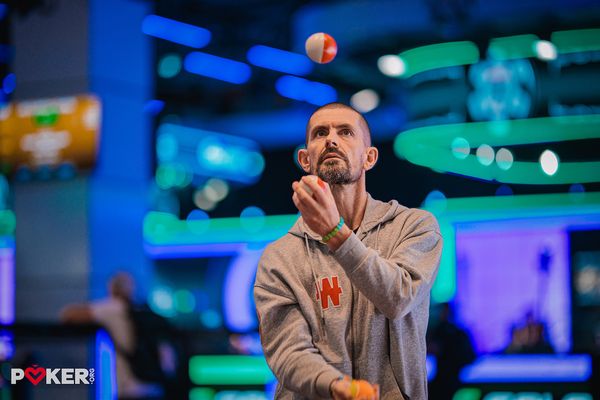
Hansen’s approach to learning mirrors his poker style—dive in headfirst and figure it out through repetition. He’s been studying Instagram tutorials from juggling specialists who break down complex patterns into manageable progressions. For someone who only started practicing recently, his progress has been notable, with fellow players stopping to watch his increasingly smooth cascades.
The timing made sense for Hansen’s new hobby. With a fuller WSOP schedule this year and his son accompanying him to Las Vegas, he wanted to maximize his time in productive ways. Since he’s never been someone who enjoys sitting idle during breaks, juggling provides the perfect outlet—active, engaging, and constantly improvable.
The Poker Strategy Breakdown
Hansen’s break-time juggling might seem disconnected from poker strategy, but it reveals something crucial about how elite players think about their time and mental resources. The conventional wisdom suggests that tournament breaks should be used for mental reset—stepping away from the intensity, clearing your head, and returning fresh. Hansen’s approach challenges this assumption.
His disdain for breaks stems from a fundamental truth about his poker psychology: he’s happiest when actively playing. “I’ve never enjoyed tournament breaks,” he admits. “When I’m at the WSOP, I want to play poker. That’s why I actually appreciate that Day 1 events have eliminated the dinner break now. Players come here to compete, not sit around.”
This perspective offers insight into Hansen’s legendary aggression at the tables. Players who genuinely love being in the action, who view every hand as an opportunity rather than a potential loss, naturally adopt more aggressive strategies. They’re not grinding through tournaments waiting for premium holdings—they’re actively seeking spots to apply pressure and build stacks.
The juggling itself serves a practical purpose beyond entertainment. During a typical 15-minute break, Hansen needs perhaps two minutes for the restroom, leaving 12-13 minutes of unstructured time. Rather than letting his mind wander or burning mental energy on hand reviews (which can sometimes lead to second-guessing and tilt), he’s found an activity that’s completely absorbing but mentally separate from poker.
This compartmentalization strategy has merit. By engaging in a physical skill that requires focus and coordination, Hansen avoids the trap of obsessing over previous hands or anticipating future scenarios. When the break ends, he returns to the table with his mind occupied by juggling patterns rather than bad beats or missed value bets.
Reading The Field & Table Dynamics
Hansen’s visible presence in the hallways juggling during breaks also serves an unintentional strategic function. In high-stakes tournaments where every edge matters, table image extends beyond the felt. Players who appear relaxed, confident, and unbothered by tournament pressure often command more respect and face fewer light three-bets.
By publicly engaging in a lighthearted activity, Hansen projects an image of someone completely comfortable in the tournament environment. He’s not frantically reviewing notes, desperately seeking coaching advice, or showing visible signs of stress. Instead, he’s casually improving at juggling—the picture of someone who views poker as just another day at the office.
This psychological edge shouldn’t be underestimated in $10,000+ buy-in events where Hansen has been spotted practicing. These fields contain a mix of seasoned professionals and wealthy amateurs, and the latter group is particularly susceptible to being intimidated by legends who appear supremely confident. A player who seems so relaxed he’s learning circus skills during breaks might receive wider ranges and fewer bluff attempts.
The social aspect also matters. Hansen’s juggling attracts attention and creates conversation opportunities with other players, rail birds, and media. These interactions build rapport and can provide valuable information about opponents’ mental states, confidence levels, and tournament approaches—all without discussing actual poker hands.
From a pure time management perspective, Hansen’s goal-oriented approach to juggling reflects the same mindset that separates winning players from break-even ones. He’s set a concrete objective: juggling four balls by year’s end. This mirrors how successful tournament players set chip accumulation targets, survival goals, and final table aspirations rather than simply “playing good poker.”
How To Apply This To Your Game
The most immediate lesson from Hansen’s juggling routine is rethinking how you use tournament breaks. If you find yourself mentally exhausted by constant hand review or tilted by dwelling on recent pots, consider engaging in a completely unrelated activity that occupies your mind without draining mental resources.
This doesn’t mean you should start juggling in your local card room (though you certainly could). The key is finding an activity that’s engaging enough to prevent rumination but light enough to avoid mental fatigue. This might be a brief walk outside, a simple mobile game, light conversation with friends, or even basic stretching exercises.
For online players, the principle applies even more directly. The temptation to immediately review hands in tracking software during breaks can lead to analysis paralysis and emotional spiraling. Instead, step away from the computer entirely. Do something physical. Reset your environment before the next session begins.
Hansen’s comfort with being in action also offers strategic guidance. If you find yourself dreading tournament play or viewing each hand as a potential disaster, you might be playing too tight or at stakes that induce fear. The best players genuinely enjoy the competition and view poker as an engaging challenge rather than a stressful ordeal.
Consider tracking your emotional state during sessions. If you’re consistently relieved when breaks arrive, that’s a signal to examine your relationship with the game. Are you playing scared money? Are you in over your head? Are you focusing too much on short-term results rather than decision quality?
Finally, Hansen’s goal-setting approach to juggling—wanting to handle four balls by year’s end—demonstrates the value of concrete, measurable objectives outside of monetary results. Apply this to your poker development by setting specific skill-based goals: master three-bet pot play from the big blind, improve river bluffing frequency by 15%, or study 100 hands per week with tracking software.
Key Takeaways
- Gus Hansen spends every WSOP tournament break juggling, using the mandatory downtime to develop a completely unrelated skill rather than obsessing over poker hands
- His approach reveals a player who genuinely loves being in action and views breaks as interruptions rather than necessary mental resets
- Engaging in absorbing but mentally light activities during breaks can prevent tilt-inducing rumination and provide genuine mental separation from poker stress
- Hansen’s visible confidence and relaxed demeanor while juggling projects a powerful table image that may discourage opponents from applying pressure
- Setting concrete skill-development goals (like juggling four balls) mirrors the goal-oriented mindset that separates elite players from recreational ones
- The best players find ways to enjoy the poker environment holistically rather than viewing tournament days as grueling endurance tests
Frequently Asked Questions
Should I avoid reviewing hands during tournament breaks?
It depends on your mental state and the specific situation. If you’re playing well and feeling confident, engaging in hand review during breaks can be productive. However, if you’re tilted, dwelling on bad beats, or mentally fatigued, you’re better off completely disconnecting from poker during breaks. Activities like Hansen’s juggling provide mental separation that can help you return to the table with a clearer mindset.
How does table image extend beyond actual poker play?
Your behavior during breaks, interactions with staff and other players, and general demeanor all contribute to how opponents perceive you. A player who appears stressed, frantically studying, or visibly upset during breaks signals vulnerability that observant opponents will exploit. Conversely, someone who seems relaxed and confident—like Hansen juggling—may receive more respect and face fewer marginal aggression spots.
What’s the best way to use tournament breaks for mental performance?
The optimal break strategy varies by individual, but generally involves some combination of physical movement, mental separation from poker, and basic needs (hydration, nutrition, restroom). Avoid activities that drain mental energy or induce negative emotions. Brief walks, light conversation, simple physical activities, or engaging hobbies like Hansen’s juggling often work better than intensive hand review or results checking.
Final Thoughts
Gus Hansen’s juggling routine at the 2026 WSOP might seem like a quirky sideshow, but it actually reveals sophisticated thinking about mental game management and time utilization. By finding an engaging activity that’s completely separate from poker, he’s avoiding the mental traps that plague many tournament players during breaks—dwelling on mistakes, anticipating disaster, or burning cognitive resources on unproductive analysis.
The deeper lesson extends beyond break management. Hansen’s genuine enjoyment of being in action, his comfort with the tournament environment, and his goal-oriented approach to skill development all reflect the mindset that’s made him one of poker’s most successful and entertaining players. Whether you’re grinding local tournaments or playing online, there’s value in examining your relationship with the game itself. Are you enjoying the process, or just enduring it in hopes of results?
As for Hansen’s juggling goals, don’t be surprised if you see him tossing four balls by the Main Event. And if his tournament results improve alongside his juggling skills, maybe we’ll see a new trend of poker pros picking up circus arts. Stranger things have happened in poker.
Ready to Sharpen Your Poker Game?
Master your poker game with expert hand analysis