

Hellmuth’s Ace-King Laydown Shows Why He’s a Legend
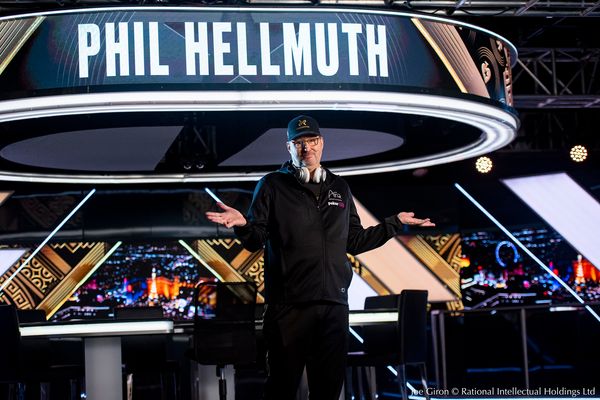
Phil Hellmuth silenced his critics with a masterclass fold on The Big Game On Tour, laying down ace-king to Rob Gronkowski’s pocket aces in a hand that showcased championship-level instincts. While the table mocked him mercilessly for the fold, the 17-time WSOP bracelet winner had the last laugh when the cards were revealed. Sometimes elite poker isn’t about what you call—it’s about what you don’t.
What Happened
The action unfolded during the season finale of PokerStars’ The Big Game On Tour, where Hellmuth found himself in a classic cooler situation that he somehow managed to navigate perfectly.
NFL legend Rob Gronkowski, holding pocket aces in early position, opted for the classic amateur move of limping for $200. Antonio Esfandiari, sitting directly behind Gronk with jack-ten offsuit, raised to $1,000. When the action reached Hellmuth, he looked down at ace-king and squeezed to $2,700, attempting to isolate what he likely perceived as a loose raise from Esfandiari.
Then came the crucial moment. Gronkowski, clearly unfamiliar with proper raise sizing etiquette, asked the dealer: “Can I raise that? Alright, I’m going to raise whatever I can raise.” Because he failed to announce a specific amount, the dealer ruled it a pot-sized raise to $5,000.
The table immediately erupted. Phil Laak and Esfandiari pounced on the opportunity to needle Hellmuth, with Esfandiari sarcastically telling him to “suck on that.” Despite holding one of the strongest hands in poker, Hellmuth went into the tank and eventually announced a fold, claiming he held ace-king.
“You’re so bad at poker,” Laak declared. Esfandiari piled on: “You are hopeless, it’s unbelievable how bad you are.” At the table’s insistence, the dealer ran out the complete board: king-high with no ace. When Gronkowski tabled his pocket rockets, the dynamic shifted instantly. “You know something… and that’s why you’re a 17-time world champ, dude,” Gronk admitted.
Hellmuth’s response was pure Phil: “These guys are all idiots. They’re like five steps behind me. Gronk, here’s the other thing, they’re so dumb that they gave me a lecture about a world-class laydown.”
The Poker Strategy Breakdown
On the surface, folding ace-king to a single raise looks absurd. It’s a premium holding that dominates most ranges and has significant equity even against pocket pairs. So why did Hellmuth make this fold, and why was it actually brilliant?
The key lies in understanding range construction and player tendencies. When Gronkowski limped from early position, he signaled weakness to most observant players. Recreational players limp for various reasons—speculative hands, medium pairs, or occasionally monsters hoping to trap. When Esfandiari raised and Hellmuth three-bet, a standard recreational player would typically fold everything except premium hands.
Gronkowski’s four-bet, even if awkwardly executed, represented an incredibly narrow range. Recreational players don’t four-bet bluff with any frequency. They don’t four-bet ace-king for value in this spot after limp-calling. The action screams pocket aces, pocket kings, and occasionally pocket queens—hands that have ace-king crushed or flipping at best.
Let’s examine the math. Against a range of QQ+, ace-king has approximately 30% equity. Against just AA-KK, it drops to around 25%. When you’re getting roughly 2.5:1 on your call ($2,300 to win approximately $5,900), you need about 28% equity to break even. While this seems close, there are several problems with calling:
First, you’re playing out of position against an opponent who has shown tremendous strength. Second, even when you hit your ace or king, you’re not guaranteed to win the pot—if Gronk has aces and an ace falls, you’re drawing dead to a chop. Third, the implied odds work against you because when you miss, you lose the minimum, but when you hit, you risk stacking off when you’re behind.
Hellmuth’s fold demonstrates advanced range reading and the discipline to trust your read even when it means laying down a hand that looks beautiful in a vacuum. This is the difference between good players who know hand rankings and great players who understand poker is about ranges, not individual holdings.
Reading The Field & Table Dynamics
Context matters enormously in poker, and this hand showcases why understanding your opponents is more valuable than memorizing charts. Hellmuth wasn’t playing against seasoned professionals in a high-stakes tournament—he was at a televised cash game featuring recreational players and celebrities.
Rob Gronkowski, despite his competitive excellence in football, is not a poker professional. He’s playing for entertainment, and his actions throughout the hand screamed inexperience. The limp from early position, the unclear raise sizing, the need to ask the dealer about his options—all of these tells painted a picture of someone who picked up a monster and didn’t know the optimal way to play it.
Contrast this with how a professional might have played pocket aces in the same spot. A skilled player might have raised initially, or if they chose to limp-reraise, they would have balanced this play with bluffs and other value hands. They would have announced a specific sizing rather than defaulting to a pot-sized raise. Gronk’s actions were transparent because he lacked the experience to disguise his hand strength.
The table dynamics also played a role. Esfandiari and Laak’s immediate needling of Hellmuth wasn’t just friendly banter—it was an attempt to influence his decision-making. By mocking him and suggesting the fold would be terrible, they were trying to goad him into making a call based on ego rather than logic. A lesser player might have called just to avoid looking weak on television.
Hellmuth, for all his table antics and emotional outbursts, demonstrated the mental fortitude to ignore the social pressure. He trusted his read, made the disciplined fold, and accepted the temporary embarrassment. This willingness to look foolish in the short term to make the correct long-term decision is what separates champions from everyone else.
How To Apply This To Your Game
The lessons from this hand extend far beyond folding ace-king preflop. Here’s how you can incorporate Hellmuth’s thinking into your own poker strategy:
Pay attention to betting patterns that deviate from the norm. When a recreational player does something unusual—like limping from early position or making an awkwardly sized raise—ask yourself what hands would make them take that action. Often, these deviations signal either extreme strength or weakness.
Adjust your ranges based on opponent type. Against thinking players who balance their ranges, you need to defend wider and give action more credit. Against straightforward recreational players, you can make exploitative folds with hands that would be mandatory calls against professionals. Don’t play a GTO strategy against players who aren’t capable of exploiting you.
Develop the discipline to fold premium hands when the situation demands it. Ace-king is a powerful hand, but it’s still just ace-high before the flop. When facing massive strength indicators from tight, passive opponents, be willing to let it go. Your ego might take a hit, but your bankroll will thank you.
Ignore social pressure at the table. Other players will needle you, mock your folds, and try to influence your decisions. Develop a thick skin and trust your analysis. The players laughing at your folds are often the same ones who will pay you off when you have the nuts.
Consider implied odds in both directions. When evaluating whether to call with a hand like ace-king, don’t just think about what you’ll win when you hit. Think about what you’ll lose when you make top pair but are still behind. Reverse implied odds can make seemingly profitable calls into long-term losers.
Key Takeaways
- Elite poker requires the discipline to fold premium hands when facing extreme strength from tight, passive opponents—even ace-king isn’t invincible
- Recreational players often telegraph hand strength through unusual betting patterns, awkward sizing, and procedural questions at the table
- Social pressure and table needling are tools opponents use to influence your decisions; champions ignore the noise and trust their reads
- Against straightforward players who don’t balance their ranges, exploitative folds with strong hands can be more profitable than GTO calling ranges
- Reverse implied odds matter significantly with hands like ace-king that can make top pair but still be dominated by overpairs
- Experience and hand-reading skills often trump hand strength—knowing when you’re beat is more valuable than knowing hand rankings
Frequently Asked Questions
Should you ever fold ace-king preflop in a cash game?
Yes, there are situations where folding ace-king preflop is correct, particularly against extremely tight, passive recreational players who four-bet or five-bet. When an opponent’s range is heavily weighted toward QQ+ and they’re unlikely to bluff, ace-king becomes a marginal call at best. Against thinking players who balance their ranges with bluffs, however, ace-king is typically a mandatory call or even a five-bet.
How do you recognize when a recreational player has a monster hand?
Look for deviations from standard play: limping from early position, asking the dealer about raise options, making awkwardly sized bets, taking unusual amounts of time with simple decisions, or displaying physical tells like shaking hands. Recreational players often struggle to disguise extreme hand strength because they lack the experience to balance their ranges or maintain consistent timing.
What’s the difference between a hero fold and a bad fold?
A hero fold is based on strong evidence—betting patterns, opponent tendencies, table dynamics, and range analysis—that indicates you’re behind despite holding a strong hand. A bad fold is based on fear, tilt, or misreading the situation. The key difference is the quality of reasoning behind the decision. Hellmuth’s fold was heroic because Gronkowski’s actions clearly indicated a premium pocket pair, not because Hellmuth got lucky.
Final Thoughts
Phil Hellmuth’s ace-king laydown on The Big Game On Tour perfectly encapsulates what separates good poker players from great ones. It’s not about making the standard play or following a chart—it’s about reading your specific opponent in your specific situation and having the courage to trust that read even when it means looking foolish.
The hand also serves as a reminder that poker is a game of incomplete information where your ability to gather and interpret data matters more than the two cards you’re holding. Hellmuth picked up on subtle cues that Gronkowski was holding a monster, processed that information correctly, and made a disciplined fold that saved him a significant amount of money. The fact that his opponents mocked him for it only makes the decision more impressive—he prioritized long-term profitability over short-term ego.
Whether you’re playing in televised cash games or your local home game, the principles remain the same. Pay attention to your opponents, adjust your strategy based on their tendencies, and develop the mental fortitude to make correct folds with strong hands when the situation demands it. That’s how you win 17 WSOP bracelets, and that’s how you’ll improve your own results at the table.
Ready to Sharpen Your Poker Game?
Master your poker game with expert hand analysis
