How David Sklansky’s Poker Theory Revolutionized the Game
Before David Sklansky put pen to paper, poker strategy was folklore passed down through smoky card rooms. His analytical approach transformed gambling hunches into mathematical certainty, creating the foundation every serious player builds upon today. The impact of his work remains undeniable, even as his personal legacy grows more complex.
What Happened
In the early 1980s, poker literature was sparse and mostly worthless. Players relied on superstition, gut feelings, and anecdotal wisdom that often led them astray. The few books available read like old wives’ tales dressed up as strategy. Even Doyle Brunson’s groundbreaking Super/System, published in 1978, carried a price tag that put it out of reach for most recreational players.
Then came David Sklansky’s Hold’em Poker, priced at an accessible $9.95. For the first time, players could access rigorous, mathematically sound poker theory without breaking the bank. The book introduced structured starting hand charts and logical frameworks that treated poker as a solvable problem rather than a mystical art.
Sklansky followed this with The Theory of Poker, a work so influential that the poker community simply calls it ‘ToP.’ This book introduced concepts like the semi-bluff and codified the Fundamental Theorem of Poker. It laid bare the game’s underlying mathematics in a way that gave studious players an enormous edge over opponents still playing by feel.
Along with Mason Malmuth, Sklansky founded the 2+2 poker forums, which became the epicenter of strategic discussion in the pre-social media era. His concept of ‘Sklansky dollars’—the expected value of a decision regardless of outcome—gave players a framework for evaluating their play beyond results-oriented thinking.
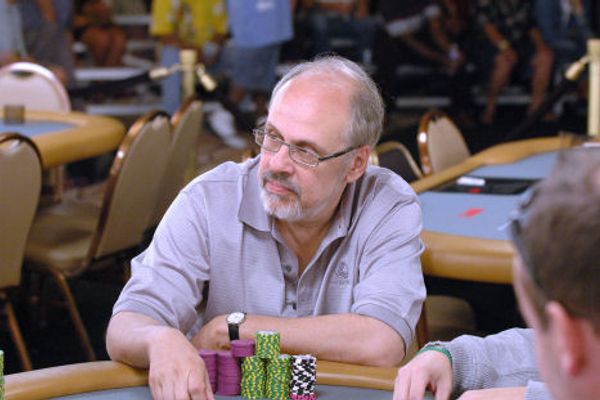
The Poker Strategy Breakdown
Sklansky’s revolutionary insight was treating poker as an information game rather than a card game. His Fundamental Theorem of Poker states: “Every time you play a hand differently from the way you would have played it if you could see all your opponents’ cards, they gain; and every time you play your hand the same way you would have played it if you could see all their cards, they lose.”
This theorem sounds simple, but its implications are profound. It shifts focus from cards to decisions. Your pocket kings getting cracked by pocket queens doesn’t mean you played poorly—you made the correct decision with incomplete information. This concept of Sklansky dollars separates process from outcome, a distinction that prevents tilt and promotes rational play.
Consider his insight about preferring a jack-high flop over an ace-high flop when you’ve capped the betting preflop with ace-jack. With an ace-high board, you’re vulnerable to anyone holding a better kicker. A jack-high flop means opponents with better aces missed, while you connected. This kind of reverse thinking—understanding when a worse-looking board is actually better for your range—was revolutionary.
The semi-bluff concept Sklansky introduced fundamentally changed aggressive play. Before this term existed, players understood pure bluffs (betting with nothing, hoping opponents fold) and value bets (betting strong hands for calls). The semi-bluff occupies the profitable middle ground: betting a hand that’s currently behind but has significant equity to improve. You win immediately if opponents fold, and you’re not dead if called.
Flush draws and straight draws became weapons, not just hopeful holdings. This concept enabled the aggressive, dynamic poker we see today. Modern players firing multiple barrels with combo draws are executing strategies Sklansky first articulated decades ago.
His work on pot odds and implied odds created a mathematical framework for drawing decisions. Instead of chasing gutshots on gut feeling, players could calculate whether the pot was offering sufficient odds. This transformed poker from gambling to investment analysis—each call becomes a question of whether you’re getting the right price on your equity.
Reading The Field & Table Dynamics
Sklansky’s books created a massive informational divide in the poker world. Players who studied his work gained an enormous advantage over those playing traditional, seat-of-the-pants poker. This advantage was especially pronounced in the 1980s and 1990s, before poker theory became widely accessible.
The 2+2 forums amplified this effect. A community of theoretically-minded players emerged, sharing insights and refining strategies. They spoke a different language than traditional poker players—discussing ranges, expected value, and game theory while their opponents relied on tells and hunches.
This created an interesting dynamic at the tables. Skilled players could identify who had done their homework and who was playing old-school poker. The gap between these groups was enormous. A competent player armed with Sklansky’s frameworks could systematically extract value from opponents who didn’t understand fundamental concepts like pot odds or hand ranges.
The Theory of Poker also introduced the concept of reading opponents not just through physical tells but through their betting patterns and strategic tendencies. Sklansky emphasized that every action provides information. A player who never bluffs can be folded out of pots easily. One who bluffs too frequently can be trapped. Understanding these patterns requires the theoretical foundation Sklansky provided.
His work on game selection—choosing profitable games rather than just playing wherever—seems obvious now but was radical then. Sklansky articulated that your win rate depends more on opponent quality than your absolute skill level. A decent player in a tough game loses money; the same player in a soft game prints cash.
How To Apply This To Your Game
Start with the Fundamental Theorem. After each session, review hands where you made significant decisions. Ask yourself: “If I could see my opponent’s cards, would I have played differently?” If yes, you made an exploitable mistake. If no, you played correctly regardless of outcome. This mental exercise separates good decisions from lucky results.
Incorporate semi-bluffing into your strategy. When you hold a drawing hand with eight or more outs, don’t just passively call—consider betting or raising. You’re not bluffing with air; you’re betting a hand with legitimate equity that also has fold equity. This dual-path profitability makes semi-bluffs among the most powerful plays in poker.
Calculate pot odds religiously. Before calling any bet with a draw, quickly compute whether the pot is offering sufficient odds. If you need to hit a four-outer (roughly 8.5% on the next card), you need pot odds of at least 11-to-1 to break even. If the pot is offering 6-to-1, fold regardless of how you “feel” about the situation.
Think in terms of Sklansky dollars, especially after bad beats. When your aces get cracked by kings all-in preflop, you won approximately 81 Sklansky dollars even though you lost the actual pot. This mindset prevents tilt and reinforces correct play. Over time, Sklansky dollars convert to real dollars.
Prioritize game selection. Sklansky famously said, “If there’s something I know that the other guy doesn’t know, or won’t learn, then I take his money.” Actively seek games with weaker opponents. Your hourly rate in a soft $2/$5 game often exceeds your rate in a tough $5/$10 game. Check your ego and find profitable spots.
Study ranges, not just your own cards. Sklansky’s work emphasizes that poker is about incomplete information. Train yourself to think about what range of hands your opponent could hold given their actions. This range-based thinking, implicit in Sklansky’s work, is how modern solvers approach the game.
Key Takeaways
- Process over results: Sklansky dollars measure correct decisions regardless of outcome, preventing results-oriented thinking and tilt.
- Semi-bluffs are powerful: Betting draws with fold equity creates dual-path profitability and enables aggressive, winning poker.
- Mathematics beats intuition: Pot odds, expected value, and probability calculations provide objective frameworks for decisions.
- Information is everything: The Fundamental Theorem shows that poker is about making correct decisions with incomplete information.
- Game selection matters most: Your win rate depends more on opponent quality than your absolute skill level.
- Theory creates edges: Understanding concepts your opponents don’t creates systematic profit opportunities.
Frequently Asked Questions
What is the Fundamental Theorem of Poker?
The Fundamental Theorem states that every time you play your hand the way you would if you could see your opponents’ cards, they lose, and every time you play differently, they gain. This theorem emphasizes that poker is about making correct decisions with incomplete information, not about winning individual pots. It shifts focus from results to process, helping players evaluate their decisions independently of short-term outcomes.
How do Sklansky dollars differ from actual money?
Sklansky dollars represent the expected value of your decisions, while actual money represents the realized outcome. If you get all-in with pocket kings against pocket queens preflop for $100 each, you’ve won approximately 62 Sklansky dollars (your equity in the pot) before the board runs out, regardless of whether you win the actual $200 pot. This concept helps players focus on making +EV decisions rather than fixating on short-term results.
Why is the semi-bluff so important in modern poker?
The semi-bluff creates two ways to win: your opponent folds immediately, or you improve to the best hand. This dual profitability makes semi-bluffs highly valuable. Before Sklansky codified this concept, players largely divided bets into value bets and pure bluffs. The semi-bluff occupies the profitable middle ground, enabling the aggressive, dynamic poker that dominates today’s games. Drawing hands become weapons rather than passive holdings.
Final Thoughts
David Sklansky’s contribution to poker theory cannot be overstated. He transformed a game of hunches and superstition into a mathematically rigorous discipline. Every time you calculate pot odds, think about ranges, or execute a semi-bluff, you’re applying frameworks Sklansky pioneered. His books created a generation of thinking players who approached poker as a solvable problem rather than a mystical art.
The informational advantage his work provided was staggering. Players who studied The Theory of Poker possessed insights their opponents couldn’t access or wouldn’t implement. This knowledge gap translated directly into profit. While modern poker has evolved with solver technology and GTO strategies, Sklansky’s foundational concepts remain relevant. The Fundamental Theorem still holds. Semi-bluffs still work. Pot odds still matter.
Yet his legacy is complicated by personal controversies that can’t be ignored. Separating the work from the person becomes necessary but uncomfortable. His theoretical contributions stand on their own merit—the mathematics don’t care about the mathematician. For players seeking to improve, Sklansky’s strategic insights remain invaluable resources, even as we acknowledge the full complexity of his story.
Ready to Sharpen Your Poker Game?
Master your poker game with expert hand analysis