How Phil Hellmuth’s ‘White Magic’ Won WSOPE 2012
Phil Hellmuth’s 2012 WSOP Europe Main Event victory stands as one of the most unconventional championship runs in poker history. The Poker Brat claimed his 13th bracelet using what he calls ‘white magic’ – a playing style so instinct-driven that he reportedly went hours without looking at his hole cards. This €1,022,376 score proved that sometimes the most powerful weapon at the poker table isn’t your cards, but your ability to read opponents.
What Happened
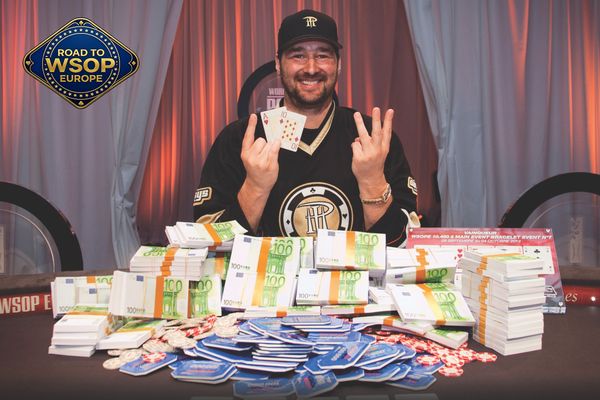
In October 2012, Phil Hellmuth navigated a 420-player field at the WSOP Europe Main Event in Cannes, France, to capture his 13th career bracelet. The victory came just four months after his 12th bracelet win in Las Vegas, cementing his status as poker’s most decorated player.
The final table featured elite competition including Joseph Cheong and Jason Mercier, both formidable tournament specialists. Yet Hellmuth dominated the proceedings with an approach that defied conventional poker wisdom. He employed relentless aggression, fired countless bluffs, and trusted his instincts to an extreme degree.
When Hellmuth defeated Russian player Sergei Branov heads-up for the title, he became the first player ever to win WSOP Main Events on two different continents. Antonio Esfandiari, commentating on the final table, captured the moment perfectly: “The guy just wins. 13 bracelets – that’s just incredible.” In the same breath, Esfandiari admitted confusion about Hellmuth’s methods, acknowledging that while nobody questions Hellmuth’s ability, his approach remains “baffling.”
Hellmuth himself ranked this victory second among all his bracelet wins, trailing only his legendary 1989 World Championship. The win represented something deeper than another trophy – it validated an entirely different approach to tournament poker.
The Poker Strategy Breakdown
Hellmuth’s ‘white magic’ strategy during the 2012 WSOPE represents a masterclass in exploitative poker taken to its logical extreme. Rather than relying on balanced ranges and GTO principles, Hellmuth weaponized his decades of live poker experience to make reads-based decisions that would make modern solvers malfunction.
The most striking element of his approach was the claim that he didn’t look at his hole cards for extended periods. This wasn’t reckless gambling – it was calculated exploitation. When opponents raised, Hellmuth would check his cards only after assessing whether they could withstand a large reraise. If he sensed weakness, he’d three-bet regardless of his holding.
This strategy works on multiple levels. First, it forces you to focus entirely on opponent tendencies rather than falling in love with your own cards. Many players make the mistake of playing their cards instead of playing their opponents. By removing the bias of looking at premium holdings, Hellmuth ensured every decision was based purely on situational advantage.
Second, this approach maximizes fold equity. In tournament poker, especially at final tables where ICM pressure intensifies, players become increasingly risk-averse. Hellmuth identified spots where opponents would fold too frequently and attacked relentlessly. His willingness to bluff “hundreds of times preflop and postflop” created a dynamic where opponents could never be certain when he held a genuine hand.
The key distinction here is that Hellmuth wasn’t bluffing randomly. He described his instincts as “100% spot on,” knowing precisely when opponents were strong or weak. This level of player reading comes from thousands of hours studying betting patterns, timing tells, and psychological profiles. It’s the difference between reckless aggression and surgical precision.
What makes this strategy particularly effective in live poker is the physical information available. Online players rely on bet sizing and timing; live players can observe breathing patterns, hand tremors, chip handling, and countless other micro-tells. Hellmuth has built his career on exploiting these live reads, and the 2012 WSOPE represented the pinnacle of that skillset.
Reading The Field & Table Dynamics
Tournament context played a crucial role in Hellmuth’s strategic approach. The WSOP Europe Main Event attracts a diverse field mixing European professionals, American stars, and recreational players with deep pockets. This creates a unique dynamic where playing styles vary dramatically from player to player.
Against a final table featuring players like Joseph Cheong and Jason Mercier – both known for sophisticated, mathematically-sound approaches – Hellmuth’s hyper-aggressive, read-based strategy created maximum discomfort. These players were accustomed to opponents who played balanced ranges and followed conventional wisdom. Hellmuth’s willingness to three-bet light repeatedly and fire multiple barrels forced them into difficult decisions where their theoretical knowledge provided limited guidance.
ICM considerations at the final table amplified Hellmuth’s edge. When pay jumps become significant, players naturally tighten up to avoid busting before shorter stacks. Hellmuth exploited this tendency ruthlessly, applying pressure when opponents had the most to lose by calling. His reputation as an unpredictable player who could show up with any two cards made it even harder for opponents to fight back.
The psychological warfare element cannot be understated. Hellmuth’s table presence – his confidence, his willingness to engage in table talk, his famous “white magic” persona – all contributed to an intimidation factor that tilted decisions in his favor. When you believe your opponent has supernatural card-reading abilities, you’re more likely to fold marginal hands.
There’s also the fascinating element of Sergei Branov’s prediction. According to Hellmuth, Branov told him from Day 1 that Hellmuth would finish first and Branov second – exactly how the tournament concluded. Whether this was genuine premonition, psychological gamesmanship, or selective memory, it demonstrates the mental game’s importance. If Hellmuth believed he was destined to win, that confidence would have influenced every decision he made.
How To Apply This To Your Game
While most players shouldn’t literally stop looking at their hole cards, there are valuable lessons to extract from Hellmuth’s approach that can immediately improve your tournament results.
First, prioritize opponent tendencies over your own hand strength in marginal situations. Too many players ask “Is my hand good enough to call?” when they should ask “Is my opponent capable of bluffing here?” or “Will my opponent fold to aggression?” Start building detailed mental profiles of opponents, noting their opening ranges, three-betting frequencies, and response to pressure.
Second, develop your live reading skills systematically. Don’t just vaguely observe opponents – create a checklist of tells to watch for. How do they handle chips when strong versus weak? Do their bet sizes correlate with hand strength? Does their breathing change? Do they talk more or less with premium hands? Document these patterns and test your hypotheses.
Third, embrace calculated aggression in tournament poker. Many players are too passive, waiting for premium hands rather than creating their own opportunities. Identify players who fold too frequently to three-bets or continuation bets, then attack them relentlessly. Your win rate will improve more from stealing pots than from waiting for aces.
Fourth, understand ICM pressure and exploit it. When you have a healthy stack at a final table, use it to bully medium stacks who are trying to ladder up. Conversely, when you’re short-stacked, recognize when chip leaders are applying ICM pressure and find spots to push back when you sense weakness rather than strength.
Finally, develop unshakeable confidence in your reads. Hellmuth’s “white magic” worked because he trusted his instincts completely. If you make a read that an opponent is weak, have the courage to act on it. Too many players talk themselves out of profitable bluffs because they second-guess their initial instinct.
Key Takeaways
- Phil Hellmuth won the 2012 WSOPE Main Event using an extreme reads-based approach he calls ‘white magic,’ reportedly going hours without looking at his hole cards and bluffing relentlessly based on opponent tendencies
- The victory made Hellmuth the first player to win WSOP Main Events on two continents and represented his 13th career bracelet, coming just four months after his 12th
- Hellmuth’s strategy worked by focusing entirely on opponent weakness rather than his own hand strength, maximizing fold equity through relentless aggression when he sensed vulnerability
- Live poker tells and physical reads were crucial to Hellmuth’s success, allowing him to make decisions with near-perfect accuracy about when opponents were strong or weak
- ICM pressure at the final table amplified Hellmuth’s edge, as opponents became more risk-averse with significant pay jumps on the line, making them easier to exploit with aggressive play
- The psychological element of confidence and table presence played a major role, with Hellmuth’s belief in his own abilities (reinforced by runner-up Sergei Branov’s prediction) influencing every decision
Frequently Asked Questions
What is Phil Hellmuth’s ‘white magic’ poker strategy?
White magic is Hellmuth’s term for an instinct-driven, reads-based approach to poker where he relies heavily on his ability to sense opponent strength and weakness. During the 2012 WSOPE, he took this to an extreme by reportedly not looking at his hole cards for hours at a time, instead making decisions based purely on whether opponents could withstand his aggression. The strategy involves relentless bluffing when he detects weakness and trusting his decades of experience reading live tells and player psychology.
How many WSOP bracelets does Phil Hellmuth have?
Phil Hellmuth currently has 17 WSOP bracelets, making him the most decorated player in World Series of Poker history. His first came at the 1989 WSOP Main Event when he was just 24 years old, making him the youngest Main Event champion at the time. The 2012 WSOPE Main Event victory discussed in this article was his 13th bracelet. He ranks this WSOPE win as his second-most important bracelet behind only his 1989 World Championship.
Can recreational players use Hellmuth’s aggressive strategy effectively?
While Hellmuth’s extreme approach requires decades of experience to execute properly, recreational players can adopt modified versions of his principles. Focus on developing strong hand-reading skills by carefully observing opponent patterns and tendencies. Start by identifying the most exploitable players at your table – those who fold too often to aggression – and increase your bluffing frequency against them specifically. However, don’t abandon looking at your cards or bluff randomly. The key is building confidence in your reads through systematic observation and gradually expanding your aggressive play as your skills improve. Start conservative and increase aggression as you develop genuine reading ability.
Final Thoughts
Phil Hellmuth’s 2012 WSOP Europe Main Event victory represents poker at its most human level. In an era increasingly dominated by solver-based strategies and GTO approaches, Hellmuth proved that exploitative play rooted in decades of live experience can still triumph at the highest levels. His ‘white magic’ wasn’t supernatural – it was the culmination of thousands of hours studying human behavior, betting patterns, and psychological warfare.
The lesson here isn’t that you should stop looking at your cards or bluff constantly. Rather, it’s that poker remains fundamentally a game of people, not just cards. Mathematical foundations are essential, but the ability to read opponents and exploit their tendencies separates good players from champions. Hellmuth’s success came from knowing his opponents better than they knew themselves, then having the courage to act on that knowledge.
Whether Hellmuth can capture his 18th bracelet using similar methods remains to be seen, but his 2012 triumph serves as a reminder that there’s no single path to poker success. While you’re studying ranges and reviewing solver outputs, don’t neglect the human element. The player who can combine theoretical knowledge with elite reading skills will always have an edge over those who rely on either skill alone.
Ready to Sharpen Your Poker Game?
Master your poker game with expert hand analysis