

How The Orleans’ Sunday Special Became Vegas’ Smartest Play
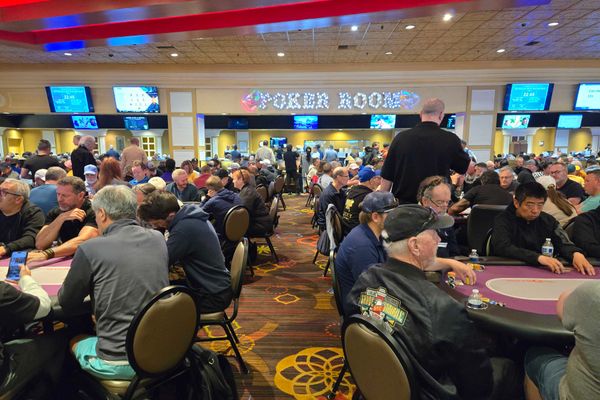
While the poker world fixates on the World Series of Poker each summer, savvy players are quietly crushing one of Las Vegas’ most profitable counter-programming tournaments. The Orleans’ Sunday Special has evolved from a solid local weekly into a record-smashing event that offers better value, softer fields, and five-figure scores—all while the masses battle it out on the Strip.
What Happened
The Orleans Hotel & Casino, positioned just west of the Las Vegas Strip along Tropicana Avenue, has cracked the code on WSOP counter-programming. Their Sunday Special tournament has transformed into the Super Sunday Special during poker’s busiest season, and the numbers tell a compelling story.
Last summer’s inaugural Super Sunday Special on May 25, 2025 attracted 538 entries for a $181,000 prize pool—immediately setting an in-house record. But that was just the beginning. The following week saw 587 players, then an explosive 815 entries created a $274,000 pool that ended in a seven-way chop worth $17,000 each at sunrise.
The momentum continued building throughout June. On June 22, the tournament drew 819 entries, only to be surpassed a week later when 904 players generated a $305,160 prize pool. The winner of that record-breaking event took home $46,000—a remarkable return on a tournament with a $200 buy-in and optional $100 add-on.
For the 2026 season running May 22 through July 12, The Orleans is doubling down on success. Seven Super Sunday Specials are scheduled, each carrying a $100,000 guarantee with a $300 buy-in plus $100 add-on structure. The series culminates in a $600 Main Event boasting a $500,000 guarantee—a price point that previously attracted 2,726 entries and generated over $1.4 million in prizes.
The Poker Strategy Breakdown
Understanding why The Orleans Sunday Special offers superior value requires examining the fundamental economics and strategic landscape of WSOP counter-programming tournaments. These events present unique opportunities that differ significantly from the main action at Paris and Horseshoe.
First, consider the field composition. While the WSOP attracts the world’s elite professionals alongside recreational players, off-Strip events during the same period tend to skew toward three player types: locals looking for their regular game, WSOP participants who busted early and want immediate redemption, and value-conscious grinders seeking softer competition.
This creates a strategic environment where solid fundamentals and patient play generate outsized returns. The recreational-to-professional ratio typically favors skilled players more than comparable WSOP events. You’re facing fewer bracelet hunters and more players simply looking for entertainment or those on tilt from earlier losses.
The structure itself rewards strategic thinking. With the add-on providing a full second starting stack, players who take the option begin with substantial ammunition for post-flop poker. This deeper structure means you can employ a wider range of strategic approaches—from tight-aggressive grinding to creative small-ball tactics—without the immediate stack pressure common in turbo formats.
ICM considerations come into play earlier in these tournaments due to the massive fields. With 800+ entries becoming standard, understanding Independent Chip Model dynamics becomes crucial once you reach the money bubble and especially at the final table. The difference between ladder positions can represent thousands of dollars, making survival skills and calculated aggression more valuable than pure chip accumulation.
Position play becomes amplified in these large-field events. With so many players and inevitable table breaks, you’ll encounter constantly changing dynamics. Maintaining positional awareness and exploiting tight players on your right while avoiding aggressive players on your left becomes a continuous adjustment process throughout the tournament.
Reading The Field & Table Dynamics
The Sunday Special presents distinct table dynamics that evolve throughout the tournament’s lifecycle. Understanding these phases and adjusting accordingly separates consistent cashers from occasional lucky runs.
Early levels typically feature loose, passive play as recreational players see lots of flops and chase draws. This is not the time for elaborate bluffs or fancy plays. Value betting becomes paramount—when you make a hand, bet it for value across multiple streets. Many opponents will call down with weak pairs or draws, so thin value betting proves profitable.
The add-on break creates a crucial inflection point. Players who opted in now have doubled their stack, while those who didn’t are suddenly at a significant disadvantage. This is when you can identify who’s playing seriously versus who’s just gambling. The serious players took the add-on; they’re here to compete. Adjust your ranges accordingly when engaging with these opponents.
As the field narrows toward the money bubble, dynamics shift dramatically. With hundreds of players still remaining but the bubble approaching, this is prime time for aggressive players to accumulate chips. Short stacks tighten up desperately trying to cash, while medium stacks become risk-averse. If you’ve built an above-average stack, this is your opportunity to apply pressure relentlessly.
Post-bubble play requires recalibration. Many players who were nursing short stacks suddenly loosen up once they’ve secured a min-cash. This creates opportunities to trap with premium hands while avoiding marginal confrontations. The pay jumps remain relatively small until the final table, so continuing to accumulate chips remains the priority over ladder climbing.
Final table dynamics in these events often involve deal-making discussions, especially when the tournament runs late into the night or early morning. Understanding deal mathematics and your leverage position becomes crucial. Players with dominant stacks can often secure more than their ICM equity because shorter stacks value the certainty of a guaranteed payout. Conversely, if you’re short-stacked, don’t be afraid to push for a fair ICM deal rather than gambling for a slightly higher prize.
Player profiling accelerates in importance as the field narrows. The local regulars who play every Sunday have recognizable patterns—note who plays tight-passive, who’s a calling station, and who’s capable of creative plays. The WSOP tourists often play more straightforward poker, either because they’re tired or because they’re applying tournament fundamentals without deep situational awareness. Exploit both player types differently.
How To Apply This To Your Game
Translating The Orleans Sunday Special success into actionable strategy requires both preparation and execution. Here’s how to maximize your edge in this specific tournament environment and similar large-field events.
Before you even sit down, commit to taking the add-on. The value proposition is mathematically sound—you’re essentially buying a second starting stack at the same price. This isn’t a decision to make at the break; budget for it from the start. Players who skip the add-on are immediately at a 50% stack disadvantage that compounds throughout the tournament.
Develop a patient early-game strategy focused on seeing cheap flops in position and making strong hands. Resist the temptation to get creative with bluffs or advanced plays during the first few levels. Your edge comes from making better hands and extracting maximum value, not from outplaying opponents in marginal spots. Save your creative energy for later stages when stack sizes and blind pressure create more profitable bluffing opportunities.
Master the art of stack preservation during the middle stages. This doesn’t mean playing scared—it means avoiding unnecessary coin flips and marginal all-in situations when you have a workable stack. With such a large field, there are always shorter stacks desperate to double up. Let them battle each other while you maintain flexibility and wait for premium spots.
Study ICM calculators before the tournament. Understanding how your chip stack translates to tournament equity at various stages helps you make better decisions about when to apply pressure and when to fold. This knowledge is especially valuable during bubble play and at the final table, where a single decision can swing thousands of dollars in expected value.
Prepare physically for a marathon session. These tournaments regularly run 12-15 hours, often finishing at sunrise. Bring snacks, stay hydrated, and pace your energy. Mental fatigue leads to mistakes, and in a field this large, avoiding mistakes often matters more than making brilliant plays. If you’re exhausted at 4 AM while your opponents are fresh, your technical edge evaporates.
Exploit the location advantages that make The Orleans attractive. The free parking and easy access mean you can arrive relaxed rather than stressed from Strip traffic. The nearby food court offers affordable meal options—don’t blow your buy-in on overpriced casino dining. These logistical edges compound into better focus and decision-making at the table.
Build a network with other regulars. The Sunday Special attracts a consistent community of players. Developing friendly relationships provides valuable information about opponent tendencies and can lead to favorable deal-making situations at final tables. Poker is a people game, and social capital has real monetary value.
Key Takeaways
- The Orleans Sunday Special offers exceptional value during WSOP season, with softer fields and better structures than many Strip alternatives, regularly generating five-figure first-place prizes from modest buy-ins.
- Always take the add-on—it doubles your starting stack and provides crucial ammunition for deep-stack poker, giving you significant advantage over players who skip it.
- Field composition skews toward recreational players and tilted WSOP bustouts, creating profitable opportunities for patient, fundamentally sound poker rather than high-variance creative plays.
- ICM considerations become critical earlier than smaller tournaments due to massive field sizes; understanding tournament equity mathematics can add thousands to your expected value at final tables.
- Physical and mental preparation for 12-15 hour sessions is essential—stamina and focus often determine success more than technical skill in the late stages when exhaustion sets in.
- Off-Strip logistics provide tangible advantages including free parking, convenient food options, and a more relaxed atmosphere that translates into better decision-making throughout the tournament.
Frequently Asked Questions
Is The Orleans Sunday Special softer than comparable WSOP events?
Generally yes. While the WSOP attracts the world’s best players competing for bracelets, The Orleans draws more recreational players, local regulars, and WSOP participants looking for side action. The field composition typically includes fewer professionals per capita, though you’ll still face competent players. The key difference is the ratio—expect more exploitable opponents and fewer world-class grinders than a similar buy-in WSOP tournament.
How should I adjust my strategy for 800+ player fields versus smaller tournaments?
Large fields require more patience and tighter hand selection early, as you’ll need to survive longer to reach significant pay jumps. Focus on chip preservation over chip accumulation in early stages, avoid marginal spots, and wait for premium opportunities. Bubble dynamics last longer with more players, creating extended periods for aggressive chip accumulation if you’ve built a stack. ICM considerations also become more pronounced—ladder positions matter more when hundreds of players remain.
What’s the optimal bankroll requirement for playing this tournament regularly?
Using conservative bankroll management, you should have at least 40-50 buy-ins ($16,000-$20,000) if you’re playing this as a regular part of your tournament rotation. If it’s an occasional recreational play during a Vegas trip, having 5-10 buy-ins ($2,000-$4,000) in your trip bankroll is reasonable. Remember that even skilled players experience significant variance in large-field tournaments, so proper bankroll management prevents going broke during inevitable downswings.
Final Thoughts
The Orleans Sunday Special represents a masterclass in counter-programming strategy that benefits both the casino and savvy players. While the poker world’s attention focuses on the prestige and chaos of the World Series of Poker, this off-Strip gem offers something arguably more valuable: consistent overlay in soft fields with player-friendly structures. The tournament’s explosive growth from 538 entries to over 900 in a single summer demonstrates that players are catching on to the value proposition.
What makes this tournament particularly appealing is the convergence of factors that rarely align so perfectly. You get deep structures that reward skill, massive fields that create substantial prize pools, softer competition than comparable Strip events, and logistical conveniences that reduce stress and improve focus. For players willing to venture slightly off the beaten path, these advantages translate directly into improved win rates and bigger scores.
As more venues announce their summer schedules in the coming weeks, the counter-programming landscape will become clearer. But The Orleans has established itself as the Sunday destination, and their willingness to stick with a proven formula suggests they understand what players want. Whether you’re a local grinder, a visiting professional, or a recreational player looking to maximize your Vegas poker experience, the Super Sunday Special deserves a prominent place in your summer schedule. The question isn’t whether these tournaments will break records again—it’s whether you’ll be there to capitalize on the opportunity.
Ready to Sharpen Your Poker Game?
Master your poker game with expert hand analysis
