

How Todd Lewis Won Borgata Spring Main With 7BB Final Table
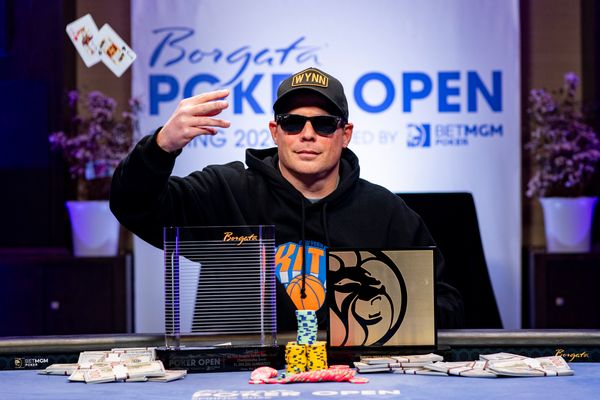
Todd Lewis entered the Borgata Spring Poker Open Championship final table as the shortest stack with just seven big blinds, yet walked away with the $215,450 first-place prize. The Manhattan cash game player’s comeback story proves that chip position isn’t everything when tournament structure and calculated aggression align perfectly.
What Happened
The $3,500 buy-in Borgata Spring Poker Open Championship drew 572 entries, creating a prize pool of $1,372,800. When the final six players returned for Day 4, Todd Lewis faced an uphill battle with the shortest stack at the table.
Lewis, who hadn’t played poker for over a decade after stepping away following Black Friday in 2011, recently returned to the game. With two young children and limited time for tournament poker, he primarily grinds cash games at venues close to his Manhattan home. This Championship represented a rare tournament opportunity.
The final table saw Lewis execute a remarkable turnaround. He tripled up early when his queen-jack held in a three-way all-in that eliminated Bobby Thomas in sixth place. Shortly after, he flopped trips against Joe Foote’s two pair to vault into second place in chips within the first two levels of play.
Farid Jattin, making his fifth appearance at a Borgata Championship final table, fell in fifth place when his ace-king ran into Foote’s pocket aces. Foote then eliminated Michael Walker in fourth before the pivotal hand of the tournament occurred.
In a preflop raising war, Lewis four-bet with ace-king, prompting Foote to five-bet shove with six-three suited—a highly questionable play that backfired when Lewis called and held. This hand gave Lewis the chip lead and left Foote crippled. William Klevitz eliminated Foote in third place, setting up heads-up play.
Lewis and Klevitz negotiated a deal that guaranteed each player $200,000, leaving $15,450 and the trophy to play for. Despite the financial agreement, both competitors battled for over two hours. The decisive moment came when Lewis hit a queen-high flush on the river against Klevitz’s turned eight-high flush, building a commanding lead. The final hand saw Klevitz’s pocket tens fall to Lewis’s queen-jack when a queen appeared on the flop.
The Poker Strategy Breakdown
Lewis’s victory offers a masterclass in short-stack tournament strategy. Starting the final table with seven big blinds, he faced a critical decision: wait for premium hands or look for spots to accumulate chips aggressively. His approach demonstrates the importance of understanding tournament structure.
The Borgata Championship features a deep structure with generous blind levels, which Lewis explicitly mentioned as crucial to his comeback. With sufficient time on the clock, he didn’t need to panic-shove with marginal holdings. Instead, he could wait for advantageous situations where his hand equity justified getting chips in the middle.
The queen-jack triple-up exemplifies optimal short-stack play. While Q-J offsuit isn’t a premium hand, it performs well in multiway all-in scenarios against random holdings. When facing elimination, suited broadways and medium pairs become valuable weapons because they maintain reasonable equity against a range of hands.
Lewis’s flopped trips against Foote’s two pair highlights another key concept: when you’re short-stacked, you need to win pots to survive, but you also need to extract maximum value when you connect with the board. Deep-stacked players can afford to slow-play monsters; short stacks cannot. Getting maximum value from strong hands is essential to rebuilding a competitive stack.
The most fascinating hand occurred when Foote five-bet shoved with six-three suited after Lewis four-bet with ace-king. This represents a catastrophic error in tournament poker. Five-bet shoving with such a weak holding—even suited—shows a fundamental misunderstanding of range construction and equity realization. Foote’s play likely stemmed from frustration or an attempt to exploit perceived weakness, but against a four-betting range that includes hands like ace-king, ace-queen, and premium pairs, six-three suited has terrible equity.
Lewis’s call demonstrates proper hand reading and courage. He recognized that Foote’s five-bet shove range was likely polarized to either very strong hands (which would have just called to keep Lewis’s short stack in) or bluffs. With ace-king, Lewis had sufficient equity against both parts of that range to make the call profitable.
Reading The Field & Table Dynamics
Tournament success at final tables requires more than hand selection and pot odds calculations. Understanding opponent tendencies, stack dynamics, and ICM pressure separates good players from champions.
Lewis entered the final table with the psychological advantage of being the short stack. This might sound counterintuitive, but he articulated it perfectly: “Maybe it was a blessing, coming in so short. If you come in with piles, sometimes at least for me, I try to do too much.” This insight reveals mature tournament thinking.
Large stacks often feel pressure to accumulate more chips and can make marginal calls or ambitious bluffs. Short stacks have clarity of purpose: double up or go home. This simplicity can be liberating and lead to clearer decision-making.
The presence of Farid Jattin, a highly experienced player making his fifth Borgata Championship final table appearance, added another layer to table dynamics. Experienced players understand ICM implications and typically play conservatively in certain spots. However, Jattin’s elimination with ace-king versus aces shows that even skilled players can’t escape coolers.
During heads-up play, Lewis and Klevitz’s decision to make a deal reflected mature bankroll management and risk assessment. By flattening the payout structure, both players reduced variance while maintaining competitive intensity for the title and remaining prize money. The two-hour heads-up battle demonstrates that despite the deal, neither player was willing to simply flip coins for the trophy.
The turning point in heads-up play—Lewis’s queen-high flush over Klevitz’s eight-high flush—illustrates the role of variance in poker. Even with optimal play, tournament outcomes often hinge on key all-in situations. Lewis got his chips in behind but hit his outs, a reminder that tournament poker rewards both skill and fortune.
How To Apply This To Your Game
Lewis’s performance offers several actionable lessons for tournament players at all levels. First, never underestimate the power of a good structure. When selecting tournaments, pay attention to blind levels and starting stacks. Turbo and hyper-turbo formats favor luck over skill; deep structures reward patient, strategic play.
Second, adjust your short-stack strategy based on tournament structure. With a fast structure and seven big blinds, you should shove or fold with a wide range. With a slow structure, you can be more selective, waiting for spots where your hand has better equity or fold equity.
Third, recognize that chip accumulation at final tables often comes in spurts. Lewis went from shortest stack to second in chips within a few hands. Don’t panic when you’re short—focus on finding one good spot to double through, then reassess your situation.
Fourth, be willing to make big calls when your hand reading suggests your opponent is out of line. Lewis’s call with ace-king against Foote’s five-bet shove required courage and conviction. Develop your hand reading skills so you can identify these profitable spots.
Fifth, consider deal-making in heads-up situations, especially when the money represents a significant portion of your bankroll. Lewis and Klevitz’s deal reduced variance while preserving competitive motivation. There’s no shame in securing a guaranteed payout while still playing for additional prize money and prestige.
Finally, manage external pressure effectively. Lewis mentioned the difficulty of playing in front of family and friends while card-dead late on Day 3. Developing mental resilience and the ability to focus despite external distractions is crucial for tournament success.
Key Takeaways
- Tournament structure matters enormously—deep structures give short stacks legitimate comeback opportunities that fast formats don’t provide
- Being the shortest stack at a final table can be psychologically liberating, simplifying decision-making and reducing the temptation to overplay marginal spots
- Hand selection for short-stack all-ins should consider equity against ranges, not just hand strength in isolation—queen-jack performs well in multiway pots
- Catastrophic errors by opponents create opportunities—recognize when aggressive actions don’t make strategic sense and be prepared to call down with strong holdings
- Deal-making in heads-up situations can be +EV when it reduces variance while maintaining competitive incentives
- Mental game and pressure management are as important as technical skills, especially when playing in front of friends and family or during extended card-dead stretches
Frequently Asked Questions
How should you play with 7 big blinds at a final table?
With 7 big blinds in a deep-structure tournament, you should look for premium spots to get your chips in rather than panic-shoving with any two cards. Hands like suited broadways, medium-to-high pocket pairs, and strong aces are ideal. In faster structures, you’d need to shove or fold with a much wider range. The key is matching your aggression level to the time you have available based on blind levels.
When should you make a deal at a poker final table?
Deal-making makes sense when the remaining prize money represents a significant portion of your bankroll and you want to reduce variance. It’s most common in heads-up situations where players are relatively even in chips. Consider deals when the difference between first and second place is substantial relative to your financial situation, but ensure you’re still playing for enough money to maintain competitive motivation.
What’s the biggest mistake players make with big stacks at final tables?
The biggest mistake big stacks make is trying to do too much—making loose calls to eliminate short stacks, attempting ambitious bluffs, or playing too many pots. As Lewis noted, having a big stack can lead to overplaying hands. The best approach is to apply selective pressure on medium stacks who can’t afford to bust, while avoiding unnecessary confrontations with other big stacks or committed short stacks.
Final Thoughts
Todd Lewis’s victory at the Borgata Spring Poker Open Championship demonstrates that tournament poker rewards patience, discipline, and strategic clarity. His journey from seven big blinds to champion wasn’t about getting lucky—it was about understanding structure, recognizing profitable spots, and executing fundamental strategy under pressure.
For recreational players balancing poker with family and career responsibilities, Lewis’s story is particularly inspiring. You don’t need to grind tournaments full-time to achieve success. Focus on quality over quantity, select events with structures that reward skill, and bring your A-game when you do sit down to play. Lewis’s decade-long absence from poker didn’t prevent him from winning a major title when he returned—proof that solid fundamentals and strategic thinking are timeless.
The hand where Foote five-bet shoved with six-three suited serves as a cautionary tale about emotional control and strategic discipline. Even experienced players can make catastrophic errors when they deviate from sound strategy. Stay patient, trust your preparation, and avoid the temptation to force action when the situation doesn’t warrant it.
Ready to Sharpen Your Poker Game?
Master your poker game with expert hand analysis
