Jon Pardy’s 120-Hour Poker Marathon: Strategy Analysis
ACR Poker Pro Jon Pardy is attempting a grueling 120-hour streaming marathon that only ends one way: winning an Online Super Series XL tournament. The former Big Brother Canada contestant launched his five-day poker endurance test on March 8, gambling that his tournament skills can save him from what amounts to an entire workweek glued to the felt.
What Happened
Starting at 10am Eastern Time on March 8, Jon Pardy began what might be poker streaming’s most ambitious challenge yet. The ACR-sponsored pro set himself a simple but brutal condition: play poker non-stop for 120 consecutive hours unless he secures victory in an OSS XL event.
The challenge draws inspiration from Kevin Martin’s 60-hour “War Room Challenge” back in January, where the GGPoker Ambassador put his hair on the line. Pardy has doubled down on the concept, literally extending the timeframe to a full five days of continuous play.
Unlike pure endurance challenges where the clock simply runs out, Pardy’s setup creates fascinating strategic implications. Every tournament entry represents a potential escape route. Every final table could be his ticket to freedom. The psychological pressure mounts with each elimination, each cooler, each bubble.
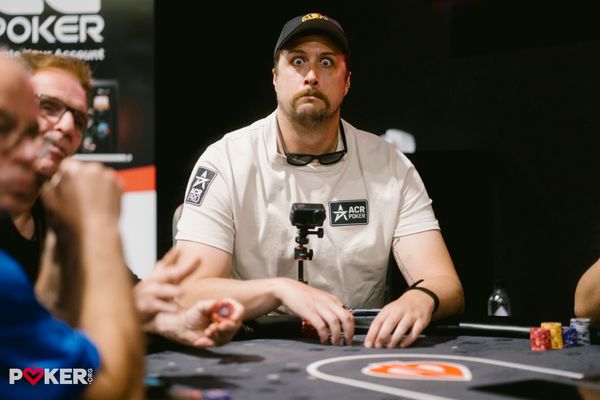
Pardy’s reality TV background—including 75 days under constant surveillance on Big Brother Canada—provides unique preparation for this type of public pressure cooker. He’s promised viewer giveaways, on-stream punishments, and bankroll-building opportunities for his audience throughout the marathon.
The OSS XL schedule works in his favor, offering numerous tournament opportunities across the five-day window. But variance is variance, and even skilled professionals can go days without a tournament victory when the cards don’t cooperate.
The Poker Strategy Breakdown
This challenge creates a fascinating strategic dilemma that most tournament players never face: optimizing for a single win rather than long-term ROI. Pardy’s goal isn’t to maximize profit or maintain a healthy win rate—it’s simply to capture one victory before exhaustion sets in.
This objective fundamentally alters optimal tournament selection. Smaller field tournaments offer higher win probability but less prestige. Larger fields provide more variance but also more opportunities to run hot when it counts. The sweet spot likely lies in mid-sized tournaments where skill edge can manifest over 6-8 hours without requiring you to navigate through thousands of opponents.
Sleep deprivation becomes a critical factor that compounds with each passing hour. Research shows that after 24 hours without sleep, cognitive function deteriorates to levels comparable to legal intoxication. By hour 72, decision-making capacity drops precipitously. This means Pardy’s edge—his primary weapon for escaping the challenge—diminishes as the clock ticks.
The optimal approach requires front-loading aggression and volume during the first 48 hours when mental acuity remains relatively sharp. This window represents his best chance to leverage skill advantage before fatigue becomes the dominant factor at the table.
Tournament structure selection matters enormously under these constraints. Turbo and hyper-turbo formats allow for more attempts within the time limit but reduce the skill component. Deep-stack events maximize edge but consume precious hours that could be spent on multiple attempts. Standard-speed tournaments likely offer the best balance between skill expression and time efficiency.
Reading The Field & Table Dynamics
Pardy faces an unusual meta-game consideration: his challenge is public knowledge. Opponents who recognize him know he’s playing under extreme duress as hours accumulate. This information asymmetry can be exploited by observant players, particularly in the later stages of the marathon.
After 80-100 hours without sleep, even the most disciplined player will exhibit tells in their timing, bet sizing, and decision patterns. Sharp opponents can identify fatigue-induced mistakes that wouldn’t exist under normal circumstances. This creates an escalating disadvantage that makes late-stage victories increasingly unlikely.
The psychological pressure of repeated near-misses compounds the challenge. Each deep run that falls short—each final table bubble, each runner-up finish—adds emotional weight that affects subsequent decision-making. Tilt management becomes paramount, but tilt resistance deteriorates alongside other cognitive functions during sleep deprivation.
ICM considerations take on unusual importance in this format. Normally, a professional might make exploitative folds near the bubble to preserve chips for a deep run. But Pardy’s goal is binary: win or continue playing. This suggests more aggressive bubble play and final table strategies that prioritize tournament victory over cash considerations.
The challenge also creates interesting viewer dynamics. As Pardy’s audience grows and the marathon progresses, opponents at his tables know they’re playing against someone with extra-poker motivations. Some may soft-play for entertainment value; others might target him specifically. Reading these social dynamics becomes crucial.
How To Apply This To Your Game
While most players won’t attempt 120-hour marathons, several strategic lessons translate to normal tournament poker. Understanding how to optimize for specific goals rather than general profit maximization is valuable whenever you’re playing with constraints.
Tournament selection based on win probability rather than expected value applies to satellite scenarios and promotional challenges. When you need a specific result rather than long-term profit, the math changes. Smaller fields with weaker competition offer better chances of securing that crucial win, even if the prize pool is less attractive.
Recognizing your own cognitive state is essential for serious players. If you’ve been grinding for 12+ hours, your decision quality has declined whether you feel it or not. The players who acknowledge this and adjust their strategy accordingly—perhaps playing tighter, avoiding marginal spots, or simply quitting—protect their bankrolls from fatigue-induced mistakes.
The concept of “escape velocity” in tournaments matters. When you need a win, understanding the minimum viable stack to realistically contend for first place helps you calibrate aggression. Limping into min-cashes doesn’t accomplish the objective; you need to accumulate chips aggressively enough to give yourself a legitimate shot at victory.
Managing variance expectations is crucial. Even with a significant skill edge, tournament poker involves substantial short-term variance. Going 50+ tournaments without a win is well within normal variance, even for winning players. This reality makes Pardy’s challenge genuinely difficult—skill alone may not be sufficient within the time constraint.
Key Takeaways
- Jon Pardy’s 120-hour streaming challenge only ends with an OSS XL tournament victory, creating unique strategic pressures that differ from standard tournament optimization
- Sleep deprivation significantly impairs decision-making after 24-48 hours, meaning Pardy’s skill edge deteriorates as the marathon progresses
- Optimizing for a single win rather than long-term ROI requires different tournament selection criteria, favoring mid-sized fields where skill can manifest efficiently
- The public nature of the challenge creates information asymmetry that opponents can exploit, particularly as fatigue becomes visible in play patterns
- Aggressive early-stage play maximizes win probability while cognitive function remains sharp, making the first 48 hours critical
- These strategic concepts apply to any scenario where players need specific results rather than general profit, including satellites and promotional challenges
Frequently Asked Questions
How does sleep deprivation affect poker decision-making?
Studies show that after 24 hours without sleep, cognitive function declines to levels comparable to a 0.10% blood alcohol content. This affects hand reading, calculation speed, emotional regulation, and risk assessment—all critical poker skills. By 72+ hours, decision-making capacity drops dramatically, making it extremely difficult to maintain any skill edge over opponents.
What’s the optimal tournament strategy when you need a win rather than profit?
When optimizing for a single victory rather than long-term ROI, prioritize mid-sized field tournaments with weaker competition where your skill edge can manifest over a reasonable timeframe. Play more aggressively at final tables, take ICM-negative spots that increase first-place equity at the expense of ladder considerations, and avoid strategies designed to min-cash. Your goal is maximizing win probability, not average finish position.
How many tournaments would an average pro need to play to guarantee a win?
There’s no such thing as a “guaranteed” tournament win due to variance. Even a player with 20% ROI might have a win rate of only 2-3% in a typical field. This means they could easily go 50-100 tournaments without a victory within normal variance. Over 120 hours, even playing multiple tournaments simultaneously, securing a win is far from certain regardless of skill level.
Final Thoughts
Jon Pardy’s 120-hour marathon represents more than a streaming spectacle—it’s a fascinating natural experiment in how external pressures reshape optimal poker strategy. The challenge forces a skilled professional to navigate the intersection of tournament variance, cognitive decline, and time constraints in ways that illuminate broader strategic principles.
The most compelling aspect isn’t whether Pardy escapes before the 120 hours expire, but how his strategy evolves as the marathon progresses. Will he maintain discipline as fatigue sets in, or will desperation lead to increasingly marginal tournament entries and aggressive plays? The tension between needing a win and maintaining the edge required to achieve that win creates genuine drama that transcends typical poker content.
For players looking to improve their own game, watching how professionals handle extreme pressure situations offers valuable insights. The mental game, bankroll management, and strategic adjustment skills on display during challenges like this translate directly to handling downswings, bad beats, and the psychological pressures that every serious player faces. Whether Pardy emerges victorious or completes the full marathon, the strategic lessons are worth studying.
Ready to Sharpen Your Poker Game?
Master your poker game with expert hand analysis