Juan Rodriguez’s $673K Seniors High Roller Win: Strategy Lessons
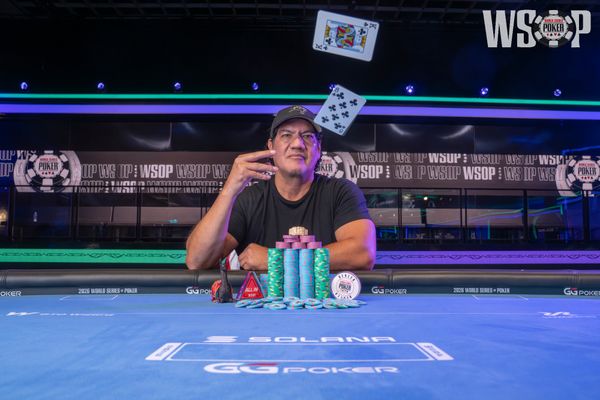
Juan Rodriguez captured his first WSOP bracelet and a career-defining $673,011 payday in the 2026 Seniors High Roller, marking Peru’s third-ever gold bracelet. The 52-year-old Tampa Bay grinder’s journey from folding pocket kings in fear at low-stakes dailies to closing out a $5,000 championship with a dramatic river king exemplifies the transformational power of consistent table presence and strategic evolution.
What Happened
The 2026 WSOP $5,000 Seniors High Roller concluded Monday night with Rodriguez defeating Iran’s Nariman Yaghmai in a heads-up battle that ended with poetic justice. After 19 years grinding the poker circuit since his early days playing $45 tournaments at the now-defunct O’Shea’s casino on the Las Vegas Strip, Rodriguez finally broke through on poker’s biggest stage.
The final hand delivered maximum drama when a king on the river gave Rodriguez the winning pair against Yaghmai, who collected $448,634 for second place. Rodriguez’s massive rail of friends—accumulated over nearly two decades in the game—erupted as he secured the bracelet and nearly $700,000, dwarfing his previous career-best score of just over $47,000.
The victory made Rodriguez only the third Peruvian player to win a WSOP bracelet, joining Diego Ventura (2023) and Ewald Mahr Olivera (2022). Despite living most of his adult life in the United States after arriving at age 20 to play tennis at Butler University, Rodriguez proudly displayed the Peruvian flag throughout the final table.
The final table featured a diverse international field, with Qing Lu finishing third for $314,158, followed by Chad Lipton ($223,439), Marc Rivera from the Philippines ($161,446), and three more American players rounding out the payouts.
The Poker Strategy Breakdown
Rodriguez’s path to victory offers critical insights into senior tournament strategy, particularly in high-roller formats where experience meets elevated buy-ins. The $5,000 price point creates a unique dynamic—players have the bankroll management and life experience to handle variance, but the stakes are high enough to generate genuine pressure spots.
The champion’s own reflection on his evolution as a player reveals the mental game transformation necessary for tournament success. His admission about fearfully folding pocket kings in his early days highlights a common leak among developing players: overvaluing survival over chip accumulation in spots where aggression is warranted. Premium pairs like kings demand assertive play in most tournament scenarios, and learning when to apply pressure versus when to exercise caution separates recreational players from consistent winners.
Senior events present distinct strategic considerations compared to open-field tournaments. The player pool typically features more straightforward approaches, fewer multi-street bluffs, and greater respect for aggression. Experienced players in these fields have seen enough poker to avoid fancy play syndrome, but this also means they’re more likely to give credit when you represent strength.
The final table ICM considerations in a $5,000 senior event become particularly pronounced. With the top prize exceeding $673,000 and second place collecting nearly $450,000, there’s substantial pay jump incentive to ladder up. However, the $225,000 difference between first and second creates enough separation that aggressive chip accumulation remains profitable for players willing to apply pressure.
Rodriguez’s ability to close out the tournament heads-up demonstrates understanding of when to shift gears. The river king that sealed his victory wasn’t just fortunate—it was the culmination of playing enough hands to give himself opportunities to win. Many players tighten up excessively in heads-up play, particularly when life-changing money is at stake. Maintaining aggression while managing risk is the hallmark of championship poker.
Reading The Field & Table Dynamics
Rodriguez’s emphasis on maintaining positive table presence and earning opponent respect reveals sophisticated understanding of long-term strategic value. In multi-day tournaments, your table image compounds across sessions. Players who consistently demonstrate professionalism and solid fundamentals earn credibility that translates into fold equity in crucial spots.
The senior high roller format attracts a specific player profile: financially successful individuals with decades of life experience who can afford the $5,000 entry but may not be full-time professionals. This creates exploitable tendencies. Many senior players have solid fundamental understanding but lack the hand volume and theoretical study of younger grinders. They’re more likely to play fit-or-fold poker postflop and give excessive credit to three-bets.
However, the flip side creates danger for overly aggressive players. Senior fields punish reckless bluffing because experienced players trust their reads and aren’t afraid to make hero calls when something feels off. The optimal approach involves selective aggression—picking spots where your story makes sense and your opponent’s range is capped or weak.
Rodriguez’s large rail presence at the final table also impacts dynamics. While emotional support matters psychologically, visible backing can influence opponent decision-making. Players facing someone with enthusiastic support may assume they’re a strong regular with a solid network, potentially affecting their willingness to get involved in marginal spots.
The international composition of the final table—featuring players from Peru, Iran, Philippines, and the United States—demonstrates how WSOP senior events attract global participation. Different poker cultures bring varying approaches, from the typically aggressive American style to more conservative European and Asian tendencies. Reading these cultural poker patterns provides additional exploitative opportunities.
How To Apply This To Your Game
Rodriguez’s 19-year journey from scared money to bracelet winner offers actionable lessons for players at every level. First, recognize that poker mastery is a marathon, not a sprint. His early mistake of folding pocket kings out of fear is something nearly every player experiences in some form. The key is identifying leaks, understanding the math behind correct decisions, and gradually expanding your comfort zone with variance.
Build your network intentionally. Rodriguez’s massive rail didn’t materialize overnight—it developed through years of positive interactions, professional conduct, and genuine relationship building. In poker, your network provides emotional support during downswings, strategic advice for hand review, and potential staking opportunities. Treat every opponent with respect, regardless of stakes or outcome.
When playing senior events (if you’re age-eligible), adjust your strategy for the player pool. Increase your three-betting frequency against tight ranges, but reduce your bluffing frequency postflop against calling stations. Value bet relentlessly when you connect, as experienced players are more likely to pay off with second-best hands than fold exploitably.
Manage your mental game around life-changing money. Rodriguez’s focus on providing for his young son Max rather than obsessing over the bracelet itself kept him grounded. Having clear financial goals beyond poker glory helps maintain emotional equilibrium during high-pressure situations. When the money matters, paradoxically, caring less about the specific outcome often improves performance.
Practice heads-up play specifically. Many tournament players reach heads-up so infrequently that they lack comfort with the required aggression and hand reading. Use play-money platforms or low-stakes sit-and-gos to develop heads-up instincts. Understanding when to apply maximum pressure versus when to exercise pot control in heads-up scenarios is crucial for converting final table appearances into wins.
Finally, embrace the long-term perspective on bankroll building. Rodriguez’s previous best score of $47,000 to a $673,000 victory represents a massive jump, but it came after years of grinding and skill development. Don’t force yourself into tournaments beyond your bankroll just because you’re impatient for a big score. Sustainable poker success comes from proper game selection, continuous improvement, and patience.
Key Takeaways
- Juan Rodriguez won $673,011 and his first WSOP bracelet in the $5,000 Seniors High Roller, becoming Peru’s third-ever bracelet winner
- Senior tournament strategy requires adjusting for experienced but often straightforward player pools with selective aggression and reduced bluffing frequency
- Building positive table presence and earning opponent respect over years creates valuable fold equity and networking opportunities
- Managing mental game around life-changing money involves focusing on external motivations (family, security) rather than obsessing over results
- The $225,000 gap between first and second place creates incentive for aggressive chip accumulation rather than purely defensive ICM play
- Long-term poker success requires patience, continuous learning, and willingness to expand your comfort zone with variance over years, not months
Frequently Asked Questions
What makes senior poker tournaments strategically different from open events?
Senior tournaments feature more experienced players who typically employ straightforward strategies with less multi-street bluffing. They give more credit to aggression but also trust their reads more confidently. The optimal approach involves selective three-betting against tight ranges, reduced bluffing frequency postflop, and relentless value betting since experienced players pay off more readily with second-best hands.
How should you adjust your game when playing for life-changing money?
Focus on external motivations like family security rather than obsessing over the money itself. This paradoxically reduces pressure and improves decision-making. Maintain your standard strategic approach rather than playing scared or overly tight. Rodriguez’s focus on his son Max rather than the $673,000 helped him execute his game plan without fear-based mistakes.
What’s the importance of building a poker network over time?
A strong poker network provides emotional support during downswings, strategic advice for hand review, staking opportunities, and enhanced enjoyment of the game. Rodriguez’s large rail represented 19 years of positive interactions and professional conduct. Building relationships through respectful play and genuine connection creates lasting value beyond immediate poker results.
Final Thoughts
Juan Rodriguez’s triumph in the 2026 WSOP Seniors High Roller represents more than a single tournament victory—it exemplifies the patient, relationship-focused approach to poker that creates sustainable success. His evolution from a player who folded pocket kings out of fear to a champion who closed out a high roller with a dramatic river king demonstrates the transformational power of consistent effort and strategic growth.
The $673,011 payday changes Rodriguez’s financial reality, but his emphasis on using the money for his family while keeping the bracelet for himself reveals mature priorities. Poker at its best serves as a vehicle for achieving life goals rather than an end in itself. Whether you’re grinding $45 dailies or competing in $5,000 high rollers, maintaining perspective on why you play helps navigate the inevitable variance.
For players aspiring to similar breakthroughs, Rodriguez’s journey offers a blueprint: invest in your strategic development, build genuine relationships at the tables, expand your comfort zone gradually, and trust that consistent effort compounds over time. The next time you’re facing a difficult decision with a premium hand, remember that champions are made not in single moments but through thousands of decisions across years of dedicated play.
Ready to Sharpen Your Poker Game?
Master your poker game with expert hand analysis