Kevin Hart’s $1.8M Meltdown: High Stakes Poker Disaster
Comedian and poker enthusiast Kevin Hart suffered a catastrophic $1.8 million loss during the live finale of High Stakes Poker on PokerGO, surrendering massive pots in back-to-back confrontations with Eric Wasserson. What began as a triumphant session with Hart building his stack beyond $1 million quickly devolved into one of the most painful downswings ever broadcast on the premium poker platform.
What Happened
The Saturday night broadcast showcased the volatile nature of high-stakes cash games as Hart experienced the ultimate poker rollercoaster. During the early portions of the stream, the Hollywood star demonstrated solid play, accumulating chips and pushing his stack well past the seven-figure mark. His confidence was high, his reads seemed sharp, and everything pointed toward a successful session.
Then Eric Wasserson entered the picture, and Hart’s fortunes reversed dramatically.
The first devastating collision occurred when Hart opened to $28,000 holding pocket nines. Wasserson, running exceptionally hot throughout the series, flatted with jack-seven offsuit, and Shawn Madden came along with ace-queen. The flop brought jack-jack-ten rainbow, giving Wasserson trip jacks while Hart flopped an inside straight draw to the nuts.
Hart continued with a $30,000 bet, but Wasserson countered with a hefty $100,000 raise. Rather than proceeding cautiously, Hart interpreted the sizing as weakness and moved all-in for his remaining stack of over $300,000. Wasserson snap-called without hesitation.
“Oh,” Hart muttered upon seeing the showdown. “I thought he was bluffing.”
The two agreed to run the board twice, giving Hart two chances at hitting his straight. Unfortunately for the comedian, neither the first runout nor the second delivered his miracle card, and Wasserson dragged the entire pot. Hart immediately reloaded for $500,000 as the session approached its conclusion.
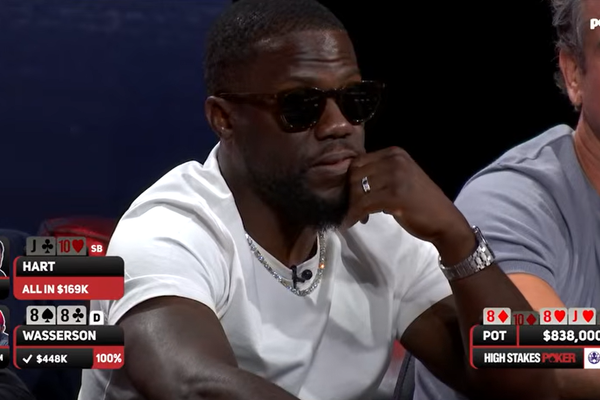
But the poker gods weren’t finished with Hart. In what would become the final significant hand of the evening, Wasserson raised to $16,000 with six-four suited. Sam Kiki called with king-jack suited, Hart defended his small blind with ace-king offsuit, and Justin Gavri came along from the big blind holding queen-ten.
The flop fell six-six-four, giving Wasserson quads on the flop—an extraordinarily rare occurrence that typically guarantees maximum value. Action checked to Wasserson, who bet $20,000. Both Hart and Kiki called before the ace hit the turn, giving Hart top two pair and a false sense of security.
Hart checked, Kiki checked his flush and straight draws, and Wasserson fired $60,000. Hart, now holding what appeared to be a monster hand, raised to $185,000. Kiki wisely folded his drawing hand, and Wasserson flatted, disguising the absolute strength of his holding.
When the river bricked, Hart shoved his remaining stack. Wasserson snap-called immediately.
“I have quads,” Wasserson announced calmly—reportedly his fourth quads of the week. Hart, stunned into silence, simply adjusted his sunglasses and pushed the $838,000 pot across the table. Wasserson finished the session as the biggest winner with approximately $1.8 million in front of him.
The Poker Strategy Breakdown
Both hands reveal critical strategic considerations that separate recreational players from professionals, even at the highest stakes.
In the first confrontation, Hart’s decision to shove over Wasserson’s raise represents a fundamental misread of both his opponent and the situation. While pocket nines with an inside straight draw offers some equity, it’s primarily a bluff-catcher in this scenario. Wasserson’s $100,000 raise into a $30,000 bet on a jack-high board signals genuine strength far more often than a bluff, especially from a player who had been running hot and accumulating chips.
Hart’s straight draw gives him eight outs twice (running the board twice), but he’s drawing nearly dead against any jack. The pot odds might seem favorable on the surface, but against Wasserson’s actual range in this spot—which heavily includes jacks, overpairs, and strong two-pair combinations—Hart’s equity is insufficient to justify the all-in.
The second hand presents an even more instructive scenario. Hart’s turn raise with top two pair appears standard in isolation, but context matters tremendously. Wasserson’s flop bet received two callers, suggesting multiple players connected with the board. When the ace falls on the turn and Wasserson continues betting after two checks, he’s representing a very narrow, strong range.
Hart’s raise to $185,000 commits him to the pot psychologically and mathematically. Once Wasserson calls this substantial raise rather than folding or shoving, alarm bells should sound. Recreational players often fail to recognize that when a competent opponent just calls a large turn raise in a multiway pot, they’re rarely doing so with a marginal holding. They’re either trapping with a monster or have a strong draw they’re willing to realize equity with.
The river shove becomes almost automatic for Hart after his turn aggression, but this is where the earlier mistake compounds. Against Wasserson’s calling range on the turn, Hart’s ace-king is often behind or chopping. Quads, full houses, and even trip sixes with better kickers all make sense given the action.
Reading The Field & Table Dynamics
High-stakes cash games operate under different dynamics than typical poker tournaments or lower-stakes cash games. Players like Wasserson, who had been running exceptionally well throughout the series, often receive action from opponents who believe they’re due for a cooldown or making plays with inflated confidence.
Hart’s comment—”I thought he was bluffing”—reveals a critical error in player profiling. Wasserson wasn’t showing any tendency toward wild bluffs or reckless aggression. He’d been accumulating chips through solid, aggressive play backed by strong holdings. Assuming a player is bluffing simply because they’re winning ignores the more likely explanation: they’re winning because they’re getting good cards and playing them well.
The table dynamics also matter significantly. As the session approached its end, Hart had already experienced a major loss and reloaded. Players in this situation often feel pressure to “get even” before the stream concludes, leading to looser calls and more aggressive plays than optimal strategy would dictate. This psychological factor likely influenced Hart’s decision-making in both hands.
Additionally, the presence of cameras and a live audience creates unique pressures. Making a big laydown on television feels weak, while making a hero call or a big bluff generates excitement and memorable moments. Professional players learn to ignore these external pressures, but recreational players—even wealthy, experienced ones like Hart—sometimes make decisions influenced by entertainment value rather than pure profit maximization.
How To Apply This To Your Game
The lessons from Hart’s brutal session translate directly to games at every stake level:
Respect aggression on coordinated boards. When an opponent makes a significant raise on a board that connects with many hands, they usually have something legitimate. Bluffs typically prefer smaller, more efficient sizes. Large raises signal strength and should be treated accordingly unless you have specific reads suggesting otherwise.
Recognize when you’re beat on the turn. If you raise the turn and receive a call rather than a fold or reraise, proceed with extreme caution on the river. Competent opponents don’t flat large turn raises with marginal hands—they’re either trapping or have enough equity to justify continuing. Your river options should lean heavily toward pot control rather than aggression.
Don’t assume hot players are bluffing. Players on heaters are usually winning because they’re catching cards, not because they’re running elaborate bluffs. Adjust your calling ranges tighter against players who’ve been accumulating chips through showdown strength rather than loose aggression.
Avoid revenge spots after big losses. Hart’s reload and immediate involvement in another massive pot with the same opponent suggests emotional decision-making. After suffering a significant loss, take time to reset mentally before jumping into another potential confrontation. The money you already lost is gone—don’t compound the damage by playing emotionally in subsequent hands.
Consider your opponent’s perspective. In the second hand, ask yourself: “What hands would my opponent play this way?” If the answer is primarily monsters and very few bluffs, your marginal value hands should check-call or check-fold rather than raise.
Key Takeaways
- Kevin Hart lost $1.8 million in two hands against Eric Wasserson during the High Stakes Poker live finale, first losing $300,000+ with pocket nines against trip jacks, then $838,000 with top two pair against flopped quads
- Large raises on coordinated boards typically signal genuine strength rather than bluffs, especially from players who’ve demonstrated solid, winning play
- When opponents flat large turn raises instead of folding or reraising, proceed with extreme caution on the river as their range is heavily weighted toward strong hands
- Emotional decision-making after significant losses often leads to compounded mistakes, as players feel pressure to recover quickly rather than playing optimal strategy
- Table dynamics and external pressures (cameras, audience, session timing) can influence recreational players to make entertainment-focused decisions rather than profit-maximizing ones
- Wasserson’s ability to extract maximum value from premium hands demonstrates the importance of disguising strength and allowing opponents to build the pot with worse holdings
Frequently Asked Questions
Should Kevin Hart have folded pocket nines to Wasserson’s flop raise?
Yes, Hart should have strongly considered folding. While pocket nines with a gutshot straight draw has some equity, Wasserson’s large raise on a jack-high board represents a very strong range. Against hands like trip jacks, overpairs, and strong two-pair combinations, Hart’s equity is insufficient to justify calling, let alone shoving. The all-in reraise represents a significant strategic error based on an incorrect read of the situation.
How rare is it to flop quads in poker?
Flopping quads is extremely rare, occurring approximately once every 4,165 hands when you have a pocket pair, and even less frequently (about once every 9,800 hands) when you hold unpaired cards like Wasserson’s six-four suited. The rarity makes it nearly impossible to put an opponent on this holding, which is why Wasserson extracted maximum value from Hart’s top two pair.
What should you do when an opponent just calls a large turn raise?
When a competent opponent calls a large turn raise rather than folding or reraising, you should proceed with extreme caution on the river. Their calling range is typically polarized toward very strong hands (trapping) or strong draws. With marginal value hands, checking the river is often the best play. If you bet and face a raise, you’re almost always beat. This situation calls for pot control rather than continued aggression unless you hold the absolute nuts.
Final Thoughts
Kevin Hart’s $1.8 million loss serves as a masterclass in how quickly fortunes can reverse in high-stakes poker. The comedian’s early success in building a seven-figure stack demonstrated he possesses genuine poker skills, but the two brutal hands against Eric Wasserson highlight the unforgiving nature of the game at its highest levels. Small strategic errors—misreading opponent strength, overvaluing marginal hands, and allowing emotions to influence decision-making—become exponentially more expensive when blinds are measured in thousands rather than dollars.
What makes these hands particularly instructive is that Hart didn’t make obviously terrible plays. He didn’t call off his stack with nothing or make wildly reckless bluffs. Instead, he made subtle strategic errors that many recreational players would make in similar situations: overestimating his opponent’s bluffing frequency, underestimating the strength required to raise large on coordinated boards, and failing to recognize when he was beaten on the turn. These are sophisticated mistakes that require advanced thinking to avoid.
For poker players at any level, the lesson is clear: respect aggression, trust your reads when they suggest you’re behind, and never let the desire to recover losses push you into marginal spots. The chips you save by making disciplined folds are just as valuable as the chips you win by making hero calls—often more so.
Ready to Sharpen Your Poker Game?
Master your poker game with expert hand analysis