Kristen Foxen’s Masterclass in Handling Aggressive Players
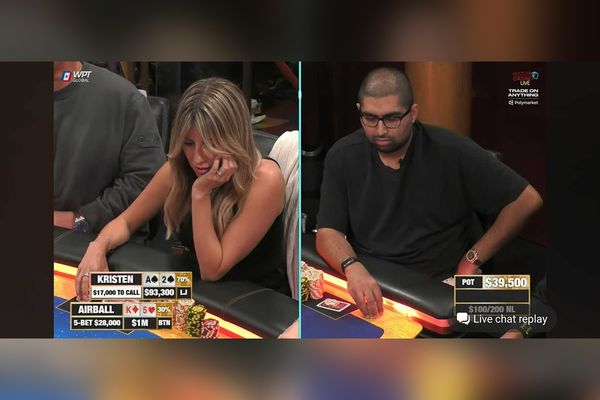
When Nik Airball boldly declared “tournament players all suck” before a recent Hustler Casino Live session, Kristen Foxen made him eat those words—finishing the night up while Airball hemorrhaged nearly $400K. The clash produced one of the most instructive preflop battles in recent HCL history, showcasing how elite tournament pros adapt their game to handle hyper-aggressive cash game opponents.
What Happened
The stage was set for fireworks at Hustler Casino Live during a $100/$200 nosebleed cash game featuring an eclectic mix of recreational players and professionals. Among the lineup were Ethan “Rampage” Yau, Turbo Nguyen, Big Mike, Rick, HCL co-founder Ryan Feldman, and special guest Kristen Foxen—a tournament specialist stepping into the cash game arena.
Before the stream even started, Airball had drawn a line in the sand with his inflammatory comments about tournament players. So confident was he in his assessment that he accepted a $10,000 side bet from tournament crusher Chance Kornuth, wagering that he would finish ahead of Foxen by session’s end.
That confidence proved misplaced. As the session progressed into its final hour, Airball found himself spiraling—displaying all the telltale signs of tilt as his stack evaporated. The culmination came in a spectacular preflop confrontation with Foxen, where aggressive betting escalated to a six-bet scenario that perfectly illustrated the clash between tournament discipline and cash game aggression gone awry.
By the time the stream concluded, Airball had posted a staggering loss of $399,900, while Foxen navigated the deep waters successfully. Kornuth collected his $10K without breaking a sweat, and Airball’s trash talk had backfired spectacularly.
The Poker Strategy Breakdown
What makes this hand particularly fascinating from a strategic standpoint is the preflop escalation between two vastly different playing styles. Foxen, despite holding what she later described as a marginal holding, recognized the specific dynamics at play and adjusted accordingly.
The six-bet scenario is exceptionally rare in cash games, typically reserved for premium holdings like pocket aces, kings, or ace-king suited. However, the HCL environment—particularly when Airball is involved—creates unique conditions where standard ranges get blown wide open. Understanding when and why to deviate from GTO (Game Theory Optimal) play is what separates good players from great ones.
Foxen’s decision to continue escalating preflop wasn’t made in a vacuum. She had observed Airball’s pattern of hyper-aggressive preflop play throughout the session, noting that he was attempting to run over the table with relentless pressure. When a player is applying maximum pressure indiscriminately, the correct counter-strategy is to widen your defending and re-raising ranges.
“I can see that Nik definitely tries to attack these spots preflop, which, to me, is actually unique,” Foxen explained post-session. “It’s not something that you typically see in a cash game. It might be something you see during a tournament or deeper in a tournament with ICM pressure.”
This observation is crucial. Airball’s approach mirrors late-stage tournament play where stack leverage becomes paramount, but he’s applying it in a cash game context where the financial dynamics are fundamentally different. Without ICM considerations or bubble pressure, the mathematical justification for extreme preflop aggression diminishes significantly.
The key strategic element Foxen exploited was recognizing that Airball’s range in these escalated preflop pots was likely far wider than it should be. When an opponent is three-betting and four-betting with a polarized but overly aggressive range, the correct response is to call down lighter and occasionally re-raise as a bluff or with hands that have decent equity against their inflated range.
Reading The Field & Table Dynamics
Table dynamics at HCL differ dramatically from traditional cash games, and understanding these nuances was essential to Foxen’s success. The presence of recreational players with deep stacks, combined with the livestream environment and personalities like Airball who thrive on creating action, produces a unique ecosystem.
Foxen acknowledged she hadn’t played significant cash games in five or six years, focusing primarily on tournament poker where she’s achieved remarkable success. However, her husband Alex Foxen had battled Airball the previous night, providing valuable intelligence about his tendencies and approach.
“The night before I played, Alex had played with Airball, and there was some really aggressive action,” Kristen noted. This scouting report proved invaluable, allowing her to enter the session with a game plan specifically tailored to counter Airball’s style.
By the time this hand occurred, Airball was clearly on tilt—a critical factor in the decision-making process. A tilting opponent who has been losing significant money becomes even more unpredictable and prone to making oversized bluffs or calling down with marginal holdings. Foxen recognized these signs and adjusted her strategy to exploit them.
The psychological warfare element cannot be understated. Airball’s pre-session trash talk about tournament players created additional pressure on himself to perform. When results didn’t materialize, that pressure likely contributed to his tilted state, creating a feedback loop of poor decisions and mounting losses.
Foxen’s calm, measured approach contrasted sharply with Airball’s emotional volatility. While he was trying to bludgeon opponents into submission with aggression, she was making calculated decisions based on range analysis and opponent tendencies—a textbook example of exploitative play.
How To Apply This To Your Game
The lessons from this confrontation extend far beyond nosebleed stakes and livestream poker. Players at any level can apply these principles when facing overly aggressive opponents.
First, recognize that extreme preflop aggression is often unsustainable and exploitable. When an opponent is consistently three-betting and four-betting at frequencies well above optimal, they cannot possibly have strong hands every time. This creates opportunities to defend wider, call down lighter, and occasionally fire back with re-raises knowing their range is capped or polarized incorrectly.
Second, gather information before making major adjustments. Foxen benefited from her husband’s reconnaissance the previous night, but even without that advantage, taking time to observe an aggressive player’s patterns before engaging in major confrontations is crucial. Watch how they play against different opponents, note their sizing tells, and identify whether their aggression is selective or indiscriminate.
Third, emotional control becomes paramount when facing an aggressive opponent. The natural tendency is to either fold too much (letting them run you over) or fight back recklessly (playing into their hands when they actually have it). Maintaining discipline while making calculated counter-adjustments is the sweet spot.
Fourth, position and stack depth matter enormously in these dynamics. Foxen had the benefit of deep stacks and could leverage position effectively. In your games, be more cautious about escalating preflop wars when you’re out of position or playing shorter stacks where you lose maneuverability.
Finally, recognize tilt in your opponents and adjust accordingly. When Airball was fresh and playing his A-game, his aggressive style was formidable and difficult to combat. But as he began tilting and losing control, his decision-making deteriorated, creating even more exploitable opportunities. Learn to identify these shifts and press your advantage when opponents are emotionally compromised.
Key Takeaways
- Hyper-aggressive preflop play is exploitable: When opponents consistently apply maximum pressure preflop, their ranges become too wide and vulnerable to well-timed resistance.
- Tournament skills translate to cash games: Despite Airball’s trash talk, Foxen’s tournament expertise in reading opponents and making disciplined decisions proved highly effective in the cash game format.
- Information gathering is invaluable: Observing opponents before major confrontations—whether through personal observation or reliable scouting reports—provides crucial strategic advantages.
- Tilt recognition creates opportunities: Identifying when opponents are emotionally compromised allows you to exploit their deteriorating decision-making with wider ranges and increased aggression.
- Table dynamics at HCL are unique: The livestream environment, deep stacks, and mix of player types creates a game that plays more like late-stage tournaments than traditional cash games.
- Emotional control wins wars: Maintaining composure while facing relentless aggression separates winning players from those who either fold too much or fight back recklessly.
Frequently Asked Questions
How should you adjust your strategy against hyper-aggressive players like Nik Airball?
Against hyper-aggressive opponents, widen your defending ranges and look for spots to re-raise as a bluff or with medium-strength hands that have decent equity. The key is recognizing that their aggression frequency means they can’t always have premium holdings. However, maintain discipline and don’t fight back recklessly—pick your spots based on position, stack depth, and their specific tendencies rather than engaging every time out of frustration.
Why do tournament players often succeed in high-stakes cash games despite different formats?
Elite tournament players develop crucial skills that translate exceptionally well to cash games: reading opponents, adjusting to table dynamics, managing bankroll pressure, and making disciplined decisions under stress. While cash game-specific strategies like optimal bet sizing and deeper stack play require adjustment, the fundamental skills of hand reading, range analysis, and exploitative play are universal. Foxen’s success demonstrates that strong poker fundamentals transcend format differences.
What are the signs that an opponent is on tilt and how can you exploit it?
Common tilt indicators include playing more hands than usual, making oversized bets or raises, showing frustration through body language or table talk, making calls they would normally fold, and generally abandoning their strategic approach for emotional play. To exploit tilting opponents, widen your value betting range (they’ll call down lighter), bluff less frequently (they’re more likely to make hero calls), and avoid getting into marginal spots where their unpredictability creates high variance. Focus on extracting maximum value when you have strong hands rather than trying to bluff them off pots.
Final Thoughts
The clash between Kristen Foxen and Nik Airball serves as a masterclass in adapting your strategy to exploit specific opponent tendencies. While Airball’s trash talk about tournament players provided entertaining theater, the actual poker demonstrated why elite players succeed across formats—they read situations accurately, maintain emotional control, and make disciplined adjustments based on opponent weaknesses.
Foxen’s approach wasn’t about playing perfectly according to GTO principles; it was about recognizing the specific dynamics at play and exploiting them maximally. She identified Airball’s overly aggressive preflop strategy, noted his deteriorating emotional state, and made calculated decisions to counter his approach. The result was a successful session that made Airball’s pre-game confidence look foolish and earned Chance Kornuth an easy $10,000.
For players looking to improve their game, this hand offers valuable lessons about the importance of observation, adaptation, and emotional control. Whether you’re playing $1/$2 at your local card room or $100/$200 on a livestream, the principles remain constant: identify your opponents’ tendencies, adjust your strategy accordingly, and maintain discipline even when facing relentless aggression. Master these fundamentals, and you’ll find success regardless of the format or stakes you’re playing.
Ready to Sharpen Your Poker Game?
Master your poker game with expert hand analysis