Liberto Commands 57% of Chips as PLO8 Final Five Battle
Justin Liberto has positioned himself as the overwhelming favorite heading into the final day of the $10,000 Pot-Limit Omaha Hi-Lo Championship, controlling a staggering 13.5 million chips—more than half the total in play. With $767,395 awaiting the winner and just four opponents standing between him and a third WSOP bracelet, the Maryland pro’s massive chip advantage sets up a fascinating test of aggression versus survival.
What Happened
Day 3 of the PLO8 Championship delivered the drama expected from a $10K event with nearly $3.7 million in prize money at stake. Starting with 25 players, the field was whittled down to just five survivors, each guaranteed at least $174,981 but eyeing the massive top prize.
The day began with Ryan Hughes and Martin Zamani sharing the chip lead, but Hughes’s tournament came crashing down in spectacular fashion. Holding pocket kings with a suited ace, Hughes got his stack in preflop against Nino Pansier’s pocket tens with ace-deuce. In PLO8, both hands have merit—Hughes for the high, Pansier with low potential and a pair. But when the board bricked out for both the low and Hughes’s overcards, Pansier’s tens held to scoop a massive pot, leaving the three-time bracelet winner with just one small blind.
While Hughes exited shortly after, Liberto was building what would become an insurmountable lead. The turning point came in a three-way pot that eliminated both Matthew Schreiber and Jarod Minghini simultaneously. After Schreiber shoved the flop, Liberto re-raised to isolate, putting Minghini to a decision he couldn’t avoid. Both opponents held ace-deuce combinations—typically powerful in Omaha Hi-Lo for the nut low potential—but Liberto’s pocket sixes flopped a set. When no low materialized, Liberto scooped the entire pot with trip sixes, catapulting him to a commanding position.
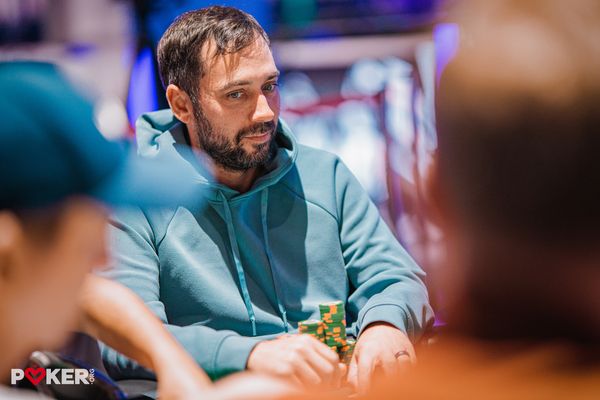
Marco Johnson became the final casualty of Day 3, falling to Pansier and setting the final five. The chip distribution heading into the final day reveals just how dominant Liberto’s position is: his 13.59 million represents nearly four times his closest competitor, Nathan Gamble’s 3.54 million. Pansier sits third with 3.3 million, while Matthew Beinner and Martin Zamani are the short stacks with 1.77 million and 1.195 million respectively.
The field that fell on Day 3 read like a who’s who of poker excellence: David Coleman, Jason Mercier, Matt Vengrin, Joao Vieira, and Nick Guagenti all saw their championship hopes end. In tournament poker, past success guarantees nothing—a lesson reinforced as former champions hit the rail one by one.
The Poker Strategy Breakdown
The Hughes versus Pansier hand illustrates a fundamental PLO8 concept that separates winning players from those who consistently lose: understanding when hands are actually strong enough to commit your tournament life. Hughes held K♥K♠A♦x with a flush draw—a hand many players overvalue in Omaha Hi-Lo. While pocket kings are premium in Hold’em, they’re far more vulnerable in four-card games where opponents hold twice as many cards and significantly more ways to connect with boards.
Pansier’s call with T♥T♠A♣2♦ demonstrates proper PLO8 hand selection. This holding has multiple ways to win: the pair for high, the A-2 for the nut low, and connectivity that plays well postflop. The suited ace gives additional flush potential. When both players connected with their pairs and no low developed, the tens were actually ahead—an outcome that might surprise Hold’em players but makes perfect sense in Omaha.
The double elimination hand showcases why ace-deuce, while powerful, isn’t invincible in PLO8. Both Schreiber and Minghini held A-2 combinations, banking on a low developing. But Liberto’s pocket sixes had immediate value—a made hand that didn’t need the board’s cooperation. When you’re playing for a low that requires three unpaired cards below eight on the board, you’re subject to significant variance. Roughly 40% of boards don’t qualify for a low at all, and when multiple players hold A-2, they’re often quartering each other even when the low arrives.
Liberto’s willingness to re-raise and isolate in that spot demonstrates advanced tournament thinking. Rather than simply calling and seeing how the hand develops, he applied maximum pressure, forcing Minghini into a difficult decision while building a pot where he had significant equity to scoop. This aggressive approach—risking chips when you have an edge rather than playing passively—is what separates good tournament players from great ones.
Reading The Field & Table Dynamics
The final table bubble in this event created fascinating ICM pressure. With six-figure payouts starting at sixth place but only five players advancing, the nine-handed play stretched for hours as players navigated the minefield between survival and accumulation. Yuhong Liu, entering as the shortest stack, couldn’t find a spot and exited ninth, missing the massive pay jump by just one spot.
Liberto’s chip accumulation during this period wasn’t accidental. When other players tighten up near significant pay jumps, aggressive players can exploit their reluctance to commit chips. This is especially pronounced in split-pot games like PLO8, where players often need premium holdings to feel comfortable putting their tournament at risk. The chip leader can apply relentless pressure, forcing opponents into marginal spots where they’re playing for their tournament lives while he’s simply playing poker.
The current chip distribution creates a fascinating dynamic for the final day. Liberto holds approximately 57% of the chips in play with blinds at 60K/120K/120K, giving him roughly 113 big blinds. His opponents, by contrast, are all relatively short: Gamble has about 30bb, Pansier 28bb, Beinner 15bb, and Zamani just 10bb. This disparity means Liberto can put constant pressure on everyone without risking his chip lead, while his opponents face difficult decisions on every significant pot.
The pay jumps are severe at this stage: fifth place earns $174,981, but fourth jumps to $245,467, third to $351,037, second to $511,580, and first to $767,395. These aren’t linear increases—they’re exponential. This structure creates tension between ICM considerations (playing to ladder up) and chip accumulation (playing to win). Zamani, with the shortest stack, faces the most immediate pressure and may need to take a stand soon or risk being blinded out.
How To Apply This To Your Game
The most important lesson from this tournament is understanding hand values in split-pot games. If you’re transitioning from Hold’em to PLO8, you must recalibrate what constitutes a strong holding. High pairs without low potential or connectivity are far weaker than they appear. Conversely, hands like A-2-3-4 with suits and connectivity are premium, even without a high pair.
When you flop a set in PLO8, as Liberto did with his sixes, recognize that you often have significant equity to scoop if no low develops. Don’t be afraid to build pots with these hands, especially against opponents drawing to lows. Approximately 40% of boards don’t qualify for low, meaning your high hand scoops the entire pot. This is a massive edge that many players fail to exploit aggressively enough.
Study ICM pressure points in tournaments. The final table bubble, especially when pay jumps are significant, creates exploitable situations. If you’re the big stack, this is your time to accumulate—not to coast. Medium and short stacks will be looking for reasons to fold, giving you opportunities to steal blinds and antes profitably. Conversely, if you’re short-stacked, understand when survival is worth more than chips and when you need to take a stand before you’re blinded into oblivion.
In multi-way pots in PLO8, be cautious with ace-deuce combinations when multiple opponents are involved. If you’re quartering the low while someone scoops the high, you’re losing chips even when your hand “hits.” The best PLO8 hands are those with two-way potential—hands that can win both high and low, or at minimum, have strong equity for one side with backup potential for the other.
Finally, practice pot control in split-pot games. Just because you have the nut low doesn’t mean you should build a massive pot if you have no high equity. Getting quartered (splitting the low half of the pot while your opponent takes the high) is one of the fastest ways to lose chips in PLO8. Look for spots where you can scoop or where you have strong equity for both halves.
Key Takeaways
- Justin Liberto holds 13.59 million chips heading into the final day—57% of chips in play and nearly 4x his closest competitor
- High pairs without low potential or connectivity are significantly weaker in PLO8 than many players realize, as demonstrated by Ryan Hughes’s elimination with pocket kings
- Ace-deuce combinations, while strong, can be costly when multiple players hold them or when no low develops—both Schreiber and Minghini learned this lesson in their double elimination
- ICM pressure at final tables creates exploitable situations for chip leaders who can apply constant pressure without risking their tournament life
- The pay structure features massive jumps from $174,981 for fifth to $767,395 for first, creating tension between survival strategies and playing to win
- In PLO8, hands with two-way potential (high and low equity) are far more valuable than one-dimensional holdings, even when those one-dimensional hands seem strong
Frequently Asked Questions
Why are pocket kings considered weaker in PLO8 than in Hold’em?
In Pot-Limit Omaha Hi-Lo, players hold four cards instead of two, giving them significantly more combinations and ways to connect with boards. Pocket kings without low potential or strong connectivity are vulnerable to being outdrawn by opponents with coordinated hands. Additionally, in split-pot games, even if your kings hold for high, you’re only winning half the pot if a low develops. Hands like A-2-3-K with suits offer both high and low potential, making them more valuable than bare pocket kings.
What does it mean to get “quartered” in PLO8?
Getting quartered occurs when you split half the pot with another player. Most commonly, this happens when two or more players have the same nut low (typically A-2), so they split the low half of the pot, while another player scoops the entire high half. If you’re quartered, you only receive 25% of the pot despite winning your half. This is why hands with two-way potential (able to win both high and low) are so valuable—they can scoop the entire pot rather than splitting it.
How should short stacks approach the final table with significant pay jumps?
Short stacks face a delicate balance between ICM considerations and chip accumulation. With 10-15 big blinds, you can’t afford to wait for premium hands—you’ll be blinded out. Look for spots to move all-in with reasonable equity, especially when the big stack is applying pressure. However, be aware of the pay jumps: if you’re on the bubble of a significant jump, sometimes folding and letting another short stack bust first is worth more than taking a marginal spot. Martin Zamani, with just 10bb, will need to find a double-up opportunity early or risk being eliminated in fifth place.
Final Thoughts
The $10,000 PLO8 Championship final table is set up for a masterclass in big-stack poker. Justin Liberto’s commanding chip lead gives him every advantage, but tournaments aren’t won on paper—they’re won through execution. His opponents, while short-stacked, are all accomplished players who understand that survival mode won’t win a bracelet. Expect to see creative plays, calculated risks, and the kind of high-level poker that makes championship events memorable.
What makes this final table particularly intriguing is the split-pot dynamic. In No-Limit Hold’em, a big stack can simply run over the table with relentless aggression. In PLO8, the math is more complex. Pots are split roughly 60% of the time, meaning even dominant chip leaders need to win showdowns to maintain their edge. Liberto’s opponents will be looking for spots where they can get chips in with two-way potential, hoping to scoop and ladder up the pay structure.
For poker students, this tournament offers valuable lessons in game selection, hand values, and tournament dynamics. Whether you’re a cash game player looking to expand into tournaments or a Hold’em specialist curious about mixed games, studying how these hands played out provides insights you can apply immediately. The difference between good and great poker often comes down to understanding these nuances—recognizing when conventional wisdom doesn’t apply and adjusting accordingly.
Ready to Sharpen Your Poker Game?
Master your poker game with expert hand analysis