Lowery’s 20th WSOP Ring Reignites Historic Chase
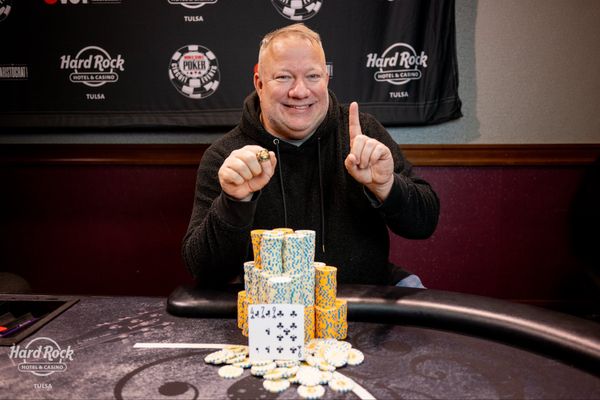
Daniel Lowery has stormed back into contention in the all-time WSOP Circuit ring race, capturing his 20th career title in dominant fashion at the Tulsa Seniors event. The victory places him level with Ari Engel at 20 rings, though both remain three behind runaway leader Maurice Hawkins, who extended his record to 23 rings just weeks earlier.
What Happened
Lowery’s latest triumph came in the $400 Seniors No-Limit Hold’em event at WSOPC Tulsa, where he navigated through a competitive field of 480 entries to claim the top prize of $21,789. The win pushed his lifetime tournament earnings to the cusp of $4 million according to the Hendon Mob database, cementing his status as one of the Circuit’s most consistent performers.
What makes this victory particularly remarkable is Lowery’s perfect record in Tulsa Seniors events since becoming eligible. This marks his third consecutive Seniors title at the Oklahoma venue, having swept both Seniors tournaments during the March 2025 stop for back-to-back rings. His dominance in this specific demographic and location demonstrates an exceptional ability to exploit field tendencies and maintain focus across multiple tournament structures.
The timing of Lowery’s 20th ring is significant in the broader context of the race. After Hawkins surged ahead with his 22nd and 23rd rings during a February hot streak at WSOPC Tunica, the gap appeared to be widening. Engel had reached the 20-ring milestone at WSOPC Council Bluffs last September, while Lowery added his 19th at Lake Tahoe in October. The Tulsa victory brings Lowery back to parity with Engel, though both face a substantial challenge in catching Hawkins.
The current standings show Hawkins at 23 rings, followed by the tied duo of Engel and Lowery at 20, with Mike Setera at 17 and Josh Reichard rounding out the top five with 16. With significant Circuit stops remaining before the summer WSOP in Las Vegas, including events at Turning Stone, Grand Victory, Lake Tahoe, Tunica, Texas, Cherokee, Commerce, and New Orleans, there’s still ample opportunity for the chasing pack to close the gap.
The Poker Strategy Breakdown
Lowery’s consistent success in Seniors events reveals important strategic considerations that separate elite Circuit grinders from the pack. Seniors tournaments typically feature fields with distinct characteristics: players who are more experienced but potentially less aggressive than younger competitors, tighter ranges in early positions, and a tendency toward more straightforward play without excessive three-betting or four-betting dynamics.
Exploiting these tendencies requires a nuanced approach. Against opponents who play fit-or-fold poker, continuation betting becomes highly profitable, particularly on coordinated boards where missed hands are forced to fold. Lowery’s ability to win three consecutive Seniors events at the same venue suggests he’s identified specific patterns in how this player pool approaches common situations.
Position becomes even more critical in these fields. When opponents are less likely to defend their blinds aggressively or float continuation bets without strong holdings, late position stealing opportunities multiply. The key is balancing aggression with awareness—overplaying marginal hands against calling stations can be costly, but failing to apply pressure against tight ranges leaves chips on the table.
Stack preservation versus accumulation presents another strategic fork in Seniors events. Many players in this demographic are satisfied laddering up the payout structure, creating opportunities for aggressive players to accumulate chips through well-timed pressure. However, this same dynamic means that bubble play and final table situations require careful ICM consideration, as shorter stacks may be more willing to wait for premium hands rather than take marginal spots.
Lowery’s track record suggests he’s mastered the art of controlled aggression—applying pressure when fold equity is high while avoiding unnecessary confrontations against the portion of the field that only enters pots with legitimate strength. This balanced approach prevents him from becoming predictable while maximizing the exploitation of player pool tendencies.
Reading The Field & Table Dynamics
Understanding field composition is crucial for Circuit success, and Lowery’s performance demonstrates exceptional field reading ability. A 480-entry Seniors event creates a prize pool structure where early accumulation matters, but survival becomes increasingly important as the money bubble approaches. The ability to shift gears between these phases separates consistent winners from one-time champions.
In the early stages of such tournaments, identifying the recreational players versus experienced grinders shapes optimal strategy. Recreational seniors often play too many hands from early position and struggle to fold top pair, making value betting with strong hands paramount. Against experienced opponents who recognize Lowery from previous events, mixing in bluffs and semi-bluffs becomes necessary to prevent exploitation.
As the field condenses toward the money bubble, ICM pressure intensifies. In a Seniors event, this pressure manifests differently than in open-age tournaments. Players who view the buy-in as significant relative to their bankroll may tighten up excessively, creating opportunities for medium stacks to accumulate without showdown. Conversely, some experienced players recognize this dynamic and counter-adjust, making blind reads on player types essential.
Final table dynamics in Circuit events carry additional weight beyond the immediate prize pool. Players competing for points toward the Casino Championship or overall Circuit standings may take different lines than those purely focused on first-place money. Lowery’s experience navigating these layered incentives gives him an edge in complex spots where opponents face conflicting priorities.
Table draw also impacts tournament outcomes more than many players acknowledge. Drawing a table with multiple short stacks creates different opportunities than sitting with nine deep stacks. Lowery’s consistency suggests he adapts his approach based on table composition rather than employing a one-size-fits-all strategy, adjusting his opening ranges, three-betting frequencies, and showdown tendencies based on the specific opponents at his table.
How To Apply This To Your Game
For players looking to improve their Circuit results, Lowery’s approach offers several actionable lessons. First, specialization matters. By focusing on Seniors events at specific venues, he’s developed pattern recognition that translates into consistent results. While most players can’t limit themselves to a single event type, identifying which tournament structures and player pools align with your strengths maximizes ROI.
Developing a systematic approach to different tournament phases is essential. Create distinct strategies for early levels (chip accumulation), middle stages (survival and selective aggression), bubble play (ICM exploitation), and final table situations (adjusted ranges based on stack sizes and payout jumps). Many players use the same approach throughout the tournament, leaving significant edge on the table.
Study your opponents between hands. Circuit regulars appear repeatedly across different stops, making note-taking invaluable. Track how specific players defend their blinds, their three-betting ranges from different positions, and how they respond to aggression on different board textures. This information compounds over time, providing crucial reads in marginal spots.
Adjust your continuation betting strategy based on opponent tendencies rather than board texture alone. Against opponents who fold too frequently, increase your c-betting frequency on all board types. Against calling stations, check back more often with marginal hands and size up your value bets. This opponent-focused approach generates more profit than rigid, board-texture-based strategies.
Practice ICM calculations until they become intuitive. Understanding how stack sizes translate into prize pool equity prevents costly mistakes near pay jumps. Free ICM calculators allow you to input specific situations and study the results, building pattern recognition that serves you during live play when precise calculations aren’t possible.
Finally, embrace the grind mentality. Lowery’s 20 rings didn’t come from occasional Circuit appearances—they resulted from consistent participation and volume. While natural ability matters, sustained success in poker comes from putting yourself in position to win repeatedly, learning from each tournament, and making incremental improvements to your game.
Key Takeaways
- Daniel Lowery captured his 20th WSOP Circuit ring at the Tulsa Seniors event, tying Ari Engel for second place in the all-time race behind Maurice Hawkins’ 23 rings
- Lowery has won all three Seniors events at WSOPC Tulsa since becoming eligible, demonstrating exceptional venue and field-specific dominance
- Success in Seniors tournaments requires exploiting tighter ranges and less aggressive play while avoiding overaggression against calling stations
- ICM considerations become even more critical in Seniors events where players may prioritize cashing over chip accumulation
- Consistent Circuit success requires specialization, systematic phase-based strategies, detailed opponent tracking, and high tournament volume
- With multiple Circuit stops remaining before the summer WSOP, the ring race remains competitive despite Hawkins’ current three-ring lead
Frequently Asked Questions
How many WSOP Circuit rings does Maurice Hawkins have?
Maurice Hawkins currently leads the all-time WSOP Circuit ring race with 23 rings, extending his record with two victories at WSOPC Tunica in February 2026. He holds a three-ring lead over both Daniel Lowery and Ari Engel, who are tied at 20 rings each. Hawkins has been the dominant force in Circuit events for years, and his lead appears secure for now, though with numerous stops remaining in the 2026 season, the chasing pack still has opportunities to close the gap.
What makes Seniors tournaments different strategically from open-age events?
Seniors tournaments typically feature tighter ranges, less three-betting and four-betting aggression, more straightforward play, and players who are more likely to play fit-or-fold poker. This creates opportunities for controlled aggression, increased continuation betting profitability, and exploitation of bubble dynamics when players prioritize cashing. However, experienced seniors can be calling stations with strong hands, making it important to balance aggression with solid value betting. The key is identifying which opponents fit which profile and adjusting accordingly rather than assuming all seniors play identically.
How can I improve my WSOP Circuit tournament results?
Improving Circuit results requires several elements: develop phase-based strategies for early, middle, bubble, and final table play; study ICM to make mathematically sound decisions near pay jumps; take detailed notes on regular opponents who appear across multiple stops; adjust your continuation betting and aggression based on opponent tendencies rather than rigid formulas; and play sufficient volume to overcome variance while gaining experience. Additionally, identify which tournament structures and player pools align with your strengths, and consider specializing in those events to maximize your edge, as Lowery has done with Seniors tournaments.
Final Thoughts
Daniel Lowery’s 20th Circuit ring represents more than just another trophy—it signals that the historic race for all-time rings remains competitive despite Maurice Hawkins’ commanding lead. With Lowery and Engel both at 20 rings and multiple Circuit stops scheduled before the summer WSOP, the 2026 season could see significant movement in the standings. Hawkins’ three-ring cushion is substantial but not insurmountable, particularly if he experiences a cold stretch while his pursuers get hot.
What makes Lowery’s achievement particularly impressive is his methodical approach to building his ring collection. Rather than chasing every event at every stop, he’s identified specific tournaments where his edge is maximized—particularly Seniors events at familiar venues. This strategic focus demonstrates that success in poker isn’t just about playing well; it’s about putting yourself in the best possible situations to leverage your specific skills and experience.
For aspiring Circuit grinders and recreational players alike, the lessons from Lowery’s career are clear: consistency beats brilliance, specialization creates edge, and the long-term grind rewards those who approach poker as a skill to be continuously refined rather than a game of pure chance. Whether you’re chasing rings or simply looking to improve your tournament results, studying how the game’s most successful grinders approach different situations provides a roadmap for improvement.
Ready to Sharpen Your Poker Game?
Master your poker game with expert hand analysis