Moneymaker Crushes NGNF Night 2, Hellmuth Barely Breaks Even
Chris Moneymaker dominated the second night of No Gamble, No Future Live’s revamped format, banking $74,400 while Phil Hellmuth needed a late-night miracle just to escape with a microscopic profit. The Sunday session in Las Vegas featured poker royalty battling in a star-studded cash game that showcased both elite play and costly mistakes.
What Happened
The refreshed No Gamble, No Future Live brought together an impressive roster for its second consecutive night of high-stakes action. Moneymaker, fresh off a strong showing on Night 1, continued his momentum alongside Tom Dwan, Phil Hellmuth, Shaun Deeb, Erick Lindgren, and Jared Bleznick.
The new NGNF format features Fox Sports 1’s Nick Wright and Brent Hanks at the helm, creating a more interactive experience for viewers. Bleznick plays a dual role as both competitor and sponsor through his Blez Online sports card venture, which integrates card breaks and giveaways throughout the broadcast.
Moneymaker’s profit of $74,400 came after he peaked near $160,000 in chips from his $25,000 starting stack. The 2003 World Series of Poker Main Event champion cooled off during the later stages but maintained his commanding lead on the night.
Bleznick himself posted a respectable $25,600 win, while the losing column told a different story. Lindgren hemorrhaged over $47,000, and Dwan finished with just $8,400 remaining from his $50,000 buy-in. Deeb recorded a $13,000 loss to compound his struggles from the previous night.
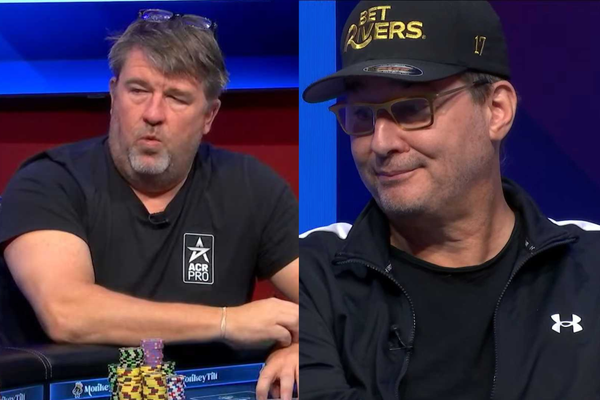
Hellmuth’s evening proved particularly dramatic. After hours of frustration, he salvaged a minuscule $2,600 profit thanks to a crucial double-up in the final minutes of play. The hand came against Lindgren, where Hellmuth’s pocket kings held against ace-king suited across two runs.
The Poker Strategy Breakdown
The pivotal hand that launched Moneymaker’s session came early against Bleznick, demonstrating a crucial concept in deep-stacked cash game play: pot commitment and range assessment.
Bleznick applied maximum pressure with a massive bet exceeding $37,000, holding ace-queen. Moneymaker faced the decision with pocket tens. This spot illustrates the tension between mathematical pot odds and ICM considerations in a televised cash game format.
Moneymaker’s call represents a sophisticated understanding of his opponent’s range in this specific context. Against an aggressive player like Bleznick, who understands the entertainment value of big pots on stream, the calling range expands beyond pure GTO considerations. Pocket tens performs reasonably well against a polarized betting range that includes bluffs, dominated pairs, and big draws.
The “flushy runout” that Moneymaker survived highlights another critical element: when you’re committed to a pot of this magnitude, you’re playing for the entire session’s trajectory. Winning this pot didn’t just add chips—it provided psychological momentum and established table presence.
Hellmuth’s late-night salvation hand offers different strategic lessons. His four-bet to $16,000 after Lindgren’s three-bet to $4,000 represents standard play with pocket kings. When Lindgren made it $28,000 with ace-king suited, Hellmuth’s shove becomes nearly automatic.
The decision to run it twice in this spot is interesting from a variance-reduction perspective. For Hellmuth, who was stuck and looking to minimize downswings, running it twice with a hand that’s approximately 70% to win makes mathematical sense. It smooths out the variance while maintaining his equity advantage.
Reading The Field & Table Dynamics
The player dynamics at this table created unique strategic considerations that differ from typical cash game environments. With a mix of tournament specialists, cash game professionals, and players wearing multiple hats, reading ranges becomes more complex.
Moneymaker’s sustained success across both nights suggests strong table awareness. He identified spots where aggression would be rewarded and demonstrated patience when the situation demanded it. His willingness to call the massive bet from Bleznick early in the session indicates he’d assessed his opponent’s playing style and adjusted accordingly.
Bleznick’s position as both player and sponsor creates an interesting dynamic. His incentive to generate action and entertainment value potentially widens his ranges in certain spots. Observant opponents can exploit this by calling down lighter when Bleznick applies pressure, exactly as Moneymaker did.
Hellmuth’s frustration throughout the session became visible to the entire table. His post-double-up monologue—”You people just have no comprehension for hold’em. It’s really unbelievable”—reveals the psychological warfare that develops in these extended sessions. Whether this was genuine frustration or calculated table talk, it demonstrates how emotional control (or the appearance of losing it) influences table dynamics.
The sports card integration added another layer to the evening’s psychology. Lindgren’s valuable Steph Curry pull, despite his limited knowledge of the sports card market, created a positive emotional spike that can influence decision-making. These psychological factors matter more in cash games than many players acknowledge.
Dwan’s significant loss is noteworthy given his reputation as one of the game’s elite cash game players. His $41,600 deficit suggests either card-dead conditions or marginal spots that didn’t materialize. Against this specific lineup, Dwan’s typically aggressive style may have run into resistance from players willing to gamble.
How To Apply This To Your Game
The most actionable lesson from this session involves adjusting your calling ranges based on opponent psychology and incentive structures. When facing large bets from players who have reasons to generate action—whether for entertainment value, sponsorship obligations, or personal playing style—you can profitably defend wider than solver solutions might suggest.
Practice identifying when you’re pot-committed before the decision point arrives. Moneymaker’s call with pocket tens becomes easier when you recognize that folding leaves you short-stacked relative to your session goals. In your local games, calculate pot commitment thresholds before you’re facing the pressure of a massive bet.
Hellmuth’s late-night double demonstrates the importance of maintaining composure during downswings. Despite hours of frustration, he correctly identified a premium spot and maximized value by getting his stack in good. Many players tilt off chips trying to force action; Hellmuth waited for a genuine premium opportunity.
The decision to run it twice deserves consideration in your cash games when the option exists. If you’re playing above your normal stakes or trying to minimize variance for any reason, running multiple times with equity advantages makes mathematical sense. The slight reduction in EV is often worth the variance reduction.
Study how successful players like Moneymaker build momentum within a session. After winning the big pot against Bleznick, he leveraged that stack and table image to continue accumulating chips. When you win a significant pot, use that psychological edge to apply measured pressure in subsequent hands.
Key Takeaways
- Moneymaker’s $74,400 profit demonstrates the value of making big calls in the right spots against aggressive opponents with wide ranges
- Hellmuth’s $2,600 win came from maintaining discipline during a frustrating session and capitalizing on premium hands when they arrived
- Understanding opponent incentives—like Bleznick’s dual role as player and sponsor—allows you to adjust ranges profitably
- Running it twice with equity advantages reduces variance while maintaining expected value, a valuable tool for bankroll management
- Psychological factors including card breaks, table talk, and visible frustration significantly impact decision-making in extended cash sessions
- Deep-stacked play requires different pot commitment calculations than tournament poker, where ICM considerations dominate
Frequently Asked Questions
When should you call large bets with medium pocket pairs like tens?
Calling large bets with pocket tens depends on several factors: your opponent’s range, stack depths, pot odds, and your read on their playing style. Against aggressive players who might be applying pressure with a polarized range including bluffs and draws, pocket tens performs well enough to call. Calculate your pot odds, assess whether your opponent would make this bet with worse hands, and consider the session dynamics. In Moneymaker’s spot, facing an action-oriented player in a televised format, the call becomes more attractive than in a typical cash game scenario.
What does “running it twice” mean and when should you do it?
Running it twice means dealing the remaining community cards two separate times when players are all-in, with each run accounting for half the pot. This reduces variance without changing expected value. You should consider running it multiple times when you want to minimize swings—either because you’re playing above your normal stakes, stuck in a session, or simply prefer smoother variance. It’s most beneficial when you have an equity advantage, as it reduces the chance of losing the entire pot while maintaining your mathematical edge.
How do you maintain composure during long losing stretches like Hellmuth experienced?
Maintaining composure during downswings requires mental discipline and proper expectation management. Take breaks when frustration builds, remind yourself that variance is inherent to poker, and focus on making correct decisions rather than results. Hellmuth’s eventual recovery came because he didn’t force action—he waited for a genuinely premium spot with pocket kings. Practice mindfulness techniques, set loss limits if necessary, and remember that even the best players experience extended card-dead periods. The key is continuing to play fundamentally sound poker regardless of short-term results.
Final Thoughts
Night 2 of the revamped No Gamble, No Future Live delivered exactly what high-stakes poker fans crave: massive pots, dramatic swings, and genuine emotion from poker’s biggest personalities. Moneymaker’s commanding performance showcases skills that extend far beyond his legendary 2003 Main Event victory, while Hellmuth’s late-night escape demonstrates the resilience required for cash game success.
The strategic lessons from this session apply directly to your own game, regardless of stakes. Understanding when to expand calling ranges against action-oriented opponents, recognizing pot commitment before decisions arrive, and maintaining emotional control during downswings are universal skills that separate winning players from the rest of the field.
As this new NGNF format continues to evolve, the integration of entertainment elements like sports card breaks with serious poker action creates a unique viewing and playing experience. For students of the game, these sessions provide invaluable insights into how elite players navigate complex table dynamics, manage variance, and capitalize on opponent tendencies in real-time.
Ready to Sharpen Your Poker Game?
Master your poker game with expert hand analysis