

Phil Hellmuth’s Meltdown: When #Positivity Meets Reality
Phil Hellmuth’s years-long commitment to positive social media posting came crashing down after a devastating elimination from the $10,000 PLO Hi-Lo Championship. The 17-time bracelet winner unleashed a profanity-laced tirade that exposed the mounting pressure of a three-year drought without WSOP gold.
What Happened
Deep into Day 2 of the $10,000 Pot-Limit Omaha Hi-Lo 8 or Better Championship, Hellmuth found himself in prime position for another deep tournament run. With a commanding stack and confidence in his play, the Poker Brat was cruising toward what should have been a comfortable bag-and-tag.
Then disaster struck in a multi-way pot that would shatter his composure and his carefully maintained social media persona. The hand developed innocuously enough, checking through to the turn where Hellmuth connected for top two pair – a premium holding in PLO Hi-Lo that put him in commanding position.
Two opponents moved all-in ahead of him, and Hellmuth re-raised all-in into a player with a covering stack. His opponent made what Hellmuth characterized as “a horrendous call” with inferior two pair and minimal redraws. The pot ballooned into chip-leader territory, and Hellmuth was in prime position to vault into contention.
The river delivered one of just three outs his opponent needed – an ace that scooped the high portion of the pot and sent Hellmuth to the rail in disbelief.
What followed was a social media explosion that marked a stark departure from Hellmuth’s recent online presence. “Folks, for the last few years I don’t really share any negative posts on social media,” he began, before unleashing a stream-of-consciousness rant that touched on bad beats, perceived disrespect from fellow professionals, and his determination to reach 24 WSOP bracelets.
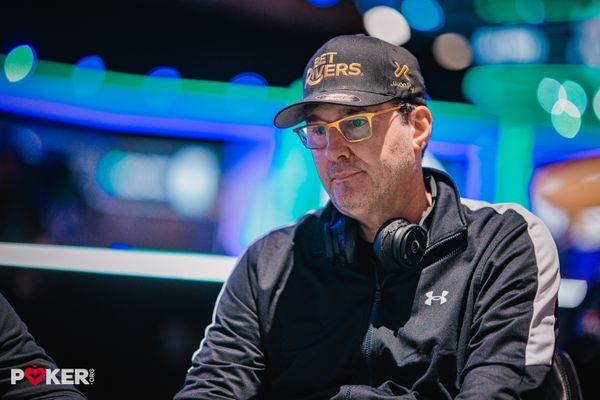
The frustration boiled over into a declaration that resonated with anyone who’s ever suffered through a brutal downswing: “I’m getting sick of this shit.” For a player who’s spent recent years cultivating a more measured public image, the outburst felt simultaneously shocking and inevitable.
The Poker Strategy Breakdown
Let’s dissect the strategic elements of Hellmuth’s elimination hand, because beneath the emotional response lies an interesting PLO Hi-Lo scenario that many players struggle with.
In Pot-Limit Omaha Hi-Lo, top two pair on the turn represents a strong but vulnerable holding. Unlike in Hold’em where two pair often commands the pot, PLO’s four-card structure means opponents frequently hold wraps, sets, or combination draws that create significant equity against overpairs.
When facing a multi-way pot in PLO Hi-Lo, the calculus becomes even more complex. You’re not just fighting for the high – you need to consider whether a low is possible and how that impacts pot equity distribution. With two players moving all-in before the action reached Hellmuth, his decision to re-jam shows confidence that his hand was either ahead for high or had sufficient equity against drawing hands.
The critical moment came when the covering stack called with inferior two pair. This is where Hellmuth’s frustration becomes mathematically justified. Against a hand with only three clean outs (the remaining aces that don’t complete a low), Hellmuth was roughly 90% to scoop or split the high portion of the pot.
But here’s the reality of tournament poker that even 17-bracelet winners must face: 10% events happen 10% of the time. When they occur in chip-lead pots late on Day 2, they feel catastrophic because of the opportunity cost – not just the chips lost, but the deep run denied.
The opponent’s call, which Hellmuth deemed “horrendous,” deserves scrutiny. In tournament situations with significant money already committed, players sometimes make calls that appear questionable in isolation but make sense given pot odds and ICM pressure. Without knowing exact stack sizes and payout implications, it’s difficult to definitively label the call as egregious, though being a 90% underdog rarely constitutes a strong decision.
Reading The Field & Table Dynamics
Hellmuth’s elimination occurred at a critical juncture – late Day 2 when the field has thinned considerably and every chip carries amplified significance. This is when tournament dynamics shift from accumulation mode to preservation-with-aggression, where maintaining a healthy stack provides crucial leverage for Day 3.
The multi-way nature of the pot suggests a table dynamic where players were willing to see flops and build pots – typical in PLO Hi-Lo where starting hand values run closer together than in Hold’em. When multiple players commit their stacks, it often indicates a convergence of strong holdings or draws, creating the high-variance scenarios that define Omaha variants.
For Hellmuth, holding top two pair in this spot meant he likely had the best made hand but faced significant drawing equity from opponents. His decision to re-jam shows an understanding that allowing cheap cards could be disastrous, and that building a chip-leading stack required pushing edges when they presented themselves.
The covering stack’s call introduces an interesting dynamic. Players who accumulate large stacks sometimes become more liberal with calls, knowing they can sustain a loss without elimination. This “big stack privilege” can lead to questionable decisions that occasionally get rewarded – precisely what happened here.
Hellmuth’s frustration also hints at a broader dynamic he’s experienced recently: the sense that he’s consistently getting his chips in good but failing to convert. This perception, whether statistically accurate or influenced by negativity bias, affects how players approach future decisions. The fear of another bad beat can lead to overly cautious play or, conversely, to forcing action out of desperation to “get even with the poker gods.”
How To Apply This To Your Game
The most important lesson from Hellmuth’s experience isn’t about the specific hand – it’s about emotional management and variance tolerance in tournament poker.
First, understand that correct decisions don’t always yield positive results. If you’re consistently getting your money in with significant equity advantages, you’re playing winning poker regardless of short-term outcomes. Hellmuth’s assertion that he’ll “keep putting the money in with the best hand day after day” reflects proper strategic thinking, even if delivered through gritted teeth.
Second, recognize the danger of results-oriented thinking. Labeling an opponent’s call as “horrendous” based solely on the outcome ignores the complexity of tournament decision-making. While the call may indeed have been questionable, evaluating poker decisions requires examining the information available at the time, not the river card that followed.
Third, develop strategies for processing bad beats away from the table. Hellmuth’s years of maintaining positivity on social media likely helped him manage tilt in the moment, but the eventual explosion suggests that suppressing frustration without processing it creates pressure that eventually erupts. Find healthy outlets – whether journaling, discussion with poker friends, or professional coaching – to work through the emotional toll of variance.
Fourth, in PLO Hi-Lo specifically, always calculate your true equity in multi-way pots. Top two pair feels strong, but against multiple opponents with potential low draws, wraps, and redraws, your equity can be significantly less than it appears. Use equity calculators during study sessions to internalize how various holdings perform against ranges.
Finally, maintain perspective on downswings and droughts. Three years without a bracelet sounds catastrophic for Hellmuth, but it represents a sample size that’s minuscule in the grand scheme of poker variance. Even the best players experience extended periods without major wins – it’s the nature of tournament poker’s high variance structure.
Key Takeaways
- Hellmuth was eliminated from the $10,000 PLO Hi-Lo Championship when his top two pair lost to an opponent who hit one of three outs on the river, ending his Day 2 run and triggering a rare public meltdown
- The incident broke Hellmuth’s multi-year streak of maintaining positivity on social media, revealing the psychological toll of a three-year bracelet drought for poker’s all-time leader in WSOP wins
- In PLO Hi-Lo, top two pair on the turn is strong but vulnerable in multi-way pots, requiring careful equity calculation and awareness of potential low draws and wraps
- Correct poker decisions don’t guarantee positive results – consistently getting money in good is what matters, regardless of short-term variance
- Emotional management and processing bad beats constructively is crucial for long-term success; suppressing frustration without addressing it can lead to eventual explosions that affect both mental health and play quality
- Tournament dynamics late on Day 2 amplify the impact of big pots, as every decision carries increased significance for securing a deep run and potential bracelet contention
Frequently Asked Questions
How long has Phil Hellmuth gone without winning a WSOP bracelet?
Hellmuth hasn’t won a WSOP bracelet in three years, which represents a significant drought for the all-time leader with 17 bracelets. While this would be considered normal variance for most players, Hellmuth’s historically high win rate makes the drought feel more pronounced, contributing to his visible frustration.
Was the opponent’s call in the PLO Hi-Lo hand really that bad?
Based on Hellmuth’s description, the opponent called with inferior two pair and only three outs (approximately 10% equity), making it a highly questionable decision from a pure equity standpoint. However, without knowing exact stack sizes, pot odds, and ICM considerations, it’s difficult to definitively label the call as “horrendous.” Tournament situations sometimes justify calls that appear poor in isolation.
How should players handle bad beats emotionally?
Develop healthy processing mechanisms away from the table, such as discussing hands with trusted poker friends, using journaling to work through emotions, or seeking coaching for mental game improvement. Suppressing frustration entirely can lead to eventual explosions, while dwelling on bad beats creates tilt and affects future decision-making. Find a balance that acknowledges the emotional impact while maintaining focus on long-term correct play.
Final Thoughts
Phil Hellmuth’s meltdown offers a rare glimpse behind the curtain of professional poker’s psychological demands. For years, he’s cultivated a more positive public image, sharing inspirational content and avoiding the bad beat stories that once defined his social media presence. The explosion that followed his PLO Hi-Lo elimination reveals what many suspected: the frustration never disappeared, it simply went underground.
The irony is that Hellmuth’s rant actually demonstrates sound poker thinking beneath the profanity. His commitment to “putting the money in with the best hand day after day” reflects exactly the mindset that’s earned him 17 bracelets. The problem isn’t his strategy – it’s the inevitable collision between correct play and short-term variance that torments even the greatest players.
As the WSOP continues, Hellmuth faces a choice: let this frustration poison his remaining events, or channel it into the focused aggression that’s characterized his best performances. History suggests he’ll find a way to compete at the highest level regardless of emotional state. Whether that leads to bracelet number 18 or further frustration remains to be seen, but one thing is certain – we’ll all be watching.
Ready to Sharpen Your Poker Game?
Master your poker game with expert hand analysis
