Playground Montreal Crushes WSOP Circuit Records Again
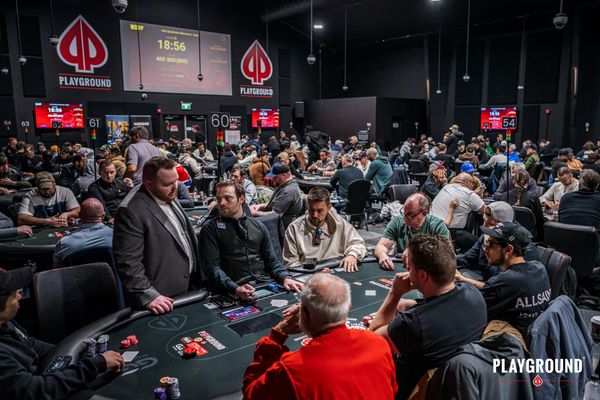
Playground Poker Club in Montreal has cemented its position as the undisputed king of WSOP Circuit Main Events, posting a staggering $4.04 million CAD prize pool that ranks as the second-largest in Circuit history. The Canadian poker powerhouse attracted 1,781 entries, proving once again that the venue has cracked the code on massive tournament turnouts that rival Las Vegas itself.
What Happened
The numbers tell a remarkable story. After three starting flights concluded on Saturday with 902 entries in the final Day 1C alone, Playground’s WSOP Circuit Main Event generated a prize pool of $4,042,870 CAD (approximately $2.9 million USD). This marks the second time in less than a year that the Montreal venue has crossed the $4 million CAD threshold.
The achievement surpasses Harrah’s Cherokee’s February 2026 prize pool of $2.76 million USD, claiming the title of largest Circuit Main Event of the year so far. Only one event in Circuit history has ever been bigger—Playground’s own August 2025 tournament, which drew 1,978 entries and created a $4.45 million CAD prize pool.
That previous record-breaker produced one of poker’s most inspiring stories when Toronto’s Jacob Hobday satellite his way into the tournament for just $75 on GGPoker, then walked away with $620,000 CAD ($448,000 USD) in first-place money. The upcoming winner from this April event is projected to earn at least $500,000 CAD when the tournament concludes on Monday.
Andrew Johnson, Playground’s Assistant Director of Poker Operations, made it clear this isn’t a fluke. “We did it again, and we’re going to continue to do it,” Johnson stated. “We have a strategy, and this first quarter Circuit series is part of the bigger scope and the bigger strategy we have going forward.”
The venue is already preparing for its next Circuit series in less than six weeks, followed by the first-ever Canadian WSOP Super Circuit in late August, featuring a $5,000 Main Event with a guaranteed $10 million CAD prize pool. Johnson didn’t mince words about the ambition: “It’s going to be the biggest Canada has ever seen, and that’s a fact.”
The Poker Strategy Breakdown
Massive fields like Playground’s 1,781-entry tournament fundamentally change optimal strategy compared to smaller Circuit events. When you’re one of nearly 1,800 players, your approach from the opening hand needs to account for the marathon ahead.
In these mega-fields, survival becomes paramount during the early stages. The variance inherent in tournament poker gets amplified when you need to outlast 90% of a field this size just to reach the money. This means avoiding marginal spots where you’re risking significant portions of your stack without clear equity advantages.
Consider the math: with 1,781 entries, roughly 267 players will cash (assuming standard 15% payout structure). That means you need to finish in the top 15% just to see a return. The min-cash will likely be around $1,500-2,000 CAD, while the final table represents life-changing money. This creates a strategic tension between playing to ladder up pay jumps and accumulating chips to make a serious run at the top prizes.
Early position play becomes even more critical in these fields. You’re not just playing against the immediate table—you’re navigating through multiple Day 2 levels where stack sizes will vary wildly. Players who survive Day 1 with below-average stacks often find themselves in push-fold territory much earlier than they’d prefer, limiting their options and forcing high-variance decisions.
The satellite qualifier angle that worked for Jacob Hobday in August adds another strategic layer. Players who bought in for $75 versus those who paid the full $1,500 CAD entry may approach risk differently, though professional players understand that once you’re in your seat, the buy-in amount shouldn’t influence optimal strategy. Every chip has the same value regardless of how you acquired your entry.
Hand selection tightens considerably in these massive tournaments. Speculative hands like small pocket pairs and suited connectors lose value when you can’t see cheap flops consistently. The presence of aggressive players who understand modern tournament theory means you’ll face three-bets and four-bets more frequently, making those marginal holdings expensive to play.
Reading The Field & Table Dynamics
Playground’s reputation for huge fields is drawing players from across North America, creating a diverse mix of playing styles and skill levels. Los Angeles pro David Uvaydov, who finished runner-up in the 2025 WSOP Monster Stack, made the trip from New York specifically for this event after his friend Dan Stavila recommended the venue’s quality.
This international draw creates fascinating table dynamics. You’ll encounter Canadian recreational players who drove in from Toronto or Ottawa, seasoned American pros hunting big scores, and online specialists who qualified through satellites. Reading these different player types requires constant adjustment.
The recreational players often telegraph their hand strength through physical tells and betting patterns. They’ll frequently limp with weak holdings, call too wide preflop, and struggle with proper bet sizing. Against these opponents, value betting becomes crucial—extract maximum value when you’re ahead, but don’t get married to top pair when they show aggression.
Professional players in the field will employ balanced ranges and understand ICM considerations. They’ll apply pressure in position, defend their blinds appropriately, and recognize when stack sizes dictate specific plays. Against these opponents, you need to avoid predictable patterns and mix up your play to remain unexploitable.
The three starting flights create an interesting dynamic for Day 2. Players who bagged big stacks on Day 1A had to wait through two more flights, watching the prize pool grow but also seeing more competition enter. Those who played Day 1C got the freshest read on total field size but had less time to rest before Day 2.
ICM pressure intensifies dramatically in fields this size. Once you reach the money bubble with 268 players remaining, every elimination changes your equity in the prize pool. Short stacks will tighten up considerably, creating opportunities for medium and big stacks to apply pressure. Understanding when to exploit this dynamic versus when to preserve your own stack separates good tournament players from great ones.
How To Apply This To Your Game
Whether you’re planning to play at Playground or your local Circuit stop, these massive-field tournaments require specific preparation and adjustments to your standard tournament approach.
First, build a deeper starting stack strategy. In these events, you typically start with 200-300 big blinds. This deep-stacked play rewards patience and post-flop skill. Work on your flop and turn play rather than just preflop charts. The ability to navigate multi-street decisions with various hand strengths becomes your edge.
Second, study satellite strategy if you’re on a budget. Jacob Hobday’s $75-to-$620,000 story isn’t just inspirational—it’s mathematically smart. Satellites offer tremendous value because you’re competing for a fixed prize (the seat) rather than a percentage of the prize pool. Your ROI in satellites can exceed your ROI in the main event itself, especially if you’re a skilled player entering fields with weaker competition.
Third, prepare mentally for a marathon. These tournaments typically run three or four days from start to finish. Physical conditioning matters—staying alert through 12-hour playing sessions requires proper sleep, nutrition, and mental stamina. The player who maintains focus on Day 3 while others are exhausted gains a significant edge.
Fourth, bankroll management becomes critical. A $1,500 CAD buy-in might seem reasonable, but when you factor in travel, accommodation, and food for potentially four days, your total investment could reach $3,000-4,000. Make sure this represents an appropriate percentage of your poker bankroll, typically no more than 2-5% for a single tournament.
Fifth, study the payout structure before play begins. Understanding the pay jumps helps you make better decisions near bubble situations and at final table time. In a $4 million prize pool, the difference between 9th place and 1st place could be $400,000 or more. These pay jumps should influence your risk tolerance at different stages.
Finally, network and observe. Events like this attract top players from around the world. Watch how they play, note their tendencies, and don’t be afraid to discuss hands during breaks (after you’re eliminated from that hand, of course). The education you receive from observing world-class players can be worth more than the buy-in itself.
Key Takeaways
- Playground Montreal generated a $4.04 million CAD prize pool, the second-largest WSOP Circuit Main Event in history and the biggest of 2026 so far
- The 1,781-entry field demonstrates Canada’s growing prominence in the international poker landscape, rivaling traditional American poker destinations
- Massive fields require tighter hand selection, deeper strategic thinking, and exceptional patience compared to smaller tournaments
- Satellite qualification offers tremendous value—Jacob Hobday’s $75-to-$448,000 score proves that smart players can compete with any buy-in level
- Playground’s upcoming Super Circuit in August with a $10 million CAD guaranteed prize pool signals even bigger opportunities ahead for tournament players
- Understanding ICM pressure and table dynamics in fields approaching 2,000 players separates recreational players from professionals
Frequently Asked Questions
Why does Playground consistently generate such massive WSOP Circuit fields?
Playground has developed a comprehensive strategy combining strong promotional efforts, satellite accessibility through GGPoker, excellent tournament structures, and a reputation for professional operations. The venue’s location in Montreal attracts players from across Canada and the northeastern United States. Additionally, their track record of delivering on guarantees and creating player-friendly environments has built trust in the poker community, creating a snowball effect where players know these events will be worth attending.
How should my strategy change in a 1,700+ player field versus a typical 300-player Circuit event?
In massive fields, patience becomes even more critical. You’ll need to survive longer to reach the money (often 10-12 hours of play), and the pay jumps are more dramatic. Tighten your opening ranges, avoid marginal spots early, and focus on accumulating chips through solid post-flop play rather than preflop aggression. The variance is higher, so you’ll need to pick your spots more carefully. Also, be prepared for longer bubble periods and more complex ICM situations as you approach the money and final tables.
Are satellites really worth it for major Circuit events?
Absolutely. Satellites offer some of the best value in poker because you’re competing for a fixed prize (the tournament seat) rather than a percentage of a prize pool. If you’re a winning player, your ROI in satellites can be exceptional, especially in online satellites where fields are often softer than the main event itself. Jacob Hobday’s story isn’t unique—countless players have satellited into major tournaments and scored life-changing wins. Even if you don’t win the tournament, the experience and skill development from playing deep in a major event provides value beyond the buy-in.
Final Thoughts
Playground’s continued dominance in the WSOP Circuit landscape isn’t accidental—it’s the result of deliberate strategy, professional execution, and understanding what tournament players want. The venue has essentially created a poker destination that rivals Las Vegas for Circuit events, proving that world-class tournament poker isn’t limited to Nevada.
For serious tournament players, these massive fields represent both challenge and opportunity. Yes, you’re competing against 1,780 other players, but the prize pools are substantial enough that even a deep run without a win can significantly boost your bankroll. The key is approaching these events with proper preparation, realistic expectations, and a strategy tailored to the unique dynamics of mega-field tournaments.
As Playground prepares for its Super Circuit in August with a $10 million CAD guarantee, the poker world is watching. If they can deliver on that ambitious promise—and their track record suggests they can—we may be witnessing the emergence of a new global poker hub that challenges the traditional hierarchy of tournament destinations.
Ready to Sharpen Your Poker Game?
Master your poker game with expert hand analysis