Shaun Deeb’s 9th WSOP Bracelet: Breaking the Runner-Up Curse
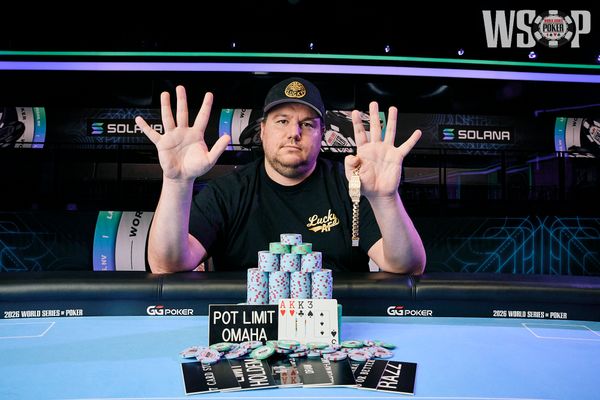
Shaun Deeb finally broke through for his ninth WSOP bracelet in the $1,500 8-Game Mixed event, ending a brutal stretch that saw him finish second three times in recent months. The victory came after Deeb battled back from multiple chip deficits in a marathon heads-up battle against Dean Joe, turning around what he called “the worst WSOP of his career.”
What Happened
The road to bracelet number nine was anything but straightforward for Shaun Deeb. Coming into the summer, he’d already suffered two heartbreaking runner-up finishes at WSOPE Prague—both losses coming heads-up when his opponents hit quads. Those near-misses were just the beginning of a summer that would test even the most seasoned professional’s mental fortitude.
Things got worse before they got better. After reportedly being cursed by WWE’s Danhausen (courtesy of WSOP reporter Jeff Platt), Deeb went on an unprecedented cold streak. He managed just one cash in his first 60 tournament entries—a stretch so brutal that Deeb himself acknowledged it as his worst-ever World Series performance. The only glimmer of hope came when he finished second in the $3,000 Nine-Game Mixed event, but that was another runner-up finish adding to his growing frustration.
Tuesday night’s $1,500 8-Game Mixed event started promisingly. Deeb returned to the final day as chip leader with 13 players remaining. But the tournament nearly ended in disaster when he found himself on the brink of elimination in ninth place, needing to hit a wheel in 2-7 triple draw just to survive. He managed to navigate his way to heads-up play, though he entered the duel facing a 2:1 chip disadvantage against Dean Joe.
The heads-up battle became a war of attrition. Deeb clawed back to even stacks, then surged ahead to a 2:1 lead of his own. But Joe refused to go quietly, mounting his own comeback to take a commanding 3:1 chip advantage. With his rail desperately trying to will him forward, Deeb hung tough through the swings. The decisive moment came in a PLO hand where Deeb got his chips in as the underdog on the flop but managed to outdraw Joe, prompting him to extend his hand and simply state, “I win.”
His first words after clinching the bracelet? “Too many seconds.” Within minutes of his winner’s photo, Deeb was already eyeing his next tournament, proving that for elite professionals, one victory is simply a stepping stone to the next challenge.
The Poker Strategy Breakdown
Mixed game events like 8-Game require a fundamentally different strategic approach than No-Limit Hold’em tournaments. Players must maintain proficiency across eight different poker variants, each with distinct optimal strategies, hand values, and betting structures. The format rotates between Limit Hold’em, Omaha Hi-Lo, Razz, Seven Card Stud, Stud Hi-Lo, No-Limit Hold’em, Pot-Limit Omaha, and 2-7 Triple Draw Lowball.
Deeb’s survival hand in 2-7 Triple Draw illustrates a critical concept in mixed games: understanding when you’re committed to a pot and must draw to win. In triple draw, making a wheel (A-2-3-4-5) represents the nuts, and when facing elimination with a drawing hand, the mathematics often dictate that you must take your shot rather than fold and wait for a better spot. This differs significantly from No-Limit Hold’em, where stack preservation often takes priority.
The heads-up battle showcased another crucial mixed game skill: adaptability across formats. When Deeb mentioned he “thought he could run over” Joe but couldn’t, he was acknowledging his opponent’s ability to adjust and fight back across multiple game types. Joe’s three-betting in stud games and his willingness to play back demonstrated sophisticated mixed game understanding—he wasn’t simply waiting for premium hands but actively applying pressure when the format allowed.
The PLO hand where Deeb got his money in as an underdog on the flop but still won exemplifies the variance inherent in mixed game tournaments. In Pot-Limit Omaha, equity runs much closer than in Hold’em, and being behind on the flop doesn’t mean you’re in terrible shape. Understanding these equity distributions and being willing to gamble when the tournament situation demands it separates elite mixed game players from specialists in a single format.
Deeb’s decision to continue playing immediately after his win also reveals a professional mindset about bankroll management and opportunity cost. The $100K PLO High Roller represented a high-value tournament where his edge justified the buy-in, regardless of having just won a bracelet. This calculated approach to game selection—prioritizing expected value over celebration—is characteristic of the most successful tournament professionals.
Reading The Field & Table Dynamics
One of the most underappreciated aspects of Deeb’s victory was his ability to navigate the final table bubble and early final table play. Starting the final day as chip leader with 13 players remaining put him in a position of strength, but mixed game tournaments present unique ICM considerations that differ from standard freezeout events.
In mixed games, the skill differential between players tends to be more pronounced than in No-Limit Hold’em events. Some players excel in certain formats while struggling in others, creating exploitable patterns. Deeb’s experience across all eight games gave him an edge in identifying these weaknesses and applying pressure during the variants where opponents were less comfortable.
The near-elimination in ninth place demonstrates how quickly chip leads can evaporate in mixed games. Unlike No-Limit Hold’em where you can control pot sizes more effectively, the structured betting limits in games like 2-7 Triple Draw can lead to committed situations where you’re forced to see hands through to the end. This creates more volatility and requires players to maintain composure through swings that would be less common in other formats.
During heads-up play, the multiple lead changes reflected the importance of game rotation in determining outcomes. A chip lead in one format doesn’t guarantee continued dominance when the game switches. Joe’s ability to mount comebacks suggests he was particularly strong in certain variants, while Deeb’s ultimate victory showed his consistency across all eight games. The fact that Joe re-raised in stud games indicates he understood how to leverage position and board texture in fixed-limit formats—a sophisticated adjustment that many players miss.
Deeb’s rail support, while not directly affecting card distribution, does play a psychological role in marathon sessions. Having vocal supporters can provide emotional energy during the inevitable downswings, helping players maintain focus and avoid tilt during crucial moments. The mental game becomes increasingly important as tournaments extend into their final stages and fatigue sets in.
How To Apply This To Your Game
The most important lesson from Deeb’s victory is the value of persistence through variance. His summer started with an unprecedented cold streak—one cash in 60 entries would break most players mentally. Yet he continued putting himself in position to win, eventually breaking through. For recreational players, this underscores the importance of proper bankroll management and maintaining emotional stability during downswings.
If you’re looking to improve your mixed game skills, start by developing competency in each format individually before combining them in rotation tournaments. Many players make the mistake of entering mixed events with only basic knowledge of some variants, leaving them exploitable during those rounds. Focus on understanding the fundamental differences in hand values across formats—what constitutes a strong starting hand in Omaha Hi-Lo differs dramatically from Razz or 2-7 Triple Draw.
Study the strategic adjustments required when transitioning between limit and no-limit structures. In limit games, pot control through betting caps means you’ll see more showdowns and need to value bet thinner. In pot-limit and no-limit formats, you have more tools for applying pressure and protecting your stack. Understanding when to accumulate chips aggressively versus when to play conservatively based on the current game format is crucial.
Pay attention to your opponents’ comfort levels in different games. If you notice someone playing particularly tight during Razz rounds or making fundamental errors in Stud Hi-Lo, make a mental note to apply more pressure during those formats. Conversely, if an opponent seems particularly strong in PLO, consider playing more straightforward during those rotations to minimize your risk.
Finally, adopt Deeb’s professional approach to game selection and schedule management. He immediately moved on to the next valuable opportunity rather than celebrating excessively. For serious players, this means constantly evaluating which tournaments offer the best combination of field strength, structure, and buy-in relative to your edge. Don’t let emotions—whether from a big win or a bad beat—dictate your game selection.
Key Takeaways
- Persistence through variance is essential—Deeb endured three runner-up finishes and a 1-in-60 cash rate before breaking through for his ninth bracelet
- Mixed game tournaments require proficiency across multiple formats; weaknesses in any single game create exploitable leaks
- Heads-up battles in mixed events involve multiple lead changes as the game format rotates; consistency across all variants matters more than dominance in one
- Understanding when you’re committed to a pot in structured betting games differs from No-Limit Hold’em stack preservation strategy
- Professional players prioritize expected value and game selection over celebration, immediately moving to the next profitable opportunity
- Mental game and emotional stability become increasingly important during extended cold streaks and marathon final table sessions
Frequently Asked Questions
How many WSOP bracelets does Shaun Deeb have now?
Shaun Deeb now has nine WSOP bracelets after winning the $1,500 8-Game Mixed event. This victory came after a difficult summer that included multiple runner-up finishes and an unprecedented cold streak where he cashed just once in his first 60 tournament entries.
What games are included in 8-Game Mixed format?
The 8-Game Mixed format rotates through eight different poker variants: Limit Hold’em, Omaha Hi-Lo, Razz, Seven Card Stud, Stud Hi-Lo, No-Limit Hold’em, Pot-Limit Omaha, and 2-7 Triple Draw Lowball. Players must maintain proficiency across all eight games to compete effectively, as the format changes regularly throughout the tournament.
How should you prepare for mixed game tournaments?
Prepare for mixed game tournaments by developing solid fundamentals in each individual format before combining them. Study the different hand value hierarchies across games, understand the strategic differences between limit and no-limit structures, and practice transitioning between formats. Identify which games are your strongest and weakest, then work to shore up weaknesses while exploiting opponents’ discomfort in certain variants.
Final Thoughts
Shaun Deeb’s ninth bracelet victory represents more than just another title for an already decorated career. It’s a masterclass in mental resilience and the importance of process over results. When facing the worst WSOP performance of his career, Deeb didn’t abandon his approach or let frustration dictate his decisions. He continued grinding, putting himself in position to win, and eventually broke through when the cards finally cooperated.
For players at any level, this tournament offers valuable lessons about variance, game selection, and the long-term mindset required for poker success. The swings Deeb experienced—from chip leader to near-elimination to multiple heads-up lead changes—reflect the reality of tournament poker. Success isn’t about avoiding variance but rather about maintaining optimal strategy through it and capitalizing when opportunities arise.
The immediate transition from winner’s circle to the next tournament also exemplifies the professional approach that separates recreational players from those who treat poker as a business. Every decision, from which tournaments to enter to how long to celebrate a victory, gets evaluated through the lens of expected value and opportunity cost. That disciplined mindset, combined with world-class technical skills across multiple formats, is what allows players like Deeb to accumulate bracelets over time despite the inevitable rough patches.
Ready to Sharpen Your Poker Game?
Master your poker game with expert hand analysis