Shaun Deeb’s Brutal WSOP Run: When Variance Humbles a Champion
Defending Player of the Year Shaun Deeb is experiencing his worst World Series of Poker performance ever, cashing just once in 60 tournament entries. Despite the brutal variance, he remains second in the 2026 POY race—a testament to both his WSOP Europe dominance and the marathon nature of poker’s most prestigious annual competition.
What Happened
Shaun Deeb entered the 2026 WSOP with momentum and ambition. After a dominant performance at WSOP Europe that banked substantial Player of the Year points, he arrived in Las Vegas with clear objectives: secure a bracelet and build an insurmountable POY lead.
Reality had different plans. According to Jeff Platt on the WSOP Countdown show, Deeb has managed a single cash across 60 tournament bullets—a staggering drought for a player of his caliber. His solitary score came in the $10,000 No-Limit 2-7 Lowball Championship, where a fifth-place finish netted him $99,557. While respectable, it’s a far cry from the eight cashes he’d accumulated by this point during his 2025 POY-winning campaign, which included multiple deep finishes.
Deeb himself acknowledged the struggle, telling Platt this represents his worst WSOP performance in his entire career. He came close to a second cash in the $10,000 Limit Championship but busted just before the money bubble—adding insult to injury in what’s already been a punishing series.
The timing couldn’t be more ironic. Before the series began, Deeb expressed confidence about his POY prospects, stating that a bracelet in Vegas or at WSOP Paradise would make him “a huge favorite for POY.” He anticipated “a lot of other final tables and deep runs.” None have materialized yet.
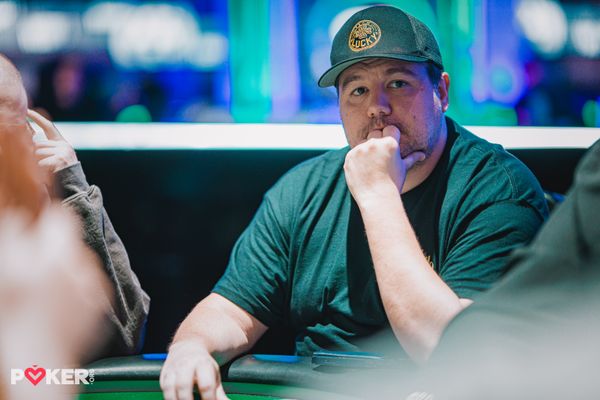
Despite the Vegas nightmare, Deeb sits second on the POY leaderboard with 1,596 points, trailing Japan’s Naoya Kihara (1,665 points) who has captured two bracelets this summer. The gap is narrow, and with WSOP Paradise still on the calendar, Deeb’s POY defense remains mathematically viable—though his current form offers little comfort.
Deeb isn’t alone in his struggles. Phil Ivey has also cashed just once, finishing ninth in the $10,000 Limit Championship. High-stakes crusher Jason Koon was still searching for his first cash, though he entered the $250,000 Super High Roller seeking to change his fortunes.
The Poker Strategy Breakdown
Deeb’s situation illustrates a fundamental poker truth that transcends skill level: variance is the great equalizer, at least in the short term. Tournament poker, particularly at the WSOP where field sizes are massive and structures vary widely, amplifies this reality.
Consider the mathematics. Even world-class players typically cash in only 15-20% of tournaments they enter. At 60 entries with one cash, Deeb is running at roughly 1.7%—well below expectation but not mathematically impossible. The standard deviation in tournament poker is enormous, and even extended cold streaks fall within the realm of normal variance.
What makes Deeb’s approach noteworthy is his volume-based strategy. Firing 60 bullets demonstrates a commitment to maximizing opportunities—a cornerstone of serious tournament poker. The logic is sound: the more events you play, the more chances you create to hit that high-variance tournament score. This strategy works over large samples but offers no protection against brutal short-term results.
The $10,000 2-7 Lowball cash reveals another dimension of Deeb’s game. Mixed games and specialty events typically feature smaller, tougher fields. His willingness to compete in these events—and cash deep—shows strategic diversification. These tournaments often have less variance than no-limit hold’em due to smaller fields, yet they require specialized skills that many players lack.
Deeb’s bubble in the $10,000 Limit Championship highlights the cruel nature of tournament poker. Limit formats reduce variance compared to no-limit, yet he still couldn’t convert a deep run into a cash. This exemplifies how tournament poker punishes players at inflection points—the bubble, final table bubble, and pay jumps all create high-pressure situations where a single decision or card can determine outcomes.
Reading The Field & Table Dynamics
The 2026 WSOP has proven exceptionally competitive. Naoya Kihara’s two-bracelet performance demonstrates that new champions are emerging, not just the established elite recycling victories. The POY leaderboard reflects this diversity, with players from Japan, Lithuania, China, and Germany occupying top-ten spots.
This increased global competition changes table dynamics significantly. Players can no longer rely solely on reading American tournament regulars. Different poker cultures bring varied approaches—some more aggressive, others more mathematical, many incorporating game theory optimal (GTO) principles that reduce exploitability.
For someone like Deeb, whose game combines technical excellence with exploitative adjustments, this evolving landscape presents challenges. His historical edge came partly from superior technical knowledge and partly from reading opponents. As the field’s baseline skill level rises, those edges compress.
The volume strategy also creates interesting dynamics. When you’re playing 60 events, you’re constantly facing different opponents, structures, and formats. You might play a turbo event one day, a deep-stack the next, then a mixed game. This prevents you from developing reads on specific opponents but also means you’re not overexposed to any single player pool.
ICM considerations become paramount when you’re chasing POY points. Deeb needs not just cashes but deep finishes and bracelets. This might incentivize slightly more aggressive play near pay jumps—taking marginal spots that maximize upside even if they slightly reduce cash frequency. However, with only one cash in 60 tries, it’s clear this strategy hasn’t yielded results yet.
How To Apply This To Your Game
Deeb’s experience offers crucial lessons for players at all levels, particularly around bankroll management and psychological resilience.
First, understand that volume matters but requires proper bankroll support. Firing 60 bullets at the WSOP represents a massive financial commitment. For professionals like Deeb, this is sustainable through a combination of personal bankroll, staking arrangements, and previous winnings. Recreational players should never attempt this volume without appropriate financial backing. A good rule: maintain 100+ buy-ins for your typical tournament stakes to weather extended downswings.
Second, diversify your tournament portfolio. Deeb’s cash came in a specialty event—2-7 Lowball—not a mainstream no-limit hold’em tournament. Learning mixed games and variants creates additional opportunities and often features softer fields relative to buy-in levels. If you’re playing a series, don’t just fire the same event type repeatedly.
Third, separate process from results. Deeb is presumably playing solid poker despite terrible results. The ability to maintain strategic discipline during downswings separates professionals from amateurs. Review your play based on decision quality, not outcomes. Did you make theoretically sound plays? Did you adjust appropriately to opponents? These matter more than whether you cashed.
Fourth, manage your mental game proactively. After 59 failed bullets, the psychological pressure on that 60th entry is immense. Techniques like meditation, exercise, proper sleep, and even taking strategic breaks help maintain emotional equilibrium. Some players benefit from reducing volume during cold streaks to prevent tilt-influenced decisions.
Finally, maintain perspective on sample sizes. Sixty tournaments feels like a lot, but it’s statistically small in poker’s variance-heavy landscape. Professionals think in terms of thousands of tournaments over careers. Don’t make sweeping strategic changes based on short-term results, even when those results feel catastrophic.
Key Takeaways
- Even elite players experience brutal downswings—Deeb’s 1-for-60 cash rate demonstrates that variance affects everyone regardless of skill level
- Volume-based tournament strategies require substantial bankroll depth and psychological resilience to weather extended cold streaks
- Diversifying into mixed games and specialty events can create additional opportunities in softer fields
- POY races are marathons, not sprints—Deeb remains second despite his Vegas struggles thanks to strong WSOP Europe performance
- Process matters more than short-term results; maintaining strategic discipline during downswings separates professionals from recreational players
- The global poker landscape is increasingly competitive, with players from diverse backgrounds bringing varied strategic approaches
Frequently Asked Questions
How can a top professional like Shaun Deeb cash only once in 60 tournaments?
Tournament poker has extreme variance even for world-class players. Top professionals typically cash in only 15-20% of events, meaning extended dry spells are mathematically normal. Deeb’s 1.7% rate is well below expectation but falls within possible variance over a 60-tournament sample. Factors like field size, structure, and competition level all contribute to cash frequency.
What is the WSOP Player of the Year race and how does scoring work?
The WSOP Player of the Year award recognizes the most successful player across all WSOP events in a calendar year. Points are awarded based on finish position and buy-in level, with higher buy-ins and deeper finishes earning more points. The 2026 race includes WSOP Europe, WSOP Las Vegas, and WSOP Paradise, making it a year-long competition requiring sustained excellence across multiple series.
Should recreational players adopt a high-volume tournament strategy like Deeb’s?
Only with proper bankroll management and realistic expectations. High-volume strategies require 100+ buy-ins for your stake level to survive variance. Recreational players should prioritize game selection, playing their best poker, and maintaining proper life balance over pure volume. Quality often trumps quantity for players still developing their skills, as focused study and review can accelerate improvement more than simply grinding volume.
Final Thoughts
Shaun Deeb’s nightmarish WSOP run serves as a humbling reminder that poker remains a game of skill expressed through a fog of variance. The same mathematical realities that allow recreational players to occasionally beat professionals also ensure that even champions endure stretches that would break lesser players mentally and financially.
What separates Deeb from the field isn’t immunity to variance—it’s his systematic approach to the game, proper bankroll management, and psychological resilience to continue firing bullets even when results suggest futility. His second-place POY position despite Vegas struggles demonstrates the value of long-term thinking and capitalizing on opportunities across multiple series.
For students of the game, Deeb’s experience offers more valuable lessons than a smooth run of final tables would provide. It illustrates the importance of process over results, the necessity of financial preparation for downswings, and the mental fortitude required to compete at poker’s highest levels. Whether you’re grinding micro-stakes online or playing WSOP events, these principles apply universally. The cards don’t care about your reputation, your past results, or your expectations—they simply fall as probability dictates, and your job is to make optimal decisions regardless of short-term outcomes.
Ready to Sharpen Your Poker Game?
Master your poker game with expert hand analysis